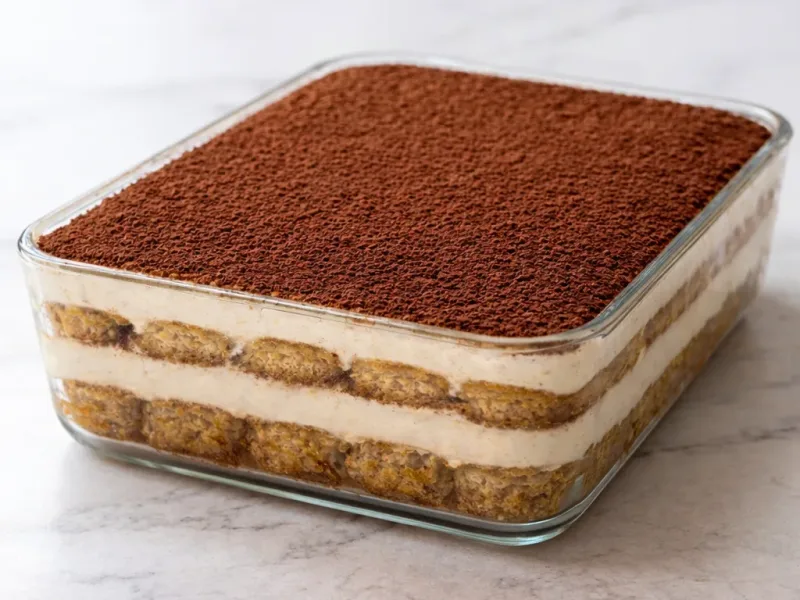
Base recipe: 8 servings (7.5 × 12.6 inch / 19 × 32 cm tiramisu)
Your kitchen companion
Ingredients
Check off ingredients as you prepare them.
Follow the steps at your own pace.
Method
Separate eggs: Use a bowl and separate 5 large eggs (8.8 oz / 250 g) into yolks and whites, ensuring no yolk contaminates the whites.
Heat yolks and sugar: Place 5 egg yolks and ½ cup (125 g) sugar in a heatproof bowl over a saucepan with simmering water (bain-marie) at 158°F (70°C). Whisk continuously for 6–8 minutes until thick and pale; mixture should ribbon when lifted.
Cool mixture: Remove bowl and allow the mixture to cool to 77–86°F (25–30°C). Cooling stabilizes the emulsion and prevents mascarpone splitting.
Incorporate mascarpone: Add 2 cups (500 g) mascarpone and mix gently with a spatula until smooth and lump-free; mixture should hold soft shape.
Whip egg whites: Using a mixer, whip 5 egg whites with ¼ tsp (1 g) salt at medium-high speed until stiff peaks form; peaks should stand upright without collapsing.
Fold cream: Fold one-third of the whipped egg whites into the mascarpone mixture using a spatula, then repeat twice with remaining whites, preserving air structure.
Prepare coffee mixture: Combine 1 ⅔ cups (400 ml) espresso and ⅓ cup (80 ml) Marsala in a shallow dish; ensure liquid is below 77°F (25°C) to prevent over-softening.
Dip savoiardi: Dip each of the 30 savoiardi cookies (14.8 oz / 420 g) into the coffee mixture for 2–3 seconds total; biscuits should absorb liquid but remain firm when held.
Arrange first layer: Place 15 dipped savoiardi in a 19 × 32 cm (7.5 × 12.6 inch) rectangular glass dish in a tight single layer with minimal gaps.
Spread first cream layer: Add half of the mascarpone cream and spread evenly using a spatula; surface should be level and smooth.
Add second layer: Place the remaining 15 dipped savoiardi over the cream in aligned rows; maintain even spacing for structural stability.
Finish cream layer: Spread remaining mascarpone cream evenly to fully cover the biscuits; edges should be clean and level.
Dust cocoa: Sift 3 tbsp (25 g) cocoa powder evenly across the surface; top should appear dry and uniform.
Chill tiramisu: Cover and refrigerate at 39°F (4°C) for a minimum of 480 minutes. Chilling stabilizes the cream, allows moisture redistribution, and ensures clean slicing.
Extra technique, safety notes and details when you want to go deeper.
More tips & details
The Standard Reference for Tray-Layer Tiramisu
Mastering the Standard Tray-Layer Method
A structurally precise classic italian tiramisu is defined by its architectural integrity and a clean, geometric slice. This recipe uses the standard tray-layer method, which consists of two biscuit layers and two cream layers within a fixed rectangular format. This fixed tier geometry defines the load-bearing structure of the dessert. Serving as the canonical reference for all tray-format variations within this recipe collection, this version relies on a precise egg-stabilized mascarpone cream rather than chemical thickeners or whipped cream stabilizers. This ensures the dessert maintains its volume and a sharp edge when portioned, revealing distinct, horizontal tiers without structural sagging.
Precision Hydration and Biscuit Stability
The structural foundation of this method depends on the controlled hydration of ladyfingers. This version is calibrated specifically for firm, dry biscuits with low residual moisture, such as the homemade Savoiardi recipe used within this recipe collection. These biscuits act as a structural sponge; a brief 2 to 3-second dip (approx. 1 ⅔ cups / 400 ml total liquid) allows for capillary absorption without breaking down the biscuit’s cellular structure. The hydration timing specified assumes biscuits with a dry, aerated crumb; softer commercial variants may require reduced contact time to prevent structural collapse.
The Protein-Fat Matrix and Core Ratio
The stability of the cream is built upon a fixed protein-fat network. The structural balance of this version relies on a fixed ratio of 1 egg (approx. 1.8 oz / 50 g) : 0.9 oz (25 g) sugar : 3.5 oz (100 g) mascarpone, calibrated to support aeration without auxiliary stabilizers. The full tray formulation scales this ratio proportionally to maintain aeration stability across the 7.5 × 12.6 inch (19 × 32 cm) format. By whisking the yolks over a bain-marie to 158 °F (70 °C), a stable emulsion is created that binds the rich fats of the 2 cups (500 g) of mascarpone. Folding in stiffly beaten egg whites introduces micro-bubbles that provide volume and a cohesive airy consistency, capable of supporting the weight of the upper layers.
Why This Version Is the Structural Reference
This tray-layer configuration represents the most stable format for classic tiramisu. It balances hydration, aeration, and fat content to produce clean portions without the need for gelatin or shortcuts. All format or flavor variations within this system modify one of these specific variables while preserving the core assembly logic and rectangular geometry defined here. This formulation defines the baseline hydration timing, aeration ratio, and rectangular assembly standard for all related adaptations.
Common Structural Failures and Technical Pitfalls
- Oversaturation: Soaking ladyfingers beyond 3 seconds leads to "weeping," where excess liquid compromises the bottom layer.
- Temperature Inconsistency: Using cold mascarpone prevents the cream from emulsifying with the egg base, resulting in a grainy, broken texture.
- Insufficient Stabilization: Rushing the chilling phase prevents the fat matrix from setting. A minimum of 4 to 8 hours at 39 °F (4 °C) is required for moisture redistribution.
- Overmixing: Excessive folding of the egg whites collapses the protein network, leading to a dense, runny cream that cannot support the upper layers.
Tiramisu Variations Based on This Standard Method
The following adaptations modify one structural variable (fat ratio, moisture content, or aeration complexity) while preserving the tray-layer geometry defined here:
- Pumpkin Tiramisu – Replaces a portion of the mascarpone matrix with pumpkin puree, increasing moisture content and requiring tighter hydration control of the biscuit base.
- Pistachio Tiramisu – Introduces dense nut paste into the cream, increasing fat density and requiring an adjustment of aeration to maintain slice stability.
- Hazelnut Tiramisu – Reduces aeration complexity and chilling duration while preserving tray-layer geometry.
Chef’s Technical Handling and Portioning Guidelines
To ensure a flawless result, bring the mascarpone to room temperature before integration to prevent graininess. The 3 tbsp (25 g) of cocoa powder should be applied only after the top layer of cream has been smoothed to ensure a dry, velvet-like finish. For professional service, use a sharp, thin-bladed knife dipped in hot water to achieve the cleanest slices, wiping the blade between every cut to maintain the definition of the internal layers.
Storage and Maintenance of Structural Integrity
This formulation is designed for structural reliability over 24–48 hours under refrigeration without auxiliary stabilizers. The fat-protein matrix remains stable under continuous refrigeration within this window. As a no-bake dessert, it performs best after a controlled rest period. Store the tray covered at 39 °F (4 °C). Extended storage beyond the 48-hour window will lead to the gradual softening of the lower layers as moisture continues to migrate from the biscuits into the cream.
Clean Slices for Table Service
Classic Italian Tiramisu appears here as a structured tray dessert rather than an individual or plated format. Each portion lifts with defined layers, where the cream holds and the base remains intact without compression. The top surface stays dry from cocoa, while the interior reveals a soft, uniform structure. Served directly from the dish, it supports consistent slicing and stable portion transfer without deformation.
Texture Performance During Service
The first contact shows a light resistance, followed by a smooth, even bite. The interior remains cohesive without collapsing, and the cream carries a soft, airy consistency that does not spread on the plate. This behavior ensures each slice maintains its geometry during service, with clear separation between layers and no excess moisture release.
For individual portions, a format adaptation such as tiramisu in a glass with stable layers modifies only the serving geometry while preserving the cream and hydration ratios defined in this standard. The structural integrity remains consistent, with layers adapting to vertical containment rather than horizontal slicing.
The flavor profile remains controlled, with cocoa forming a dry surface contrast against the interior cream. Coffee integration stays balanced, preventing saturation while maintaining aromatic presence. This ensures a clean finish and stable mouthfeel without excess sweetness or liquid separation.
For simplified preparation, an egg-free variation modifies the aeration stage while maintaining layered assembly principles. The resulting cream is denser due to the absence of the egg-based protein network, affecting lift while preserving structural cohesion. A comparable adaptation is available in 20-minute tiramisu without eggs, where assembly remains aligned with this standard.
All alternative formats within this collection are derived from the tray-layer ratios and structural logic established in this reference version.
Questions
Why is my Classic Italian Tiramisu runny after chilling overnight?
Runny texture is caused by excess moisture and weak cream structure. Over-soaked biscuits release liquid, while under-whipped or overmixed cream cannot hold air. The fat-protein network fails, leading to separation and pooling. The correct result shows clean layers that hold shape when sliced. Maintain brief biscuit contact and stable aeration to prevent collapse.
Can Classic Italian Tiramisu be made without raw eggs safely?
Safe preparation requires heating egg yolks to 158°F (70°C) to stabilize proteins and reduce risk. Without this step, the mixture remains microbiologically unsafe and structurally weaker. Properly heated yolks create a thick, stable base that binds mascarpone effectively. The cream should appear pale and hold soft volume after mixing.
Why do ladyfingers become soggy in tiramisu layers instead of soft?
Sogginess occurs when biscuits absorb more liquid than their structure can retain. Extended soaking breaks down the internal crumb, causing compression and loss of definition. Proper hydration creates a soft but structured bite with no collapse. The biscuit should remain intact when lifted and not drip excess liquid. Chef tip: Use a shallow dish for dipping to control contact time and avoid oversaturation.
How to get firm layers in tiramisu without making it dense?
Firm layers depend on preserving air within the cream while maintaining moisture balance. Overmixing removes air and creates density, while insufficient folding leads to instability. A properly balanced cream spreads smoothly and holds shape under light pressure. The final slice should remain stable without feeling heavy.
Does mascarpone quality affect tiramisu texture and structure?
Mascarpone with lower fat or excess water destabilizes the emulsion and causes separation. High-fat mascarpone binds liquid efficiently, producing a smooth and cohesive cream. The mixture should remain thick and uniform after chilling with no visible liquid release. Stable fat content ensures clean slicing and consistent texture. Chef tip: If mascarpone appears watery, stir gently before use to re-emulsify the fat.
Can Classic Italian Tiramisu be made without alcohol and still stay stable?
Structural stability does not depend on alcohol but on correct moisture and cream balance. A non-alcoholic version replaces wine with espresso while preserving the same layering logic. For a tested version, see tiramisu without alcohol with stable layers. The result remains firm and sliceable when hydration is controlled.
Why does tiramisu taste too sweet and lack coffee flavor?
Imbalance occurs when sugar dominates and espresso concentration is too weak. Without sufficient bitterness, the dessert loses contrast and depth. Cocoa and strong coffee create a necessary counterbalance to sweetness. The correct flavor profile finishes clean, with noticeable coffee aroma and no lingering heaviness.
Recivelle · /recipe/classic-italian-tiramisu-dessert-recipe