Base recipe: 6 servings
Your kitchen companion
Ingredients
Check off ingredients as you prepare them.
Follow the steps at your own pace.
Method
Bloom the gelatin: Pour 3 tbsp (45 ml) cold water into a small heatproof bowl and evenly sprinkle 2 tsp (6 g) powdered gelatin over the surface. Allow the mixture to stand for 5 minutes at room temperature until the gelatin absorbs the water and forms a soft gel.
Combine the dairy mixture: Add 2 cups (480 ml) heavy cream, ⅓ cup (80 ml) whole milk, ⅓ cup + 1 tbsp (90 g) granulated sugar, and ¼ tsp (1 g) fine sea salt to a medium saucepan (2–3 qt / 2–3 L capacity). Place the pan on a stovetop burner set to medium heat.
Heat the cream base: Stir the mixture gently with a silicone spatula or wooden spoon while heating until the sugar dissolves and the liquid reaches 149–167°F (65–75°C). The surface should release light steam but must not boil. If small bubbles begin forming at the edges, immediately lower the heat.
Dissolve the gelatin: Remove the saucepan from the heat and add the bloomed gelatin mixture. Stir continuously for about 30 seconds until the gelatin completely melts and the liquid becomes smooth and uniform with no visible granules.
Add the flavoring: Stir in 1 tsp (5 ml) vanilla extract using a spoon or spatula until evenly distributed throughout the warm cream mixture.
Cool the mixture slightly: Allow the mixture to rest in the saucepan for 5 minutes until it cools to approximately 122–131°F (50–55°C). This short cooling stage reduces condensation and prevents bubbles from forming on the finished surface.
Fill the molds: Place six 100 ml (3.5 oz) ramekins or dessert molds on a tray. Carefully pour the warm mixture evenly into each mold, filling each portion completely.
Chill the dessert: Transfer the tray to a refrigerator set to 39°F (4°C). Chill for at least 240 minutes until the structure becomes firm and the center gently jiggles when the mold is nudged. The dessert should hold its shape when inverted onto a plate.
Unmold the panna cotta: Dip the outside of each mold briefly in warm water for about 5 seconds to loosen the edges. Place a plate over the mold and invert carefully so the dessert releases cleanly onto the plate.
Extra technique, safety notes and details when you want to go deeper.
More tips & details
Mastering the Texture of Traditional Panna Cotta
A classic Italian cream dessert with a delicate wobble
Panna cotta, which literally translates to "cooked cream," is a beloved Italian spoon dessert that relies on a delicate gel set rather than the heavy thickening of egg yolks or flour-based binders. This elegant preparation uses a base of 2 cups (480 ml) heavy cream and 1/3 cup (80 ml) whole milk to create a rich, indulgent structure, while 2 tsp (6 g) of dissolved gelatin provides the necessary stability. When executed correctly, the surface of the dessert should be perfectly smooth and reflect a soft, satin-like gloss. The hallmark of a successful panna cotta is its gentle jiggle; the center should sway when the plate is nudged but hold its shape firmly enough to stand tall after being released from its mold. It should be tender enough to melt almost instantly on the tongue, offering a luxurious experience that is as much about mouthfeel as it is about flavor.
Cream-forward texture with a clean vanilla aroma
The primary sensory experience of this recipe is its incredibly smooth and uniform cream structure. When you cut into the dessert, the interior should appear pale ivory and dense, with a spoon revealing a clean slice that maintains its integrity without crumbling or collapsing. This specific texture is achieved as the dairy fat is evenly dispersed throughout the liquid, resulting in a silky mouthfeel that coats the palate without feeling heavy. While the aroma is predominantly dairy-forward, a touch of vanilla bean provides a sophisticated background note that complements the sweetness. To balance this richness, we highly recommend pairing the cream with a vibrant, seedless berry sauce, which provides a bright, acidic contrast that cleanses the palate after every bite.
How gelatin creates the signature wobble
The unique "trembling" consistency of a professional-grade panna cotta is the result of a precise protein network. As the warm dairy mixture cools below refrigeration temperature—usually 40°F (4°C)—the hydrated gelatin molecules reorganize into a microscopic three-dimensional lattice that traps the liquid cream within its structure. To achieve this specific result every time, mastering the gelatin for panna cotta is essential for balancing the richness of the heavy cream with the strength of the setting agent. If this network forms evenly, the dessert will have a consistent sheen and a smooth, grain-free surface. However, if you find that your dessert remains liquid after several hours, understanding why panna cotta did not set will help you troubleshoot common issues like improper bloom temperature or the presence of certain fruit enzymes.
Reliable structure for perfect unmolding
A perfectly balanced formulation ensures that the panna cotta is stable enough to slide effortlessly from its container and settle onto a plate with sharp, defined edges. When unmolded, the sides should remain straight and show the faint lines of the ramekin, indicating that the gel strength is sufficient to support the weight of the dairy. Even at a cool serving temperature, the dessert should stay intact on the plate for several minutes without "weeping" or releasing excess liquid. This level of stability confirms that the gelatin has successfully formed a uniform bond throughout the entire mixture. For those looking to achieve a professional, restaurant-quality presentation, following the proper technique for how to unmold panna cotta will ensure you get a clean release without any cracks or tears.
Professional tips from Chef PEKIS
To ensure the best visual results, Chef PEKIS recommends allowing the heated mixture to cool slightly to approximately 122–131°F (50–55°C) before pouring it into your molds. This short resting period is crucial as it helps minimize the formation of tiny air bubbles on the surface, which can otherwise create an uneven appearance once the dessert sets. It is also important to avoid overheating the cream base above 167°F (75°C); excessive heat can break down the delicate gelatin proteins, resulting in a loose, weak structure that may fail to hold its shape. When it comes time to plate, a very brief dip in warm water is usually enough to break the vacuum seal and allow the dessert to drop smoothly.
Storage and make-ahead stability
Because the gel structure continues to strengthen and mature during the chilling process, this dessert is an ideal candidate for make-ahead service. Once it has fully set, the panna cotta will remain stable and delicious for up to two days when stored covered in the refrigerator at 40°F (4°C). To maintain the best quality, always keep the molds covered to prevent moisture loss and the formation of a "skin" on the surface. Over extended periods of storage, you may notice a very small amount of liquid at the base—a natural process called syneresis—where the protein network contracts slightly. This is completely normal and indicates that the dessert is at its peak of set and ready to be enjoyed.
A quiet dessert served straight from the refrigerator
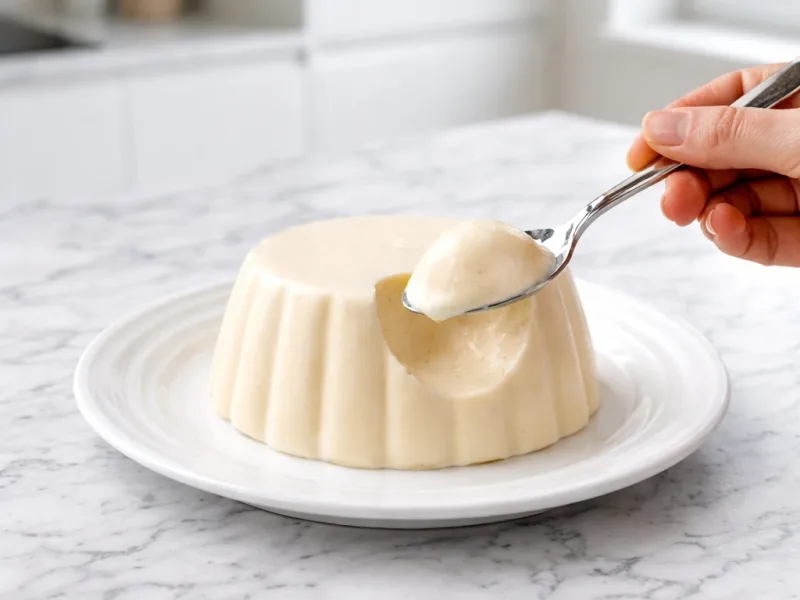
The first spoonful reveals what makes panna cotta distinct among chilled desserts. This version is a set cream preparation rather than a baked custard or whipped mousse, so the texture holds together in one smooth piece. The surface remains pale and glossy, and the spoon leaves a clean curve as it moves through the center. When the plate shifts slightly, the dessert moves with a soft wobble, a clear sign that the cream and gelatin have formed a balanced gel. This structure can be adapted into richer variations such as chocolate panna cotta or aromatic profiles like coffee panna cotta.
A spoonful lifts easily, carrying both richness and lightness. The cream flavor arrives first, followed by a mild sweetness that fades quickly, leaving a faint trace of vanilla. What stands out most is the structure: the center bends gently instead of breaking. That delicate movement signals the correct consistency. The surface stays intact, and the interior shows a silky, dense texture without air pockets or grain. For those requiring a plant-based alternative, the same texture can be achieved with vegan coconut panna cotta, where the gel structure is formed without animal gelatin.
When the table needs something calm and clean
This dessert fits naturally at the end of a meal where heavier sweets would feel excessive. Its cool, smooth texture contrasts well with warm main courses, especially those built around roasted meat or rich sauces. On a quiet evening meal or a small dinner gathering, it settles onto the plate with a simple presence that does not require garnish to feel complete, though a light fruit contrast such as a berry finish can be added without changing the base structure.
Shared at the table, each portion keeps its shape long enough to be passed and served without losing its structure. The spoon glides through the center while the edges remain smooth, showing that the cream gel holds evenly from top to bottom. That balance between firmness and tenderness makes the final bite feel composed rather than heavy, leaving the palate clear for conversation and another sip of coffee.
Questions
Is panna cotta gluten-free when made with gelatin?
Classic panna cotta is naturally gluten-free because the structure comes from gelatin and dairy, not wheat starch. Cream and milk form the base while hydrated gelatin stabilizes the liquid into a soft gel during refrigeration. The finished dessert should appear smooth, pale ivory, and gently wobble when the plate moves. Gluten may only appear through additives in flavored gelatin powders or contaminated vanilla extracts. Use pure powdered gelatin and standard dairy ingredients to maintain a gluten-free result.
Why did panna cotta turn rubbery instead of creamy?
Rubbery panna cotta results from too much gelatin relative to liquid. Excess gelatin creates a tight protein network that traps liquid too firmly, producing a texture similar to firm jelly rather than a soft cream gel. Properly balanced panna cotta bends slightly when pressed with a spoon and leaves a clean, smooth cut surface. If the dessert feels springy or resistant, the gelatin level was too high for the amount of dairy used. Chef tip: For a softer restaurant-style texture, reduce gelatin slightly or increase cream by about 2 tbsp (30 ml).
Why did panna cotta fail to set after chilling?
Panna cotta does not set when gelatin was not fully hydrated or dissolved in the warm cream base. Gelatin granules must absorb cold water first so they melt evenly into the dairy mixture. Undissolved particles cannot build a stable gel network during refrigeration. A correctly prepared mixture looks completely smooth before pouring and forms a gentle wobble after chilling. Chef tip: After blooming gelatin, press it lightly between fingers; it should feel soft and jelly-like before adding to the cream.
How should panna cotta look and feel when properly set?
Properly set panna cotta shows a soft wobble and smooth glossy surface. When the plate is nudged, the entire dessert should move slightly but remain upright. A spoon should glide through the center with minimal resistance, leaving a clean edge without crumbs or liquid separation. The interior texture should appear dense and silky rather than airy or grainy.
Why are there bubbles on the surface of panna cotta?
Surface bubbles occur when air becomes trapped in the hot cream mixture. Vigorous stirring or pouring the liquid while it is very hot introduces air that rises slowly as the gel sets. The bubbles become visible once the dessert solidifies. Allowing the mixture to cool briefly before filling molds produces a smoother, cleaner surface. Chef tip: Pour the mixture slowly along the inside edge of the mold to prevent trapped air.
Can panna cotta be made with agar instead of gelatin?
Agar can replace gelatin, but it produces a firmer and more brittle gel. Agar sets through a different molecular structure that breaks cleanly rather than bending softly. In contrast, the classic texture depends on a precise gelatin ratio for panna cotta, which creates a smooth, elastic structure. The result with agar slices sharply and feels less creamy on the palate, so many kitchens adjust the dairy content to soften the texture.
Why did panna cotta separate into layers during chilling?
Layer separation happens when the mixture cools unevenly or the gelatin was not evenly dispersed. Cream fat can rise before the gel network forms, leaving a denser lower layer and a lighter upper layer. Proper stirring immediately after dissolving gelatin keeps the emulsion stable so the dairy and gelatin set together into one uniform structure. Chef tip: Stir gently for about 20–30 seconds after dissolving gelatin to distribute it evenly before pouring.
Recivelle · /recipe/panna-cotta-recipe