Base recipe: 6 servings
Your kitchen companion
Ingredients
Check off ingredients as you prepare them.
Follow the steps at your own pace.
Method
Combine ingredients: Place 1⅔ cups (400 ml) full-fat coconut milk, ¾ cup + 1 tbsp (200 ml) coconut cream, ⅓ cup (70 g) granulated sugar, 1½ tsp (4.5 g) agar-agar powder, and 1 pinch (0.3 g) fine sea salt into a medium 2-quart (2-liter) saucepan. Whisk thoroughly while the mixture is cold so the agar powder disperses evenly and does not form lumps.
Heat mixture: Place the saucepan over medium heat on the stovetop. Stir continuously with a silicone spatula or whisk while heating the mixture until it reaches a full boil at about 212 °F (100 °C). The mixture should appear fully smooth with no visible agar particles.
Activate agar: Reduce heat slightly to maintain a gentle simmer and cook for 2 minutes while stirring constantly. This boiling stage activates the agar and forms the gel structure. Doneness test: dip a spoon into the liquid; it should coat the spoon smoothly without grainy residue.
Add flavor: Remove the saucepan from the heat and immediately stir in 1 tsp (5 ml) vanilla extract using a whisk until evenly incorporated.
Rest mixture: Allow the mixture to stand in the saucepan for 1 minute so surface bubbles dissipate and the liquid stabilizes before portioning.
Portion dessert: Pour the hot mixture evenly into six dessert glasses or molds (about 120 ml each). Use a small ladle or measuring cup to distribute the liquid evenly so each portion sets uniformly.
Initial cooling: Leave the filled glasses on the counter at room temperature for about 10 minutes. During this stage the mixture will begin to thicken as agar starts forming its gel network.
Chill dessert: Transfer the glasses to a refrigerator set between 37–41 °F (3–5 °C). Chill for at least 120 minutes until the dessert becomes fully set. Doneness test: gently tilt the glass; the surface should wobble slightly but remain stable.
Extra technique, safety notes and details when you want to go deeper.
More tips & details
Master the Art of Vegan Coconut Panna Cotta
A Plant-Based Twist on the Creamy Italian Classic
This recipe transforms the traditional Panna Cotta Recipe into a fully plant-based masterpiece while preserving the delicate, wobbling structure of the original. By replacing dairy and gelatin with rich coconut milk, coconut cream, and agar-agar, we solve the challenge of creating a stable, egg-free custard. This version is perfect for those seeking a dairy-free alternative that delivers the same luxurious mouthfeel as the classic Italian version without any animal products.
The coconut base introduces a naturally rich mouthfeel that replaces heavy dairy cream while remaining compatible with vegan diets. When properly chilled, the finished dessert holds a clean spoon shape yet yields smoothly under light pressure. The expected texture cue is a silky set custard that trembles slightly when the glass is tapped but does not collapse.
Achieving the Perfect Silky Coconut Texture
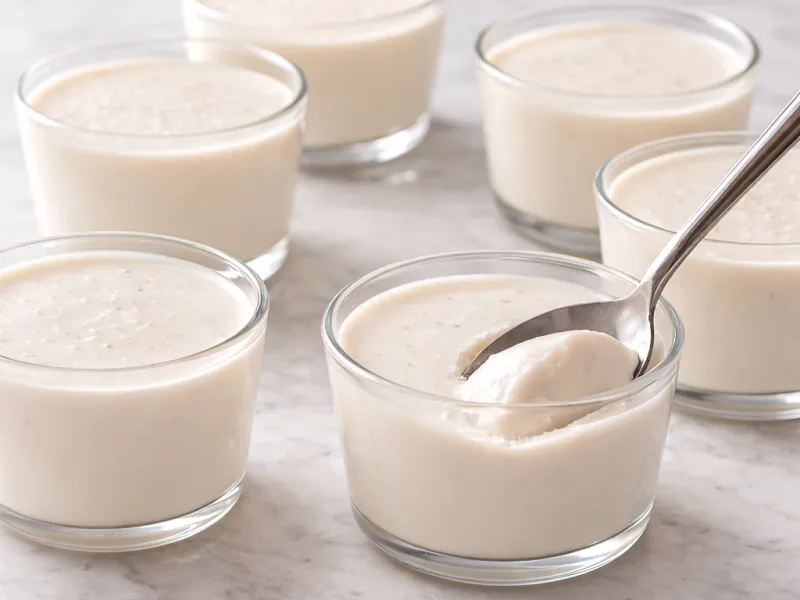
A successful vegan panna cotta results in a pale, ivory-colored cream with a uniform surface and faint vanilla speckles. The texture must be silky enough for a spoon to glide through effortlessly when served chilled at 40–43 °F (4–6 °C). A properly set portion releases from the sides of the glass with a slight shake but retains its defined edges.
Because this coconut base is exceptionally rich and velvety, it requires a sharp, acidic contrast to truly shine. I highly recommend finishing each portion with a Berry Sauce—the vibrant acidity of the fruit cuts through the coconut fats, creating a perfectly balanced dessert profile. This combination ensures the dessert feels light and bright rather than overly heavy.
Technical Differences Between Agar and Gelatin
Agar-agar is a seaweed-derived gelling agent that operates differently than animal-based gelatin. To form a stable network, the liquid must reach a full boil of 212 °F (100 °C) to fully activate the agar. Unlike gelatin, agar sets quickly at room temperature, which helps prevent the coconut fat from separating before it reaches the fridge.
Technical Success Note: Unlike gelatin, agar-agar must reach a full boil to activate its gelling properties. If your dessert hasn't reached the desired firmness after two hours, consult my technical breakdown on Why Panna Cotta Did Not Set to correct the activation temperature. If the activation stage is incomplete, the structure will remain fluid even after long refrigeration.
Visual Signs of a Perfectly Set Dessert
Once chilled, your panna cotta should exhibit clear indicators of professional quality that confirm the agar network has formed evenly:
- Smooth gel surface – a uniform, glossy top without bubbles or cracks.
- Soft spoon entry – the spoon creates a clean indentation without tearing the custard.
- Stable structure – the edges remain defined and sharp after a spoonful is removed.
- Light coconut aroma – a subtle vanilla scent with clean, tropical notes and no cooked sugar smell.
When the glass is tilted slightly, the interior should remain stable with only a gentle, characteristic wobble.
Executive Chef Tips for Professional Results
To ensure a 10/10 result, always whisk your agar powder thoroughly into the liquid while it is still cold to ensure the particles disperse evenly. If dry pockets remain, the gel structure forms inconsistently, creating unwanted soft spots. Once on the heat, allow the mixture to reach a steady boil for at least two minutes to fully dissolve the seaweed-derived polysaccharides.
One of the greatest advantages of using agar-agar is its superior thermal stability, which makes this vegan version far more resilient than a gelatin-based dessert when served out of a mold. If you want to move beyond the glass and showcase that iconic, silky wobble on a flat plate, you’ll need to master the release technique. I’ve detailed the professional steps to unmold panna cotta perfectly so you can achieve a flawless, restaurant-style presentation without damaging the delicate surface.
Storage and Make-Ahead Stability Standards
This preparation performs exceptionally well as a make-ahead dessert. Once fully set, cover the glasses to prevent the surface from drying out and store them refrigerated at 37–41 °F (3–5 °C) for up to 3 days. The gel structure remains stable during this time and maintains its smooth, spoonable consistency.
Freezing is not recommended for this variation. Agar-agar gels lose their structural integrity after freezing and thawing, which leads to unappealing water separation and a grainy mouthfeel. Always serve directly from the refrigerator while cold to ensure the coconut fat remains firm and the dessert retains its intended velvety finish.
Served Cold with a Clean, Silky Spoon Cut
A spoon enters the Vegan Coconut Panna Cotta and the surface yields smoothly, revealing a pale interior with a gentle wobble. This version relies on a plant-based gel rather than gelatin, giving the dessert a set that stays delicate while holding a clear edge where the spoon passes through. The first bite carries the quiet richness of coconut with a faint vanilla note that lingers lightly on the palate. The texture should remain silky and uniform, with no graininess and no liquid separation in the glass.
Placed on a small plate or served directly in the glass, the dessert reads immediately as something cool and composed. The spoon lifts a portion that keeps its shape briefly before settling back into a soft curve. The mouthfeel stays smooth from the first bite to the last, helped by the coconut fat that melts slowly as it warms on the tongue. A simple fruit glaze often sits well beside it, bringing brightness that cuts through the creamy base without overwhelming the flavor.
A Quiet Dessert for Shared Tables
This style of dessert fits easily into the rhythm of a shared table. Each portion feels complete on its own, so it can arrive quietly at the end of a meal without the need for slicing or plating. The small glasses hold the set custard neatly, and the surface remains glossy when the spoon first breaks through. The visual cue is subtle but clear: a gentle wobble that confirms the structure is correct.
Served after a full meal, the dessert works best when the room slows down and conversation settles. The spoon moves easily through the custard, leaving a smooth track that closes softly behind it. That texture—the balance between firmness and softness—is the signal that the dessert reached the right structure before chilling. When shared in this moment, the portion disappears gradually, each spoonful carrying the same clean coconut finish until the glass is empty.
Questions
Why did my vegan coconut panna cotta not set with agar-agar?
Vegan coconut panna cotta fails to set when agar-agar is not fully boiled and activated. Agar forms its gel network only after reaching a full rolling boil at 212 °F (100 °C). If the mixture only warms or briefly simmers, the gelling molecules stay inactive and the dessert remains liquid even after chilling. Properly activated agar thickens slightly as it cools before refrigeration. A correct batch will wobble gently but stay intact when you tilt the glass. Chef tip: Wait until the surface shows steady bubbling across the entire pan before starting the two-minute simmer.
Can I make vegan coconut panna cotta without coconut cream?
Yes, but removing coconut cream produces a lighter and less creamy gel texture. Coconut cream provides the fat that replicates traditional dairy richness and stabilizes the gel network. Without enough fat, agar still sets the mixture but the mouthfeel becomes thinner and less velvety. The finished dessert may also appear slightly translucent instead of opaque. Chef tip: Use full-fat coconut milk (about 1⅔ cups / 400 ml) if coconut cream is unavailable to maintain a smoother structure.
Why is my vegan coconut panna cotta rubbery instead of silky?
A rubbery texture means too much agar-agar was added relative to the liquid base. Agar creates a stronger gel than gelatin, so even small measurement errors dramatically increase firmness. Excess agar tightens the gel matrix and removes the delicate wobble expected from panna cotta. The correct texture should feel soft and silky with a clean spoon edge. Chef tip: Measure agar precisely—about 1½ teaspoons (4.5 g) for this recipe keeps the gel tender.
Why did my coconut panna cotta separate into layers while cooling?
Layer separation occurs when coconut fat and liquid are not properly emulsified during heating. Coconut cream contains natural oils that must disperse evenly before the gel begins forming. If the mixture is not whisked continuously or is heated unevenly, the fat can rise before agar sets the structure. A properly mixed base appears completely smooth and slightly glossy. Chef tip: Stir continuously until the mixture reaches a uniform creamy consistency with no oily film.
Can agar powder be replaced with agar flakes in vegan panna cotta?
Agar flakes can replace powder, but they require longer boiling and different quantities. Flakes dissolve more slowly and must simmer several minutes longer to fully release their gelling compounds. Using the same amount as powder often results in a weak gel that will not hold its shape. The mixture is ready when no visible flakes remain in the liquid. Chef tip: Crush flakes slightly and simmer until the mixture looks clear and completely smooth.
Why does vegan coconut panna cotta develop bubbles on the surface?
Surface bubbles form when the hot mixture is poured immediately after vigorous boiling. Boiling traps air in the liquid, and pouring too quickly locks those bubbles into the gel as it sets. Allowing the mixture to rest briefly lets trapped air escape and produces a smooth surface. A properly rested mixture pours evenly and sets with a glossy top. Chef tip: Let the mixture sit about 1 minute in the saucepan before filling the glasses.
Recivelle · /recipe/vegan-coconut-panna-cotta-silky-smooth-dessert-agar-set