Base recipe: 6 servings (1 cup / 240 ml)
Your kitchen companion
Ingredients
Check off ingredients as you prepare them.
Follow the steps at your own pace.
Method
Combine the berries: Place 1 cup mixed berries (250 g strawberries, raspberries, blueberries), ¼ cup sugar (60 g), 2 tbsp water (30 ml), 2 tsp lemon juice (10 ml), and ½ tsp fine sea salt (2 g) into a medium saucepan (1.5–2 qt / 1.4–1.9 L) set over medium heat.
Soften the fruit: Heat the saucepan over medium heat on a stovetop burner and cook for 6 minutes, stirring occasionally with a silicone spatula until the berries collapse and release juice. The mixture should appear loose and lightly bubbling at about 194 °F (90 °C).
Blend the puree: Transfer the hot mixture into a tall blending container and blend using an immersion blender for about 20–30 seconds until the sauce becomes fully smooth with no visible fruit pieces.
Strain the sauce: Pour the blended sauce through a fine mesh sieve (8–10 inch / 20–25 cm) into a clean bowl. Press gently with the back of a spoon to remove seeds and skins. The resulting liquid should appear glossy and completely seedless.
Prepare the slurry: In a small bowl, whisk together 2 tsp cornstarch (5 g) and 1 tbsp water (15 ml) until the mixture becomes completely smooth and free of lumps.
Heat the puree: Return the strained sauce to the saucepan and warm over medium heat until it reaches a gentle simmer at about 194 °F (90 °C), stirring with a whisk to prevent sticking.
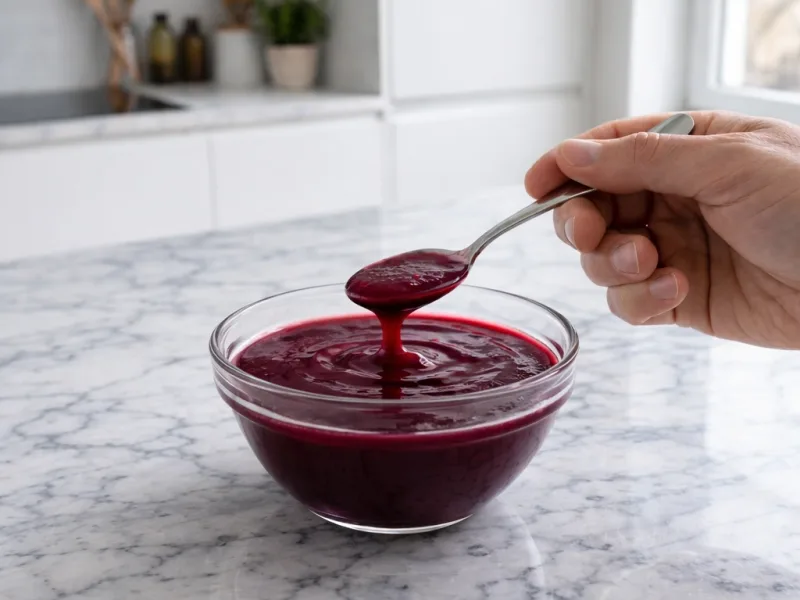
Thicken the glaze: Pour in the cornstarch slurry while whisking continuously and cook for 1 minute until the sauce thickens slightly. A proper texture test is when the sauce coats the back of a spoon and forms a slow ribbon when dripped.
Cool the sauce: Remove the saucepan from heat and allow the sauce to cool for 10 minutes until it reaches approximately 77–86 °F (25–30 °C). Cooling stabilizes the starch structure and prevents melting a chilled dessert.
Serve the glaze: Spoon approximately 2½ tbsp (40 ml) of sauce over one portion of panna cotta. The glaze should spread slowly and create a smooth surface sheen.
Extra technique, safety notes and details when you want to go deeper.
More tips & details
Vibrant Fruit Topping for Elegant Cream Desserts
A balanced berry glaze to elevate your favorite panna cotta recipe
This refined fruit preparation is the perfect finishing touch for plated desserts and is specifically designed to complement our classic panna cotta recipe. While a traditional cream base offers a delicate texture and mild vanilla profile, this tangy berry glaze introduces essential acidity and a bright burst of fruit. The practical goal of this variation is to add a sharp flavor contrast without disturbing the silky, chilled structure of the set cream. When poured at a temperature between 77–86 °F (25–30 °C), the sauce flows smoothly across the surface instead of melting the gelatin. The result is a professional-quality dessert where cool dairy and tart fruit perfectly meet in every spoonful.
Why a smooth seedless berry sauce works better for panna cotta
A smooth berry sauce provides a much more refined experience than rustic, chunky fruit compotes. By straining the puree through a fine sieve, you remove seeds and skins that would otherwise interrupt the soft mouthfeel of the dessert. This creates a glossy fruit glaze that settles gently over the cream rather than sitting in heavy fragments. The natural acidity from the mixed berries and a touch of lemon juice also serves a functional purpose: it cuts through the rich fat of the cream to refresh the palate after each bite. For desserts served in molds or ramekins, the sauce remains fluid enough to coat the sides elegantly without pooling too heavily at the bottom.
Achieving a perfect pourable glaze consistency
The defining feature of this recipe is its lightly thickened coulis texture. A small amount of starch stabilizes the fruit, creating a viscosity that remains pourable even after it has cooled. When prepared correctly, the sauce should form a thin ribbon as it falls from a spoon, slowly merging back into the surface. This indicates that the starch has properly set at approximately 194 °F (90 °C), creating a stable network that holds moisture without turning into a stiff jelly. If the mixture is overheated, the texture can become too thick and heavy rather than maintaining its signature flow.
Ideal serving conditions and finishing touches
Temperature control is key to how the glaze behaves on a chilled dessert. Keeping the sauce within a serving window of 72–86 °F (22–30 °C) allows it to flow naturally without compromising the cold temperature of the cream. At this range, the aroma of the berries becomes more pronounced and the surface maintains a beautiful, mirror-like sheen. A thin, even layer across the top is all you need for the perfect contrast. The objective is to achieve a professional balance where the cream base is still visible, preserving the clean and classic appearance of the dish.
Chef PEKIS professional tips
Chef PEKIS recommends cooling the glaze slightly before you begin plating to maintain total control over the flow. Pouring the sauce while it is still very hot can soften the gelatin in the dessert, causing the surface to lose its sharp, defined shape. When stirring your finished sauce, use gentle, slow movements rather than vigorous whisking. Too much agitation can incorporate air bubbles and dull the natural shine that gives this glaze its high-end, professional finish.
Best practices for storage and making ahead
This berry preparation is an excellent make-ahead element if handled correctly. Simply transfer the finished sauce to a sealed container and refrigerate at 39 °F (4 °C) for up to 3 days. During refrigeration, the starch structure will naturally tighten and thicken the sauce. To restore that original, silky consistency, warm it gently back to about 86 °F (30 °C) and stir until smooth. Freezing is not recommended for this particular recipe, as thawing can disrupt the starch and result in a separated, grainy texture.
Served with Chilled Cream Desserts
A spoonful of berry sauce settles quietly over a molded panna cotta, spreading in a thin layer that catches the light. This version is a strained fruit glaze rather than a chunky topping, leaving the cream surface visible beneath a glossy red sheen. The first contact of spoon to plate reveals a smooth contrast: cool dairy underneath and a silky fruit glaze above it. The texture remains fluid enough to coat each bite without covering the dessert completely.
At the table, the sauce changes how the dessert behaves on the palate. Cream alone feels soft and mild, but the fruit layer brings brightness that resets the taste between bites. The surface of the glaze shows a clear reflective shine, a small sign that the fruit puree settled properly after straining. When the spoon passes through, the sauce moves with it instead of separating, leaving a thin trail across the plate.
A Quiet Finish for Light Desserts
This kind of glaze fits naturally into a simple dessert course, especially when served after a full meal where richness needs balance. The fruit note stays gentle rather than dominant, allowing the cream base to remain the focus. When placed alongside a neutral dessert, the color alone signals freshness before the first taste.
In colder months the sauce adds brightness to otherwise mellow desserts, while in warmer seasons it feels clean and refreshing. The smooth texture matters here: a glossy, seedless surface keeps the dessert elegant and easy to eat. Each spoonful carries a small amount of fruit and cream together, creating a steady balance that holds from the first bite to the last.
Questions
Why is my berry sauce for panna cotta too thick or jam-like?
Berry sauce becomes too thick when cornstarch gelatinizes too strongly from prolonged heating. Once starch granules absorb excess liquid above about 194 °F (90 °C), the sauce tightens and behaves more like jam than a glaze. The fix is to whisk in 1–2 tsp water (5–10 ml) while gently reheating. The correct texture forms a slow ribbon from a spoon and spreads easily across a chilled dessert without holding stiff peaks. Chef tip: Remove the saucepan from heat immediately after the sauce coats the back of a spoon; continued heat will thicken it rapidly.
How do I know if berry sauce for panna cotta is smooth enough?
The sauce is smooth enough when no seeds or pulp remain after straining and the surface appears glossy and uniform. A proper coulis should flow without graininess and leave a thin coating on a spoon. If tiny particles are visible or the texture feels gritty, the puree needs a second pass through a fine mesh sieve. A finished glaze should look completely even and reflective when poured. Chef tip: Use the back of a spoon to press gently through the sieve; excessive pressure pushes seed fragments into the sauce.
Can I make berry sauce for panna cotta without cornstarch?
Berry sauce can thicken naturally through fruit reduction instead of starch. Simmer the blended berries slightly longer to evaporate water and concentrate fruit solids. This creates a lighter, more fluid coulis with a clean berry flavor. However, the sauce will be less stable and may separate if cooled quickly. The correct reduction is reached when the sauce lightly coats the spoon but still flows freely. Chef tip: Raspberries and strawberries reduce more effectively because they contain more natural fruit solids.
Why does my berry sauce separate or look watery after cooking?
Separation occurs when starch dispersion or fruit emulsification is incomplete. If the cornstarch slurry is not whisked fully into hot puree, starch particles clump and release liquid as the sauce cools. Proper mixing at a gentle simmer ensures even thickening. A stable glaze appears smooth with no liquid pooling around the edges. If separation occurs, gently reheat and whisk until the texture becomes uniform again. Chef tip: Always whisk the slurry into the sauce at a simmer, never into cold puree.
What temperature should berry sauce be when poured over panna cotta?
Berry sauce should be poured at about 77–86 °F (25–30 °C) so it flows evenly without melting the dessert. At higher temperatures the gelatin structure softens and the panna cotta surface loses its shape. At cooler temperatures the sauce thickens and spreads poorly. The correct serving cue is a glossy sauce that drips slowly from a spoon and spreads in a thin layer across the chilled cream. Chef tip: Let the sauce rest about 10 minutes after cooking; this short cooling window stabilizes the texture for plating.
Recivelle · /recipe/best-panna-cotta-berry-sauce-perfect-topping