Base recipe: 6 servings
Your kitchen companion
Ingredients
Check off ingredients as you prepare them.
Follow the steps at your own pace.
Method
Bloom the gelatin: Place 2 tsp powdered gelatin (6 g) in a small heatproof bowl and add 2 tbs cold water (30 ml). Stir gently with a teaspoon and let stand for 5 minutes at room temperature until the gelatin absorbs the liquid and forms a soft gel.
Combine the dairy base: Pour 1 ⅔ cups heavy cream (400 ml) and ¾ cup whole milk (200 ml) into a medium saucepan (2–3 qt / 2–3 L capacity). Add ⅓ cup + 1 tbs granulated sugar (70 g) and ¼ tsp fine sea salt (1 g). Place the saucepan on the stovetop over medium heat.
Heat the mixture: Stir continuously with a silicone spatula while heating until the liquid reaches 180–185 °F (82–85 °C). Use an instant-read thermometer if available. The mixture should steam but must not boil. Boiling can destabilize milk proteins and produce a grainy texture.
Dissolve the gelatin: Remove the saucepan from the heat. Immediately add the bloomed gelatin (2 tsp / 6 g gelatin with 2 tbs / 30 ml water) to the hot dairy mixture. Whisk gently for 30–40 seconds until the gelatin dissolves completely and no granules remain.
Add espresso and vanilla: Pour in ⅓ cup cooled espresso (80 ml) and ½ tsp vanilla extract (2 g). Stir slowly with a whisk for 20 seconds until the mixture becomes completely uniform in color.
Strain the mixture: Place a fine-mesh sieve over a heatproof bowl and pour the mixture through it. This removes foam and ensures a smooth custard texture. The liquid should appear glossy and light mocha in color.
Fill the serving glasses: Arrange six glass dessert cups or ramekins on a countertop or marble surface. Carefully pour approximately 4.6 oz (130 g) of the mixture into each cup using a ladle or measuring jug.
Cool at room temperature: Allow the filled cups to rest undisturbed at room temperature for 20 minutes. This step prevents condensation from forming during refrigeration and helps the gelatin structure begin stabilizing.
Chill the panna cotta: Transfer the cups to a refrigerator set to 39 °F (4 °C). Chill for at least 240 minutes (4 hours) until fully set. The surface should appear smooth and firm but still tremble slightly when gently shaken.
Serve the dessert: Remove from the refrigerator and allow the cups to stand at room temperature for 5–8 minutes before serving. This short rest softens the gel structure and enhances the espresso aroma.
Extra technique, safety notes and details when you want to go deeper.
More tips & details
Mastering Espresso-Infused Cream Desserts
Why this bold espresso variation exists
This specialized preparation adapts the classic logic found in our panna cotta recipe by replacing a portion of the neutral dairy base with freshly brewed espresso. This version solves a specific culinary goal: introducing a robust, roasted aroma without compromising the reliable gelatin-set method that produces the perfect "wobble." The natural acidity of the coffee cuts through the richness of the heavy cream, creating a sophisticated dessert for those who prefer a more mature, structured flavor. When chilled to 39 °F (4 °C), the mixture transforms into a silky gel that holds its shape beautifully while remaining delicate on the palate.
Defining the flavor profile and serving style
This coffee-driven dessert features a distinctive light mocha hue and a deep roasted scent that truly blooms when served just slightly above refrigerator temperature. After a minimum of four hours in the cold, the surface should be glossy and perfectly level—a clear sign of a successful set. Most enthusiasts refer to this style as a coffee panna cotta, especially when presented in individual glass ramekins. While the structure is stable enough for elegant plating, it is best enjoyed cool; leaving the dessert at room temperature for more than 15 minutes will gradually soften its signature consistency.
How espresso influences the dairy base
While swapping milk for espresso shifts the flavor, the foundational liquid-to-gelatin ratio remains consistent with our professional standards. The organic acids in the coffee bond with the milk fats, ensuring a more intense flavor release as the dessert melts in your mouth. Success depends on controlled heating to between 180–185 °F (82–85 °C). This precise range is hot enough to dissolve the sugar and gelatin completely but gentle enough to prevent boiling. The result is a smooth, custard-like finish that provides a clean spoon cut every time.
Key texture cues for the perfect set
To know your dessert has reached professional quality, look for these visual indicators:
- Glossy surface finish – signals that the gelatin was distributed evenly.
- Soft spoon resistance – the cream yields easily without falling apart.
- Consistent mocha color – ensures the espresso was fully integrated into the dairy.
- Sharp, clean edges – confirms the gel network has fully matured during chilling.
Professional tips for flavor clarity
To protect the delicate aromatics of the coffee, let the dairy mixture cool slightly before stirring in your espresso. Excessive heat can "scorch" the coffee notes, leading to a bitter or flat aftertaste. Additionally, wait until the mixture is lukewarm before pouring it into your molds to prevent condensation from forming on the surface. Never let the cream reach a rolling boil; high heat can destabilize the proteins, resulting in a grainy texture rather than the intended silkiness.
Storage and make-ahead serving advice
This espresso treat is an excellent candidate for make-ahead hosting. Once set, keep your portions covered and refrigerated at 39 °F (4 °C) for up to three days. The structure remains stable and maintains its velvety mouthfeel throughout this period. For the best tasting experience, let each portion sit at room temperature for 5–8 minutes before serving. This short rest allows the cold fats to soften just enough to amplify the espresso aroma without weakening the dessert's structural integrity.
Served Straight from the Glass
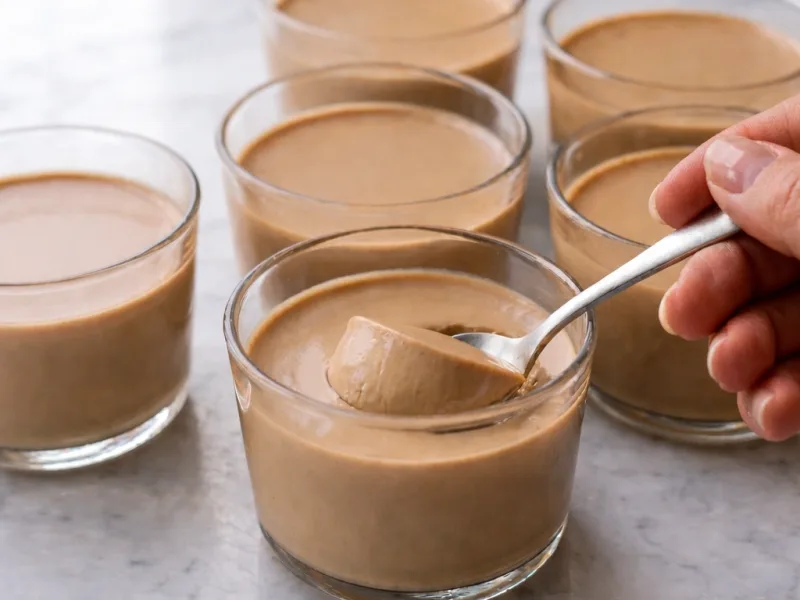
Coffee panna cotta appears here as a chilled custard set with gelatin rather than eggs, giving it a clean, delicate structure that holds softly in a glass. At the table, the surface shows a faint sheen and a steady silky wobble when the spoon touches the edge. The aroma rises gently from the cream and coffee together, neither sharp nor sweet, just balanced enough to linger. The first spoonful moves easily through the custard, leaving a smooth line where the spoon passes and a pale mocha color that stays even from top to base.
The texture matters most at this moment. Each spoonful should lift without breaking or clinging, forming a small mound that relaxes back into the glass. The dairy carries the espresso flavor in a calm way, allowing the roasted notes to remain clear without becoming bitter. This balance makes the dessert feel light on the palate even though the cream gives it body.
When a Quiet Dessert Fits the Table
This style of dessert fits naturally at the end of a meal where the table slows down rather than grows busy. The glass cups remain simple and unobtrusive, letting the pale brown custard stand out against the marble or wood beneath them. As guests reach for a spoon, the surface shifts slightly and reveals its soft custard texture, a small signal that the set is correct.
Coffee panna cotta works especially well when served after a rich main course, where something cool and smooth helps settle the palate. The flavor is present but never overwhelming, which allows it to accompany conversation rather than interrupt it. On a shared table, the glasses line up neatly, each portion identical, each one offering the same calm finish to the meal.
The last few spoonfuls tend to show the clearest character of the dessert. The custard remains uniform and glossy, and the roasted coffee note stays gentle against the cream. That consistency is the quiet sign of a properly prepared coffee panna cotta, one that keeps its shape while remaining tender to the spoon.
Questions
Why did my coffee panna cotta not set after chilling?
Coffee panna cotta fails to set when the gelatin ratio, blooming step, or chilling time is incorrect. Gelatin must hydrate in cold water before being dissolved into hot dairy around 180–185 °F (82–85 °C). If it is added dry, boiled, or the dessert chills less than four hours, the gel network forms weakly and the custard remains loose. A properly set portion should wobble gently but hold a clean spoon indentation without flowing. Chef tip: If the surface still ripples like liquid after 4 hours, refrigerate another 60 minutes before serving.
Can I make coffee panna cotta with instant coffee instead of espresso?
Yes, coffee panna cotta works with instant coffee when it is fully dissolved and concentrated enough to balance the cream. Instant coffee is weaker than espresso, so dissolve 2 tsp instant coffee (≈4 g) in ⅓ cup hot water (80 ml) before mixing it into the dairy base. Undissolved granules or weak coffee produce a flat flavor. The mixture should taste slightly stronger before chilling because dairy fat softens the coffee intensity. Chef tip: If the coffee aroma fades after chilling, increase the instant coffee slightly in the next batch while keeping the liquid amount the same.
Why is my coffee panna cotta rubbery instead of silky?
Coffee panna cotta becomes rubbery when the gelatin concentration is too high relative to the liquid. Gelatin forms a protein network during chilling, and excess gelatin tightens that network into a firm gel rather than a soft custard. The correct texture should tremble lightly when the cup is nudged. If the dessert feels springy or slices clean like jelly, the gelatin amount was too high. Chef tip: For silky texture, keep gelatin close to 2 tsp (6 g) per 3 cups liquid (≈700 ml).
Why does coffee panna cotta taste bitter?
Coffee panna cotta tastes bitter when the espresso is overheated or brewed too strong. High heat evaporates delicate coffee aromatics and leaves harsh roasted compounds behind. Espresso should be stirred into the dairy after the pan is removed from heat. Taste the liquid mixture before chilling: it should be pleasantly roasted and slightly sweet, not sharp or burnt. Chef tip: If bitterness appears after chilling, serve the dessert slightly warmer by resting it 5–8 minutes at room temperature.
How do I know when coffee panna cotta is fully set?
Coffee panna cotta is fully set when the center shows a gentle wobble but no liquid movement. After chilling at 39 °F (4 °C) for about four hours, the surface should look glossy and smooth. Press the side of the cup lightly; the custard should move as a single soft mass rather than ripple like a liquid. A spoon should leave a smooth indentation without collapsing the structure. Chef tip: If the spoon cut fills back with liquid, the dessert needs another 30–60 minutes of chilling.
Can coffee panna cotta be made without gelatin?
Traditional coffee panna cotta cannot achieve the same silky custard structure without gelatin. Gelatin creates the delicate gel network that allows the dessert to hold shape while remaining creamy. Substitutes such as agar agar set more firmly and produce a slightly brittle texture. If using agar, the dessert will slice cleanly rather than wobble softly. Chef tip: Agar versions should set within 1–2 hours, but the texture will be noticeably firmer than classic panna cotta.
Recivelle · /recipe/coffee-panna-cotta-silky-espresso-egg-free-custard