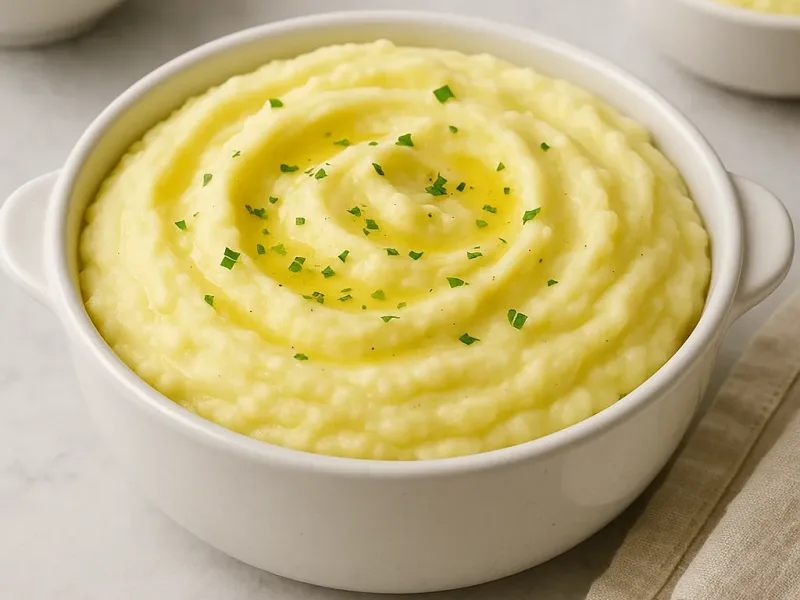
Base recipe: 6
Your kitchen companion
Ingredients
Check off ingredients as you prepare them.
Follow the steps at your own pace.
Method
Boil the potatoes: Place the peeled and chopped potatoes into a large pot of cold water with 1 tbsp (15 g) of salt. Bring to a boil over medium-high heat, then reduce the heat and simmer for 20–25 minutes until the potatoes are tender when pierced with a fork.
Drain thoroughly: Drain the potatoes in a colander and let them sit for 2–3 minutes to allow excess steam to escape. This step ensures the mashed potatoes will not become watery.
Mash the potatoes: Use a potato ricer or masher to mash the potatoes directly in the warm pot. Avoid using a blender or food processor, as this can make the texture gluey.
Heat the dairy mixture: In a small saucepan, gently warm the milk (240 ml) and heavy cream (120 ml) over low heat until just hot but not boiling. This prevents the potatoes from cooling down during mixing.
Combine and mix: Slowly pour the warm milk and cream mixture into the mashed potatoes, stirring gently with a wooden spoon. Add the melted butter (115 g) gradually, mixing until the texture is smooth and creamy.
Season and finish: Stir in white pepper (2 g) and adjust seasoning with more salt if needed. The mashed potatoes should be light, fluffy, and rich.
Garnish and serve: Transfer the mashed potatoes to a serving bowl. Top with a small knob of butter or sprinkle with chopped parsley for presentation. Serve hot.
Extra technique, safety notes and details when you want to go deeper.
More tips & details
The Secret to Perfectly Smooth Mashed Potatoes
Discover the creamy texture and rich flavor that make this comfort food timeless
Soft, velvety, and irresistibly rich, mashed potatoes are the ultimate comfort dish—simple ingredients elevated to perfection. The secret lies in balancing buttery smooth texture, gentle seasoning, and the perfect blend of potatoes, milk, and cream. Every spoonful melts in your mouth, making it a staple for both everyday meals and festive tables.
Selecting the right potatoes is the first key to success. Starchy varieties such as Russet or Yukon Gold ensure a light and airy consistency, while waxy types can make the texture too dense. Heating the milk and butter before adding them keeps the mixture silky instead of gluey, maintaining that irresistible creamy texture. The technique is as important as the ingredients—mash while the potatoes are still warm, and mix gently to keep the airiness intact.
The origin of mashed potatoes dates back to 17th-century Europe, where French and English chefs began turning boiled potatoes into elegant purées. From French purée de pommes de terre to the classic American mashed potatoes, the dish evolved through centuries, always symbolizing warmth and togetherness. Today, it’s a beloved side dish worldwide—served alongside roasts, poultry, or grilled vegetables, embodying the essence of homemade comfort food.
Why you’ll love this recipe
- Super creamy texture that’s smooth, rich, and indulgent
- Easy to make with just a few basic ingredients
- Perfect pairing for meat, fish, or vegetarian dishes
- Naturally gluten-free and easy to adapt for different diets
- Family favorite for both holidays and weeknight dinners
Storage and Make-Ahead Tips
Mashed potatoes can easily be made ahead and stored without losing their creaminess. Prepare them up to two days in advance, then keep in an airtight container in the refrigerator. When ready to serve, warm them gently on the stove or in the oven with a splash of warm milk or cream to restore the texture. Avoid microwaving directly to prevent uneven heating. For long-term storage, mashed potatoes freeze well—divide into portions, freeze, then thaw overnight and reheat slowly for the best results.
The Role of Ingredients in Achieving the Ideal Creaminess
Each ingredient contributes to the perfect balance:
- Potatoes: Provide structure and starch for the smooth base.
- Butter: Adds depth and luxurious richness.
- Milk or Cream: Brings softness and binds all flavors together.
- Salt: Enhances sweetness and balances the overall taste.
- Optional herbs or garlic: Add subtle aromatic notes for variation.
Culinary Heritage and Global Influence
From rustic Irish dinners to modern gourmet kitchens, mashed potatoes remain a universal favorite. In French cuisine, they’re refined to a velvety purée, while in American homes, they’re often served with gravy or melted butter. The versatility of the dish allows it to fit seamlessly into countless cuisines and occasions—proving that simplicity, when executed perfectly, never goes out of style.
For a delicious European version, explore our Mashed Potatoes Recipe – Creamy Homemade Mashed Potatoes and discover how this classic side can become the star of your table.
Chef’s Tip
Warm every ingredient before combining to preserve the creamy texture and prevent the mash from becoming stiff. For an ultra-smooth finish, use a potato ricer instead of a masher and fold in the butter last for that glossy, restaurant-style sheen.
Common Mistakes to Avoid
- Overmixing – makes the texture gluey
- Adding cold dairy – cools the potatoes and stiffens them
- Skipping drainage – excess water ruins the consistency
- Mashing before fully cooked – leads to lumps
- Adding all liquid at once – can make it too thin
Perfect mashed potatoes combine precision, patience, and premium ingredients. The result is a dish that’s smooth, comforting, and timeless—a side that steals the show at every meal.
Perfect Creamy Mashed Potatoes for Every Occasion
Smooth, buttery, and irresistibly rich, Mashed Potatoes bring together simple ingredients in a way that elevates any meal. The combination of fluffy potatoes, warm milk, and melted butter creates a texture that’s both light and luxurious. Every spoonful melts in your mouth, making it one of the most loved comfort foods across the world. Its balance of creaminess and flavor turns a humble side dish into something extraordinary.
Easy to Make, Hard to Resist
In just 40 minutes, this recipe transforms a few everyday ingredients into a dish that feels indulgent yet effortless. With only 6 servings and minimal preparation, it’s ideal for both busy weeknights and festive gatherings. Using the right potato variety and proper technique ensures perfect consistency every time—never lumpy, never gluey, always velvety smooth. The method is straightforward: boil, mash, and blend while still warm for the best texture and flavor retention.
Flexible for Every Diet and Taste
The Mashed Potatoes Recipe adapts beautifully to different dietary preferences. It’s naturally gluten-free, and simple swaps like plant-based butter or non-dairy milk make it suitable for vegan or lactose-free diets without compromising the creamy result. For those who prefer a lighter version, olive oil can replace butter, while roasted garlic or herbs add aromatic depth.
Why It Stands Out
What makes these mashed potatoes truly special is their versatility and comforting appeal. They pair perfectly with roasted meats, fish, or vegetable mains, fitting seamlessly into both everyday meals and holiday feasts. Their smooth, cloud-like texture and balanced buttery flavor turn them into the ultimate companion for festive dinners, family gatherings, or elegant dining. No matter the occasion, these super creamy mashed potatoes always deliver warmth, comfort, and timeless satisfaction.
Questions
What type of potatoes work best for mashed potatoes?
The best choice is starchy potatoes like Russet or Yukon Gold. They create a light, fluffy, and creamy texture because they absorb butter and milk evenly. Avoid waxy potatoes such as Red Bliss, which can result in a dense or sticky mash.
Can I make mashed potatoes without dairy?
Yes, use plant-based butter and unsweetened oat or almond milk. These alternatives maintain creaminess while keeping the recipe lactose-free or vegan. Warm the substitutes before mixing to prevent a grainy texture and ensure smooth blending.
Why are my mashed potatoes gluey or sticky?
Overmixing or using a blender or food processor causes excess starch release, leading to gluey potatoes. For the perfect texture, use a potato masher or ricer and mix gently with warm milk and butter until just combined.
How can I make mashed potatoes ahead of time and reheat them?
Prepare the potatoes and refrigerate them for up to 2 days in a sealed container. Reheat slowly on the stove with a splash of warm milk or cream to restore smoothness. Avoid microwaving directly, as it can cause uneven texture and dryness.
Can I freeze mashed potatoes?
Yes, mashed potatoes freeze well for up to 3 months. Portion them into airtight containers or freezer bags. To thaw, place in the refrigerator overnight, then reheat slowly on low heat with a bit of butter or milk for a creamy consistency.
What toppings go well with mashed potatoes?
Classic toppings include melted butter, chopped parsley, chives, or gravy. For added richness, try a swirl of cream cheese or roasted garlic. Serve them in a warm dish with a smooth surface for an elegant presentation.
Is this recipe gluten-free and suitable for special diets?
Yes, mashed potatoes are naturally gluten-free. For a vegan version, use plant-based dairy alternatives. For low-sodium diets, reduce added salt and season with herbs like rosemary or thyme for extra flavor without sodium.
Recivelle · /recipe/mashed-potatoes-recipe-thats-super-creamy