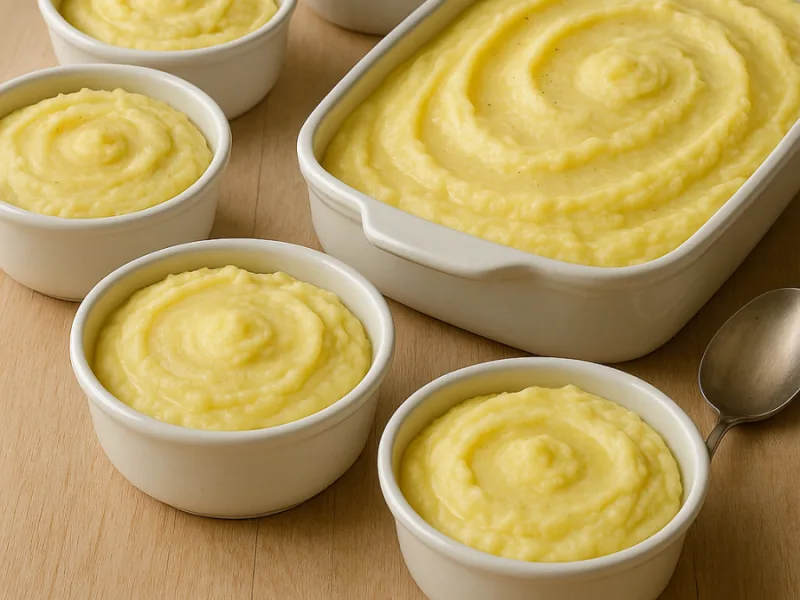
Base recipe: 6 servings
Your kitchen companion
Ingredients
Check off ingredients as you prepare them.
Follow the steps at your own pace.
Method
Peel the potatoes and cut them into even chunks, approximately 2-inch pieces. They should feel firm and dry to the touch.
Place the potato pieces into a large pot and cover with cold water until submerged by about 2 inches. Add ½ teaspoon of the salt. The water should look slightly cloudy from the starch.
Bring to a boil over high heat, then reduce to medium and simmer for 15–20 minutes. The potatoes are ready when they break apart easily when pierced with a fork and their edges look slightly frayed.
Drain the potatoes thoroughly and return them to the hot pot. Let them sit uncovered for 2–3 minutes to allow excess moisture to evaporate. The surface of the potatoes should appear dry and slightly flaky.
While the potatoes rest, warm the milk, cream, and butter in a small saucepan over low heat until the butter is melted and the mixture is steaming, not boiling. It should give off a rich, buttery aroma.
Mash the potatoes using a potato masher or ricer until completely smooth. The texture should look fluffy and lump-free.
Gradually pour in the warm milk and cream mixture, stirring gently with a spatula or wooden spoon. The mashed potatoes will become glossy, creamy, and thick but not runny.
Stir in the remaining 1 teaspoon of salt and the black pepper. Taste and adjust seasoning if necessary. The finished mash should look light, velvety, and swirl easily from the spoon.
Extra technique, safety notes and details when you want to go deeper.
More tips & details
The Best Creamy Mashed Potatoes for Holiday Dinners and Everyday Comfort
How to make mashed potatoes taste like a restaurant version
There’s something profoundly comforting about a bowl of creamy mashed potatoes made from scratch—a dish that feels like home, looks like luxury, and tastes like a warm embrace. From the soft billow of velvety potatoes to the rich, buttery aroma that fills the kitchen as you stir, this is not just a side dish—it’s the emotional centerpiece of any comforting meal. The way the mashed potatoes glide across your plate, holding their shape but melting instantly on your tongue, is what sets this recipe apart. Smooth but not heavy, rich without being greasy, and seasoned with a delicate balance that enhances the natural flavor of the potatoes themselves—this is the kind of recipe I trust at any gathering, from casual family dinners to festive holiday spreads.
What truly makes this version the best mashed potatoes recipe I’ve ever developed is its balance of flavor, texture, and ease. I tested several combinations of butter-to-cream ratios, potato types, and mixing techniques until the consistency was just right—silky without becoming gluey, fluffy without losing body. The process is simple, yet every step matters. From choosing starchy potatoes like Yukon Golds to warming the dairy before adding it in, the details turn a humble dish into something memorable.
Why this mashed potatoes recipe is a true comfort food favorite
This recipe earns its place as a go-to comfort food dish thanks to its lush texture and irresistibly rich flavor. The moment the spoon sinks into the pile of mash, you can see the gentle folds—smooth, creamy, and glowing from the melted butter. There’s a soft tang from the cream and just enough seasoning to round everything out without overpowering the natural depth of the potatoes. When paired with roasted meats or simple vegetables, it creates a satisfying contrast of textures and temperatures that feels indulgent but familiar.
I find myself making this particular recipe for any occasion that calls for warmth and togetherness. It’s my staple for Thanksgiving, a must alongside Sunday roast chicken, and the one dish everyone requests when comfort is on the menu. I’ve even made it as the base for elevated presentations like mashed potato quenelles under slow-braised short ribs—it holds its own, every single time.
What to serve with mashed potatoes for a complete meal
These homemade mashed potatoes are endlessly versatile. Pair them with:
- Oven-roasted chicken or turkey for a classic pairing
- Garlic butter steak or lamb chops for an indulgent twist
- Slow-cooked beef stew or pot roast where the mash soaks up every drop of the sauce
- Roasted root vegetables for a comforting vegetarian spread
- Pan-fried sausages for a simple yet satisfying weeknight dinner
If you’re planning a holiday menu, these easy creamy mashed potatoes make the perfect foundation for gravy, cranberry sauce, or herbed compound butters. Their smooth surface acts as a canvas for endless flavor combinations.
What makes mashed potatoes so creamy and smooth?
Achieving that restaurant-style creaminess comes down to two things: potato choice and technique. I use Yukon Golds because they strike the perfect balance between starch and moisture, offering both flavor and fluff. After boiling, they’re passed through a ricer (never a food processor!) while still warm, which creates a fine, airy base. The warm butter and cream mixture is gently folded in, not stirred, to keep the structure light and avoid overworking the starch.
I’ve also learned through multiple trials that letting the potatoes steam dry for a minute or two before mashing is essential—it prevents a watery mash and helps the butter absorb more evenly. It’s these little insights that elevate this homemade mashed potatoes recipe from good to unforgettable.
Best occasions to serve mashed potatoes
Although perfect as a weeknight dinner side, this recipe truly shines during:
- Thanksgiving or Christmas dinners, where it complements bold main dishes
- Romantic date nights, served alongside filet mignon and red wine
- Comfort meals after a long day—because few things soothe quite like mashed potatoes
- Dinner parties, when plated with finesse under slow-braised meat or grilled mushrooms
Its universal appeal means it fits as seamlessly into casual meals as it does fine dining. Whether you’re serving two or ten, it scales beautifully and brings warmth to any table.
Why this is the only mashed potatoes recipe you’ll ever need
This recipe has earned its place as a favorite in my kitchen not because it reinvents the wheel, but because it perfects it. Every time I serve it, I get the same reaction—people pause, smile, and go back for seconds. It’s dependable, rich in flavor, and deeply satisfying. With the right balance of butter and cream, the ideal potato texture, and just enough salt to enhance without overpowering, it delivers classic mashed potatoes done exactly right.
Whether you're looking for a holiday dinner side dish, an easy recipe for mashed potatoes, or simply that one version that finally delivers on texture and flavor, this is it. It's not just about boiling and mashing—it's about intention. From selecting the right ingredients to savoring the final spoonful, this dish is built on care, not shortcuts.
I hope this recipe brings as much joy to your table as it has to mine.
Perfect Your Comfort Food Side Dish with Creamier, Fluffier Mashed Potatoes
Mashed potatoes are a staple across countless cuisines, but turning them into the ultimate creamy side dish requires more than just boiling and mashing. From ingredient selection to mixing techniques, subtle shifts in method can elevate the texture, deepen the flavor, and enhance overall satisfaction. Whether you're preparing a holiday dinner side dish, a weeknight comfort meal, or simply aiming to refine a traditional favorite, this guide will show you how to upgrade your mashed potatoes with expert insights, practical advice, and hands-on experience.
Professional tips to make mashed potatoes extra smooth and flavorful
Creating the best mashed potatoes starts with a few key professional techniques that maximize creaminess and depth of flavor without overcomplicating the process.
- Use starchy potatoes like russets for a fluffier, drier base that absorbs dairy more effectively. Yukon Golds offer a naturally buttery flavor but yield a slightly denser texture.
- Warm your dairy before incorporating it. Cold milk or cream shocks the potatoes and can cause gumminess. Heated dairy blends smoothly and enhances flavor absorption.
- Mash while hot, mix while warm. Potatoes release starch more gently when hot. Waiting too long allows them to cool, which can make the final texture gluey.
- Steam dry the potatoes before mashing. Letting them sit in the pot uncovered for 2–3 minutes after draining ensures excess water evaporates. This small step significantly improves texture.
I’ve tested different mashing tools and always return to the ricer for ultra-smooth results. If you prefer a rustic mash, a masher works well—but avoid electric mixers, which quickly overwork the starch and ruin the texture.
Common mistakes to avoid when making mashed potatoes
Even seasoned cooks can fall into familiar pitfalls. Here's what to avoid for reliably perfect results:
- Overmixing: This is the number one texture killer. Stirring too aggressively after adding liquid makes the potatoes dense and sticky.
- Undercooking the potatoes: If the centers remain firm, you'll struggle to mash them evenly. The potatoes should break apart easily when pierced.
- Using the wrong salt timing: Add salt during boiling to flavor the interior, not just the surface. If you season only at the end, the mash will taste flat.
- Skipping the dry-out phase: Mashing wet potatoes results in a watery dish that can’t hold the creamy additions.
In my own kitchen, I've found that even small distractions—like stepping away too long during boiling—can shift the final texture. Staying focused through those key moments pays off.
Healthier alternatives and ingredient substitutions
Looking for ways to make mashed potatoes dairy-free or lower in saturated fat? It’s possible to substitute without losing the luxurious texture:
- Use olive oil instead of butter (6 tbsp = 85 g) for a lighter, slightly fruity finish.
- Replace whole milk and cream with unsweetened oat milk and full-fat coconut milk for dairy-free richness.
- Add roasted garlic or sautéed leeks to deepen flavor naturally instead of relying solely on butter.
These swaps are especially useful for serving guests with dietary needs, and they still produce a rich, creamy mashed potato dish that feels indulgent and satisfying.
Easy ways to add flavor variety to mashed potatoes
Mashed potatoes are a blank canvas, and with a few creative touches, you can easily adapt them for different menus or preferences:
- Garlic mashed potatoes: Sauté minced garlic in butter before adding the dairy. The aroma alone is worth the extra step.
- Herbed mashed potatoes: Mix in finely chopped chives, parsley, or thyme just before serving for freshness and color.
- Cheesy mashed potatoes: Stir in ½ cup of grated parmesan or cheddar during the final mix for an extra layer of creaminess.
For holiday tables, I often fold in horseradish or grainy mustard to add depth that pairs beautifully with roast beef or ham. It's an easy way to create a signature twist.
The role and benefits of each ingredient
Each element of this recipe serves a clear purpose. Understanding their function helps fine-tune taste and texture:
- Russet potatoes: High-starch content creates fluffiness and absorbs liquid beautifully.
- Whole milk and heavy cream: Offer richness and a smooth mouthfeel. Cream adds body while milk lightens the texture.
- Unsalted butter: Enhances flavor and creaminess while allowing full control of salt levels.
- Salt and black pepper: Balance the richness and brighten the flavor without overwhelming the natural sweetness of the potato.
During testing, I adjusted ratios to find the ideal 1:2 fat-to-liquid balance. Too much butter masks flavor; too little makes the mash taste flat.
How to store and reheat mashed potatoes without losing texture
Mashed potatoes can be made ahead, but they’re sensitive to reheating. Follow these best practices:
- To store: Transfer to an airtight container and refrigerate for up to 3 days. Add a small pat of butter on top to prevent drying.
- To reheat on the stove: Add a splash of milk and gently rewarm over low heat, stirring slowly to prevent sticking.
- To reheat in the oven: Cover with foil and bake at 160°C (325°F) for 20–25 minutes, adding a bit of cream if the texture looks dry.
Avoid microwaving large batches directly—hot spots develop quickly and the starch seizes up. When I reheat for guests, I always refresh with a touch of warm dairy to restore the original creaminess.
Common Questions
How do I know when the potatoes are fully cooked?
They should easily break apart when pierced with a fork and have slightly frayed edges. The centers should feel fluffy, not dense.
Can I make mashed potatoes ahead of time?
Yes. Prepare them up to 2 days in advance and reheat gently with added milk or cream to restore texture.
What’s the best tool for mashing?
A potato ricer produces the smoothest result. A masher works well too, but avoid food processors—they make the mash gluey.
How can I fix runny mashed potatoes?
Stir in instant potato flakes a tablespoon at a time, or return them to the pot over low heat and stir gently until thickened.
Should I peel the potatoes before boiling?
Yes, for the smoothest texture. However, if you prefer a rustic version, leave the skins on and mash lightly for more texture and fiber.
With just a few refinements in method and ingredients, your mashed potatoes can move from everyday side dish to show-stopping comfort food. These small adjustments and careful steps make all the difference. Whether you're cooking for family or preparing a special meal, these expert techniques will help you deliver perfectly creamy mashed potatoes every time.
Recivelle · /recipe/mashed-potatoes-recipe-creamy-homemade-mashed-potatoes