Base recipe: 4 servings
Your kitchen companion
Ingredients
Check off ingredients as you prepare them.
Follow the steps at your own pace.
Method
Heat the pan: Place a 28 cm (11 inch) skillet over medium heat (320–340°F / 160–170°C surface) and add 1 tbsp (15 ml) olive oil and 2 tbsp (30 g) butter until melted and lightly foaming.
Cook the chicken: Add 1.3 lb (600 g) chicken pieces in a single layer and cook for 5–6 minutes, turning once, until lightly golden; remove when exterior is set but interior still slightly undercooked.
Cook the onion: Add 2.8 oz (80 g) chopped onion to the same pan and cook for 3 minutes until soft and translucent with no browning.
Add garlic: Add 0.35 oz (10 g) garlic and cook for 30 seconds until fragrant; stop before color develops to avoid bitterness.
Cook mushrooms: Add 8.8 oz (250 g) sliced mushrooms and cook for 6–8 minutes until released moisture evaporates and surfaces begin to brown; pan should appear mostly dry.
Add liquid: Pour in 3/4 cup (200 ml) chicken stock, scrape the pan base, and simmer for 3 minutes until slightly reduced and aromatic.
Add cream and seasoning: Add 2/3 cup (150 ml) cream, 1 1/2 tsp (8 g) salt, 1/2 tsp (3 g) pepper, and 1 tsp (5 g) Dijon mustard; maintain gentle heat (below boiling) to prevent separation.
Return chicken: Add cooked chicken back and cook for 6–8 minutes until internal temperature reaches 165°F (75°C) and sauce thickens to coat a spoon (nappe consistency).
Finish: Add 1 tbsp (5 g) parsley and stir; sauce should be smooth and evenly coating all components.
Extra technique, safety notes and details when you want to go deeper.
More tips & details
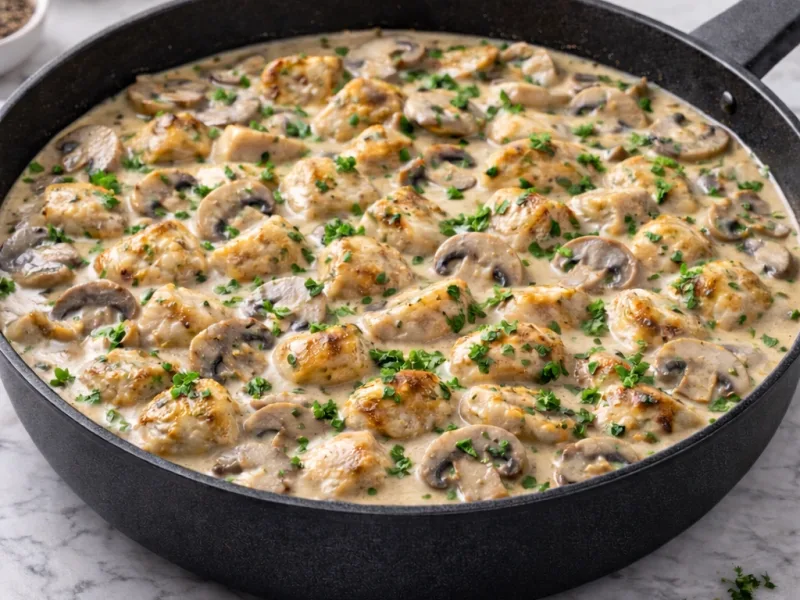
One-pan creamy chicken with mushrooms in rich sauce
A balanced skillet dinner with controlled texture and stable sauce
A properly executed creamy chicken mushroom skillet delivers a cohesive result where each piece is evenly coated and the sauce remains stable throughout serving. The preparation serves as a reliable creamy chicken mushroom skillet dinner, with the defining marker being a sauce that clings rather than pools. When heat is managed correctly, moisture released from mushrooms evaporates before cream is introduced, preventing dilution and ensuring a rich sauce coating chicken evenly.
Even cooking creates tender chicken and consistent structure
Uniform 3 cm cuts ensure synchronized cooking, which becomes visible when all pieces reach the same light golden surface at the same time. This condition matters because uneven sizing leads to dry edges or undercooked centers. The dish is on track when the chicken remains firm yet yields easily under light pressure, indicating retained moisture and controlled protein contraction.
Sauce stability depends on reduction and fat integration
The sauce develops through reduction and fat binding, not thickening agents. As liquid reduces, the fat from cream and butter integrates into a smooth phase, creating a coating consistency. This process directly affects mouthfeel: insufficient reduction leads to separation, while proper reduction results in a creamy skillet chicken with mushrooms that lightly coats the back of a spoon. The visual cue is a slow-moving surface with no visible water separation.
Balanced composition supports practical serving combinations
The skillet format allows flexible plating without structural collapse. When paired with a neutral base such as Mashed Potatoes Recipe That’s Super Creamy, the sauce distributes evenly, enhancing the overall plate without overpowering it. The dish maintains integrity when transferred, with mushrooms and chicken remaining evenly dispersed rather than sinking or separating.
Variation in format changes texture perception
The same base profile can shift depending on the starch or format used. When adapted into a pasta-based dish such as Chicken Alfredo Pasta Recipe – Creamy, Easy & Delicious, the sauce binds differently due to starch interaction, resulting in a thicker, more enveloping texture. In contrast, the skillet version retains a lighter coating that highlights individual components.
Chef PEKIS recommends
- Heat Control: Lower the heat after adding the cream to prevent rapid boiling, as high heat can break the emulsion and create a grainy texture.
- Moisture Management: Allow the mushrooms to fully release and evaporate their moisture before adding any liquid; skipping this step will result in a thin, diluted base.
- Avoid Overcrowding: Keep the pan surface moderately filled. Overcrowding traps steam and prevents the proper browning needed for deep flavor.
Storage and make-ahead conditions define final texture
- Storage: This dish can be stored in an airtight container for up to 2 days at 4°C (40°F).
- Texture Note: The sauce will thicken significantly as it cools due to fat solidification.
- Reheating: Use gentle, low heat to restore the emulsion; excessive heat will cause the sauce to separate. This dish is best enjoyed fresh, as the sauce loses its ideal coating consistency after repeated heating.
Best served immediately
The creamy chicken and mushroom skillet, a stovetop dish without baking or layering, reaches its peak once plated and still warm. The sauce settles into a smooth layer that lightly coats each piece, with a visible glossy surface indicating proper consistency. Mushrooms remain soft but structured, while the chicken holds its shape without tearing. This moment defines the dish—when sauce, meat, and aromatics remain fully integrated.
Balanced plate and everyday use
Served alongside neutral elements, the richness becomes more controlled and balanced. A simple base allows the sauce to spread naturally without overwhelming the plate. The texture contrast becomes clear: soft chicken, tender mushrooms, and a coating sauce that binds everything without pooling. This structure supports both plated meals and informal serving, where portions can be transferred without breaking apart.
The dish fits well into regular meal patterns where a single pan defines the main component. It adapts easily to midday or evening service, especially when a warm, stable dish is needed without additional complexity. The aroma remains steady over time, with no sharp notes or separation, making it suitable for shared serving.
When cooled slightly, the sauce thickens and becomes more pronounced on the surface of each piece. This shift highlights the fat structure and creates a denser mouthfeel, while still maintaining a smooth finish. The result remains consistent across servings, with each portion showing the same even coating and balanced composition.
Questions
Why does creamy chicken mushroom skillet sauce turn watery after cooking?
Excess moisture from mushrooms prevents proper reduction and dilutes the sauce structure. Mushrooms release water rapidly under heat, and if not fully evaporated before cream is added, the liquid phase dominates. This leads to a thin, unstable consistency that cannot coat the chicken. Allow visible moisture to evaporate and the pan to dry slightly before adding cream. The result is a thicker, stable sauce that adheres properly.
Can creamy chicken mushroom skillet be made without cream and still stay rich?
Replacing cream removes the fat structure needed for emulsification and texture stability. Cream binds water and fat into a smooth phase, creating the signature mouthfeel. Without it, sauces tend to split or feel thin. Alternatives like high-fat yogurt or crème fraîche can partially replicate the effect if added at lower heat. The result remains less dense but still cohesive.
Why is chicken dry in a creamy mushroom skillet even with sauce?
Overcooking causes protein tightening, forcing moisture out of the chicken fibers. Even in sauce, dry chicken results from excessive heat or extended cooking time after reaching safe temperature. The sauce cannot rehydrate already contracted meat. Cook only until internal temperature reaches 75°C and remove from high heat immediately. This preserves a juicy, tender texture inside.
How to keep creamy skillet sauce from separating when reheating?
High heat breaks the emulsion by separating fat from liquid components. When reheated too quickly, the sauce loses its smooth structure and becomes grainy. Gentle reheating at low temperature allows fats to reintegrate gradually. Stirring during reheating helps restore consistency. The sauce returns to a smooth, lightly coating texture when handled correctly.
How to fix bland flavor in creamy chicken mushroom skillet after cooking?
Insufficient salt balance or lack of acidity causes flat flavor despite a rich texture. Cream and fat mute perception of seasoning, so without enough salt or a mild acidic element, the dish tastes dull. Adjust seasoning while the sauce is warm so it integrates evenly. A small increase in salt or a touch of mustard sharpens the profile. The result becomes more defined, with clearer savory depth and balanced richness.
Recivelle · /recipe/creamy-chicken-and-mushroom-skillet-rich-sauce-dinner