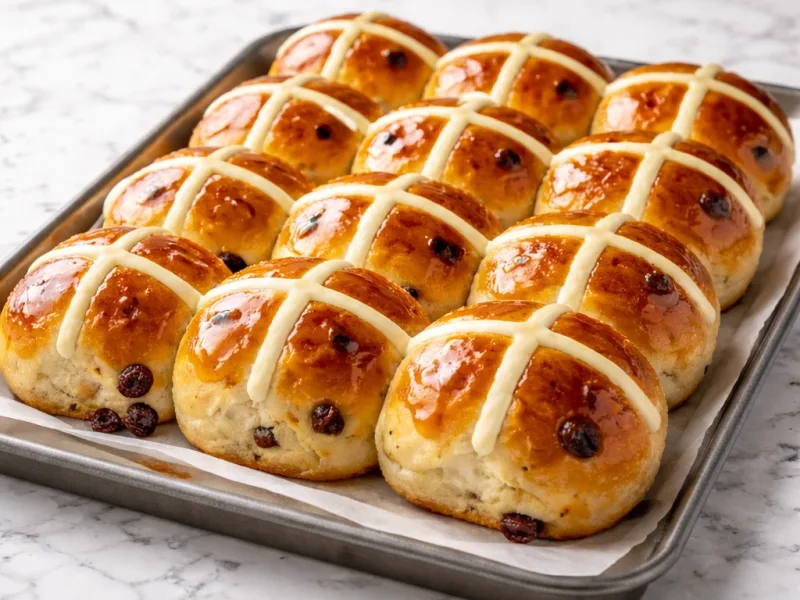
Base recipe: 12 buns
Your kitchen companion
Ingredients
Check off ingredients as you prepare them.
Follow the steps at your own pace.
Method
Heat milk and melt butter: Heat 1 cup (250 ml) whole milk to 95–100°F (35–38°C) using a saucepan or microwave. Add 1/4 cup (60 g) unsalted butter and allow it to melt fully; mixture should feel warm but not hot to the touch.
Mix dry ingredients: In a large mixing bowl, combine 3 1/3 cups (500 g) all-purpose flour, 2 1/4 tsp (7 g) instant dry yeast, 1/3 cup (75 g) granulated sugar, 1 tsp (5 g) fine salt, 1 tsp (2 g) ground cinnamon, and 1/2 tsp (1 g) ground nutmeg. Stir evenly.
Form dough: Add the warm milk-butter mixture and 1 large egg (50 g) to the bowl. Mix until a cohesive dough forms with no dry flour remaining.
Knead dough: Transfer dough to a clean surface and knead for 8–10 minutes until smooth and elastic. The dough should stretch without tearing and feel slightly tacky but not sticky.
Add fruit: Incorporate 1/2 cup (80 g) raisins and 1/4 cup (30 g) candied orange peel evenly into the dough.
First rise: Place dough in a lightly oiled bowl, cover, and let rise at 75–79°F (24–26°C) for 60–75 minutes until doubled in volume. Dough is ready when an indentation slowly springs back.
Divide and shape: Divide dough into 12 equal portions (about 2.8 oz / 80 g each). Shape each into a tight ball by tucking edges underneath.
Second rise: Arrange buns on a 12 × 16 inch (30 × 40 cm) baking tray with 1–1.2 inches (2–3 cm) spacing. Cover and proof for 45–60 minutes until visibly expanded and soft to touch.
Prepare cross paste: Mix 1/3 cup (40 g) flour with 3 tbsp (40 ml) water until smooth and pipe crosses onto each bun.
Bake buns: Bake in a conventional oven at 356°F (180°C) on the middle rack for 18–20 minutes. Buns are done when golden brown and internal temperature reaches about 190°F (88°C).
Glaze buns: Warm 2 tbsp (30 g) apricot jam and brush over hot buns immediately after baking for shine and moisture retention.
Cool buns: Transfer to a rack and cool for 20–30 minutes to stabilize crumb structure and prevent collapse before serving.
Extra technique, safety notes and details when you want to go deeper.
More tips & details
Classic Hot Cross Buns Recipe with Soft Crumb for Easter
Achieving the Signature Soft, Fluffy Crumb for Easter Brunch
A properly developed dough is the foundation of hot cross buns with that iconic, pillowy crumb and a gentle pull-apart texture—essential for any shared Easter table. You’ll know the dough is on track when it expands evenly during proofing and maintains a proud, rounded shape without spreading. Maintaining a warm fermentation window (ideally room temperature) allows the yeast to build the internal gas structure that defines that final lightness, ensuring the buns don't collapse once they hit the heat.
Enriched Dough for a Tender Interior and Balanced Sweetness
The inclusion of milk, butter, and egg creates a rich, "enriched" dough that yields a melt-in-the-mouth interior and a delicate, thin crust. The structure is perfected when the dough feels elastic and slightly tacky, never dry. These fats coat the gluten strands to prevent toughness, producing a soft bite, while the sugar serves a dual purpose: it moderates fermentation speed and helps achieve that signature even, golden browning.
Mastered Spice Blends and Fruit Distribution
To keep the flavor profile sophisticated, spice levels should remain balanced, allowing the cinnamon and nutmeg to provide warmth rather than overpowering the palate. The buns are correctly executed when the aroma is subtle and inviting. Evenly folding in the raisins and candied peel is crucial; they create small pockets of moisture that prevent the crumb from drying out, significantly improving shelf life for several hours post-bake.
The Role of Oven Heat: Setting Structure and Preventing Collapse
Precise oven temperature is what triggers the "oven spring," allowing the buns to rise further in those first few minutes before the structure sets. You’ve mastered the bake when the surface is a uniform golden brown with a clearly defined, pale cross pattern. This heat transfer is what stabilizes the internal crumb; too little heat results in a dense, gummy texture, while excessive heat causes the crust to form too early, restricting that final, airy expansion.
Serving Fluffy Hot Cross Buns for the Holiday Table
These buns are at their peak when served slightly warm, allowing the crumb to stay elastic and the apricot glaze to maintain its high-shine finish. They are a natural fit for an Easter brunch spread alongside salted butter or mild fruit preserves. For those looking to master the basics of bread-making, explore our reliable homemade bread dough base for soft yeast buns.
Chef PEKIS recommends
- The "Double Rule": Always allow the dough to fully double during the first rise; under-proofed dough is the leading cause of dense, heavy buns.
- Flour Restraint: Avoid the temptation to add extra flour during kneading. A slightly tacky dough is the secret to a professional-grade soft crumb.
- The Golden Window: Apply your apricot glaze the second the buns come out of the oven. This ensures the glaze absorbs slightly and sets with a professional sheen rather than a dull finish.
Storage and Make-Ahead Tips
To maintain that "just-baked" softness, store the buns in an airtight container at room temperature for up to 24 hours. Protecting them from air exposure is the best way to slow down moisture loss. While you can freeze them for longer storage, be aware that thawing can slightly dull the surface gloss and tighten the crumb texture.
For a complete holiday dessert table, pair these buns with our traditional Easter Simnel cake.
Best served slightly warm at the table
Classic hot cross buns are a baked yeast dough, not fried or laminated, with a soft interior designed for gentle pull-apart serving. When brought to the table while still slightly warm, the crumb shows a soft, elastic structure that separates cleanly without tearing. The glaze remains lightly set, giving a subtle sheen without stickiness. The first break reveals a mild spice aroma, supported by small pockets of fruit that hold moisture within the crumb.
At breakfast or late morning brunch, these buns fit naturally alongside butter or light preserves. Their structure holds when split, allowing a clean surface without crumbling. The interior remains tender enough to absorb spreads without becoming soggy. Served on a shared plate, the buns maintain form while still offering a slight resistance when pulled apart, indicating correct fermentation and baking balance.
Balanced texture holds through the day
As they cool fully, the crumb settles into a stable, fine structure that remains pleasant to eat without reheating. The surface becomes slightly firmer while the interior keeps a lightly moist crumb, especially around the fruit. This balance allows them to be served later in the day without losing their defining softness, provided they are kept covered.
For seasonal occasions, these buns sit comfortably within a broader Easter table, alongside other baked items and simple accompaniments. Their flavor remains neutral enough to pair with both sweet and mildly savory elements. The spice profile stays present but restrained, allowing the overall composition to remain clear and structured rather than heavy.
Questions
Why are hot cross buns dense instead of soft and fluffy?
Dense texture occurs when gluten development or fermentation is insufficient, preventing proper gas retention. Yeast produces carbon dioxide that expands within a developed gluten network; without elasticity, the dough cannot trap gas effectively. This leads to compact structure and reduced volume. Proper kneading creates extensibility, while adequate proofing allows full expansion. Dough should feel elastic and slightly airy before baking. Final crumb becomes light and tender when structure and fermentation align.
Can hot cross buns be made without dairy and still stay soft?
Soft texture depends on fat content and hydration balance rather than dairy specifically. Milk and butter contribute to tenderness by coating gluten strands and retaining moisture. Replacing them with plant-based milk and fat preserves softness if ratios remain consistent. Lower fat results in a firmer crumb and faster drying. The dough should remain slightly enriched to maintain elasticity and moisture retention. Final texture stays tender when fat and liquid are balanced.
Why do raisins sink or burn in hot cross buns during baking?
Improper incorporation or surface exposure causes uneven distribution and burning. Raisins that remain on the surface lose moisture quickly under direct heat, leading to scorching. Even mixing ensures they are embedded within the dough, where moisture from surrounding structure protects them. Hydrated fruit integrates better and reduces sinking. Dough consistency must support suspension without excessive softness. Balanced placement results in even texture and controlled sweetness throughout.
How to keep hot cross buns soft after baking without drying out?
Moisture loss occurs when steam escapes from the crumb after baking, leading to firm texture. The internal structure stabilizes as it cools, but exposure to air accelerates drying. A thin glaze layer reduces evaporation by sealing the surface. Covering the buns once slightly cooled preserves internal moisture and softness. Warm serving enhances elasticity and aroma. Texture remains soft when moisture retention is controlled immediately after baking.
Recivelle · /recipe/classic-hot-cross-buns-recipe-soft-crumb-easter