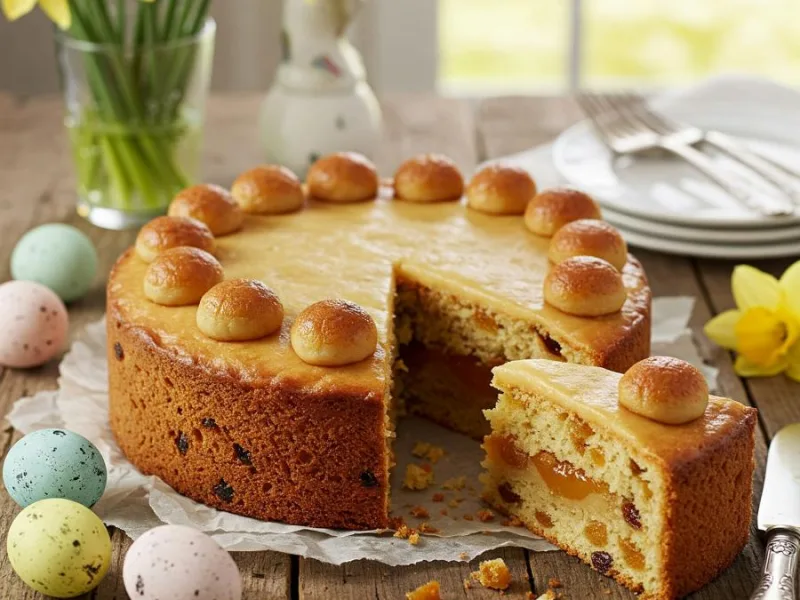
Base recipe: 12 slices
Your kitchen companion
Ingredients
Check off ingredients as you prepare them.
Follow the steps at your own pace.
Method
Preheat the oven to 150°C (300°F). Grease and line a 20 cm (8-inch) round cake tin with baking paper.
Cream the butter and sugar together in a large mixing bowl until pale and fluffy.
Add the eggs one at a time, beating well after each addition. If the mixture curdles, add a spoonful of flour.
Fold in the dry ingredients: sift in the flour, baking powder, salt, and spices. Stir to combine.
Add the zest, ground almonds, and dried fruits. Mix thoroughly. Optionally, stir in brandy or rum.
Roll out a third of the marzipan into a circle the size of your cake tin.
Spoon half the batter into the tin and smooth the surface.
Place the marzipan disc on top of the batter layer.
Add the remaining batter over the marzipan and level the top.
Bake for 2 hours, checking after 1 hour 45 minutes. A skewer should come out clean. Cover with foil if browning too fast.
Cool in tin for 10 minutes, then transfer to a wire rack to cool completely.
Brush the top of the cake with warmed apricot jam. Roll out another third of marzipan and cover the top.
Form 11 balls from the remaining marzipan and arrange in a circle on top.
Brush with milk and place under a hot grill for 1–2 minutes until the marzipan is golden.
Extra technique, safety notes and details when you want to go deeper.
More tips & details
Discover the Rich History and Flavor of Britain’s Beloved Easter Cake
Why Simnel Cake Is a Must-Have Easter Tradition
Soft, spiced, and packed with symbolism, the Simnel Cake stands as one of the most cherished Easter traditions in the United Kingdom. This festive fruit cake isn’t just about flavor—it’s about heritage, family, and the celebration of renewal that comes with spring. Topped with golden marzipan, traditionally decorated with eleven toasted balls representing the apostles (minus Judas), and infused with layers of flavor from dried fruits, citrus zest, and warming spices, Simnel Cake is as visually stunning as it is delicious. It’s not just a cake—it’s a culinary symbol of the season, enjoyed on Easter Sunday, Mothering Sunday, and throughout spring gatherings.
This traditional treat has evolved over centuries yet maintains its rustic charm and celebratory importance. Unlike heavier Christmas fruit cakes, Simnel Cake strikes a balance with its lighter texture, brighter flavors, and signature layer of marzipan baked into the middle—a surprise element that delights everyone from first-time tasters to lifelong fans. It's the quintessential British Easter cake, ideal for making ahead of the big day or gifting to loved ones.
In today’s world of modern baking trends, there’s something timeless about preparing a homemade Simnel Cake. The process of soaking the fruits, preparing the almond paste, and watching the marzipan bubble into golden perfection in the oven brings back memories of spring kitchens filled with the scent of spices and citrus. The tradition has transcended generations, and baking this cake is an act of cultural appreciation as well as culinary joy.
The Significance Behind the Simnel Cake Tradition
More than just a dessert, Simnel Cake is deeply rooted in Christian symbolism and British culinary history. Originating in the Middle Ages, it was once associated with the fourth Sunday in Lent, known as Mothering Sunday, when servants were allowed to return home and bring a gift—often this very cake—for their mothers. Over time, it became closely linked with Easter, a symbol of rebirth, celebration, and indulgence after the sacrifices of Lent.
The marzipan topping—particularly the eleven balls—is perhaps its most iconic feature. These balls symbolize the twelve apostles, minus Judas, and are often lightly browned under the grill to provide a contrast of textures: soft, chewy almond paste with a crisp, caramelized surface.
A Treat Worth Mastering
While it may look elaborate, the beauty of the Simnel Cake lies in its simplicity. With the right ingredients and a bit of patience, even novice bakers can recreate this showstopping centerpiece. From the delicate mixing of dried fruits, spices, and orange zest, to rolling and shaping the marzipan, every step is a joyful ritual. And the result is a cake that keeps beautifully, matures with time, and improves in flavor by the day.
Whether you follow the traditional British recipe or add a modern twist—perhaps with a splash of brandy or a flourish of crystallized flowers—the Simnel Cake offers endless opportunity for personalization. Yet, at its heart, it remains a cake of connection and celebration, rooted in values of family, gratitude, and seasonal joy.
Perfect for Gifting and Sharing
There’s nothing more heartfelt than giving a handmade Easter cake to someone you love. Simnel Cake travels well, keeps wonderfully, and presents beautifully with its golden marzipan crown and fragrant interior. Whether you’re sharing it over an Easter brunch, wrapping it for a spring gift basket, or enjoying a slice with afternoon tea, this cake is sure to impress.
Easter is a season of warmth, color, and renewal—and this cake embodies every aspect of it. If you’re looking to start a new holiday tradition, revisit a cherished family recipe, or simply enjoy a slice of springtime comfort, the Simnel Cake is your answer.
Mastering and Personalizing the Simnel Cake: Creative Twists and Common Pitfalls
Enhance flavor, texture, and presentation with expert techniques and ingredient upgrades
The Simnel Cake is already a standout dessert thanks to its rich tradition and distinct combination of flavors. But for passionate bakers who wish to elevate it further, there are many subtle and creative ways to enhance the recipe. By understanding the role of each ingredient and learning how to tweak preparation techniques, you can transform this classic Easter treat into a personalized showpiece—while still honoring its roots.
The impact of ingredient choices on flavor and texture
Upgrade your dried fruits
While traditional Simnel Cake calls for a mix of sultanas, raisins, and currants, the addition of dried cherries, cranberries, chopped apricots, or figs can add layers of flavor and a burst of natural sweetness. If you're aiming for a more vibrant and tart flavor profile, dried sour cherries provide excellent contrast to the marzipan's richness.
Soaking fruits in alcohol or juice
One of the easiest ways to intensify flavor is to soak dried fruits overnight in brandy, rum, orange liqueur, or even a mix of strong black tea and orange juice. This not only makes the cake more moist, but also infuses it with deep, complex undertones. For a family-friendly version, use freshly squeezed citrus juice with a splash of vanilla extract.
Alternative zests and spices
Citrus zest is vital for freshness, but you can experiment with lime, grapefruit, or even bergamot zest to introduce floral complexity. Spices like cardamom, clove, or allspice can complement or substitute traditional nutmeg and cinnamon to add a more exotic aroma.
Elevating the marzipan
Homemade vs store-bought
Using homemade marzipan made with finely ground almonds, confectioners’ sugar, egg white (or syrup for egg-free), and almond extract results in a fresher, nuttier flavor compared to most store-bought versions. You can adjust sweetness and texture to your preference, and ensure no additives or preservatives.
Marzipan layer inside the cake
Some traditional versions omit the baked-in marzipan layer, but this addition makes the cake moist, chewy, and indulgent. Ensure the marzipan is rolled evenly and placed in the center without gaps, which prevents separation during baking.
Why homemade always tastes better
Making this cake at home allows for complete control over ingredient quality, sugar levels, and spice balance. Prepackaged cakes often rely on preservatives, artificial flavors, or lower-quality fruit blends. The homemade version is fresher, more aromatic, and full of warmth that only real, handcrafted baking can deliver.
Common mistakes and how to avoid them
Underbaking or overbaking
Simnel Cake requires gentle, even baking. Always test doneness with a skewer in multiple places. Baking too fast at a high temperature can dry out the fruit, while undercooked centers can collapse and become dense. Maintain a steady 150°C (300°F) and cover the cake with foil in the second hour if browning too quickly.
Uneven marzipan toasting
The top marzipan and decorative balls should be lightly browned, not burnt. Always toast under a moderate grill for no more than 1–2 minutes, and rotate the cake for even coloring. Watch closely to avoid scorching.
Poor fruit distribution
Coat the dried fruit in a bit of flour before mixing into the batter to prevent it from sinking. This ensures even distribution and better presentation when sliced.
Health-conscious substitutions
Reducing sugar
Simnel Cake is sweet by nature, but you can cut the sugar content by 20–30% without compromising structure. Replace part of the sugar with apple puree or mashed banana for natural sweetness and moisture.
Lighter fats and dairy-free options
Instead of traditional butter, try light margarine or plant-based spread to reduce saturated fat. For a dairy-free version, almond milk or oat milk works well for brushing the marzipan.
Gluten-free alternatives
Substitute the flour with a gluten-free baking mix and ensure baking powder is also gluten-free. Adding a teaspoon of xanthan gum helps bind the ingredients and gives the cake structure.
Presentation tips for extra visual appeal
- Brush marzipan with a golden egg wash or apricot glaze before grilling for a glossy finish.
- Use edible gold leaf, crystallized flowers, or light dustings of powdered sugar to make it look elegant for festive tables.
- Serve slices with a dollop of crème fraîche or a side of citrus sorbet for contrast.
Modern reinterpretations of a classic
You can also transform the Simnel Cake into individual cupcakes, mini bundt cakes, or even layer cakes with marzipan folded into buttercream between layers. These adaptations are ideal for serving at large gatherings, packaging as gifts, or simply making the tradition your own.
Creative baking
While the classic Simnel Cake is already a symbol of tradition, flavor, and festivity, adapting it to your tastes, dietary needs, and creative inspirations can make it even more memorable. Whether you’re enhancing the depth of fruit flavor, lightening the texture, or experimenting with modern designs, the goal is always the same: to bring people together through something rich in history and homemade warmth.
Recivelle · /recipe/traditional-easter-cake-recipe-how-make-perfect-simnel-cake