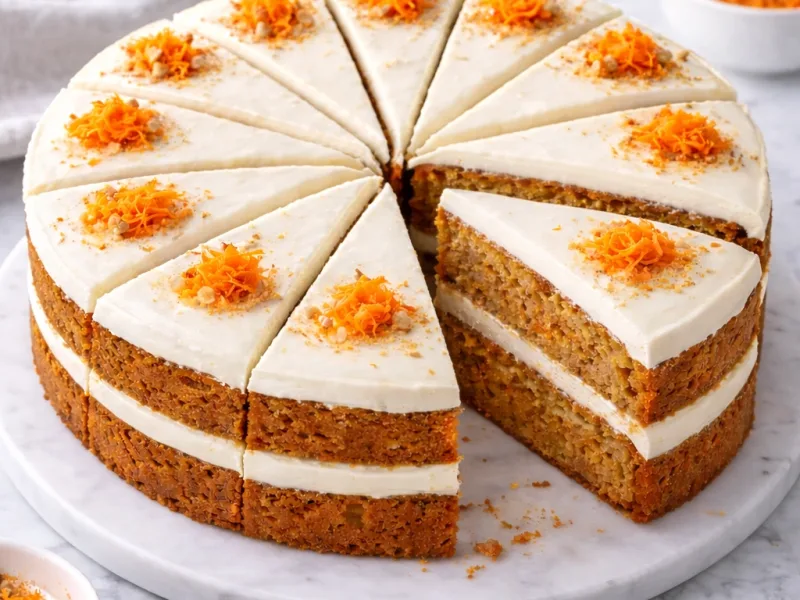
Base recipe: 12 slices
Your kitchen companion
Ingredients
Check off ingredients as you prepare them.
Follow the steps at your own pace.
Method
Prepare the oven and pan: Preheat the oven to 350°F (175°C), conventional setting, no fan. Grease one 9-inch (23 cm) round cake pan and line the bottom with baking paper. This prevents sticking and cracking during cooling.
Mix the dry ingredients: In a large bowl, whisk together 2½ cups all-purpose flour (300 g), 2 tsp baking powder (10 g), 1 tsp baking soda (5 g), ½ tsp salt (3 g), 2 tsp ground cinnamon (5 g), and ¼ tsp ground nutmeg (0.5 g). The mixture should look evenly colored with no spice clumps.
Whisk the eggs and sugars: In a separate bowl, whisk 4 large eggs with 1 cup granulated sugar (200 g) and ½ cup brown sugar (100 g) for 2 minutes by hand or 1 minute with an electric mixer on medium speed. The mixture will look pale, thick, and slightly foamy.
Add liquids: Slowly whisk in 1 cup vegetable oil (240 ml), ¼ cup milk (60 ml), and 2 tsp vanilla extract (10 ml). The batter should become smooth, glossy, and fluid without separation.
Combine wet and dry: Add the dry ingredients to the wet mixture in two additions. Fold gently: Use a spatula and fold from bottom to top. Do not stir. Stop as soon as no dry flour is visible. Overmixing will make the cake dense.
Incorporate the carrots: Fold in 3 cups finely grated carrots (360 g). The batter will look thick but spoonable. The carrots should be evenly distributed without sinking.
Bake the cake: Pour the batter into the prepared pan and smooth the surface. Bake for 45 minutes at 350°F (175°C). Visual test: The top will be golden and slightly domed. Touch test: The center springs back when lightly pressed. Skewer test: Insert a skewer into the center; it should come out clean. If not ready, bake 5 minutes longer and test again.
Cool properly: Remove from the oven and let the cake cool in the pan for 15 minutes. Then unmold and cool completely on a wire rack for at least 60 minutes. Cooling prevents soggy texture and frosting melt.
Extra technique, safety notes and details when you want to go deeper.
More tips & details
A Classic Carrot Cake That Sets the Standard for Home Baking
A timeless homemade cake defined by moisture, spice, and balance
Carrot cake holds a unique place among classic homemade cakes, balancing natural sweetness, gentle spice, and a soft crumb that feels indulgent without being heavy. This best homemade carrot cake recipe is built around technique rather than shortcuts, focusing on how each ingredient contributes to a cake that is consistently soft, moist, and fluffy from the center to the edges. Finely grated carrots melt into the batter as it bakes, releasing moisture slowly and creating a tender structure that stays fresh for days. Warm spices deepen the flavor without overpowering the carrots, while the batter itself is designed to trap air gently, giving the cake its signature lightness.
Unlike dense or overly oily versions, this moist carrot cake relies on balance. The carrots provide natural sweetness and texture, fats are used with restraint to keep the crumb supple, and the mixing method avoids overworking the batter. The result is a cake that slices cleanly, rises evenly, and delivers a delicate, bakery-style bite that feels both familiar and refined. A smooth cream cheese frosting traditionally completes the cake, adding tang and richness that contrast beautifully with the subtly spiced sponge.
Carrot cake as we know it today gained popularity in Europe during times when sweeteners were scarce, with carrots used as a natural substitute. Over time, it evolved into the beloved dessert found in bakeries and home kitchens worldwide. This modern interpretation respects that heritage while refining the method for reliable results in a contemporary home oven.
Why you’ll love this recipe
- Soft, moist crumb that stays fresh for days
- Balanced sweetness with natural carrot flavor
- Light, fluffy texture without being airy or dry
- Perfect base for classic cream cheese frosting
- Reliable results for celebrations or everyday baking
Why this method works
- Gentle mixing keeps the batter airy without activating excess gluten
- Finely grated carrots distribute moisture evenly throughout the cake
- Proper fat balance prevents greasiness while locking in softness
- Controlled baking temperature ensures even rise and color
Chef’s tips
- Grate the carrots finely to avoid dense pockets in the crumb
- Bring chilled ingredients to room temperature for smoother emulsification
- Allow the cake layers to cool fully before frosting to maintain structure
- Use a light hand when folding to preserve trapped air
Common mistakes
- Overmixing the batter, leading to a heavy texture
- Using coarsely grated carrots that sink or release excess water
- Baking at too high a temperature, which dries the edges
- Frosting the cake while still warm, causing slippage
Storage and make-ahead
Carrot cake is ideal for advance preparation. Unfrosted cake layers can be baked ahead, wrapped tightly, and stored at room temperature for a short period or refrigerated for longer freshness. Once frosted, the cake keeps well when chilled, with the crumb remaining moist and flavorful. Bring slices to room temperature before serving to restore their soft texture and full aroma. This make-ahead flexibility makes the cake especially practical for holidays, gatherings, and special occasions.
Warm spices, gentle sweetness, and a tender crumb make carrot cake endlessly adaptable and seasonally versatile. For festive inspiration, cozy loaf-style bakes, or lighter fruit-forward options, exploring complementary recipes can spark new ideas and pairings.
If you enjoy holiday carrot cake variations, the Best Easter Carrot Cake Recipe offers a celebratory twist with a festive presentation. For another soft and fluffy homemade bake, the Banana Bread Moist Recipe delivers the same tender crumb in loaf form. When a lighter, seasonal dessert is on your mind, the Strawberry Cake with Fresh Cream Frosting brings fresh fruit flavor and airy texture to the table.
A Reliable Classic Worth Returning To
Carrot cake remains one of those rare desserts that feels both nostalgic and endlessly adaptable. A well-made carrot cake recipe delivers more than sweetness—it offers warmth, balance, and a texture that stays inviting long after baking. The natural moisture from finely grated carrots, paired with gentle spices and a soft crumb, creates a cake that is rich without heaviness and comforting without excess. Each slice carries depth of flavor, a subtle aroma, and a structure that holds beautifully from the first cut to the last bite.
Flavor, Texture, and Everyday Practicality
What makes this carrot cake stand out is its consistent softness and clean, well-defined crumb. The cake bakes evenly, slices without crumbling, and stays moist for days when stored properly. It is approachable for home bakers yet refined enough for special occasions. Timing fits easily into a busy schedule, and the method allows flexibility—bake ahead, frost later, or serve simply with minimal decoration. The flavor profile remains familiar but never dull, making it appealing to a wide range of tastes.
Flexible for Different Needs and Occasions
A thoughtful carrot cake adapts well to modern kitchens. Simple ingredient swaps allow for gluten-free or dairy-free variations without sacrificing texture. The cake works equally well as a layered celebration dessert or a straightforward everyday bake. It travels well, holds its shape, and maintains its flavor, making it suitable for gatherings, family meals, or quiet afternoons with coffee.
Why This Cake Deserves a Place in Your Kitchen
This carrot cake succeeds because it respects tradition while refining technique. It offers dependable results, balanced sweetness, and a texture that feels generous yet light. Ideal for birthdays, holidays, weekend baking, or make-ahead entertaining, it earns its place as a reliable favorite—one that delivers comfort, flavor, and confidence every time it is served.
Questions
Can I make carrot cake without eggs?
Yes, but the texture will change. Eggs provide structure and lift, so replacing them with applesauce or flax eggs will produce a denser, slightly heavier cake. This option works for dietary needs, but the crumb will be less fluffy.
Why is my carrot cake dense or heavy?
This happens most often due to overmixing the batter or using coarsely grated carrots. Mix gently and stop as soon as the flour is incorporated, and always use finely grated carrots to keep the cake light.
How do I keep carrot cake moist after baking?
Store the cake in an airtight container. Once frosted, keep it refrigerated. The oil and natural moisture from carrots help retain softness, and bringing slices to room temperature before serving restores the tender crumb.
Can carrot cake be frozen?
Yes. Freeze unfrosted or frosted slices wrapped tightly in plastic wrap and a freezer-safe container. Thaw overnight in the refrigerator, then let the cake sit at room temperature for best texture.
What frosting works best with carrot cake?
Cream cheese frosting is the classic choice. Its slight tang balances the sweetness and spice of the cake and pairs perfectly with the moist crumb when spread on a fully cooled cake.
How can I make carrot cake gluten-free or dairy-free?
For gluten-free, use a 1:1 gluten-free flour blend designed for baking. For dairy-free, replace milk with a plant-based milk and use a dairy-free cream cheese alternative for the frosting.
How should carrot cake be served and decorated?
Serve carrot cake at room temperature for the softest texture. Simple decoration with smooth frosting, rustic swirls, or light piping highlights the cake’s homemade appeal without overpowering its flavor.
Recivelle · /recipe/best-homemade-carrot-cake-recipe-soft-moist-fluffy