Base recipe: 12
Your kitchen companion
Ingredients
Check off ingredients as you prepare them.
Follow the steps at your own pace.
Method
Preheat the oven to 175°C (350°F). Grease and line two 20 cm (8-inch) round cake pans.
In a large bowl, whisk together eggs, granulated sugar, brown sugar, vanilla extract, and sunflower oil until smooth.
In a separate bowl, combine flour, baking powder, baking soda, cinnamon, nutmeg, ginger, and salt.
Gradually fold the dry ingredients into the wet mixture until fully incorporated.
Gently fold in grated carrots, chopped nuts, and raisins.
Divide the batter evenly between the prepared cake pans.
Bake for 35–40 minutes, or until a toothpick inserted in the center comes out clean.
Let the cakes cool in the pans for 10 minutes, then transfer to a wire rack to cool completely.
Cream cheese frosting preparation:
Beat softened butter and cream cheese together until smooth and creamy.
Add powdered sugar, vanilla extract, and optional lemon zest. Mix until light and fluffy.
Assembly:
Place one cake layer on a serving plate. Spread an even layer of frosting on top.
Place the second cake layer on top and frost the top and sides of the entire cake.
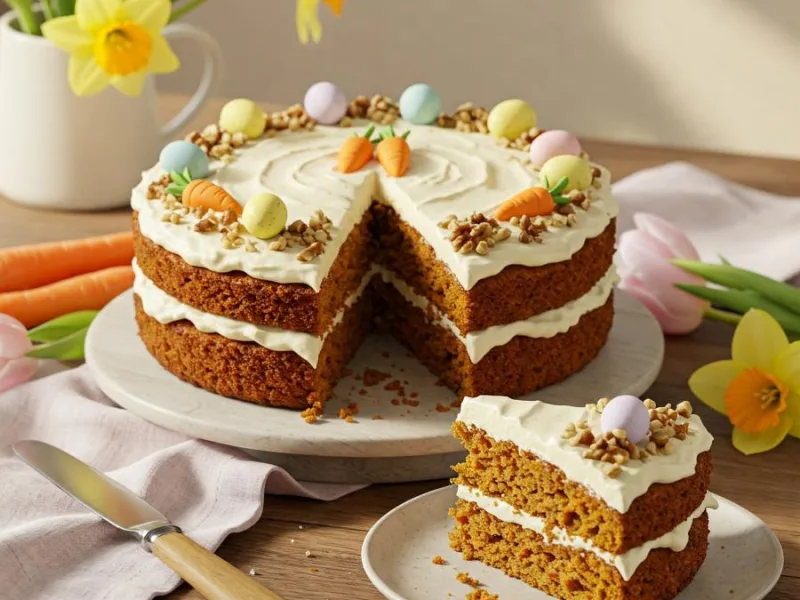
Decorate with additional chopped nuts, grated carrot, or Easter-themed toppings as desired.
Refrigerate for at least 30 minutes before serving for best slicing results.
Extra technique, safety notes and details when you want to go deeper.
More tips & details
Celebrate Spring with This Irresistible Carrot Cake for Easter
A moist and spiced cake that brings joy to every Easter gathering
There’s something timeless about a perfect carrot cake, especially when it’s lovingly baked to mark the Easter holiday. As nature begins to bloom and days grow longer, this cake becomes a symbol of renewal, warmth, and comfort. It’s not just a dessert; it’s a cherished tradition that brings generations together around the table. Our Easter carrot cake recipe captures the essence of the season—earthy carrots, warm spices, and a luscious cream cheese frosting—in a single, unforgettable bite.
This cake is more than a sweet treat—it tells a story. Imagine slicing into a dense yet airy crumb, where finely grated carrots have released their natural sweetness, blending seamlessly with cinnamon, nutmeg, and hints of vanilla. Every forkful feels like a warm embrace, with chopped walnuts or pecans offering a delightful crunch, and the gentle tang of cream cheese frosting rounding out each bite with smooth, creamy perfection.
In many homes, Easter dessert tables aren’t complete without a carrot cake, often lovingly topped with pastel-colored decorations or simple chopped nuts. Its rustic charm and versatility make it equally suited for casual family brunches or elegant holiday dinners. Whether you’re continuing a family tradition or starting a new one, this cake is the kind of recipe that will earn a permanent place in your Easter repertoire.
Why carrot cake is a must-have for Easter celebrations
Easter is a season of rebirth, and few ingredients capture that spirit quite like fresh carrots. Their vibrant color and subtle sweetness give the cake its signature taste and tender texture. Rooted in spring harvest traditions, carrot cake has long been associated with seasonal cooking, where the focus is on using what’s fresh and available. That makes this dessert not only delicious but meaningful—a true celebration of the season's gifts.
Add to that a light, fluffy cream cheese frosting, often kissed with lemon zest or vanilla, and you have a dessert that balances rich and refreshing notes perfectly. It’s easy to see why this cake has earned a devoted following over the decades.
What makes this Easter carrot cake so special
This isn’t just any carrot cake. It’s designed to be the centerpiece of your holiday table. Here's what sets it apart:
Naturally sweet and moist
The star of the show is, of course, the carrot. Freshly grated and evenly folded into the batter, it ensures every slice stays incredibly moist without being overly dense. The natural sugars in the carrots enhance the cake’s flavor, reducing the need for excessive sweeteners.
Perfectly spiced flavor profile
A careful blend of cinnamon, ginger, nutmeg, and a touch of clove gives the cake its signature warmth. These spices evoke the comforting aromas of home baking, making your kitchen smell as inviting as the final product tastes.
A frosting that dreams are made of
What’s carrot cake without a proper frosting? The classic cream cheese topping is rich, smooth, and slightly tangy, providing the ideal contrast to the warmly spiced cake. Whether you choose to add a splash of citrus or a dusting of chopped nuts on top, the frosting is the finishing touch that makes each bite unforgettable.
Versatility in presentation
This Easter carrot cake works beautifully in many forms—as a layer cake, bundt cake, or even cupcakes. You can decorate it simply with chopped nuts or shredded coconut, or go all out with marzipan carrots, sugared flowers, or Easter-themed toppers. The result is always stunning and delicious.
A dessert that speaks to all generations
One of the most charming aspects of this carrot cake is its universal appeal. It’s a dessert that grandparents remember from their childhood, that kids devour with enthusiasm, and that adults appreciate for its balance of flavors and textures. It’s the kind of cake that feels at home in every household, from country cottages to city apartments.
Whether served at the end of Easter lunch or offered with tea during a quiet afternoon, this cake becomes more than food—it becomes a memory. And those memories, shared across tables and generations, are what make this recipe so deeply beloved.
The story behind the tradition
Carrot cakes have a rich culinary history, believed to have originated during times when sugar was scarce and people turned to natural sweeteners like carrots. Over the centuries, this humble cake evolved into a gourmet treat, beloved across continents. In many parts of the world, it’s now a staple for springtime celebrations and Easter feasts.
The combination of humble ingredients and refined results reflects the essence of holiday baking—turning simplicity into something extraordinary.
Before you bake
Whether you’re an experienced baker or a weekend hobbyist, preparing this Easter carrot cake is a deeply satisfying endeavor. From the moment you begin grating fresh carrots to the final swirl of frosting on top, the process is filled with anticipation and joy. And when you finally cut that first slice, the reward is sweet, spiced, and completely worth it.
If you're looking for a way to bring extra joy to your Easter table, this cake is the answer. Moist, flavorful, beautifully spiced, and topped with irresistible frosting, it’s everything a holiday dessert should be—and more. Get ready to create new traditions and lasting memories, one slice at a time.
Elevating the Classic: Creative Twists for the Perfect Carrot Cake
Tips and tricks to transform your Easter carrot cake into a show-stopping dessert
The traditional carrot cake is already a crowd-pleaser, but with a few thoughtful adjustments, you can turn it into a personalized masterpiece that suits your taste and dietary needs even better. Whether you’re baking it for a festive Easter celebration or just because you love a moist, spiced cake, there are countless ways to take this classic recipe to new heights.
From flavor enhancements to textural upgrades and nutritional boosts, each suggestion below provides insight into how a small change can make a big difference in your baking experience and final result.
How ingredient changes influence flavor and texture
Small tweaks to the base recipe can dramatically alter the flavor, moisture, and richness of your carrot cake. Here’s how to customize it to your preferences:
Swap or combine oils for deeper flavor
Using sunflower oil in the base recipe creates a neutral flavor and moist crumb. But if you prefer a richer taste, consider replacing part of the oil with melted coconut oil or light olive oil. These options add subtle complexity to the cake’s profile. Coconut oil imparts a slightly sweet, tropical note, while olive oil brings a savory depth. However, ensure the olive oil is light in flavor to avoid overpowering the spices.
Add crushed pineapple or applesauce
To increase natural sweetness and moisture, you can fold in crushed pineapple (100 g) or unsweetened applesauce (100 g). Both ingredients work well in harmony with the spices and carrots, giving the cake a softer, slightly fruity undertone. They also reduce the need for added sugar and fat, making the cake more wholesome without sacrificing flavor.
Boost the spice profile
The traditional blend of cinnamon, nutmeg, and ginger creates the iconic warm aroma, but you can go further. Try adding a pinch of allspice or cardamom to intensify the aromatic experience. Cardamom, in particular, brings a subtle floral note that pairs beautifully with carrots and nuts.
Experiment with mix-ins
Chopped walnuts or pecans are commonly used for crunch, but other additions can enhance both flavor and texture. Try incorporating:
- Toasted coconut flakes for tropical sweetness
- Chopped dates for a chewy, caramel-like bite
- Dark chocolate chips for indulgence and richness
These mix-ins create layers of taste that elevate the dessert into something unique and luxurious.
The benefits of baking your carrot cake from scratch
Homemade baking isn’t just about nostalgia—it gives you total control over ingredients and ensures a fresher, more flavorful product. When you bake your carrot cake at home:
- You can adjust the sweetness, spice levels, and texture to your exact preferences.
- You avoid unnecessary preservatives or artificial flavors often found in store-bought versions.
- Freshly grated carrots, toasted nuts, and homemade frosting provide superior aroma and taste.
There’s also a creative satisfaction that comes from assembling and frosting your own cake, especially when it becomes a centerpiece at the Easter table.
Common mistakes to avoid when baking carrot cake
Even experienced bakers can run into issues when making carrot cake. Here are the most frequent mistakes and how to avoid them:
Overmixing the batter
This is one of the most common errors. Overmixing causes too much gluten development, resulting in a dense and rubbery cake. Mix until just combined after folding in the dry ingredients.
Using pre-shredded carrots
Pre-packaged shredded carrots are often dry and too thick, which leads to a lack of moisture and inconsistent texture. Always use freshly grated carrots, ideally with a fine grater, to maintain tenderness and distribute moisture evenly.
Skipping the cooling process
If you frost the cake while it’s still warm, the cream cheese frosting will melt and slide off. Make sure to let your cake cool completely before assembling.
Choosing the wrong pan size
Using pans that are too deep or too shallow can affect baking time and texture. For best results, stick with two 20 cm (8-inch) round pans to ensure even cooking and a balanced crumb.
Health-conscious adaptations without losing flavor
You don’t have to compromise on taste to make a healthier carrot cake. A few intelligent substitutions can create a lighter, more nutritious version while still being irresistibly delicious.
Reduce refined sugar
Substitute a portion of the granulated sugar with coconut sugar or maple syrup to create a more natural sweetness. These alternatives have lower glycemic indexes and offer a hint of caramel flavor.
Use whole wheat flour
Replace up to 50% of the all-purpose flour with whole wheat flour to add fiber and nutrients. Just be aware that whole wheat flour absorbs more moisture, so you may need to slightly increase the liquid ingredients.
Lighten the frosting
A full-fat cream cheese frosting is luxurious, but if you prefer a lighter option, try mixing Greek yogurt with a smaller portion of cream cheese. It provides the same tanginess and creaminess with added protein and fewer calories.
Go dairy-free or vegan
For a dairy-free or vegan version, use plant-based butter and cream cheese alternatives, along with flax eggs instead of real eggs (1 tablespoon ground flaxseed + 3 tablespoons water = 1 egg). Plant-based milks like almond or oat milk also work well in modified versions of the frosting.
When to make it your own—and when to follow tradition
Innovation is wonderful, but some elements of carrot cake are best left untouched. The classic combination of spices, carrots, and a smooth cream cheese frosting has stood the test of time for a reason. The key is to enhance the tradition without losing its heart.
Add a personal touch by adjusting sweetness, enhancing moisture with natural fruit purées, or experimenting with shapes like bundt or loaf formats. These changes don’t just make the recipe yours—they also improve the eating experience for your family and guests.
By understanding the role of each ingredient and technique, you can create a carrot cake that suits your unique taste while still honoring the recipe’s roots. Whether you’re baking for Easter or any other occasion, these improvements will help you deliver a cake that’s consistently moist, flavorful, and unforgettable.
Recivelle · /recipe/best-easter-carrot-cake-recipe