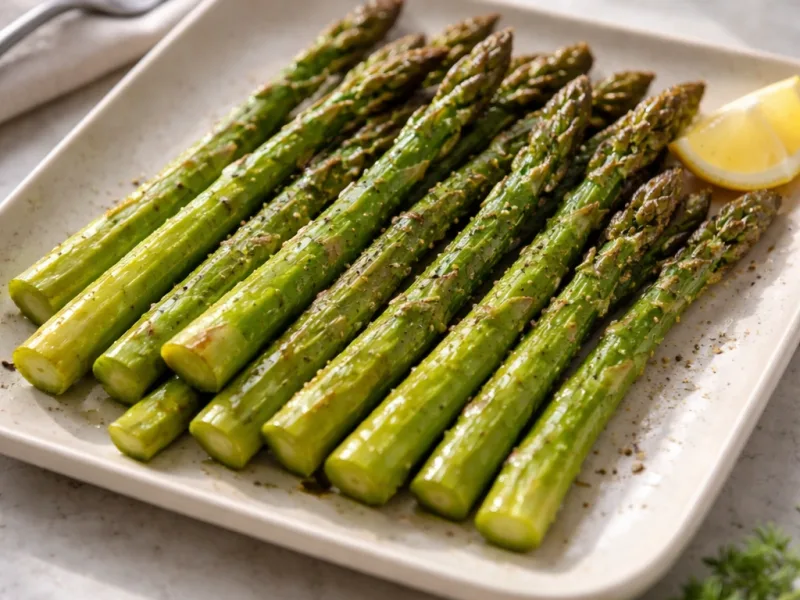
Base recipe: 14 oz (400 g) cooked asparagus
Your kitchen companion
Ingredients
Check off ingredients as you prepare them.
Follow the steps at your own pace.
Method
Preheat the air fryer: Preheat the air fryer to 200 °C (392 °F) using air-fry mode. Allow it to fully heat so the asparagus begins crisping immediately on contact.
Dry and season the asparagus: Pat the 1 lb asparagus (450 g) completely dry with kitchen paper to remove surface moisture. Place in a bowl and add 1 tbsp olive oil (15 ml), ½ tsp fine sea salt (3 g), and ¼ tsp black pepper (1 g). Toss until all spears are evenly coated and lightly glossy.
Arrange in the basket: Place the seasoned asparagus in a single layer in the air fryer basket. Use a standard 3.5–5.5 L basket and avoid overlapping to allow proper air circulation.
Air fry until crisp: Cook at 200 °C (392 °F) for 9 minutes, shaking the basket once at the 5-minute mark. The asparagus should appear deep green with lightly blistered tips and feel firm but tender when pressed. If the tips are not crisp, cook 2 minutes longer.
Finish and rest: Remove the asparagus immediately and drizzle with 1 tsp fresh lemon juice (5 ml). Let rest uncovered for 2 minutes to stabilize the crisp exterior before serving. Resting allows excess steam to escape and prevents surface softening.
Extra technique, safety notes and details when you want to go deeper.
More tips & details
Crisp asparagus with controlled moisture and fast airflow
Crisp edges form while the center stays tender
This variation applies the fundamental techniques of cooking air fryer vegetables, focusing on the narrow timing window required to develop crisp edges and tender centers without dehydration. The objective is controlled surface moisture removal rather than deep browning, ensuring the interior remains succulent. You will recognize the ideal stage when the tips begin to firm and slightly wrinkle, yet the stalks still bend with light resistance.
Unlike softer, roasted versions, this preparation is calibrated for a clean bite and defined structure. The spears should appear glossy with a light oil sheen, avoiding a matte or shriveled appearance. Achieving this balance requires speed; timing accuracy is more critical than total cooking duration in this high-heat environment.
A fast air fryer asparagus recipe with defined texture
This method prevents the common issue of asparagus turning limp before achieving surface texture. By using high heat and short intervals, moisture evaporates from the exterior first, creating a thin, dry layer that allows for light Maillard reaction and crisping while protecting the interior core.
The result delivers exactly what is expected from a fast air fryer asparagus recipe: a vegetable that holds its shape, offers a slight snap, and remains moist. If the surface appears dull or wet after cooking, it indicates that trapped steam impeded the airflow and prevented the necessary surface dehydration.
Heat and airflow determine the final structure
The primary mechanism is rapid moisture evaporation driven by high-velocity hot air. When spears are spaced correctly, air circulates freely around each piece, removing surface water before the heat can overcook the center. This creates the necessary contrast between the outer layer and the core.
Crowding the basket causes steam to accumulate, reversing the desired effect and shifting the texture toward steaming rather than crisping. Proper airflow is signaled by light blistering on the tips and a deepening of color without turning brown.
When to choose this over denser vegetables
This preparation is ideal for delicate vegetables that benefit from brief, high-heat exposure. In contrast to air fryer carrots, which require more time to soften their dense cellular structure, asparagus reaches its peak texture rapidly.
Choose this version for a light, vibrant green profile. While carrots develop concentrated sweetness and a firmer bite through longer cooking and caramelization, asparagus relies on speed to maintain its characteristic snap and moisture.
Serving condition and finishing characteristics
Serve immediately while the exterior remains dry and lightly crisp. The texture begins to soften as soon as residual steam settles back onto the surface. A brief resting period allows the structure to stabilize, but extended holding reduces the textural contrast.
- Crisp tip formation – indicates correct moisture loss and optimal airflow.
- Flexible center structure – confirms the interior remains hydrated and tender.
- Bright green color – shows controlled heat exposure without overcooking.
These cues provide a reliable visual check before plating.
Chef PEKIS recommends
Preheating is essential; adding asparagus to a cold unit delays surface drying and leads to a soft, mushy finish. Avoid stacking or overlapping the spears, as trapped steam will prevent crisp edges from forming. Remove the batch as soon as the tips firm up, since even a short delay in the hot basket will continue the cooking process and reduce tenderness.
Storage and make-ahead
This preparation is not suitable for advance preparation. The crisp surface degrades quickly as moisture redistributes through the vegetable after cooling. If necessary, store uncovered in the refrigerator for up to 24 hours and reheat briefly in the air fryer; however, expect reduced crispness and a softer texture compared to freshly cooked asparagus.
Served at the table
Set down while still warm, the spears hold a dry, crisp surface that gives way easily when cut. This is a dry-roasted version without breading, meant to be eaten as-is rather than dressed or sauced. Air Fryer Asparagus shows its best character in this moment, when the exterior is firm and the center stays juicy. The color stays deep green with just enough browning at the tips to signal readiness, not collapse.
At the table, it works quietly alongside whatever else is being served. The flavor stays clean and direct, making room for the rest of the plate. A simple protein or grain benefits from the contrast, while the asparagus keeps its own shape and presence. What matters most here is that the spears are not stacked or crowded, so each one keeps its individual texture and light snap.
Where it fits naturally
This dish suits everyday meals where vegetables are expected to carry their weight without drawing attention. It fits into family dinners, small shared plates, or quick lunches where freshness matters more than garnish. The aroma is mild and green, with no lingering heaviness, which keeps the palate clear for what follows.
Seasonally, it feels right when asparagus is at its best and meals lean toward lighter sides. It does not travel well or wait patiently, but that is part of its role. Served straight from the kitchen, the surface stays firm to the bite and the interior remains moist. Once it cools, that balance shifts, so it rewards timing rather than planning.
Questions
Why does air fryer asparagus turn soft instead of crispy?
Excess surface moisture prevents proper evaporation, which blocks browning and traps steam around the spears. When asparagus enters the air fryer damp or crowded, released water condenses instead of escaping, softening the exterior. Drying thoroughly and keeping space between spears allows hot air to carry moisture away, creating firm tips and a dry surface. The result is a crisp bite instead of a limp texture.
Is air fryer asparagus vegan and gluten-free by default?
The outcome is vegan and gluten-free when only oil, salt, pepper, and lemon are used. No binders or coatings are required because the structure relies on moisture loss, not starch or protein networks. Adding breading or cheese changes heat transfer and moisture retention. Keeping the preparation simple preserves both dietary compatibility and the intended crisp-tender texture.
Can thick asparagus cook evenly in an air fryer?
Even cooking depends on diameter consistency and airflow, not thickness alone. Thicker spears contain more internal moisture, which protects the center but requires unobstructed air movement to dry the surface. If crowded, thick asparagus steams before browning. Spacing the spears ensures heat reaches all sides, producing a firm exterior with a juicy interior.
Why does reheated asparagus lose its crisp texture?
Once cooled, the surface reabsorbs ambient moisture, reversing the dehydration that created crispness. Refrigeration accelerates this process as water migrates back into the outer layers. Reheating can warm the spears but cannot fully recreate the original dry surface. This preparation is best eaten hot, shortly after cooking, for optimal texture and aroma.
Recivelle · /recipe/air-fryer-asparagus-easy-and-crispy