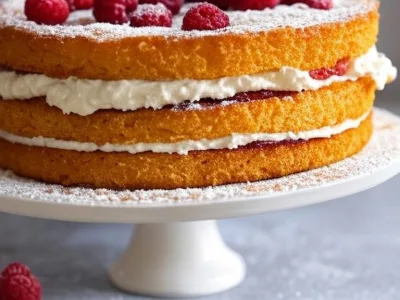
Base recipe: 8
Your kitchen companion
Ingredients
Check off ingredients as you prepare them.
Follow the steps at your own pace.
Method
Step 1: Preheat the Oven
Preheat your oven to 180°C (350°F). Grease and line two 20 cm (8-inch) round cake tins with parchment paper.
Step 2: Prepare the Batter
In a large mixing bowl, cream together the softened butter and caster sugar until light and fluffy. Use an electric mixer for the best results.
Gradually add the eggs, one at a time, beating well after each addition.
Sift in the flour and baking powder. Fold gently with a spatula until just combined.
Add the milk and vanilla extract. Mix until the batter is smooth and creamy, ensuring not to overmix.
Step 3: Bake the Cakes
Divide the batter evenly between the prepared cake tins. Smooth the tops with a spatula.
Bake in the preheated oven for 20–25 minutes, or until a skewer inserted into the center comes out clean.
Allow the cakes to cool in their tins for 5 minutes before transferring them to a wire rack to cool completely.
Step 4: Assemble the Cake
Once the sponges have cooled, spread the jam evenly over the top of one sponge layer.
Whip the cream until it forms soft peaks, then spread it over the jam layer.
Place the second sponge layer on top and gently press down.
Dust the top with icing sugar for a classic finish.
Extra technique, safety notes and details when you want to go deeper.
More tips & details
There’s nothing quite as indulgent as a slice of Victoria Sponge Cake. A timeless British classic, this cake boasts a perfectly light and fluffy texture, complemented by layers of sweet, fruity jam and velvety cream. Whether you're a seasoned baker or a novice in the kitchen, this recipe is guaranteed to delight your taste buds and impress your guests. Made with simple, high-quality ingredients, this homemade masterpiece is ideal for any occasion—from afternoon tea to birthdays, anniversaries, or even just as a midweek treat.
What Makes This Victoria Sponge Cake Special?
- Perfect Texture: The sponge layers are airy, soft, and melt in your mouth.
- Balanced Sweetness: The subtle sweetness of the sponge is perfectly complemented by the rich jam and cream filling.
- Versatility: Swap out the fillings or customize the flavors to suit your preference.
- Ease of Preparation: This recipe is designed to be approachable, even for beginners.
Why You’ll Love This Recipe
- Timeless Elegance: Victoria Sponge Cake is a classic for a reason. Its simplicity allows the quality of the ingredients to shine, creating a dessert that's both beautiful and satisfying.
- Impressively Easy: Despite its elegant appearance, this cake is surprisingly straightforward to make. The step-by-step process ensures a flawless result every time.
- Crowd-Pleaser: The combination of soft sponge, creamy filling, and fruity jam is universally loved, making this cake a guaranteed hit at any gathering.
- Customizable: While the traditional recipe calls for raspberry jam and whipped cream, you can easily substitute your favorite flavors, such as strawberry, lemon curd, or even chocolate ganache.
What Sets This Recipe Apart
- Quality Ingredients: This recipe emphasizes the use of fresh, high-quality ingredients to achieve the best flavor and texture.
- Foolproof Method: Designed for success, the instructions guide you through every step with precision.
- Adaptable Portions: Whether you're baking for a small group or a large crowd, this recipe can be easily scaled up or down.
A Tradition Worth Sharing
The Victoria Sponge Cake is named after Queen Victoria, who was known to enjoy a slice of this delightful dessert with her afternoon tea. Its rich history and simple elegance make it a staple of British baking. But this cake’s appeal extends far beyond its royal origins—it has become a beloved dessert worldwide, cherished for its delicate balance of flavors and textures.
By following this recipe, you'll not only recreate a culinary classic but also bring a piece of history to your table. Each bite is a celebration of tradition, skill, and the joy of baking.
Tips for Baking the Perfect Victoria Sponge
- Use Room Temperature Ingredients: This ensures even mixing and a smoother batter.
- Don’t Overmix: Be gentle when combining the ingredients to preserve the lightness of the sponge.
- Preheat Your Oven: Proper temperature is key to achieving the perfect rise.
- Choose Quality Jam: The filling is just as important as the sponge—opt for a rich, flavorful jam for the best results.
Your Next Baking Adventure Starts Here
With this Victoria Sponge Cake recipe, you’re not just baking a dessert—you’re crafting a memory. Imagine the joy of slicing into a perfectly golden cake, watching the layers reveal themselves, and savoring the harmony of flavors in every bite. Gather your ingredients, preheat your oven, and let the magic of baking begin.
Indulge yourself, impress your loved ones, and create a dessert that will be remembered. Start baking your Victoria Sponge Cake today and experience the perfect blend of tradition and taste.
Whether you’re hosting an elegant tea party or simply treating yourself, this recipe will quickly become a favorite in your kitchen. Don't wait—make your next occasion truly special with this timeless classic.
Tips and Tricks for Perfecting Your Victoria Sponge Cake
The Victoria Sponge Cake is a classic dessert, loved for its simplicity and elegance. However, like any recipe, small changes can significantly impact the outcome. Below, we’ll explore adjustments to the ingredients, techniques, and flavors to help you create a cake that suits your preferences perfectly.
Adjusting Ingredients for Texture and Flavor
Choosing the Right Flour
The recipe calls for plain flour, but substituting it with other types can yield different textures:
- Self-raising flour: Skipping the baking powder and using self-raising flour can give a slightly airier texture while maintaining structure.
- Almond flour: For a nutty flavor, replace 20% of the plain flour with almond flour. This will make the sponge denser and richer.
Butter vs. Margarine
Using unsalted butter gives the cake a creamy richness, but you can substitute with margarine or oil for specific effects:
- Margarine: Creates a lighter texture but reduces the buttery taste.
- Coconut oil: Adds a subtle coconut flavor and makes the cake dairy-free.
Sweetener Alternatives
The recipe uses caster sugar, but alternatives can alter the sweetness and texture:
- Brown sugar: Adds a caramel-like depth of flavor but may darken the sponge.
- Honey or maple syrup: Natural sweeteners add moisture, but you’ll need to reduce the milk slightly to maintain the right batter consistency.
Experimenting with Fillings
The traditional jam and cream filling is iconic, but switching it up can introduce new flavors:
- Lemon curd: A tangy option that balances the sweetness of the sponge.
- Nutella or chocolate spread: Adds a rich, indulgent twist.
- Fresh fruit slices: Layer with whipped cream for a refreshing touch.
Customizing for Dietary Preferences
Gluten-Free Version
To make this cake gluten-free:
- Replace the plain flour with a gluten-free flour blend. Add ½ tsp xanthan gum for improved structure and elasticity.
- Expect a slightly denser texture, but the taste will remain delightful.
Dairy-Free Adaptations
For a lactose-free cake:
- Substitute butter with a plant-based alternative like vegan butter or coconut oil.
- Use dairy-free whipping cream or coconut cream for the filling.
Egg-Free Options
Replace the eggs with one of these alternatives:
- Aquafaba (chickpea water): Use 3 tbsp per egg for a similar texture.
- Flaxseed meal: Mix 1 tbsp flaxseed with 2.5 tbsp water per egg, then let it sit for 5 minutes to thicken.
Techniques to Enhance Your Cake
Proper Mixing for a Fluffy Texture
- Overmixing the batter can result in a dense cake. Once the flour is added, fold it gently using a spatula to keep the mixture airy.
- Ensure the butter and sugar are creamed until pale and fluffy to create a stable base.
Maintaining Moisture
- If your cakes often turn out dry, consider adding an extra tablespoon of milk to the batter or brushing the cooled sponges with a light sugar syrup before assembling.
Ensuring an Even Rise
- Use a kitchen scale to evenly divide the batter between cake tins. Uneven distribution can lead to one sponge being thicker than the other.
- Avoid opening the oven door while the cakes are baking to prevent sinking.
Flavor Variations to Elevate the Cake
Adding Zest and Extracts
- Lemon or orange zest: Mix into the batter for a zesty kick.
- Almond or coconut extract: Use ½ tsp for a subtle flavor boost.
Infusing the Jam
- Heat the jam gently with a splash of liqueur (e.g., Chambord or Grand Marnier) for an adult-friendly twist. Allow it to cool before spreading on the sponge.
Incorporating Spices
- A pinch of cinnamon, nutmeg, or cardamom can add warmth to the sponge, making it ideal for autumn or winter gatherings.
Presentation Ideas to Impress
Decorative Touches
- Dust the top of the cake with icing sugar for a classic look. For added flair, use a stencil to create patterns or designs.
- Top the cake with fresh berries or edible flowers for a beautiful, natural garnish.
Layering Options
- Instead of a two-layer cake, bake three thinner layers for a more dramatic presentation.
- Alternate fillings in different layers, such as jam in one and lemon curd in another.
Individual Portions
- Turn this recipe into cupcakes by dividing the batter into a muffin tin. Adjust the baking time to 15–20 minutes.
Balancing Flavors and Textures
Sweet vs. Tangy
If the overall sweetness is too intense, serve the cake with a dollop of unsweetened whipped cream or Greek yogurt.
Crunchy Contrast
Sprinkle crushed nuts, like toasted almonds or hazelnuts, on top of the cream filling for added texture.
Why Small Changes Matter
Each alteration in the recipe can significantly impact the outcome. By experimenting with ingredients and techniques, you can create a Victoria Sponge Cake that’s uniquely yours. Whether you prefer a richer, denser cake or a lighter, zestier version, these tips ensure you achieve the perfect bake every time.
Embrace your creativity and enjoy the process—because baking isn’t just about the result; it’s about the joy of crafting something special. Happy baking!
Recivelle · /recipe/victoria-sponge-cake-recipe-fluffy-and-delicious