Base recipe: 4
Your kitchen companion
Ingredients
Check off ingredients as you prepare them.
Follow the steps at your own pace.
Method
Cooking the Rice:
Rinse the brown rice under cold water until the water runs clear.
In a medium saucepan, bring 500 ml (2 cups) water to a boil. Add the rice and salt, reduce the heat, cover, and simmer for 30-35 minutes, or until the rice is tender.
Remove from heat and let it sit, covered, for 5 minutes before fluffing with a fork.
Preparing the Curry Base:
In a large pan, heat olive oil over medium heat. Add onion and sauté until soft and translucent, about 3-4 minutes.
Stir in garlic and ginger, cooking for another 1 minute until fragrant.
Adding Vegetables and Spices:
Add carrots, bell peppers, and cauliflower, stirring well to coat with the aromatics.
Sprinkle in the curry powder, turmeric, cumin, coriander, and paprika, stirring continuously for 1 minute to toast the spices.
Simmering the Curry:
Pour in the coconut milk, vegetable broth, and tomato paste, stirring to combine.
Bring the mixture to a gentle simmer and cook for 15 minutes, or until the vegetables are tender.
Final Touches:
Stir in the chickpeas and cook for another 5 minutes to heat through.
Add the lime juice and fresh spinach, stirring until the spinach wilts.
Adjust seasoning with additional salt if needed.
Serving:
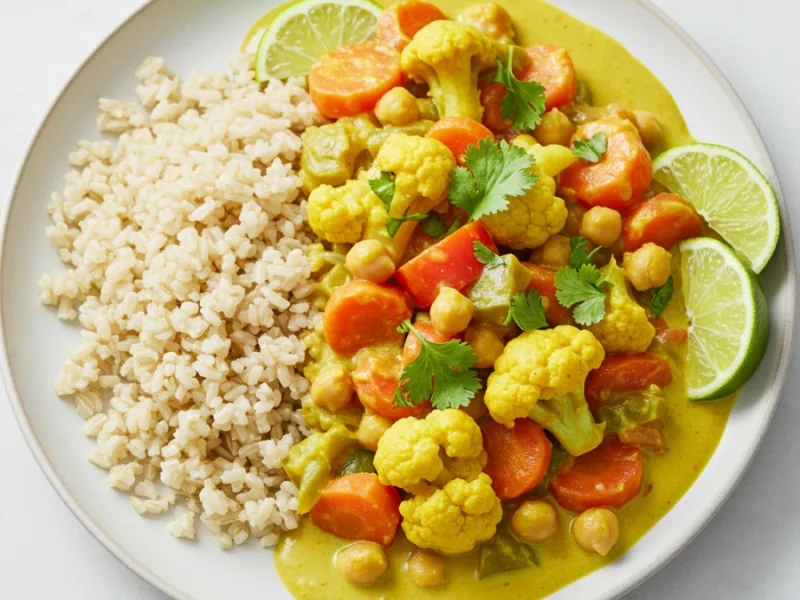
Serve the vegetable curry over the fluffy brown rice. Garnish with fresh cilantro.
Enjoy with naan bread or a side of yogurt for extra creaminess.
Extra technique, safety notes and details when you want to go deeper.
More tips & details
A Flavorful and Nourishing Vegetable Curry with Whole Grain Rice
A Perfectly Spiced and Wholesome Dish for Every Occasion
There is something deeply comforting and satisfying about a warm bowl of vegetable curry with brown rice. Packed with vibrant, nutrient-rich vegetables and a harmonious blend of aromatic spices, this dish is a delight for the senses. The gentle heat of curry spices, the natural sweetness of roasted vegetables, and the nutty flavor of whole-grain rice create a well-balanced meal that is both hearty and wholesome.
Whether you’re looking for a plant-based dinner, a meal-prep-friendly dish, or a simple way to incorporate more vegetables and whole grains into your diet, this vegetable curry is an ideal choice. The rich, creamy texture of the curry sauce, infused with ginger, garlic, and coconut milk, pairs beautifully with the chewy texture of brown rice, making it an unforgettable meal.
Why You’ll Love This Vegetable Curry
One of the best things about this homemade vegetable curry is its versatility. You can easily adjust the ingredients and spice levels to suit your preferences. Whether you prefer a mild and creamy curry or a spicier, bolder flavor, this recipe allows for customization.
Here’s what makes this vegetable curry with brown rice stand out:
- Bursting with Flavor – The perfect blend of curry powder, turmeric, cumin, and coriander creates a warm and aromatic dish.
- Naturally Vegan and Gluten-Free – A meal that is both wholesome and inclusive, suitable for various dietary preferences.
- Easy to Make – A simple, one-pot meal that is perfect for beginners and seasoned cooks alike.
- Great for Meal Prep – This curry tastes even better the next day, making it an excellent make-ahead meal.
- Rich in Fiber and Nutrients – A balanced combination of vegetables, legumes, and whole grains for a truly nourishing experience.
The Secret to a Perfect Vegetable Curry
A truly great vegetable curry is all about depth of flavor. To achieve a rich and aromatic base, it’s important to:
- Toast the Spices – Lightly toasting curry powder, turmeric, cumin, and other spices in oil before adding the vegetables brings out their full depth and complexity.
- Sauté the Aromatics – Fresh onion, garlic, and ginger provide a fragrant and savory foundation.
- Simmer with Coconut Milk – Using full-fat coconut milk results in a creamy and velvety sauce that perfectly coats the vegetables.
- Balance the Flavors – A touch of fresh lime juice, tamari, or maple syrup enhances the natural flavors of the dish.
The Best Vegetables to Use in Curry
The beauty of this vegetable curry is its adaptability. You can use any combination of fresh, frozen, or roasted vegetables, depending on what’s available. Some of the best vegetables to include are:
- Carrots – Sweet and slightly firm, they add color and texture.
- Bell Peppers – Their natural sweetness balances the spices beautifully.
- Sweet Potatoes or Pumpkin – These add a creamy, hearty texture.
- Cauliflower or Broccoli – A great way to add fiber and crunch.
- Zucchini or Eggplant – Softens nicely and absorbs the flavors of the curry.
- Spinach or Kale – Stirred in at the end for a boost of greens and nutrients.
Why Brown Rice is the Perfect Pairing
Choosing brown rice instead of white rice not only enhances the nutritional profile of the dish but also brings a wonderful nutty flavor and a more satisfying bite. Brown rice is a whole grain, meaning it retains its fiber, vitamins, and minerals, making it a healthier alternative to refined grains.
For the best results, cook brown rice separately and serve it alongside the curry, allowing the flavors to shine through. Alternatively, you can cook the rice directly in the curry sauce for a rich and flavor-infused dish.
How to Serve and Store This Curry
This vegetable curry with brown rice is best served hot, garnished with fresh cilantro, lime wedges, and toasted nuts or seeds for added crunch. Pair it with:
- Flatbread or Naan – For scooping up every last drop of the flavorful curry.
- Raita or Coconut Yogurt – A cooling contrast to the warming spices.
- Chutneys or Pickles – For an extra burst of flavor.
If you have leftovers, this curry stores beautifully in the refrigerator for up to 4 days. It also freezes well, making it perfect for busy weeknights when you need a quick, homemade meal.
A Satisfying Dish for Every Season
Whether you’re craving a warming winter meal or a light summer curry, this dish is perfect year-round. It’s an excellent way to enjoy seasonal vegetables while indulging in a deeply flavorful and satisfying meal.
So, the next time you’re in the mood for something hearty, nourishing, and bursting with flavor, give this vegetable curry with brown rice a try. You’ll love every bite!
Enhancing the Flavor and Texture of Homemade Vegetable Curry
How Small Adjustments Can Make a Big Difference
A well-prepared vegetable curry with brown rice is already a delicious, hearty, and nutritious dish. However, with a few thoughtful modifications, you can elevate it to a restaurant-quality meal. From adjusting the spice balance to experimenting with different textures, there are several ways to enhance the depth of flavor and overall experience of this dish.
The Importance of Fresh and Quality Ingredients
One of the most significant ways to improve the taste of this dish is by using fresh, high-quality ingredients. While canned and frozen options may be convenient, fresh produce always brings out a more vibrant flavor and a better texture.
- Spices: Instead of pre-ground curry powder, try using freshly toasted whole spices like cumin seeds, coriander seeds, and mustard seeds. Toasting them for a few seconds before grinding releases their essential oils, resulting in a more aromatic and flavorful curry.
- Vegetables: Choosing seasonal vegetables ensures better texture and natural sweetness. For example, fresh bell peppers, carrots, and tomatoes have more pronounced flavors compared to their canned or frozen counterparts.
- Herbs: Using fresh cilantro instead of dried herbs makes a noticeable difference in the final dish. Adding fresh herbs right before serving preserves their aromatic properties and enhances the presentation.
Adjusting the Spice Blend for a Deeper and More Balanced Flavor
Balancing the spices and seasonings is key to making an exceptional vegetable curry. Some spices add warmth, while others bring a subtle sweetness or smoky note. Here’s how you can fine-tune the spice profile:
- For a richer taste: Add a pinch of smoked paprika or garam masala towards the end of cooking. These spices contribute a warm, earthy depth to the curry.
- For more heat: If you prefer a spicier curry, increase the amount of chili powder, fresh chilies, or cayenne pepper. Alternatively, add a bit of harissa paste for a different kind of heat.
- For a hint of sweetness: If the curry is too spicy or acidic, a small amount of grated carrot or coconut sugar balances the flavors without making it overly sweet.
- For a tangy kick: A squeeze of fresh lime juice or a dash of tamarind paste enhances the acidity and adds complexity to the curry.
The Role of Texture in Elevating the Dish
A great vegetable curry isn’t just about flavor—it’s also about the right texture. If all the vegetables are soft and mushy, the dish can feel one-dimensional. Adding some contrast in texture makes it more interesting:
- For a creamy texture: Blend a small portion of the curry and stir it back into the pot. This gives it a thicker consistency without needing to add extra cream or coconut milk.
- For added crunch: Toasted cashews, almonds, or pumpkin seeds sprinkled on top provide a pleasant crunch.
- For a heartier bite: Instead of just chickpeas, try adding lentils or pan-fried tofu to introduce more texture and protein.
Why Homemade Vegetable Curry is Better Than Store-Bought
While it’s easy to buy pre-made curry sauces, making your own curry from scratch allows you to control the quality and nutrition of your meal. Here are some reasons why homemade vegetable curry is the superior choice:
- No preservatives or additives: Many store-bought curry pastes and sauces contain artificial stabilizers, excessive sodium, and processed oils. By making it at home, you avoid unnecessary chemicals.
- Customizable spice levels: Whether you prefer it mild or fiery hot, homemade curry lets you adjust the spice intensity to your taste.
- Healthier ingredient choices: Using coconut milk instead of heavy cream, and brown rice instead of white rice, results in a more nutritious and fiber-rich dish.
- Better balance of flavors: Pre-made sauces often have a generic taste, whereas homemade curry gives you the freedom to layer flavors and adjust them as you cook.
Common Mistakes to Avoid When Making Vegetable Curry
Even the most experienced cooks can make avoidable mistakes when preparing vegetable curry. Here are some common errors and how to fix them:
- Not cooking the spices properly: Spices should be lightly toasted in oil before adding the vegetables. This step intensifies their aroma and prevents a raw, powdery taste.
- Overcrowding the pan: Adding too many vegetables at once can cause them to steam instead of sauté, resulting in a bland and watery curry. Cook in batches if necessary.
- Using too much liquid: A watery curry lacks richness. Simmer the sauce long enough for it to thicken, or stir in a small amount of blended chickpeas or ground cashews for a more luxurious texture.
- Skipping acidity: A squeeze of lemon or lime juice at the end brightens up the flavors and prevents the curry from tasting dull.
Healthier Substitutions Without Sacrificing Flavor
If you want to make this vegetable curry even healthier, consider these smart substitutions:
- Instead of white rice: Use quinoa, farro, or bulgur wheat for added fiber and nutrients.
- Instead of coconut milk: If you prefer a lighter curry, swap coconut milk for Greek yogurt or blended cashews.
- Instead of store-bought broth: Homemade vegetable stock or just water with added aromatics (like bay leaves and cloves) ensures a cleaner taste.
- Instead of refined sugar: If your curry needs a touch of sweetness, try dates, pureed carrots, or a splash of orange juice instead of sugar.
Final Touches That Make a Difference
Sometimes, it’s the small details that turn a good curry into an outstanding one. Here are a few finishing touches that elevate the dish:
- Drizzle of flavored oil: A few drops of chili oil, garlic oil, or sesame oil add another layer of complexity.
- Fresh herbs: Finishing with cilantro, Thai basil, or scallions makes the dish look and taste fresher.
- Fermented elements: A small amount of fermented ingredients like miso paste or kimchi juice can deepen the umami profile.
- A crunchy topping: Sprinkle some toasted coconut flakes, nuts, or crispy shallots for a textural contrast.
By making thoughtful ingredient swaps, avoiding common mistakes, and experimenting with flavor layering, you can transform a traditional vegetable curry with brown rice into a memorable and exciting dish every time.
Recivelle · /recipe/vegetable-curry-brown-rice-recipe