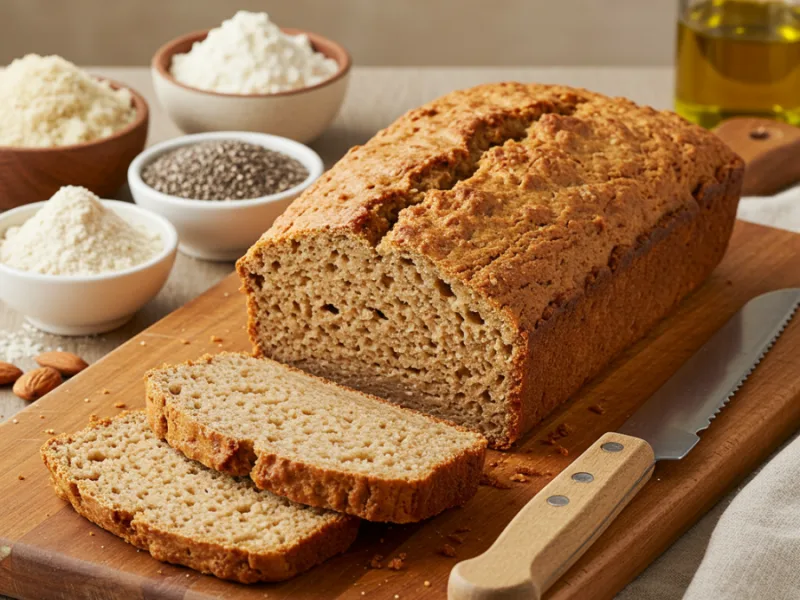
Base recipe: 10 slices
Your kitchen companion
Ingredients
Check off ingredients as you prepare them.
Follow the steps at your own pace.
Method
Preheat the oven to 175°C (350°F). Line a small loaf pan (approximately 20 cm x 10 cm or 8 x 4 inches) with parchment paper.
Mix dry ingredients. In a large mixing bowl, combine the almond flour, coconut flour, psyllium husk powder, baking powder, and salt. Stir well to distribute the ingredients evenly.
Add wet ingredients. Pour in the apple cider vinegar and olive oil. Slowly add warm water while stirring continuously. The dough will start to thicken quickly due to the psyllium husk.
Knead the dough. Using your hands, knead the dough for about 2 minutes until it becomes firm and holds together well. If the dough feels too dry, add a tablespoon of water at a time until you reach the right consistency.
Shape the loaf. Form the dough into a compact oval or rectangular shape and place it in the prepared loaf pan. Smooth the surface with wet hands to prevent cracking while baking.
Bake. Place the pan in the oven and bake for 50 minutes, or until the bread is firm to the touch and has a golden crust.
Cool completely. Remove the loaf from the oven and let it cool in the pan for 10 minutes. Then, transfer it to a wire rack and let it cool completely before slicing. This ensures the texture is set properly.
Extra technique, safety notes and details when you want to go deeper.
More tips & details
The Ultimate Vegan Keto Bread – A Low-Carb Delight
Finding a delicious, fluffy, and truly satisfying bread while following a vegan keto lifestyle can feel like a challenge. Most traditional bread recipes rely on carbohydrate-rich flours and eggs, making it difficult to find an alternative that aligns with both plant-based and low-carb diets. But this vegan keto bread is here to change the game.
With a golden crust and a soft, slightly nutty interior, this bread delivers everything you crave in a classic loaf—without the carbs, dairy, or eggs. Made from a perfect blend of almond flour, coconut flour, and psyllium husk, it achieves the ideal texture while providing a nutrient-dense, high-fiber alternative to conventional bread. Whether toasted for breakfast, used as a sandwich base, or served alongside a warm soup, this low-carb vegan bread will quickly become a staple in your kitchen.
Why You’ll Love This Vegan Keto Bread
When it comes to vegan and keto-friendly baking, achieving the perfect balance between taste, texture, and nutrition can be tricky. This recipe ticks all the boxes, offering:
- A soft yet sturdy texture – Many keto-friendly breads turn out crumbly or too dense, but this one holds together beautifully.
- Low in carbs, high in fiber – Each slice is designed to keep you in ketosis while supporting digestion.
- 100% plant-based – No eggs, no dairy, just wholesome ingredients.
- Easy to make – Simple, fuss-free, and ready in no time.
- Versatile and flavorful – Perfect for sandwiches, toast, or even a quick snack with nut butter.
The Secret Behind the Perfect Vegan Keto Loaf
Unlike traditional bread, which relies on gluten and yeast for structure, this low-carb vegan bread uses a combination of plant-based binders to achieve a soft and chewy texture. Psyllium husk plays a crucial role by giving the bread its elasticity while also providing gut-friendly fiber. Almond and coconut flour create a delicate, slightly nutty flavor while keeping the recipe grain-free.
What sets this recipe apart is the perfect balance of moisture and structure. Some keto breads can turn out too dry or too dense, but this one retains just the right amount of moisture, making it perfect for slicing, toasting, and spreading. The result? A light yet hearty bread that pairs beautifully with your favorite toppings.
How to Enjoy This Low-Carb Bread
Once you bake your golden, perfectly risen vegan keto loaf, the possibilities are endless. Try it:
- Toasted with avocado and a sprinkle of sea salt
- As a sandwich base with fresh veggies and hummus
- Sliced and served with a side of warm, creamy soup
- Topped with nut butter and cinnamon for a sweet treat
- Grilled into a crispy, buttery keto toast
This bread isn’t just for those following a vegan or keto diet—it’s a fantastic option for anyone looking for a nutritious, gluten-free, and low-carb alternative to traditional bread.
Bake It Today and Enjoy a Guilt-Free Slice
With just a few simple steps, you’ll have a freshly baked loaf ready to enjoy. If you’ve been searching for the perfect vegan keto bread, this is the only recipe you need. Give it a try, and soon, you won’t even miss traditional bread.
Get ready to experience the joy of bread—without the carbs. Your new favorite low-carb, gluten-free, and egg-free loaf is waiting!
How to Customize and Perfect Your Vegan Keto Bread
Finding the perfect vegan keto bread recipe is a game-changer, but what if you want to adjust the texture, flavor, or nutritional profile to better suit your needs? Whether you're looking for a softer crumb, a crispier crust, or a nuttier flavor, there are many ways to modify this bread while keeping it low-carb and fully plant-based. From ingredient swaps to baking techniques, here’s how you can personalize your keto bread for the ultimate result.
Adjusting the Texture for a Softer or Crispier Bread
The texture of this low-carb vegan bread is influenced by the ratio of flour, fiber, and liquid. If you prefer a fluffier loaf, or one that’s more firm and crusty, try these adjustments:
- For a softer texture: Increase the amount of almond flour by 20 g (2 tbsp) while reducing coconut flour slightly. This will create a more tender crumb.
- For a firmer, denser bread: Add an extra 5 g (1 tsp) psyllium husk to absorb more moisture and create a chewier texture.
- For a crispier crust: Brush the surface with a light layer of olive oil before baking and bake for an extra 5-10 minutes at a slightly lower temperature (170°C or 340°F).
Changing the Flavor Profile
This keto-friendly, egg-free bread has a mild, slightly nutty taste that works well in savory and sweet combinations. However, small ingredient swaps can enhance or transform the flavor:
- For a nuttier taste: Add 1 tbsp of ground flaxseeds or use hazelnut flour instead of almond flour.
- For a more neutral flavor: Swap almond flour for sunflower seed flour, which has a milder taste and similar texture.
- For a touch of sweetness: Mix in ½ tsp cinnamon or a pinch of vanilla extract to create a slightly sweet, keto-friendly version.
- For a savory variation: Add ½ tsp garlic powder, ½ tsp onion powder, or dried herbs for a more aromatic bread.
Ingredient Substitutions for Different Dietary Needs
If you need to replace an ingredient due to allergies, taste preferences, or availability, here are the best substitutions while keeping the bread low-carb and gluten-free:
- Almond Flour Alternative: Use sunflower seed flour in a 1:1 ratio for a similar texture. This also makes the bread nut-free.
- Coconut Flour Alternative: Replace with extra almond flour (increase by 30 g or ¼ cup) to maintain the same consistency.
- Psyllium Husk Replacement: If you don’t have psyllium husk, use ground flaxseeds (2 tbsp) or chia seeds (1 ½ tbsp soaked in 3 tbsp water) for similar binding properties.
- Apple Cider Vinegar Substitute: Lemon juice can be used in the same quantity for a slightly fresher taste.
How Different Oils Affect the Final Result
The type of oil used in this low-carb vegan bread affects both flavor and texture:
- Olive oil (recommended) – Adds a rich, slightly savory depth without overpowering the bread.
- Coconut oil – Creates a subtly sweet aftertaste and helps with moisture retention.
- Avocado oil – Provides a neutral taste and helps keep the bread soft.
- Melted vegan butter – Enhances richness and makes the bread slightly more indulgent.
Baking Tips for the Best Results
To get the most out of your homemade keto bread, keep these tips in mind:
- Always measure ingredients accurately. Small variations in flour and psyllium husk can drastically change the final texture.
- Use warm water (not cold or hot). Warm water helps the psyllium husk absorb moisture more evenly, preventing dry spots in the dough.
- Shape the dough properly. Since this bread doesn’t contain gluten, it won’t rise like traditional bread. Shape it into a compact form before baking for the best structure.
- Let it cool completely before slicing. Cutting into the bread too soon can make it crumbly. Allowing it to set properly ensures better texture and easier slicing.
Storing and Freezing for Freshness
To keep your vegan keto bread fresh for as long as possible, proper storage is key:
- At room temperature: Store in an airtight container for up to 3 days.
- In the refrigerator: Keeps well for 5-7 days if wrapped tightly to prevent drying out.
- In the freezer: Slice the loaf before freezing and store slices in a ziplock bag. Simply toast or warm a slice whenever you need it.
Serving Suggestions
Once you've baked and perfected your keto-friendly bread, it’s time to enjoy it in different ways:
- Toast it and top with avocado and seeds for a nutritious breakfast.
- Use it for keto sandwiches with fresh vegetables and plant-based spreads.
- Pair it with soups and stews for a hearty, filling meal.
- Spread almond butter or vegan cream cheese for a delicious snack.
By making small modifications, you can create a keto-friendly, plant-based bread that fits your taste preferences and dietary needs. Whether you like it soft or crispy, nutty or mild, this recipe is the perfect low-carb, egg-free alternative to traditional bread.
Recivelle · /recipe/vegan-keto-bread