Base recipe: 4
Your kitchen companion
Ingredients
Check off ingredients as you prepare them.
Follow the steps at your own pace.
Method
Cook the quinoa or rice Rinse the quinoa or rice under cold water to remove excess starch. Cook according to package instructions, then fluff with a fork and set aside.
Prepare the roasted chickpeas Preheat the oven to 200°C (400°F). Pat the chickpeas dry with a paper towel, then toss them with olive oil, smoked paprika, garlic powder, and salt. Spread them in a single layer on a baking sheet and roast for 15-20 minutes until crispy.
Make the peanut sauce In a small bowl, whisk together peanut butter, soy sauce, maple syrup, lime juice, grated ginger, minced garlic, and water. Adjust the consistency by adding more water if needed. Set aside.
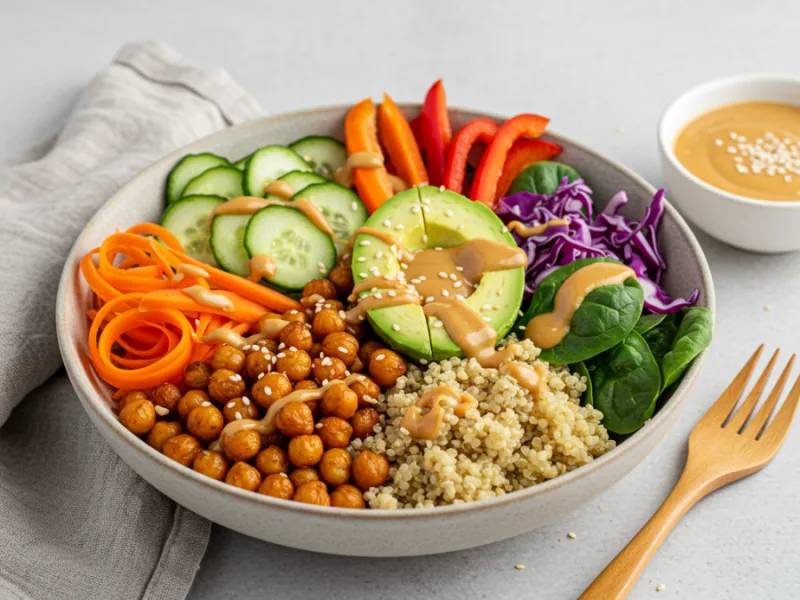
Prepare the vegetables Wash and slice the fresh vegetables: julienne the carrot, thinly slice the cucumber and red bell pepper, shred the purple cabbage, and slice the avocado.
Assemble the Buddha bowl Divide the cooked quinoa or rice into four bowls. Arrange the fresh vegetables, roasted chickpeas, and greens on top. Drizzle generously with the peanut sauce and sprinkle sesame seeds or crushed peanuts for extra crunch.
Serve immediately Enjoy fresh, or store leftovers in an airtight container in the fridge for up to two days. The peanut sauce can be stored separately and drizzled before serving.
Extra technique, safety notes and details when you want to go deeper.
More tips & details
A Nourishing and Flavorful Vegan Buddha Bowl with Peanut Sauce
A Vegan Buddha Bowl with Peanut Sauce is more than just a meal—it’s a vibrant and satisfying combination of fresh ingredients, balanced flavors, and nourishing textures. This wholesome dish brings together colorful roasted and raw vegetables, protein-packed legumes, hearty grains, and a creamy peanut sauce that ties everything together with its rich, nutty, and slightly tangy taste. Every bite offers a delightful contrast of crunchy, creamy, and chewy textures, making it a perfect choice for a well-rounded, plant-based meal.
Whether you're looking for a healthy lunch, a light yet fulfilling dinner, or a meal-prep-friendly recipe, this Buddha bowl ticks all the boxes. It’s packed with essential nutrients, plant-based proteins, and fiber, ensuring long-lasting energy and satiety. Plus, the combination of vibrant vegetables and the creamy peanut sauce makes it a visually stunning dish that’s as beautiful as it is delicious.
Why You’ll Love This Vegan Buddha Bowl
This Buddha bowl isn’t just another healthy meal—it’s an explosion of flavors and textures that will keep you coming back for more. Here’s why this dish will become a staple in your kitchen:
- Balanced and Nutritious – Packed with plant-based protein, healthy fats, and fiber, this meal keeps you energized and satisfied for hours.
- Incredibly Flavorful – The creamy peanut sauce adds a rich, nutty depth with a hint of garlic, ginger, and lime, enhancing every bite.
- Perfect for Meal Prep – This dish is easy to prepare in advance, making it ideal for busy weekdays and packed lunches.
- Customizable and Versatile – Swap in your favorite grains, veggies, or protein sources to suit your taste and dietary needs.
- A Feast for the Senses – The combination of colorful vegetables, crispy toppings, and a luscious sauce makes it as visually appealing as it is tasty.
The Secret to an Irresistible Peanut Sauce
One of the highlights of this dish is the homemade peanut sauce, which brings a bold and irresistible flavor to the bowl. Made with creamy peanut butter, fresh lime juice, soy sauce, garlic, ginger, and a touch of maple syrup, this sauce is the perfect balance of savory, sweet, and slightly tangy. It coats every ingredient beautifully, ensuring that each bite is filled with rich, satisfying flavor.
This sauce is not only great for Buddha bowls but can also be used as a dip, drizzle, or dressing for salads, wraps, and noodle dishes. The smooth texture and deep umami taste make it a staple in plant-based cooking, bringing any dish to life with minimal effort.
A Bowl of Plant-Based Goodness
Every component of this Buddha bowl is carefully selected to provide optimal nutrition and satisfaction. The base consists of hearty quinoa or brown rice, providing complex carbohydrates for steady energy. Crisp roasted chickpeas or tofu add plant-based protein, while an array of fresh and roasted vegetables deliver essential vitamins, minerals, and antioxidants. A handful of crunchy toppings like sesame seeds or crushed peanuts enhance both texture and taste, making every bite a delightful experience.
With its nutrient-dense ingredients and bold flavors, this bowl is a complete, balanced meal that nourishes both the body and the soul.
Make It Your Own
One of the best things about a Buddha bowl is its versatility. Whether you follow a strict vegan diet or simply enjoy plant-based meals, this recipe is highly adaptable. Here are some easy ways to customize it:
- Switch the Base – Use farro, couscous, or wild rice instead of quinoa or brown rice for a unique twist.
- Choose Your Protein – Try crispy tempeh, lentils, or edamame as an alternative to roasted chickpeas or tofu.
- Experiment with Vegetables – Swap in your favorite seasonal produce like roasted sweet potatoes, beets, or asparagus.
- Spice It Up – Add sriracha, chili flakes, or a pinch of cayenne pepper for a little heat.
- Make It Gluten-Free – Opt for tamari instead of soy sauce to keep it completely gluten-free.
Ready to Enjoy the Perfect Plant-Based Meal?
If you’re looking for a nutritious, easy-to-make, and flavor-packed meal, this Vegan Buddha Bowl with Peanut Sauce is exactly what you need. It’s a fantastic way to enjoy a wholesome, satisfying dish while embracing the vibrant flavors of plant-based eating.
Try this recipe today and experience how simple ingredients can transform into a nourishing, delicious meal that you’ll want to make again and again. Whether you’re preparing it for yourself, family, or friends, this bowl is guaranteed to impress!
How to Customize and Enhance Your Vegan Buddha Bowl with Peanut Sauce
A Vegan Buddha Bowl with Peanut Sauce is a versatile, nutrient-rich dish that can be tailored to personal preferences and dietary needs. By adjusting ingredients, you can enhance flavor, texture, and nutritional value, making this meal even more enjoyable. Whether you want a spicier kick, extra crunch, or a protein boost, here are some ways to modify the recipe while maintaining its delicious balance.
Choosing the Right Base for Your Buddha Bowl
The foundation of a great Buddha bowl is the grain or carbohydrate source, which determines the overall texture and flavor balance. While the original recipe calls for quinoa or brown rice, other options offer distinct benefits:
- Farro – Adds a nutty, chewy texture and is packed with fiber and protein.
- Couscous – Provides a light and fluffy texture, ideal for a softer, less chewy bowl.
- Cauliflower rice – A great low-carb alternative, adding a subtle earthy flavor.
- Wild rice – Offers a deep, slightly smoky taste with extra antioxidants.
Choosing different grains influences the bowl’s mouthfeel and ability to absorb the peanut sauce. A heartier grain like farro or wild rice will provide more chewiness, while quinoa or cauliflower rice will make the bowl feel lighter.
Adjusting the Protein for Different Textures
Protein plays a crucial role in making this meal filling and nutritionally balanced. The original recipe uses roasted chickpeas, but other protein sources can add variety:
- Tofu – When baked or pan-fried, tofu absorbs flavors well and offers a tender, slightly crispy texture.
- Tempeh – Provides a firmer, nuttier taste and extra protein and probiotics.
- Lentils – Ideal for a softer, slightly earthy bite while being rich in fiber and iron.
- Edamame – Adds a mild, fresh flavor with a firm texture, perfect for extra plant-based protein.
If opting for tofu or tempeh, marinate them in soy sauce, lime juice, and a touch of maple syrup before baking or pan-frying for maximum flavor absorption.
Enhancing the Flavor with Different Vegetables
The selection of vegetables can completely change the flavor profile of your Buddha bowl. The original recipe includes a mix of raw and roasted vegetables, but here are some variations to consider:
- For extra sweetness: Add roasted sweet potatoes or grilled zucchini.
- For a spicy kick: Include radishes or pickled jalapeños.
- For a deeper umami flavor: Roast mushrooms or eggplant.
- For added crunch: Use shredded Brussels sprouts or sugar snap peas.
Mixing both raw and roasted vegetables creates a contrast in textures, keeping the bowl more exciting with every bite.
Customizing the Peanut Sauce for Different Tastes
The peanut sauce is the heart of this dish, adding a creamy, umami-rich depth that ties all the ingredients together. However, it can be adjusted to cater to different flavor preferences and dietary needs:
- For a sweeter sauce: Add an extra teaspoon of maple syrup or swap lime juice with orange juice.
- For more spice: Mix in sriracha, chili flakes, or cayenne pepper.
- For a tangier taste: Increase the amount of lime juice or add a splash of rice vinegar.
- For a lighter version: Use tahini instead of peanut butter, creating a slightly earthier, less nutty sauce.
If you prefer a thicker sauce, reduce the amount of water. For a thinner drizzle, whisk in extra lime juice or coconut milk.
Creating More Crunch and Texture
Adding an element of crunch is essential to contrast the creaminess of the sauce and the tenderness of the grains. While the recipe includes sesame seeds or crushed peanuts, other options can enhance texture further:
- Toasted coconut flakes – Introduces a light, tropical sweetness.
- Pumpkin or sunflower seeds – Adds an earthy, nutty crunch.
- Puffed quinoa – Provides a crispy, airy bite.
- Crispy shallots – Delivers a mild oniony crunch with extra umami.
A mix of crunchy toppings balances the smooth peanut sauce and tender vegetables, making each bite more dynamic.
Adjusting the Nutritional Profile
This recipe is already high in fiber, plant-based protein, and healthy fats, but small modifications can further tailor it to dietary needs:
- For more protein: Increase the amount of tofu, tempeh, or chickpeas.
- For lower carbs: Swap quinoa for cauliflower rice and reduce the amount of maple syrup in the sauce.
- For more fiber: Add extra leafy greens, shredded cabbage, or flaxseeds.
- For a boost of healthy fats: Mix in avocado, hemp seeds, or a drizzle of extra virgin olive oil.
By balancing macronutrients, the Buddha bowl can be made lighter or more filling, depending on personal goals.
Turning It into a Warm or Cold Dish
This Buddha bowl can be enjoyed warm, cold, or somewhere in between, depending on preference and season:
- For a comforting warm bowl: Roast all vegetables and serve the peanut sauce slightly heated.
- For a fresh, crisp bowl: Keep all vegetables raw and chill the sauce before serving.
A warm bowl works well in colder months, while a cold version makes a refreshing summer meal.
Making It Meal-Prep Friendly
If preparing this Buddha bowl ahead of time, keep the following in mind:
- Store ingredients separately to prevent sogginess.
- Keep peanut sauce in a sealed container and drizzle it fresh before serving.
- Roasted chickpeas should be stored at room temperature to maintain their crunch.
When meal-prepping, assemble the bowl in layers, with grains at the bottom and fresh vegetables on top, ensuring the textures remain fresh and crisp.
Pairing Suggestions for a Complete Meal
While this Buddha bowl is already nutritionally complete, pairing it with the right side dish or beverage can enhance the overall experience:
- For extra hydration: Serve with a citrus-infused sparkling water or iced green tea.
- For a refreshing side dish: Enjoy with a cucumber and mint salad.
- For extra protein: Pair with a small lentil soup or edamame on the side.
- For a dessert pairing: Finish with a dark chocolate and almond energy bite.
Pairing the bowl with light, refreshing flavors helps balance its rich, nutty elements, creating a harmonious meal experience.
Elevate Your Vegan Buddha Bowl with Simple Adjustments
This Vegan Buddha Bowl with Peanut Sauce is already delicious and nutrient-packed, but small tweaks can make it even more exciting, versatile, and personalized. Whether you’re looking for extra crunch, more spice, or a protein boost, simple ingredient swaps can transform the dish while keeping it balanced and satisfying.
Experiment with different grains, proteins, vegetables, and seasonings to find your perfect combination. With so many customization options, this Buddha bowl never gets boring—each version brings a new, delicious experience to the table.
Recivelle · /recipe/vegan-buddha-bowl-peanut-sauce