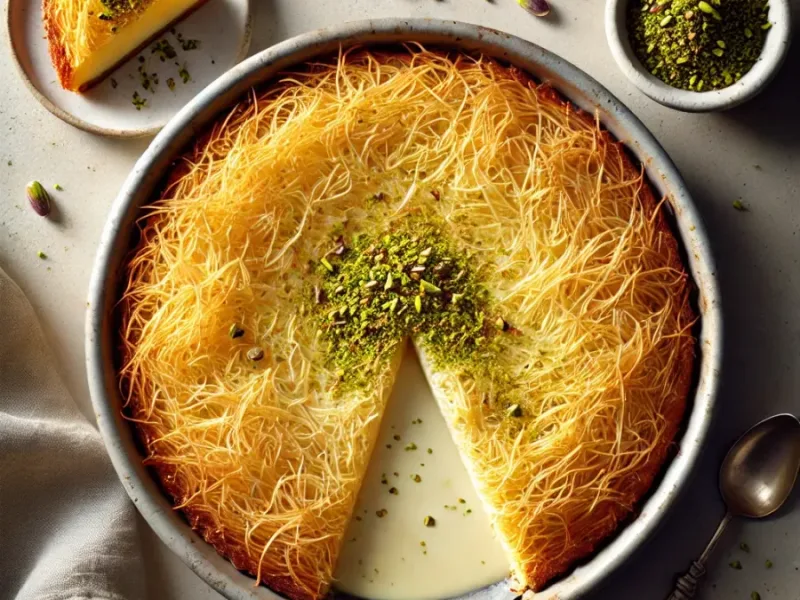
Base recipe: Serves 8
Your kitchen companion
Ingredients
Check off ingredients as you prepare them.
Follow the steps at your own pace.
Method
Prepare the Noodles
Gently separate the kadayif noodles, ensuring no large clumps remain.
Melt unsalted butter in a small saucepan over low heat. Once melted, pour it evenly over the kadayif noodles in a large bowl.
Add granulated sugar (about half of the 150 g) to the noodles, tossing thoroughly so that every strand is coated.
Pre-Bake the Base
Preheat the oven to 180°C (356°F).
Reserve about ⅓ of the buttered noodles for the top layer.
Spread the remaining ⅔ of the noodles into a greased baking dish (approximately 20x30 cm or 8x12 inch). Press lightly to form an even base.
Bake for 10–12 minutes, or until the noodles become lightly golden.
Prepare the Custard
In a mixing bowl, whisk egg yolks, cornstarch, and about 50 ml of the milk until smooth.
In a saucepan, heat the remaining milk, cream, the other half of the granulated sugar, and salt. Warm over medium heat, stirring continuously.
Once it begins to steam (not boil), slowly pour a ladle of the hot mixture into the egg-cornstarch mixture, whisking constantly to temper.
Return the tempered mixture to the saucepan, add vanilla extract, and continue stirring until it thickens into a smooth custard. This should take around 5–7 minutes.
Assemble the Pudding
Remove the partially baked kadayif base from the oven.
Pour the warm custard evenly over the base, smoothing the surface with a spatula.
Scatter the reserved buttered noodles over the custard, creating a crisp layer on top.
Return the dish to the oven and bake for 20–25 minutes, or until the top noodles turn golden brown.
Optional Syrup
While the pudding bakes, prepare an optional syrup by heating 100 ml water and 80 g sugar in a small saucepan. Simmer until the sugar fully dissolves and the syrup slightly thickens, about 5 minutes.
Drizzle the warm syrup over the top of the baked pudding as soon as it emerges from the oven for extra sweetness and shine.
Garnish and Serve
Allow the pudding to cool for 10 minutes to help the custard set.
Sprinkle generously with chopped pistachios or walnuts.
Slice and serve warm or at room temperature.
Extra technique, safety notes and details when you want to go deeper.
More tips & details
Traditional Turkish Kadayif Noodles Pudding is a dessert that instantly captivates the senses with its golden strands, silky custard, and seductively sweet aroma. At first glance, this delicate treat appears like a fine tapestry of crisp and tender layers woven together to form a dessert that is both light in texture and profoundly luxurious in flavor. The kadayif noodles, which are carefully shredded wheat pastry, lend a distinctive structure that is unlike any other dessert—thin, wispy filaments that crisp up delightfully during baking and then soften slightly when bathed in the luscious pudding. Each forkful offers a unique contrast: the gentle crunch of the noodles meets the smooth creaminess of the milk-based custard, creating a harmonious balance that pleases even the most refined palates.
Those familiar with Turkish culinary heritage know that kadayif is often compared to its close relative, kataifi pastry, popular in various Middle Eastern and Mediterranean confections. However, Traditional Turkish Kadayif Noodles Pudding holds its own distinctive identity thanks to its method of preparation, layering technique, and the exquisite interplay of sweet syrup with the delicate noodles. The process of layering melted butter and sugar over the threads ensures each strand is enveloped with rich caramelized notes, elevating the entire dessert into a sumptuous experience. The addition of fragrant ingredients—such as subtle hints of rose water or orange blossom water, if one so desires—brings a captivating aromatic depth that lingers on the palate and softly perfumes the air.
In Turkish households, this dessert is more than just a sweet treat; it symbolizes togetherness and the warmth of family gatherings, especially during holidays and festive occasions. Whether served at large celebrations like Ramadan feasts or enjoyed as a delightful finale to a special dinner, Traditional Turkish Kadayif Noodles Pudding never fails to impress. Its irresistible layers are often topped with a generous sprinkle of ground pistachios or crushed walnuts, adding both visual appeal and an extra dimension of flavor. This garnish crowns the pudding with a vibrant accent of color and further emphasizes the interplay between crisp and creamy textures.
One of the most fascinating aspects of this dessert is its uncanny ability to remain feather-light, even when enriched with a velvety pudding base and a luxurious syrup. The interplay of baked noodles and infused milk lends each bite an airy quality that dissolves gently on the tongue. This lightness stands in contrast to many other dense, syrup-drenched desserts, giving Traditional Turkish Kadayif Noodles Pudding an edge in sophistication. Its delicate flavors of subtly sweet milk and crisp pastry ensure that even a small serving offers a memorable taste experience—one that often encourages second helpings.
Another defining feature lies in the dessert’s unforgettable aroma. As soon as it emerges from the oven, the mixture of golden pastry, melted butter, and light caramel notes from the sugar crystals fills the kitchen with a comforting warmth that beckons everyone closer. The gentle waft of milk-infused custard envelops the surroundings, evoking a cozy atmosphere akin to a family reunion by the hearth. It is precisely this sense of comfort and familiarity that makes Traditional Turkish Kadayif Noodles Pudding endure as a beloved part of cultural tradition, passed from one generation to the next.
Yet, despite its classic origins, the dessert remains wonderfully versatile. Some chefs include spices like cardamom or cinnamon to add complexity, while others replace the milk custard with cream for an even richer interior. Regardless of how it is customized, the essence of kadayif noodles remains the star: an airy yet robust framework that merges seamlessly with sweet fillings to form an unrivaled pudding creation. When prepared meticulously—ensuring each strand is coated, each layer baked to perfection, and each spoonful laced with the right amount of syrup—it transforms into a culinary masterpiece.
Indeed, Traditional Turkish Kadayif Noodles Pudding showcases how simple ingredients can be elevated into a transcendent dessert. The interplay between crisp pastry threads, sugary syrup, and indulgent custard not only delights the palate but also pays homage to Turkey’s storied gastronomic legacy. It stands as a cultural emblem, affirming the role of shared desserts in bringing people together around the table. As you savor each mouthful, you taste the generational knowledge and passion woven into every morsel, making it a dessert with timeless appeal that resonates far beyond its homeland.
Enhancing and Tailoring Traditional Turkish Kadayif Noodles Pudding
Traditional Turkish Kadayif Noodles Pudding is renowned for its delectable combination of crisp noodles, creamy custard, and a subtle drizzle of sweet syrup. Although this dessert has its roots in time-honored culinary practices, it remains remarkably versatile, allowing home cooks and professional chefs alike to experiment with different ingredients, techniques, and garnishes. By making thoughtful modifications—whether to sweetness, dairy content, or the textural elements—you can produce a dessert that caters perfectly to your own palate or dietary needs. Below, you will find in-depth advice on how to fine-tune the flavor balance, accommodate dietary restrictions, and enhance the aromatic profile of this beloved dish.
1. Adjusting Sweetness and Caramel Notes One of the most appealing qualities of Traditional Turkish Kadayif Noodles Pudding lies in its carefully balanced sweetness. The interplay between sugar, custard, and butter provides a pleasant contrast with the crisp noodles. However, not everyone prefers the same intensity of sweetness. If you find the dessert too sugary:
- Reduce the total sugar used in the custard by about 20–30 g, ensuring the overall creaminess remains intact.
- Limit the amount of sugar you incorporate with the noodles before baking, and opt to add a light syrup at the end for a gentler sweetness.
- If you enjoy the subtle floral or earthy tones, use a natural sweetener such as honey or agave syrup. Keep in mind these sweeteners lend distinctive aromas that will alter the traditional flavor slightly.
If you prefer a more pronounced caramel essence:
- Increase the sugar when preparing the kadayif noodles, allowing it to caramelize more deeply during baking. Be vigilant to prevent burning.
- Extend the baking time by a few minutes so the top layer develops a toasty, amber hue, intensifying the nutty undertones that emerge from the noodles.
2. Flavor Enhancements Through Spices and Essences Even though Traditional Turkish Kadayif Noodles Pudding draws on simple, high-quality ingredients, there is ample room to enrich its aroma and taste with spices and flavorings:
- Add a tiny pinch of cardamom to the custard for a citrusy-sweet warmth that complements the milk base.
- Introduce orange blossom water or rose water in small doses, giving the dessert a distinct floral essence characteristic of Middle Eastern sweets.
- Infuse the milk with a cinnamon stick or a piece of star anise for a gentle, spicy undertone. Remove the spices before thickening the custard to avoid overpowering the delicate flavors.
By incorporating these subtle enhancements, you can craft a unique signature pudding that highlights a particular spice or evokes a specific region’s culinary style.
3. Dairy Substitutions and Cream Adjustments For those who are lactose intolerant, follow a vegan lifestyle, or merely wish for a lighter dessert, there are feasible substitutions:
- Replace dairy milk with plant-based milk such as almond, soy, or oat milk. Each choice adds a slight nutty or earthy element that can highlight the noodles’ crispness.
- Swap heavy cream with coconut cream if you seek a silky consistency without cow’s milk. The subtle coconut flavor can accentuate the overall sweetness.
- Decrease the cream by around 50 ml if you want the custard to be less dense. This shift in ratio places greater emphasis on the crisp, buttered noodles.
Butter, a key ingredient in coating kadayif noodles, also has alternatives:
- Use plant-based butter or margarine for a dairy-free version. Be mindful that certain brands contain extra oils and additives, which may slightly affect both the taste and the crisp factor.
- If you find the plant-based butter too salty or bland, adjust by adding a pinch of salt or a hint of your favorite sweetener to maintain flavor harmony.
4. Gluten-Free Variations Classic kadayif noodles are made with wheat, thus containing gluten. To accommodate gluten-sensitive or celiac guests:
- Seek out gluten-free kadayif noodles offered by specialized retailers. Often based on alternative flours (e.g., rice or corn), these noodles can recreate the threadlike texture crucial to the dessert’s success.
- In a pinch, use finely shredded gluten-free filo dough or even rice vermicelli. Although these may alter the original flavor slightly, they can still deliver an enjoyable crispness and structure.
- Always check that your cornstarch or thickener is certified gluten-free, as processing facilities sometimes handle both wheat-based and gluten-free products.
5. Texture Adjustments and Baking Techniques Achieving a pleasing contrast between crispy noodles and creamy custard is a hallmark of Traditional Turkish Kadayif Noodles Pudding. If you want a more pronounced crunch:
- Place the baking dish on a higher oven rack in the final 5–10 minutes of baking. This allows the top layer to brown evenly.
- Use the broiler setting briefly (2–3 minutes), but keep a close eye on the noodles to prevent burning.
If you prefer a softer top layer:
- Lightly sprinkle a bit of milk or cream over the noodles before baking, letting them remain moist instead of reaching full crispness.
- Shorten the cooking time or reduce the heat by 10–15°C if you notice the noodles are browning too rapidly.
For custard thickness:
- Increase the cornstarch by a small margin (5–10 g) for a firmer texture.
- If the custard appears runny, give it a little more time on the stovetop, stirring continuously so the proteins bind and thicken adequately.
6. Syrup Variations for Subtle Nuances A drizzle of syrup can amplify the dessert’s flavor profile or bestow a glistening, sweet finish:
- Use a rose-infused syrup by simmering edible rose petals with sugar and water. This method yields a floral accent and a touch of natural color.
- Replace part of the water with citrus juice (lemon or orange) for a bright, refreshing tang.
- Integrate an aromatic tea (like hibiscus or earl grey) into the syrup for a layered, sophisticated note.
Syrup consistency also influences the overall mouthfeel. A thicker syrup adheres strongly to the noodles, whereas a more fluid syrup seeps into the custard, blending flavors seamlessly.
7. Creative Garnishes and Their Impact Traditional toppings include finely chopped pistachios or walnuts, but there are many ways to adorn this dish:
- Toasted almonds offer a subtle, mild crunch, allowing the custard flavors to take center stage.
- Hazelnuts bring a deeper, slightly chocolatey flavor that can highlight the caramel nuances from the baked noodles.
- A sprinkle of desiccated coconut contributes a tropical sweetness and a chewy accent.
- For a burst of color, consider a scattering of freeze-dried raspberries, which introduce a tangy flair.
Serving style matters, too. Warm pudding emphasizes the comforting aspect, with a still-warm custard that melds seamlessly with any garnishes, while a chilled pudding may yield neater slices, though the noodles might lose a bit of their crispness.
8. Preserving the Traditional Essence Despite variations, it’s vital to honor the spirit of Traditional Turkish Kadayif Noodles Pudding. Retain the layered structure where crisp noodles envelop a gentle milk-based custard, and consider using high-quality butter (or the best plant-based equivalent) to ensure the silky undertone that distinguishes this treat. The contrast in textures—airy noodles on top and a creamy, velvety core—remains the defining characteristic, so any modifications should still allow this interplay to shine.
Each adaptation you make can be an opportunity to explore new flavor dimensions, pay homage to personal cultural influences, or cater to specific dietary needs. Whether you reduce the sweetness for a more subtle dessert, integrate spices that deepen the aroma, or experiment with gluten-free variants, the end result can still be recognized as an extension of the time-honored kadayif tradition. It is precisely this blend of heritage and creativity that keeps the dessert relevant in modern kitchens, ensuring Traditional Turkish Kadayif Noodles Pudding will continue to delight both those who cherish classic Middle Eastern sweets and those eager to leave their own culinary imprint.
By paying attention to the nuances of sweetness, texture, and aromatic enhancements, you can craft a dessert that aligns with your personal tastes while celebrating a recipe that has long brought people together around the table. As you explore these techniques, you’ll discover that even slight alterations can yield a remarkably different outcome—sometimes more floral, sometimes more caramelized, and always a testament to the generous, warm spirit of Turkish hospitality. Such flexibility is what makes Traditional Turkish Kadayif Noodles Pudding more than just a dessert; it’s a culinary journey that invites you to reinterpret and refine each mouthwatering layer.
Recivelle · /recipe/traditional-turkish-kadayif-noodles-pudding