Base recipe: This recipe serves 4 portions.
Your kitchen companion
Ingredients
Check off ingredients as you prepare them.
Follow the steps at your own pace.
Method
Step 1: Prepare the Potatoes
Boil the diced potatoes in salted water for 15-20 minutes until tender.
Drain the potatoes and mash them in a large mixing bowl.
Add the warm milk and butter to the mashed potatoes, mixing until creamy. Set aside.
Step 2: Prepare the Labskaus Mixture
In a large skillet, melt a small portion of butter over medium heat. Add the chopped onions and sauté until golden and translucent (about 5 minutes).
Stir in the shredded corned beef and cook for another 5 minutes until heated through.
Add the finely diced beetroot and chopped pickled gherkins, stirring well to combine.
Step 3: Combine and Season
Fold the corned beef mixture into the mashed potatoes, stirring until evenly incorporated.
Season with salt and freshly ground black pepper to taste.
Step 4: Assemble the Dish
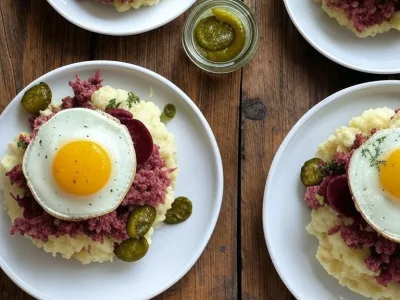
Serve the Labskaus in generous portions on individual plates.
Top each portion with a fried egg.
Garnish with pickled gherkins, beetroot slices, and one rollmop per plate for an authentic presentation.
Extra technique, safety notes and details when you want to go deeper.
More tips & details
When it comes to Northern German cuisine, few dishes are as iconic and full of character as Labskaus. This hearty meal, deeply rooted in the history of seafarers and coastal communities, is a perfect blend of flavor, tradition, and comfort. Labskaus isn't just a dish; it's a culinary journey that tells the story of resourcefulness and the love for simple, honest ingredients.
What Makes Labskaus Special?
Labskaus stands out for its unique combination of ingredients. This dish typically includes corned beef, potatoes, and beetroot, resulting in a bright pink hue that’s as eye-catching as it is appetizing. Topped with a fried egg, a side of pickled gherkins, and rollmops (pickled herring), this meal is a feast for both the eyes and the palate. It’s a dish that embodies the spirit of Northern Germany, offering a taste of history in every bite.
The rich, savory flavors are balanced by the tanginess of pickled elements, creating a harmony that will leave you craving more. Whether you’re looking to connect with your heritage or simply want to try something different, Labskaus is a dish that delivers bold flavors with a comforting touch.
Why You’ll Love This Recipe
1. A Unique Culinary Experience
Labskaus is unlike anything you’ve ever tasted. Its combination of savory and tangy flavors, paired with the creamy texture of mashed potatoes, makes it a dish that stands out.
2. Easy to Make
Despite its gourmet appearance, this recipe is straightforward and accessible for cooks of all levels. You don’t need fancy equipment or exotic ingredients—just a passion for trying something new.
3. Rich in Nutrients
Packed with protein, fiber, and essential vitamins, Labskaus is not only delicious but also nourishing. Its ingredients provide a good balance of macronutrients, making it an ideal option for a hearty meal.
4. Perfect for Any Occasion
Whether you’re preparing it for a family dinner, a cultural celebration, or just because you’re curious about traditional German cuisine, Labskaus is sure to impress.
A Recipe Steeped in History
The origins of Labskaus trace back to the sailors of the 18th and 19th centuries, who needed meals that were both nutritious and long-lasting during their journeys. The ingredients used in Labskaus—preserved meat, root vegetables, and pickles—were perfect for their needs, and the dish quickly became a staple. Today, Labskaus has transitioned from a practical meal to a beloved comfort food, cherished by people across Germany and beyond.
Pro Tips for the Perfect Labskaus
- Use fresh ingredients: While canned corned beef is traditional, you can opt for freshly cooked beef for a more refined flavor.
- Get creative with sides: Classic rollmops and pickled gherkins are must-haves, but you can add a personal twist with mustard or horseradish for extra depth.
- Cook for texture: Mash the potatoes until creamy, but leave a few chunks for texture. This gives the dish a rustic, homemade feel.
Your Next Step: Bring Germany to Your Table
Immerse yourself in the rich culinary traditions of Northern Germany by making this classic Labskaus recipe at home. Surprise your family and friends with a dish that’s as unique as it is delicious. The vibrant colors, bold flavors, and historical roots of Labskaus make it a meal worth savoring and sharing.
Take a step out of your culinary comfort zone and try Labskaus today. You won’t regret it!
Tips and Tricks for Perfecting Your Traditional Labskaus Recipe
The Traditional Labskaus Recipe from Northern Germany is not only a hearty dish with a fascinating history but also incredibly versatile. Below, we explore how you can adjust ingredients and methods to customize the flavor, texture, and presentation of this classic dish. Whether you're looking to modernize it, adapt it to dietary restrictions, or simply elevate its taste, these expert tips will help you make the most of Labskaus.
Adjusting the Protein
- Switching from Corned Beef to Fresh Beef
- Using freshly cooked beef, such as boiled or roasted brisket, adds a milder and juicier flavor compared to the salty tang of canned corned beef. Shred the fresh beef finely to maintain the traditional texture.
- Impact on flavor: The dish will taste less salty and processed, giving it a more refined, homemade feel.
- Vegetarian Protein Options
- Replace corned beef with lentils, chickpeas, or plant-based meat substitutes for a vegetarian version. Cook the legumes until soft and mash them slightly before mixing with the potatoes.
- Impact on flavor: Lentils provide an earthy taste, while chickpeas offer a nuttier profile. These alternatives make the dish suitable for vegetarians without sacrificing heartiness.
Experimenting with Potatoes
- Adding Sweet Potatoes
- Swap half the regular potatoes with sweet potatoes to introduce a hint of natural sweetness and a more vibrant color.
- Impact on flavor: The sweetness complements the tangy pickles and savory corned beef, offering a delightful contrast.
- Choosing the Right Potato Variety
- For a creamier consistency, use Yukon Gold or Maris Piper potatoes. If you prefer a fluffier texture, go for Russet potatoes.
- Impact on flavor and texture: Creamy potatoes create a richer mash, while fluffy potatoes lend a lighter, airier texture.
Enhancing the Beetroot Element
- Roasting vs. Boiling Beetroot
- Roast the beetroot instead of boiling it to enhance its natural sweetness and deepen its flavor. Dice the roasted beetroot into small pieces before adding it to the dish.
- Impact on flavor: Roasting adds a caramelized, slightly smoky taste that elevates the dish.
- Using Pickled Beetroot
- Pickled beetroot can be used for extra tanginess and a more pronounced vinegar profile.
- Impact on flavor: The tangy pickles and pickled beetroot amplify the dish’s acidic notes, balancing its richness.
Playing with Seasonings
- Adding Fresh Herbs
- Incorporate fresh dill, parsley, or chives to brighten the dish. Sprinkle chopped herbs over the finished plate or mix them into the mashed potatoes.
- Impact on flavor: Fresh herbs add a refreshing contrast to the hearty and salty elements.
- Spicing it Up
- Add a pinch of ground nutmeg, paprika, or a splash of Worcestershire sauce to the mashed potatoes for a more complex flavor.
- Impact on flavor: These additions create subtle depth and enhance the savory profile of the dish.
Customizing the Toppings and Sides
- Alternative Egg Preparations
- Instead of a fried egg, try a poached egg for a lighter, more elegant presentation. Alternatively, use a soft-boiled egg for a creamy yolk.
- Impact on flavor and texture: The runny yolk from poached or boiled eggs blends beautifully into the dish, adding extra creaminess.
- Exploring Additional Sides
- Consider serving Labskaus with a dollop of sour cream or a spoonful of horseradish for a tangy kick.
- Impact on flavor: Sour cream adds creaminess, while horseradish brings heat and sharpness.
Making It Diet-Friendly
- Gluten-Free Adaptation
- Ensure that your corned beef, pickles, and any additional seasonings are certified gluten-free. Most ingredients are naturally gluten-free, making it an easy adaptation.
- Impact on flavor: No significant change in taste, but perfect for those with gluten sensitivities.
- Low-Sodium Version
- Use low-sodium corned beef and pickles to reduce the salt content. Adding fresh herbs and spices can compensate for the reduced saltiness.
- Impact on flavor: A milder, more delicate flavor profile, with less of the briny tang typically associated with the dish.
Modernizing Presentation
- Layered Presentation
- Serve Labskaus in layers: mashed potatoes as the base, followed by the beetroot mixture, and topped with a perfectly fried egg. Garnish with finely chopped herbs for a professional finish.
- Impact on presentation: Creates a visually appealing dish that’s suitable for dinner parties or special occasions.
- Mini Portions
- Serve Labskaus in small ramekins or as individual portions for a sophisticated appetizer.
- Impact on presentation: Makes the dish feel more refined and modern, perfect for upscale dining.
Elevating the Flavor Profile
- Using Homemade Pickles
- If time allows, prepare your own pickled gherkins and beetroot. Homemade pickles offer a fresher, more nuanced flavor.
- Impact on flavor: Enhances the dish with unique tanginess and depth.
- Adding a Smoky Element
- Incorporate a sprinkle of smoked paprika or add a side of smoked fish, such as trout, for a subtle smoky undertone.
- Impact on flavor: Introduces a sophisticated smokiness that pairs well with the earthy and tangy components.
Labskaus is a versatile and forgiving dish that invites creativity. Whether you stick to the traditional recipe or make personalized adjustments, the result is always hearty, flavorful, and deeply satisfying. By experimenting with these tips, you can adapt the recipe to your tastes, dietary needs, or occasion while still honoring the rich history and flavor of this Northern German classic.
Recivelle · /recipe/traditional-labskaus-recipe-northern-germany