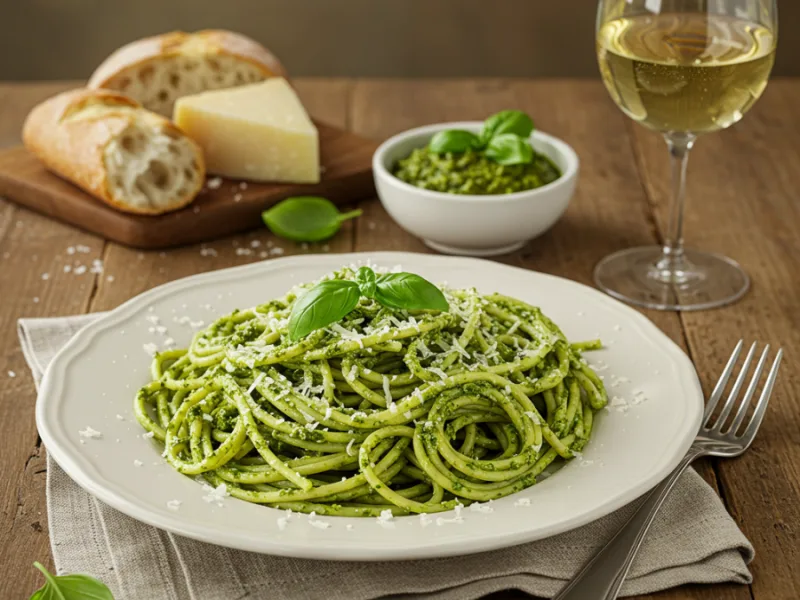
Base recipe: 4
Your kitchen companion
Ingredients
Check off ingredients as you prepare them.
Follow the steps at your own pace.
Method
Prepare the pesto sauce: In a mortar, crush the garlic with the coarse salt until a smooth paste forms. Add the pine nuts and continue grinding until they are well broken down. Gradually add the fresh basil leaves, crushing them in circular motions to release their aromatic oils. Slowly incorporate the cheeses and drizzle in the extra virgin olive oil while continuing to grind until a smooth and creamy consistency is achieved. If using a food processor, pulse the ingredients on low speed to prevent oxidation.
Cook the pasta: Bring a large pot of salted water to a boil. Add the pasta and cook according to the package instructions until al dente. Reserve about 60 ml (¼ cup) of pasta water before draining.
Combine the pasta and pesto: In a large mixing bowl, toss the drained pasta with the freshly prepared pesto. Add a small amount of the reserved pasta water to create a silky, well-coated sauce. Stir gently to ensure the sauce clings evenly to the pasta strands.
Serve: Plate the pesto pasta immediately, garnishing with extra grated Parmesan cheese and a drizzle of olive oil for enhanced flavor. Enjoy warm or at room temperature.
Extra technique, safety notes and details when you want to go deeper.
More tips & details
The Perfect Harmony of Flavors in a Classic Italian Pesto Pasta
The Origins of Pesto Pasta
Pesto pasta is a beloved dish in Italian cuisine, originating from the Ligurian region, specifically Genoa. This vibrant and aromatic sauce is known for its rich, herbaceous flavor, combining fresh basil, garlic, pine nuts, Parmigiano Reggiano, Pecorino Romano, and extra virgin olive oil. Traditionally, the sauce is made using a mortar and pestle, gently crushing the ingredients to release their natural oils and enhance their flavors.
Over the centuries, pesto has become a culinary icon, symbolizing the freshness and simplicity of Italian cooking. While there are many variations, the classic Genovese-style pesto remains the most authentic and widely loved. When paired with perfectly cooked pasta, it creates a harmonious balance of flavors and textures, making every bite an unforgettable experience.
The Secret to the Best Pesto Pasta
Achieving the perfect pesto pasta lies in the quality of the ingredients and the method of preparation. The key to a truly authentic Italian pesto is using fresh basil leaves, preferably Genovese basil, known for its sweet yet slightly peppery taste. The combination of high-quality Parmigiano Reggiano and Pecorino Romano adds a nutty, salty depth that enhances the overall flavor.
Another crucial element is the olive oil—choosing an extra virgin variety with a smooth, slightly fruity profile ensures a rich and velvety consistency. The pine nuts, lightly toasted, contribute a buttery, nutty undertone that complements the herbal notes of the basil.
When preparing pesto, it’s important to avoid overheating the basil during blending, as this can cause oxidation and turn the sauce bitter. For the best results, the traditional mortar and pestle method preserves the integrity of the ingredients, allowing the flavors to develop naturally.
Choosing the Right Pasta for Pesto
While pesto sauce pairs well with a variety of pasta shapes, some types are particularly suited to capturing its creamy texture. The most classic choice is trofie, a small, twisted pasta from Liguria that holds onto the sauce beautifully. However, linguine, spaghetti, and fusilli are also excellent options, as their shapes help evenly coat each strand with the aromatic pesto.
Another essential technique for achieving a perfectly coated pesto pasta is to reserve a small amount of pasta water before draining. The starches in the water help bind the pesto to the pasta, ensuring a silky, well-balanced sauce without becoming too thick or dry.
Modern Twists on Traditional Pesto Pasta
Although the classic pesto recipe remains timeless, modern variations have introduced exciting new ingredients and techniques. Some chefs experiment with alternative nuts like walnuts or almonds, offering a unique twist on the traditional pine nut base. Others incorporate lemon zest or ricotta cheese, adding a refreshing brightness or a creamy richness to the dish.
For those looking for a lighter version, using zucchini noodles or whole wheat pasta provides a healthier alternative without sacrificing flavor. Additionally, vegan adaptations replace cheese with nutritional yeast or plant-based alternatives, allowing more people to enjoy the exquisite taste of homemade pesto pasta.
The Ultimate Italian Comfort Food
A plate of freshly made pesto pasta is more than just a meal—it’s a celebration of Italian culinary tradition. Whether enjoyed as a quick and satisfying lunch or a gourmet dinner, this dish embodies the essence of Mediterranean flavors. Its simplicity allows the ingredients to shine, creating a vibrant, fragrant, and utterly delicious experience with every bite.
Whether sticking to the authentic Ligurian recipe or adding a personal touch, this dish is a must-try for anyone who appreciates bold, fresh flavors and the magic of traditional Italian cuisine.
Enhancing the Classic Italian Pesto Pasta Recipe
The Power of Ingredient Quality
One of the most effective ways to improve a traditional Italian pesto pasta is by focusing on ingredient quality. Since pesto is an uncooked sauce, every ingredient plays a crucial role in determining the final taste and texture.
- Basil Selection: Using fresh, young basil leaves ensures a more delicate and sweet aroma, preventing the sauce from becoming too bitter. Genovese basil is ideal, but experimenting with different varieties, such as Thai basil or lemon basil, can introduce unique flavor profiles.
- Cheese Choices: The traditional blend of Parmigiano Reggiano and Pecorino Romano provides a balance of nutty, salty, and sharp flavors. Aged Parmesan (over 24 months) brings out deeper umami notes, while Grana Padano offers a milder and slightly sweeter alternative.
- Olive Oil Variations: Extra virgin olive oil is a must, but selecting one with a fruity and peppery profile enhances the pesto’s richness. Lighter oils work best for a smoother and less intense finish.
Ingredient Modifications to Elevate Flavor
Pesto’s bold, herby character allows for creative adaptations without compromising its essence. A few ingredient swaps or additions can enhance complexity while maintaining authenticity.
Alternative Nuts for a Unique Taste
Pine nuts are the traditional choice, but other nuts can introduce different textures and aromas:
- Walnuts: Earthier and slightly bitter, walnuts provide a deeper flavor that complements the nutty undertones of Parmesan.
- Almonds: Lighter and sweeter, almonds create a mild and smooth pesto while adding a slight crunch.
- Pistachios: Their naturally sweet and rich taste pairs well with basil, making the pesto more vibrant.
- Cashews: For a creamier consistency, cashews work well, creating a silky pesto sauce with a slightly sweet aftertaste.
Adding Depth with Extra Ingredients
- Lemon Zest or Juice: A splash of fresh lemon juice brightens the pesto, balancing its herbal and nutty elements. The zest adds aromatic freshness without altering the texture.
- Garlic Roasting: Instead of using raw garlic, roasting or lightly sautéing it in olive oil mellows the pungency, adding a slightly sweet and nutty flavor.
- Chili Flakes: A pinch of chili flakes brings a subtle heat that enhances the basil’s natural peppery notes.
The Benefits of Homemade Pesto
While store-bought pesto may seem convenient, making it at home allows for better control over freshness, quality, and customization.
- No Preservatives or Artificial Additives: Many commercial pesto sauces contain stabilizers, excessive salt, or artificial flavors that can dull the natural vibrancy of fresh ingredients.
- Customizable Texture: Homemade pesto can be adjusted to preference—whether chunky, creamy, or silky smooth—depending on the method used.
- Stronger Aromatics: Freshly blended basil releases more intense flavors and essential oils, making the dish more fragrant and flavorful.
Common Mistakes to Avoid
Even with high-quality ingredients, small mistakes can affect the final result. Here are some pitfalls to watch out for:
- Overheating the Basil: Blending pesto at high speeds for too long causes oxidation, turning it brown and bitter. To prevent this, use a mortar and pestle or pulse the ingredients gently in a food processor.
- Adding Too Much Oil Too Early: Pouring in olive oil too soon can lead to a separated or overly greasy texture. Instead, mix it in gradually to create a stable emulsion.
- Using Pre-Grated Cheese: Freshly grated Parmesan and Pecorino blend more smoothly than pre-packaged versions, which often contain anti-caking agents that affect texture.
- Over-Salting: Since cheese already contributes saltiness, it’s best to taste the pesto before adding extra salt.
Healthier Alternatives Without Sacrificing Flavor
For those looking for a lighter version of pesto pasta, a few modifications can make the dish healthier while maintaining richness and depth.
Nutrient-Dense Pasta Choices
Instead of traditional pasta, consider:
- Whole Wheat Pasta: Higher in fiber and complex carbohydrates, offering better digestion and a nutty taste that complements pesto.
- Zucchini Noodles (Zoodles): A low-carb alternative that absorbs the aromatic pesto sauce while adding a fresh, crisp texture.
- Lentil or Chickpea Pasta: Packed with plant-based protein, these options enhance the dish’s nutritional profile.
Lighter Pesto Variations
- Using Less Oil: Replacing some olive oil with vegetable broth or Greek yogurt reduces fat while keeping a smooth consistency.
- Spinach or Kale Blend: Mixing baby spinach or kale with basil increases iron and vitamin content without overpowering the classic flavor.
- Nutritional Yeast Instead of Cheese: A perfect vegan alternative, nutritional yeast provides a cheesy, umami flavor while being rich in B vitamins.
Pairing Suggestions to Complement Pesto Pasta
Pesto pasta shines on its own, but pairing it with the right side dishes and proteins enhances the overall dining experience.
- Grilled Chicken or Shrimp: A light protein addition that absorbs the pesto’s herbaceous and nutty flavors.
- Roasted Vegetables: Oven-roasted cherry tomatoes, bell peppers, or zucchini add a hint of sweetness and smokiness.
- Garlic Bread or Focaccia: The crispy, garlicky texture of homemade focaccia pairs perfectly with the creamy and fragrant pesto pasta.
Small Adjustments for a Restaurant-Quality Dish
For those who want to elevate their pesto pasta to a fine-dining experience, small chef-approved techniques can make a big difference:
- Finishing with Burrata or Ricotta: Adding a spoonful of fresh burrata or ricotta on top creates a luxurious, creamy contrast to the pesto’s bold flavors.
- Garnishing with Microgreens or Edible Flowers: A sprinkle of micro basil, pea shoots, or edible flowers enhances both visual appeal and freshness.
- Drizzling Truffle Oil: A tiny drizzle of truffle oil at the end adds an earthy aroma that deepens the flavor complexity.
Bringing a Timeless Recipe to the Next Level
By making small yet intentional improvements, it’s possible to turn a simple pesto pasta into a gourmet, restaurant-worthy meal. Whether it’s selecting the finest ingredients, experimenting with flavors, or making healthier substitutions, the beauty of this dish lies in its versatility and endless possibilities.
Recivelle · /recipe/traditional-italian-pesto-pasta