Base recipe: 4
Your kitchen companion
Ingredients
Check off ingredients as you prepare them.
Follow the steps at your own pace.
Method
1. Marinating the Chicken: Place the chicken pieces in a large bowl. Add carrots, celery, onion, garlic, bay leaves, and thyme. Pour in the red wine, ensuring the chicken is fully submerged. Cover and refrigerate for at least 12 hours or overnight.
2. Preparing the Ingredients: Remove the chicken from the marinade and pat dry with paper towels. Strain the vegetables from the wine and set both aside separately.
3. Searing the Chicken: In a large Dutch oven or heavy-bottomed pot, heat the olive oil over medium heat. Add the bacon and cook until crispy. Remove and set aside.
In the same pot, sear the chicken until golden brown on both sides. Remove the chicken and set aside.
4. Cooking the Vegetables: Add the strained vegetables (carrots, celery, onion) to the pot and cook until softened. Stir in the tomato paste and cook for another minute.
5. Deglazing and Simmering: Pour in the reserved red wine marinade, scraping the bottom of the pot to release all the flavorful bits. Add the chicken broth and bring to a simmer. Return the chicken and bacon to the pot. Cover and simmer on low heat for 1.5 hours.
6. Preparing the Mushrooms and Onions: In a separate pan, melt the butter and sauté the mushrooms and pearl onions until golden brown.
7. Thickening the Sauce: Remove the chicken from the pot and set aside. Mix the flour with a bit of sauce to create a smooth paste, then whisk it into the pot. Cook for 10 minutes until the sauce thickens.
8. Final Assembly: Return the chicken, mushrooms, and onions to the pot. Stir well and let it simmer for another 5-10 minutes. Adjust seasoning with salt and black pepper.
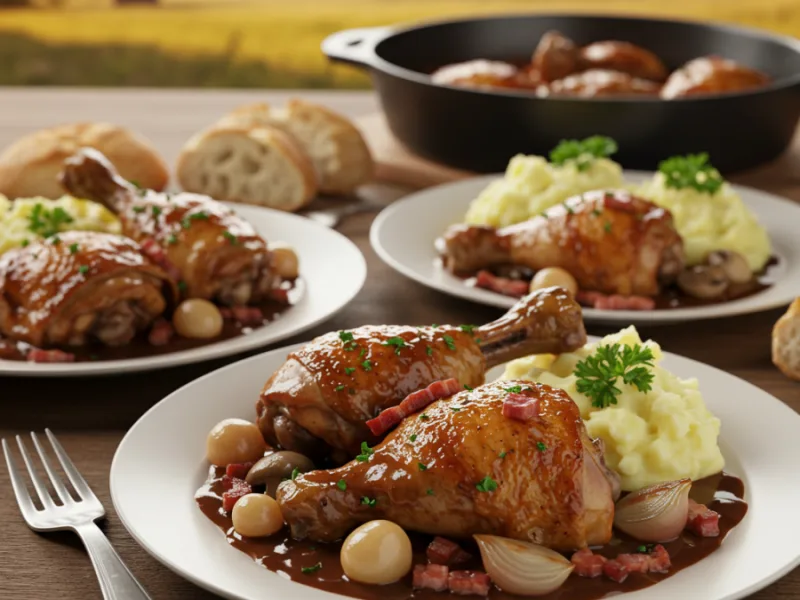
9. Serving: Sprinkle with chopped parsley and serve hot with mashed potatoes, crusty bread, or buttered noodles.
Extra technique, safety notes and details when you want to go deeper.
More tips & details
A Classic French Delight: The Irresistible Coq au Vin
The History and Legacy of Coq au Vin
Coq au Vin is a quintessential French dish, embodying the heart of traditional French cuisine. This rich and flavorful braised chicken stew is slow-cooked in red wine, creating a dish that is both comforting and elegant. With its deep roots in French culinary heritage, Coq au Vin has stood the test of time, originating as a rustic meal enjoyed in the countryside and evolving into a staple of fine dining.
The name "Coq au Vin" translates to "rooster in wine," a nod to the original preparation of the dish, which utilized older roosters that required long, slow cooking to achieve tenderness. Today, chicken is more commonly used, but the slow-simmering technique remains essential, ensuring the meat is tender and infused with the rich flavors of wine, aromatic herbs, and vegetables.
The Perfect Balance of Flavors
What makes Coq au Vin truly special is the harmonious blend of earthy, savory, and slightly sweet flavors. The combination of dry red wine, mushrooms, pearl onions, and smoked bacon (lardons) creates an incredibly complex and satisfying taste. As the dish simmers, the wine reduces, mingling with the natural juices of the chicken and the subtle sweetness of caramelized onions, while herbs like thyme, bay leaves, and parsley infuse every bite with depth.
The choice of wine plays a crucial role in enhancing the overall profile of the dish. Traditionally, a Burgundy wine is used, as it complements the richness of the ingredients. However, other full-bodied reds, such as Côtes du Rhône, Pinot Noir, or Cabernet Sauvignon, can also be excellent choices.
A Dish Meant for Slow Cooking
One of the defining characteristics of Coq au Vin is the slow-cooking process, which allows all the ingredients to fully develop their flavors. The initial step of searing the chicken in rendered bacon fat creates a golden-brown crust, sealing in the juices. This is followed by deglazing the pan with wine, scraping up every bit of caramelized goodness to intensify the sauce.
As the dish simmers gently, the chicken becomes fork-tender, absorbing the deep, velvety notes of the sauce. The slow cooking not only melds the flavors together but also enhances the overall texture, making every bite incredibly succulent and flavorful.
Ideal Pairings and Serving Suggestions
Coq au Vin is best enjoyed with traditional French accompaniments that absorb the rich sauce and complement the dish’s deep flavors. Some of the most popular side options include:
- Buttery mashed potatoes – A creamy, smooth base that balances the richness of the sauce.
- Crusty French bread – Perfect for soaking up every last drop of the luxurious red wine reduction.
- Egg noodles or tagliatelle – A classic pairing that adds a delightful texture.
- Rustic roasted vegetables – Carrots, parsnips, or Brussels sprouts bring an additional depth of flavor.
For a truly authentic experience, pair Coq au Vin with a glass of the same red wine used in cooking. This enhances the overall dining experience, allowing the flavors of the dish and wine to complement each other beautifully.
Variations and Modern Twists
While the traditional Burgundy-style Coq au Vin remains the most well-known, various regional adaptations and modern interpretations have emerged:
- Coq au Vin Blanc – A lighter version using white wine, such as Chardonnay, creating a slightly brighter and more delicate flavor profile.
- Coq au Riesling – A variation from Alsace, incorporating Riesling wine, mushrooms, and cream for a more aromatic and velvety sauce.
- Vegetarian Coq au Vin – A creative take using mushrooms, lentils, and root vegetables, offering a plant-based alternative with the same deep, rich sauce.
Each of these versions maintains the essence of the classic recipe while offering exciting new flavors to explore.
A Timeless Dish for Special Occasions
Coq au Vin is more than just a meal; it’s an experience. Whether served for a cozy family dinner or an elegant gathering, this dish never fails to impress. The combination of succulent chicken, bold wine sauce, and fragrant herbs makes it a perfect choice for any special occasion.
The beauty of Coq au Vin lies in its ability to bring people together. The long, slow cooking process fills the kitchen with inviting aromas, setting the stage for a meal that is both heartwarming and memorable. Its deep, complex flavors ensure that every bite is satisfying, leaving a lasting impression on anyone who tastes it.
By mastering this iconic dish, home cooks can bring a taste of France into their kitchens, celebrating the rich traditions of French gastronomy with every spoonful.
Enhancing the Depth and Flavor of Coq au Vin
Choosing the Right Wine for a Richer Sauce
The quality of wine used in Coq au Vin greatly influences the final flavor of the dish. While traditional recipes call for Burgundy wine, opting for a higher-quality full-bodied red wine can enhance the complexity of the sauce. Pinot Noir, Côtes du Rhône, Syrah, or even a bold Bordeaux add deeper fruit notes and a more velvety texture. If a smoother, slightly sweeter finish is desired, try using a Merlot or Zinfandel.
For a brighter and lighter alternative, consider making Coq au Vin Blanc by substituting red wine with Chardonnay or Viognier. This variation creates a more delicate and fresh flavor, which pairs beautifully with fresh herbs like tarragon and chervil.
Enhancing the Flavor with Additional Ingredients
Small ingredient adjustments can significantly elevate the dish’s richness and aroma. Some key enhancements include:
- Adding Cognac or Brandy: Before pouring in the wine, deglazing the pan with a small amount of Cognac or brandy intensifies the depth of the sauce, adding a mild sweetness and smoky undertones.
- Incorporating Dried Porcini Mushrooms: Soaking and blending dried porcini mushrooms into the sauce can enhance its earthy umami flavor, complementing the wine reduction and bacon fat.
- Using Duck Fat Instead of Butter: Replacing butter with duck fat in the final stages of the dish gives the sauce a silkier, more luxurious finish, elevating its richness.
Making Coq au Vin at Home for Better Quality
Preparing Coq au Vin at home allows for better control over ingredient quality and customization to personal taste preferences. Unlike restaurant versions, which may be pre-made and reheated, a home-cooked dish guarantees:
- Fresher and higher-quality chicken, which ensures tenderness and better flavor absorption.
- Lower sodium and preservatives, as many pre-made sauces contain artificial flavor enhancers.
- Custom seasoning levels, allowing adjustments to suit individual preferences for herbs, garlic, and wine intensity.
A homemade Coq au Vin also allows for slow-cooking adjustments, ensuring the sauce reaches its optimal consistency without becoming too thick or watery.
Avoiding Common Mistakes
Several frequent mistakes can prevent Coq au Vin from achieving its full potential:
- Skipping the Marinade: Marinating the chicken overnight is essential to allow the wine, herbs, and aromatics to penetrate deeply, enhancing tenderness and overall complexity. Skipping this step results in a flatter, less developed flavor.
- Not Searing the Chicken Properly: Properly browning the chicken in hot oil before simmering locks in juices and enhances flavor through caramelization. Failing to do this results in a less rich and less textured final dish.
- Overloading the Sauce with Flour: Using too much flour or thickening agents can make the sauce too heavy or pasty. Instead, reducing the wine slowly allows for a naturally rich consistency.
- Using the Wrong Type of Wine: Avoid wines that are too tannic (e.g., Cabernet Sauvignon) as they can create a bitter, overpowering taste in the sauce.
Healthier Alternatives for a Lighter Dish
While Coq au Vin is traditionally a rich and indulgent meal, a few modifications can create a lighter, yet still flavorful version:
- Replacing Bacon with Smoked Turkey or Mushrooms: Using smoked turkey instead of bacon reduces saturated fat while maintaining the savory, smoky depth. For a vegetarian-friendly option, adding extra mushrooms enhances umami richness.
- Choosing Skinless Chicken: Removing the skin before cooking significantly cuts down on fat and calories without compromising tenderness.
- Using a Low-Sodium Broth: Store-bought broths often contain excess sodium, which can overpower the balance of flavors. Opting for a homemade or low-sodium broth keeps the dish well-balanced.
- Swapping Butter for Olive Oil: Instead of finishing the dish with butter, using extra-virgin olive oil provides a heart-healthier alternative while still maintaining silkiness in the sauce.
Elevating the Dish with Unique Serving Ideas
While Coq au Vin is traditionally served with mashed potatoes or crusty bread, experimenting with different pairings can enhance the dining experience:
- Creamy Polenta: A soft, velvety polenta absorbs the rich sauce beautifully, offering a smooth contrast to the tender chicken.
- Cauliflower Purée: For a low-carb alternative, cauliflower purée provides a similar texture to mashed potatoes but with fewer calories and a slightly nutty flavor.
- Wild Rice or Barley: The nutty, slightly chewy texture of wild rice or barley pairs well with the deep, wine-infused sauce, adding a hearty and wholesome element.
Final Touches for an Exceptional Coq au Vin
To add a restaurant-quality finish, consider the following enhancements:
- A Splash of Wine Before Serving: Adding a tablespoon of fresh red wine at the end lifts the flavors, providing a brighter and fresher taste.
- Grating Dark Chocolate Into the Sauce: A small amount of dark chocolate (70% cocoa or higher) intensifies the richness of the sauce without making it sweet.
- Finishing with Fresh Herbs: A sprinkle of fresh thyme or tarragon just before serving provides a final layer of aroma and freshness.
With these adjustments, Coq au Vin can be transformed into a personalized, refined, and unforgettable dish, whether keeping it traditional or incorporating modern, health-conscious variations.
Recivelle · /recipe/traditional-french-coq-au-vin