Base recipe: 4 servings
Your kitchen companion
Ingredients
Check off ingredients as you prepare them.
Follow the steps at your own pace.
Method
Mix marinade: Combine ¾ cup (200 g) yogurt, 1 tbsp (20 ml) lemon juice, 1 tsp (5 g) salt, 1½ tsp (8 g) garam masala, and 1 tsp (5 g) turmeric in a bowl until smooth.
Coat chicken: Add 1.32 lb (600 g) chicken thighs and mix until fully coated; the surface should appear evenly covered with no dry spots.
Marinate chicken: Cover and refrigerate at 39°F (4°C) for 60 minutes; the mixture thickens slightly as it binds to the meat.
Heat fat: Place a 28–30 cm sauté pan on medium-high heat; add 1 tbsp (15 ml) oil and 1 tbsp (15 g) butter and heat until the butter foams and subsides.
Sear chicken: Add marinated chicken in a single layer; cook for 4–5 minutes until lightly browned and edges appear opaque; remove and set aside.
Cook onion: Reduce heat to medium; add remaining 1 tbsp (15 g) butter and 150 g onion; cook for 6–8 minutes until soft and lightly golden, stirring to prevent burning.
Add aromatics: Add 1 tbsp (15 g) garlic and 1 tbsp (15 g) ginger; cook for 1 minute until fragrant but not browned.
Add tomatoes: Add 1¾ cups (400 g) crushed tomatoes, 2 tsp (8 g) sugar, and remaining 1 tsp (5 g) salt; simmer gently for 10 minutes until slightly thickened and reduced.
Blend sauce: Use a hand blender to puree until smooth; the texture should become uniform and slightly thick.
Return chicken: Add seared chicken back to the pan; reduce heat to low and simmer for 12–15 minutes until internal temperature reaches 165°F (74°C).
Add cream: Pour in ⅔ cup (150 ml) heavy cream; stir and simmer for 3 minutes until the sauce becomes creamy and cohesive.
Rest dish: Remove from heat and rest for 5 minutes; this allows the sauce to stabilize and slightly thicken before serving.
Extra technique, safety notes and details when you want to go deeper.
More tips & details
Creamy Butter Chicken as a Controlled, Low-Acid Curry Base
What makes this a stable butter chicken recipe for home cooking
This preparation establishes a controlled version of butter chicken where the sauce remains smooth and stable at a low simmer, preventing separation during cooking or resting. The structure focuses on a reduced tomato base integrated with fat, creating a cohesive texture that coats the chicken evenly. The result is a sauce that flows slowly when served hot, maintaining body without excess liquid pooling in the dish.
How this version differs from sharper tomato-based curries
This recipe reduces spice fragmentation and limits acidity to achieve a rounder, more balanced profile. The emphasis shifts toward fat integration rather than spice intensity, solving a common issue where sauces become overly sharp or thin after reduction. If a more intense, spice-forward curry is preferred, the Authentic Chicken Tikka Masala Recipe provides a stronger tomato base and sharper flavor profile with less reliance on cream. In this version, the focus remains on controlled richness and consistent texture.
Why this is considered a no-fail butter chicken method
The method is engineered to produce repeatable results by managing heat and moisture at each stage of production. The sauce is reduced before finishing, which concentrates the flavor profile and prevents dilution once the fat phase is added. This technical approach ensures that the final consistency remains stable throughout the serving period.
- Balanced fat integration: prevents visible oil separation.
- Controlled reduction phase: produces natural thickness without added starch.
- Even coating behavior: allows the sauce to cling effectively to protein surfaces.
Texture, finish, and serving behavior in a creamy curry
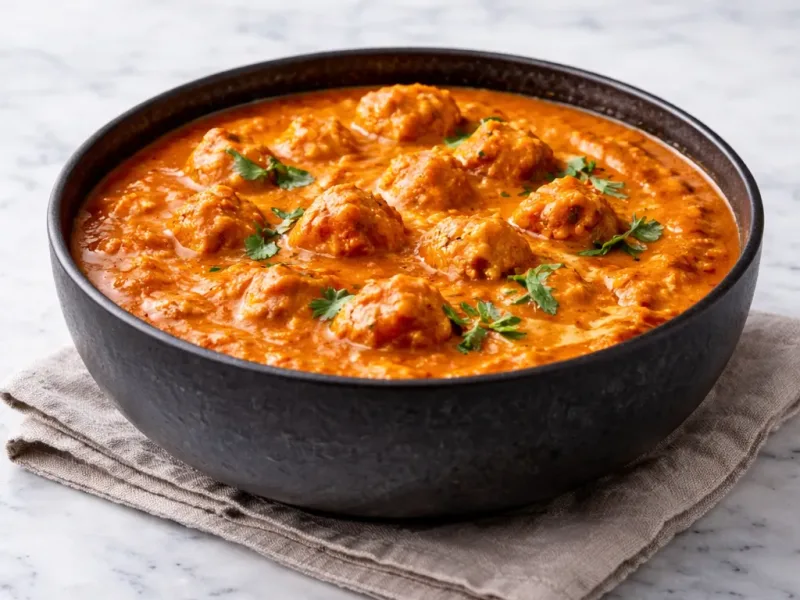
The finished dish presents a thick, cohesive sauce with a soft sheen rather than a reflective surface, indicating proper emulsification. Chicken pieces remain tender and intact, with a moist interior that contrasts with the creamy exterior. When served immediately, the sauce maintains a gentle flow that settles evenly, making this preparation suitable for plating or bowl service without structural breakdown.
Chef PEKIS recommendations
Maintain moderate heat when incorporating cream; excessive temperatures cause fat separation and a grainy texture. Allow the tomato base to reduce fully before finishing, as incomplete reduction leads to a thin sauce that cannot be corrected later. Avoid overcrowding the pan during searing, as a reduced surface temperature prevents proper browning and weakens the final flavor structure.
Storage and make-ahead behavior for creamy chicken curry
This preparation holds well under refrigeration at 40°F (4°C) for up to 3 days, maintaining its structure when reheated slowly over low heat. Stirring during reheating restores the emulsion and prevents surface oil from separating. Freezing is possible, though a slight softening of texture may occur; gradual thawing and low-temperature reheating help preserve the original consistency.
Serving style and dish format in practice
Traditional Butter Chicken (Murgh Makhani) is served as a sauced main dish, where the chicken is fully coated rather than plated separately from the sauce. The preparation is defined by its cohesive structure, where the sauce and protein function as a single component. This format ensures consistent flavor distribution in each portion and eliminates the need for additional finishing elements.
The dish presents a thick, creamy surface that holds its shape briefly when spooned, then settles evenly across the serving bowl. The aroma is mild and rounded, with no sharp edges, indicating proper balance between fat and tomato base. When eaten, the sauce clings to the chicken without separating, and the texture remains smooth without graininess, confirming stable emulsification.
Meal context and practical serving use
This preparation is typically served as part of a structured meal, paired with neutral bases such as rice or flatbread that absorb the sauce without altering its consistency. The dish maintains its texture during serving, allowing it to sit briefly without thinning or forming excess liquid. This makes it suitable for plated meals or shared service where consistency across portions is required.
In a broader dining context, this type of curry fits into both weekday and formal settings due to its stable texture and moderate flavor profile. It can be portioned directly from a single vessel without loss of structure, and the sauce remains evenly distributed even after light handling. The consistency reassures that each serving delivers the same balance of sauce and protein without adjustment.
Questions
Why does butter chicken sauce split during cooking?
The sauce splits because cream is added at too high heat; reduce temperature and stir gently. When fat is exposed to excessive heat, it separates from the liquid phase, forming visible oil pools on the surface. A stable emulsion requires low heat and gradual integration. The sauce should appear smooth and slightly thick, not oily. If separation occurs, lower heat immediately and stir until texture stabilizes.
Why is butter chicken too acidic after cooking?
Excess acidity occurs when tomato base is not reduced long enough; extend simmering before adding fat. Tomatoes contain natural acids that concentrate unless balanced by fat and reduction. Proper cooking should soften sharpness and create a rounded flavor. The sauce should taste mild and slightly sweet, not sharp. If acidity remains, continue simmering until the texture thickens and color deepens.
Why is butter chicken sauce too thin and watery?
A thin sauce results from insufficient reduction; simmer longer to evaporate excess water. Tomato mixtures release water during cooking, which must be reduced before finishing. Without this step, the sauce cannot bind with fat properly. The correct texture is thick and coats the spoon evenly. If it runs off quickly, continue simmering until it thickens naturally.
Why is butter chicken chicken dry or tough?
Dry texture comes from overcooking or using lean cuts; reduce cooking time and use higher-fat meat. Chicken continues to cook during simmering, and excessive time removes moisture. The interior should remain soft and juicy with slight resistance. If pieces feel firm and stringy, they have exceeded optimal cooking time and lost internal moisture.
Can butter chicken be made without cream and still work?
Yes, but texture and stability change; use yogurt carefully to maintain structure. Cream provides fat needed for emulsification, while yogurt alone may split under heat. The sauce becomes less smooth and slightly grainy if overheated. Maintain low heat and monitor consistency closely. The result should still be cohesive, though less rich and slightly tangier.
Why does butter chicken lack deep flavor after cooking?
Weak flavor develops when searing is insufficient; ensure proper browning before simmering. Browning creates foundational compounds through heat, which build depth in the final dish. Without this step, the sauce tastes flat and one-dimensional. The chicken should show light golden edges before removal. If no browning is visible, flavor development will be limited.
Recivelle · /recipe/traditional-butter-chicken-murgh-makhani