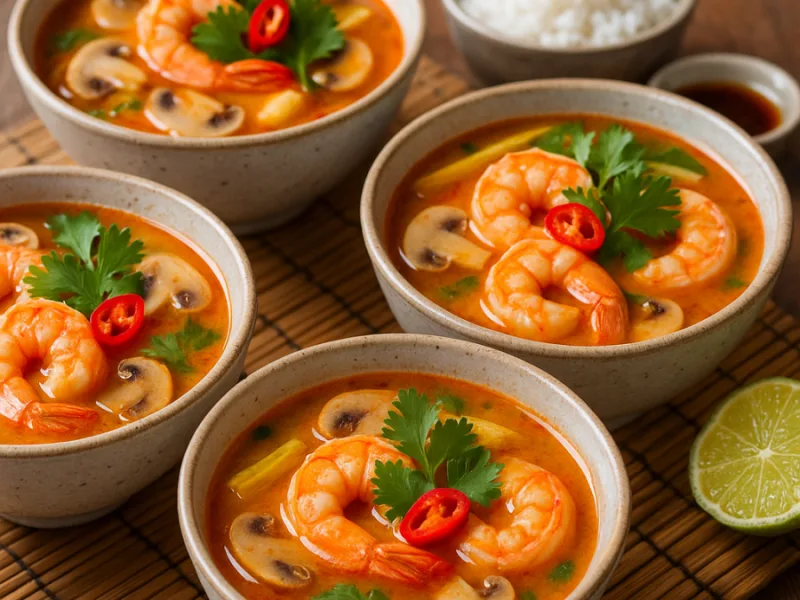
Base recipe: 4 portions
Your kitchen companion
Ingredients
Check off ingredients as you prepare them.
Follow the steps at your own pace.
Method
Prepare the broth: In a medium pot, bring the water to a boil over medium heat. Add the lemongrass, galangal, kaffir lime leaves, and Thai bird’s eye chilies. Let simmer for 5–7 minutes until the aroma is released.
Add mushrooms: Add the sliced mushrooms to the pot and cook for another 5 minutes until slightly tender.
Add shrimp: Add the raw shrimp to the soup and cook for 3–5 minutes or until the shrimp turn pink and are cooked through.
Flavor the soup: Lower the heat and stir in the fish sauce, lime juice, sugar, and salt. Taste and adjust seasoning if needed.
Add chili paste and milk: Stir in the Thai chili paste and evaporated milk (or coconut milk for a richer flavor). Simmer gently for another 2–3 minutes until everything is well blended.
Finish with herbs: Remove from heat and stir in chopped cilantro just before serving.
Serve: Serve hot as a starter or light main dish, garnished with extra herbs or lime wedges if desired.
Extra technique, safety notes and details when you want to go deeper.
More tips & details
Thai Hot and Sour Shrimp Soup for Chilly Evenings
Discover the exotic flavors of authentic Thai tom yum with shrimp
Tom Yum Soup is much more than just a bowl of spicy shrimp broth. It’s an explosion of vibrant Southeast Asian flavors, rich in tradition and deeply satisfying with every spoonful. This Thai hot and sour shrimp soup blends aromatic herbs, bold spices, and fresh seafood to create a dish that’s warming, energizing, and utterly addictive. Whether you're craving a light yet flavorful dinner or a unique starter to impress your guests, this dish brings restaurant-quality flavor to your kitchen with ease.
Crafted with care using lemongrass, galangal, kaffir lime leaves, and Thai bird’s eye chilies, this soup offers a unique balance of heat, citrus, and umami. Prawns or shrimp add protein and sweetness, while a splash of lime juice and fish sauce creates that unmistakable tom yum depth. Its signature red-orange hue comes from a touch of Thai chili paste (nam prik pao), giving the broth a rich body without overwhelming the other ingredients.
Why this Thai shrimp soup recipe stands out
This is not your average shrimp soup. Each element of traditional tom yum goong has been respected and enhanced, making it accessible for home cooks without compromising on authenticity. Unlike diluted versions you might find in takeout menus, this recipe delivers the bold Thai flavor profile in its purest form—bright, spicy, sour, and satisfying.
We’ve refined the method to be as beginner-friendly as possible, while still honoring the ingredients that make tom yum special. From perfectly cleaned shrimp to the correct slicing of galangal and lime leaves, this recipe walks you through each step so your results are always delicious and consistent.
This version also uses ingredients readily found in well-stocked supermarkets or Asian grocers, making it achievable without sacrificing its soul. Whether you're new to Thai cuisine at home or a seasoned lover of authentic Asian soups, this dish will exceed expectations.
What makes this spicy Thai soup a must-try
There are many reasons to love tom yum goong, but here are the top qualities that make it a favorite around the world:
- Bold and balanced: With a foundation of sour lime, spicy chili, and fragrant lemongrass, it captures Thailand’s love for flavor harmony.
- Naturally light: It’s a low-fat, broth-based soup that feels indulgent without being heavy—ideal for both lunch and dinner.
- Quick to prepare: From prep to table in under 40 minutes, it's a fast dinner idea that doesn’t cut corners.
- Perfect for cold weather or cleansing days: Its warming spice and aromatic herbs are incredibly comforting when you're under the weather or want something revitalizing.
- Easily adjustable: Control the spice level to your liking and substitute with chicken or mushrooms if you need a variation.
Elevate your cooking with Thai-inspired comfort food
Cooking this spicy Thai shrimp soup at home offers the chance to explore another culture’s culinary soul through a single pot. The dish’s layered depth of flavor and satisfying warmth make it more than just a meal—it’s an experience. You’ll appreciate the care behind balancing the sweet, sour, salty, and spicy notes, and find yourself reaching for this recipe again and again when you crave something both light and full of character.
Even if you've never cooked Thai food at home before, this is the perfect place to start. Once you've tasted homemade tom yum, it will quickly earn a permanent spot in your recipe rotation.
Invite warmth, flavor, and culture into your kitchen
If you're looking for a quick dinner idea that feels like a culinary escape, this is your chance. Prepare to impress your family and friends with a soup that tastes like it came from a Bangkok street vendor—but was made in your very own kitchen. Don’t forget to pair it with a side of steamed jasmine rice or a simple cucumber salad for a complete Thai dining experience.
Make this classic Thai shrimp soup your go-to whenever you want something bold, memorable, and easy to prepare. Gather your ingredients, turn up the heat, and let your kitchen come alive with the aromas of Thailand.
Let’s get cooking.
Transforming Classic Thai Shrimp Soup into a Culinary Masterpiece
Elevate your homemade tom yum with expert-approved flavor enhancements
The beauty of traditional Thai dishes like tom yum soup lies in their balance of flavor—the dance of spicy, sour, sweet, and salty notes. But within that traditional foundation lies endless room for creativity and improvement. While the classic version of spicy Thai shrimp soup is deeply satisfying, adapting and enhancing it can make your homemade version even more vibrant, nutritious, and personalized to your palate.
Whether you’re a passionate home cook or preparing tom yum for the first time, understanding the impact of ingredient choices, cooking techniques, and simple substitutions can take your soup from good to unforgettable. Here's how to refine your tom yum soup recipe and make it better every time.
Add depth and aroma with authentic Thai ingredients
While standard recipes often rely on a few essential elements, deepening the flavor of your tom yum starts with the quality and authenticity of the aromatics. Using fresh galangal, lemongrass, and kaffir lime leaves instead of dried or powdered alternatives makes a dramatic difference in aroma and taste.
- Fresh galangal offers a citrusy, pine-like sharpness that powdered ginger cannot replicate.
- Lemongrass stalks, when bruised, release intense oils that flavor the broth in a more vibrant way than pre-minced pastes.
- Kaffir lime leaves, especially when torn or finely sliced, introduce a floral, citrus perfume that defines tom yum’s iconic profile.
Enhancing these ingredients or increasing their quantities slightly (without overpowering the shrimp) can enrich your soup’s fragrant complexity, transporting it closer to the experience of dining in Thailand.
Use shrimp heads and shells for a rich, umami broth
One of the best-kept secrets in elevating any seafood soup lies in the broth base. Instead of discarding the shrimp heads and shells, sauté them first in a small amount of neutral oil until they turn deep orange. Then simmer them in water to form a rich seafood stock before straining.
This method adds:
- Extra umami that deepens the flavor of the soup.
- A natural pink hue, reducing the need for artificial coloring or excessive chili paste.
- A more rounded mouthfeel, giving the soup a luxurious finish.
This homemade stock transforms your base from plain water into a restaurant-quality broth packed with body and flavor.
Healthier twists and dietary adaptations
For those seeking a healthier version of tom yum, there are smart ingredient swaps that maintain flavor without compromising dietary goals.
- Coconut milk instead of evaporated milk adds richness but with beneficial fats. For a lighter option, reduce the quantity or use a light coconut milk.
- Use low-sodium fish sauce to better control the salt level, or replace it entirely with liquid aminos for a gluten-free, vegan-friendly umami substitute.
- Add extra vegetables like baby corn, cherry tomatoes, spinach, or bok choy to boost fiber and nutrient density while keeping the dish light.
- Swap shrimp with tofu or chicken for a different protein source that can suit various dietary restrictions.
By making these changes, you’ll not only adapt the dish to your lifestyle but also bring new textures and colors that enrich the eating experience.
Why this method works
The step-by-step structure of traditional tom yum preparation may seem simple, but every stage is essential to layering flavors properly.
- Simmering the aromatics first (before adding proteins or seasonings) allows their oils to infuse the water gently, avoiding bitterness or flatness.
- Adding shrimp later in the process ensures they stay tender and juicy. Overcooking them from the start can lead to a rubbery texture.
- Stirring in acidic ingredients like lime juice at the end helps preserve their brightness. Cooking lime juice too long flattens the flavor and reduces its tangy bite.
This method guarantees balanced taste and ideal textures, bringing out the best in every component without overpowering the final result.
Chef’s Tip: Master the chili paste balance
Thai chili paste (nam prik pao) is one of the signature ingredients in tom yum, offering smoky sweetness and a gentle heat. But using too much can easily dominate the soup and mask its nuanced flavors.
To master the balance:
- Start with 1 to 1½ tablespoons, taste, and gradually add more if desired.
- Always stir the paste in after lowering the heat. High heat can scorch the sugars in the paste and create bitterness.
- For a spicier result without changing flavor, add crushed Thai bird’s eye chilies instead of increasing the chili paste.
This careful calibration allows you to create a soup that’s both spicy and delicate, with the ideal amount of heat for your taste buds.
Common mistakes to avoid in homemade tom yum soup
Even the most experienced home cooks can make simple errors that impact the soup’s final flavor and presentation. Avoid these common pitfalls:
- Boiling the shrimp too long: This makes them chewy. Always add them in the final 3–5 minutes of cooking.
- Skipping the straining step if using shrimp heads or shells: This can lead to an unpleasant texture from bits left in the broth.
- Overloading with coconut milk: Tom yum is meant to be light and clear or slightly creamy—not overly rich.
- Using lemon instead of lime: While similar in acidity, lemons change the flavor profile entirely. Lime juice is key to achieving authentic Thai sourness.
Being mindful of these mistakes helps preserve the integrity and balance of this beloved soup.
The joy of crafting your own Thai-inspired dishes
Making tom yum soup at home is not only about replicating traditional flavor—it’s about connecting to a culinary heritage and discovering how small tweaks and techniques can completely transform a dish.
Whether you’re enhancing the broth, adjusting the spice level, or trying new proteins and vegetables, every change brings a new perspective to the classic. It’s these small, intentional touches that elevate a recipe from traditional to exceptional.
By understanding the role of each ingredient and respecting the order of preparation, you'll turn a humble shrimp soup into a bold, aromatic, and soul-warming meal worth savoring again and again.
Recivelle · /recipe/tom-yum-soup-spicy-thai-shrimp-soup-recipe