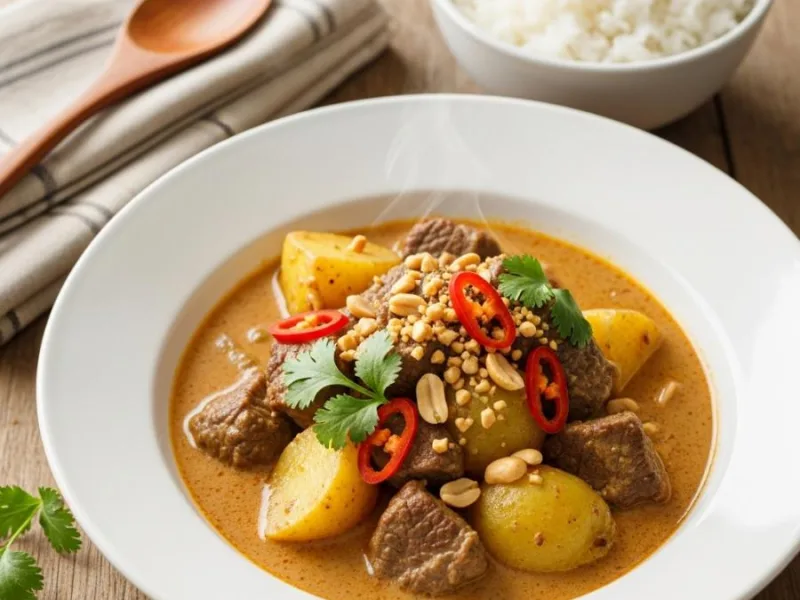
Base recipe: 6 portions
Your kitchen companion
Ingredients
Check off ingredients as you prepare them.
Follow the steps at your own pace.
Method
Cut the beef into large cubes, approximately 1½ inches (4 cm) wide. Pat dry with paper towels to ensure a good sear.
Heat the vegetable oil in a large pot over medium-high heat. Add the beef in batches, searing on all sides until browned. Set the beef aside on a plate.
In the same pot, add sliced onion and sauté for about 5 minutes, until softened and lightly golden.
Stir in the Massaman curry paste and cook for 2–3 minutes until fragrant, stirring constantly to prevent burning.
Pour in the coconut milk and beef broth, stirring to combine. Add fish sauce, tamarind paste, brown sugar, and return the beef to the pot.
Add cinnamon stick, cardamom pods, bay leaf, and bring to a boil. Then reduce heat to low, cover, and simmer gently for 60 minutes.
Add the cubed potatoes and peanuts, stir well, and continue simmering uncovered for another 30–35 minutes until the beef is tender and the potatoes are soft.
Stir in lime juice and season with salt to taste. Remove bay leaf, cardamom pods, and cinnamon stick before serving.
Let the curry rest for 5–10 minutes off heat before serving to allow flavors to settle.
Serve hot with jasmine rice or naan bread for a complete meal.
Extra technique, safety notes and details when you want to go deeper.
More tips & details
Slow-Simmered Coconut Curry with Tender Spiced Beef
A rich Thai-inspired dinner idea for cozy nights
Few dishes deliver comfort quite like a creamy coconut curry, and this slow-cooked beef Massaman curry is a perfect balance of bold spices, savory depth, and melt-in-your-mouth texture. This dish celebrates the unique harmony of Thai and Persian culinary influences, combining fragrant spices with hearty beef, silky potatoes, and the sweetness of coconut milk for a warming, restaurant-quality experience at home.
This recipe for Massaman beef curry brings the taste of Thailand into your kitchen without fuss. It’s ideal for both weeknight indulgence and dinner parties, offering a rich complexity that’s surprisingly simple to prepare. Whether you're looking for a fast dinner idea with maximum flavor or planning a special weekend meal, this dish ticks every box.
Why you’ll love this slow-cooked beef curry recipe
- Incredible depth of flavor: Built from toasted spices, aromatics, and a slow simmer, this curry develops a layered, luxurious taste that rivals anything from your favorite Thai restaurant.
- Creamy and comforting: Thanks to full-fat coconut milk and slow-cooked beef, the sauce is velvety and rich, coating every bite with warmth.
- Hearty and satisfying: Chunks of soft beef and tender potatoes make this more than just a side dish—it’s a complete, filling meal.
- Customizable heat: Whether you love a mild curry or crave some fire, the spice level is easily adjusted to suit your preference.
- Perfect for leftovers: Like many curries, the flavor deepens overnight, making it even better the next day.
If you're craving an authentic Thai beef curry that brings restaurant-quality flavor to your home kitchen, this is the one to try.
What makes Massaman curry unique?
Unlike red or green Thai curries, Massaman curry features a distinct blend of both Thai and Indian spices. The core flavor comes from the Massaman curry paste, typically made with cardamom, cinnamon, cloves, cumin, and nutmeg—spices more commonly associated with Persian and Indian cooking. These are then balanced by traditional Thai ingredients such as lemongrass, galangal, and kaffir lime.
This East-meets-Middle-East flavor profile creates a luxurious base that becomes even more indulgent with the addition of creamy coconut milk, crushed peanuts, and soft-cooked vegetables. The result is a mild, slightly sweet, and aromatic curry with melt-in-your-mouth beef that's been slow-cooked to perfection.
The secret to perfect Massaman curry at home
While Massaman curry might seem like a dish best reserved for dining out, it’s surprisingly easy to make from scratch with the right steps. The key is taking the time to brown your beef well and letting it simmer low and slow in the curry sauce until it's fork-tender. Choosing the right cut of beef, such as chuck or brisket, ensures it remains juicy and flavorful throughout the cooking process.
Adding roasted peanuts and potatoes gives the dish texture and richness, while a splash of tamarind paste or fresh lime juice provides brightness to balance the creaminess. When done right, every bite offers the perfect mix of sweet, salty, spicy, and tangy flavors.
Best sides to serve with Massaman beef curry
This Thai beef curry dish pairs beautifully with a variety of sides, depending on the meal you want to create:
- Steamed jasmine rice: A classic choice that soaks up the rich sauce beautifully.
- Sticky rice: For a more traditional Thai experience.
- Roti or naan: Perfect for dipping into the creamy curry.
- Pickled vegetables: A sharp contrast to the sweetness of the curry.
For a light finish, consider a Thai-inspired salad with lime and herbs to cleanse the palate.
A versatile curry for any occasion
Whether you're cooking for a family dinner, a date night at home, or preparing for a meal prep week, this Thai Massaman beef curry is a reliable and impressive recipe that never fails to please. It’s equally suited for casual weeknights or festive occasions. The recipe can easily be doubled to serve a crowd, and leftovers reheat beautifully for a second-day delight.
Try it tonight
Looking for a cozy dinner idea or craving a new twist on classic comfort food? This slow-simmered Thai coconut curry will quickly become a favorite. Gather your spices, grab a good cut of beef, and let your kitchen fill with the warm, intoxicating aromas of Thailand.
This is more than just a meal—it’s an experience in every bite. Serve it with pride and enjoy a dish that tastes like it’s been simmering all day in a Thai kitchen, even if you pulled it together in under two hours.
Make sure to save or print this Thai beef curry recipe so it’s ready for your next cozy night in.
Enhance the Flavor and Texture of Thai Beef Curries with Smart Tweaks
Discovering the best ways to elevate a classic Thai coconut curry
The heart of any great Thai Massaman curry lies in its balance of spices, creaminess, sweetness, and umami depth. While the traditional method creates a rich and comforting dish, there are many ways to fine-tune and improve a traditional recipe without sacrificing authenticity. Whether you’re experimenting for dietary needs, adjusting flavor profiles, or simply aiming for a more luxurious texture, small changes can make a huge difference. This guide offers practical insights to upgrade your curry game—from ingredient swaps and homemade components to cooking techniques that amplify flavor and nutrition.
Homemade Massaman curry paste makes all the difference
Store-bought curry pastes are convenient, but crafting your own Massaman curry paste allows full control over freshness, heat, and salt content. The core components—dried chilies, lemongrass, galangal, shallots, garlic, coriander seeds, cumin, cinnamon, cloves, cardamom, nutmeg, and shrimp paste—combine to create an intense and aromatic base. Toasting the dry spices before grinding releases essential oils that boost complexity and aroma. A homemade paste can be made in bulk and frozen in portions, offering convenience for future meals without compromising taste.
Why this method works When you prepare curry paste from scratch, each ingredient is layered intentionally to create a more nuanced and vibrant flavor. Toasted whole spices lend a nutty, earthy backdrop, while freshly ground aromatics give the dish sharper, brighter notes. The result is a curry that tastes deeper, more balanced, and more authentically Thai.
Upgrading your protein: Beyond beef chuck
Beef chuck is traditional for its richness and affordability, but it’s not the only option. For more tender results, you can substitute:
- Beef short ribs: Provide intense flavor and natural gelatin, creating a silkier sauce.
- Brisket: Offers melt-in-your-mouth texture when slow-cooked.
- Lamb shoulder: A bold twist that complements Massaman spices beautifully.
- Tofu or jackfruit: For a vegetarian dish that retains the curry’s complexity.
Each protein absorbs the coconut curry base differently. Fattier cuts yield more luxurious sauces, while leaner or plant-based alternatives benefit from longer marination to absorb flavor.
Rethinking coconut milk and its alternatives
Coconut milk defines the richness of Massaman curry, but adjusting the coconut content can tailor the dish to different dietary preferences. Using full-fat coconut milk ensures a thick, velvety consistency, but blending it with coconut cream intensifies the dish’s body. For lighter options, consider:
- Light coconut milk: Reduces fat but slightly thins the sauce.
- Cashew cream or oat milk: Provide a dairy-free alternative while lowering saturated fat.
Whichever you choose, ensure it’s unsweetened to maintain control over the dish’s sweetness.
Balancing sweetness, acidity, and salt
Massaman curry is about balance. Too sweet, and it becomes cloying. Too salty, and it overpowers the other spices. Fine-tuning the brown sugar, fish sauce, and tamarind paste ensures harmony:
- Add a few drops of lime juice or extra tamarind at the end to brighten the flavor and cut through richness.
- Taste often and adjust with small increments—¼ tsp (1 g) at a time—to fine-tune without overwhelming.
- Don’t forget to taste with the rice! The dish’s final flavor should complement the starch it’s served with.
Layered cooking techniques bring depth
Timing matters. Adding ingredients in stages creates better texture and more layered flavor. For instance:
- Sear the beef first to develop umami-packed fond at the bottom of the pot.
- Sauté the curry paste separately to awaken the spices before adding liquid.
- Add potatoes later so they retain shape and absorb curry without disintegrating.
Avoid boiling the coconut milk; gentle simmering preserves its fat structure, preventing curdling and maintaining a smooth texture.
Using peanuts to enhance texture and aroma
Roasted peanuts aren’t just a garnish—they’re essential to the signature Massaman texture and nuttiness. For extra punch:
- Toast raw peanuts yourself to control their roast level.
- Blend a portion into a paste and stir it into the sauce for added body.
- For a peanut-free version, use sunflower seeds or toasted sesame paste (tahini) for a nutty depth without allergens.
Healthier twists without compromising flavor
For those looking to reduce calories or saturated fats, there are smart swaps that retain flavor:
- Use lean beef cuts or substitute with tofu or mushrooms for plant-based diets.
- Replace part of the coconut milk with low-sodium vegetable broth to reduce fat.
- Serve with cauliflower rice instead of jasmine rice for a lower-carb meal.
Adding extra vegetables, like carrots, sweet potatoes, or green beans, stretches the dish and adds nutritional diversity.
Common mistakes to avoid
Overcooking the beef High heat and fast cooking will leave beef tough. Always simmer slowly and allow time for the connective tissues to break down.
Curdling the sauce Avoid boiling after adding coconut milk. Keep the heat gentle and stir occasionally to maintain a smooth, velvety texture.
Skipping the resting time Allow the curry to rest for 10–15 minutes before serving. This helps flavors meld and gives a more cohesive taste.
Using low-quality curry paste Mass-produced curry pastes often lack the aromatic intensity of homemade or artisanal brands. When store-bought is necessary, choose reputable Thai brands and enhance them with fresh aromatics like garlic, ginger, or lemongrass.
Chef’s Tip: Let it sit overnight
Massaman curry tastes better the next day. The spices settle, the sauce thickens, and the beef continues to absorb flavor. Prepare it a day in advance for guests or weekly meal prep—your future self will thank you.
Store it in an airtight container and refrigerate up to 4 days. Reheat gently over low heat, adding a splash of water or coconut milk to revive the texture.
Enhance your plating for visual appeal
Even the most rustic dishes benefit from thoughtful presentation. Garnish your Massaman curry with:
- A few whole roasted peanuts
- Thinly sliced fresh red chili
- A drizzle of coconut cream on top
- Fresh cilantro leaves for a burst of green
Not only does this elevate the look, but these additions add texture, color, and complementary flavors that make each bite more dynamic.
Customizing heat levels to taste
Massaman is generally milder than red or green curry, but it’s easy to adjust the spice level:
- Add more dried chilies to the paste or a dash of chili oil for extra heat.
- Include sriracha or Thai chili flakes for a modern twist.
- For families or spice-sensitive guests, keep the curry mild and offer heat-enhancing condiments on the side.
By understanding these adjustments, you can make a Thai beef curry that’s uniquely yours—whether it’s bolder, healthier, creamier, or more traditional. Each small change adds character and allows you to create a truly unforgettable dinner that reflects your taste and style.
Recivelle · /recipe/thai-massaman-curry-rich-creamy-beef-curry-recipe