Base recipe: 4 servings
Your kitchen companion
Ingredients
Check off ingredients as you prepare them.
Follow the steps at your own pace.
Method
Rinse the rice: Start by thoroughly rinsing the glutinous rice under cold water until the water runs clear. This helps to remove excess starch, ensuring the rice will have a sticky texture once cooked.
Cook the rice: Place the rice in a pot or rice cooker and add water (about 1 cup of water for every 1 cup of rice). Cook according to the manufacturer’s instructions, or until the rice is soft and sticky.
Prepare the coconut sauce: While the rice is cooking, heat the coconut milk in a separate saucepan over medium heat. Add the sugar and salt, stirring continuously until the sugar dissolves completely. Once it reaches a gentle simmer, remove it from the heat.
Combine rice and coconut sauce: Once the rice is cooked, place it in a large bowl and pour the coconut milk mixture over the top. Stir the rice gently to combine and let it sit for about 10 minutes to absorb the coconut milk. This step is essential for achieving the rich, creamy texture.
Prepare the mangoes: While the rice is resting, peel and slice the mangoes into thin, attractive pieces. Set them aside.
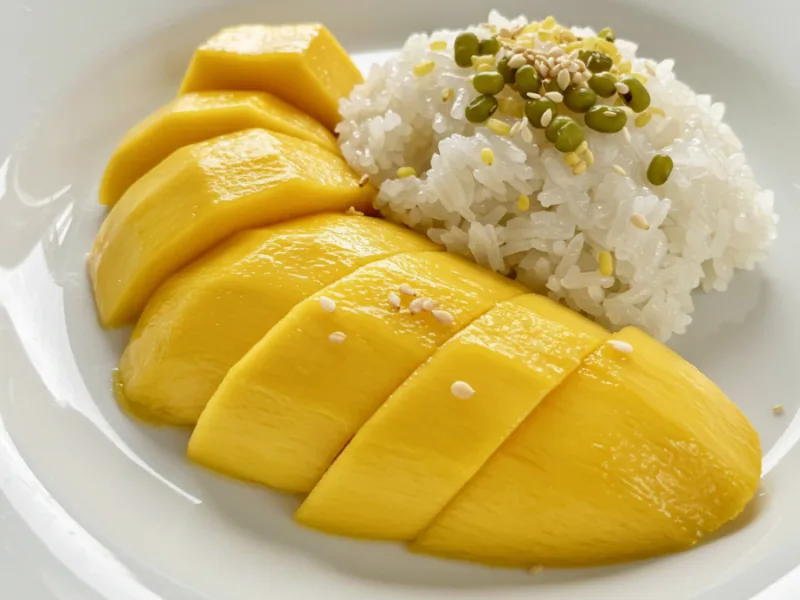
Assemble the dish: Once the rice has absorbed the coconut milk and has become creamy, portion it out onto serving plates. Arrange the mango slices on top of the sticky rice, and if desired, sprinkle with sesame seeds and mung beans for added texture and garnish.
Serve: Your Thai Mango Sticky Rice is now ready to enjoy. It’s best served chilled or at room temperature. It can be a delightful dessert after a meal or enjoyed as a sweet treat throughout the day.
Extra technique, safety notes and details when you want to go deeper.
More tips & details
Discover the Authentic Taste of Thai Mango Sticky Rice
If you're in the mood for something sweet, creamy, and absolutely satisfying, look no further than the traditional Thai Mango Sticky Rice. This dessert, often referred to as Khao Niew Mamuang, is a perfect balance of flavors and textures—rich, velvety coconut milk-soaked sticky rice paired with the natural sweetness of ripe mangoes. This iconic Thai dish is both simple and indulgent, capturing the essence of Thai cuisine in every bite.
Whether you're enjoying it as an after-dinner treat, a snack, or a sweet end to a Thai-themed meal, Mango Sticky Rice is sure to impress. The combination of glutinous rice, coconut milk, and fresh mango creates an unforgettable flavor profile that is as comforting as it is delicious. It's the perfect representation of Thai dessert culture—an exciting mix of tropical fruits, creaminess, and flavorful indulgence.
Why You’ll Love This Thai Mango Sticky Rice Recipe
If you’ve never had Mango Sticky Rice, you’re in for a treat. The sweetness of mango perfectly complements the richness of coconut milk, while the sticky rice adds a chewy texture that makes every bite satisfying. This recipe is not only incredibly delicious but also remarkably easy to prepare, allowing you to enjoy a taste of Thailand from the comfort of your own home. It’s a dessert that requires just a few ingredients, yet delivers a complex flavor experience.
Whether you’re looking for a dish to impress your guests or simply craving a little tropical sweetness, this Mango Sticky Rice recipe is guaranteed to become one of your favorites. It’s a dish that transcends special occasions, offering a little slice of Thailand every time you indulge.
The Key Ingredients for Thai Mango Sticky Rice
One of the most remarkable things about Thai Mango Sticky Rice is its simplicity. Made with just a handful of ingredients, this dish packs a big punch in terms of flavor. To make this dish, you’ll need glutinous rice (also known as sticky rice), which gives the dish its characteristic chewy texture. The coconut milk adds richness and creaminess, while sugar provides the sweetness that is so signature to Thai desserts. Fresh mangoes are, of course, essential for that fruity, vibrant taste that completes the dish.
How to Make Thai Mango Sticky Rice
The process of making Thai Mango Sticky Rice is quite straightforward, yet it’s the method that ensures perfect results. Start by cooking the sticky rice until it’s soft and tender. While the rice is cooking, make the coconut sauce by simmering coconut milk with sugar and a pinch of salt, creating a silky-smooth sauce to mix with the rice. Once the rice is done, combine it with the coconut mixture and let it absorb all that flavor. Afterward, simply slice your fresh mangoes and arrange them alongside the rice.
The secret to making this dish truly authentic lies in the balance of flavors. The rice should be perfectly sticky and slightly sweet, with a creamy coconut flavor that pairs beautifully with the juicy mango slices. The key is in allowing the rice to rest after mixing with the coconut sauce so it can fully absorb the flavors and reach its optimal consistency.
Why This Thai Mango Sticky Rice Recipe is a Must-Try
This recipe is a must-try for anyone looking to explore authentic Thai desserts. Not only does it showcase the delightful fusion of sweet and savory, but it’s also incredibly easy to make. Mango Sticky Rice is perfect for any occasion—whether you're hosting a dinner party, preparing a special meal for your family, or simply satisfying your sweet tooth.
Mango Sticky Rice is also versatile; while it's traditionally made with fresh mango, you can experiment with different varieties to see what suits your taste. It’s a great way to explore the diversity of tropical fruits and their unique flavors.
The Perfect Thai Dessert for Any Occasion
What makes Thai Mango Sticky Rice even more appealing is how it fits into any setting. It’s ideal for special occasions, such as birthdays, celebrations, or a casual gathering with friends and family. Its combination of natural sweetness, freshness, and creaminess makes it universally loved.
The beauty of this dish lies in its simplicity. It doesn’t require any complicated techniques or hard-to-find ingredients. With just a few key items, you can recreate a dessert that’s as delicious as anything you’d find at a traditional Thai restaurant. Plus, the dessert’s beautiful presentation—mango slices arranged artfully on top of the sticky rice—makes it as pleasing to the eye as it is to the palate.
Why It’s the Perfect Dessert for Summer
Thai Mango Sticky Rice is a refreshing dessert, particularly perfect for summer. The cool mango slices paired with the creamy coconut rice provide a wonderful contrast to hot weather. It’s the kind of dessert you’ll want to serve at your next outdoor gathering or after a light summer meal. The tropical flavors of mango and coconut offer a taste of paradise, evoking feelings of relaxation and warmth.
Ready to Make Thai Mango Sticky Rice?
Now that you know what makes Thai Mango Sticky Rice so special, it’s time to give it a try yourself. With the right ingredients and just a few simple steps, you’ll be able to create this mouthwatering dessert that will have everyone asking for more. Perfect for any occasion, this dessert is sure to become a favorite in your recipe collection. Don't wait—experience the deliciousness of Thai Mango Sticky Rice today!
Enhance Your Thai Mango Sticky Rice with These Expert Tips
When it comes to Thai Mango Sticky Rice, there’s no doubt that this traditional dessert already offers a wonderful combination of flavors—sticky rice, coconut milk, and mangoes come together to create a truly unforgettable experience. However, like any great recipe, there are always ways to enhance it and add your unique touch. Whether you're aiming to refine the texture, adjust the flavor, or introduce a new twist to this classic dish, there are several methods to elevate the overall experience.
In this article, we'll dive into some expert tips and techniques to improve your Thai Mango Sticky Rice and make it even more delightful. From ingredient substitutions to preparation techniques, these insights will ensure your dish turns out better than ever. Read on for ideas that will make your version stand out and be even more enjoyable.
Why Homemade Thai Mango Sticky Rice is Superior
One of the key reasons homemade Thai Mango Sticky Rice surpasses store-bought or restaurant versions is that you can customize it to your exact preferences. When you make this dish at home, you're in control of the quality of the ingredients, the sweetness level, and the texture of the sticky rice. Store-bought versions may not always use the freshest mangoes, and often rely on preservatives or additives in the coconut milk. By preparing it yourself, you ensure the freshest, most authentic flavors.
Additionally, when you make Mango Sticky Rice at home, you can experiment with different textures and flavors. Whether you prefer a slightly firmer rice or a sweeter coconut sauce, homemade versions offer flexibility and personalization.
Adjusting the Flavor of Thai Mango Sticky Rice
There are numerous ways to improve the flavor profile of Thai Mango Sticky Rice by making small changes to the ingredients or cooking method. Here are some ideas to enhance the taste:
Add More Sweetness or a Hint of Spice
If you enjoy a sweeter dessert, you can increase the sugar in the coconut milk mixture. Alternatively, for those who like a little spice, adding a pinch of cinnamon or cardamom to the coconut sauce can introduce a layer of complexity. A touch of ginger also pairs wonderfully with the coconut milk and mango. Ginger's spicy yet fresh flavor enhances the richness of the coconut without overwhelming the natural sweetness of the mangoes.
Use Different Mango Varieties
The type of mangoes you use can have a significant impact on the dish. Thai varieties, such as the Nam Dok Mai mango, are known for their perfect balance of sweetness and smooth texture. However, if these are not available, you can substitute with Ataulfo or Honey mangoes. These varieties offer a similar level of sweetness and a creamy texture that complements the sticky rice. Ripe mangoes are a must for the best flavor, so make sure to select fruit that is fully ripened to achieve the perfect balance of tart and sweet.
Coconut Milk Variations
While coconut milk is the standard for this dessert, there are ways to adjust its richness. For a lighter version, you could use coconut cream or a mix of coconut milk and almond milk to create a more subdued coconut flavor. If you're looking to add a touch of creaminess, using full-fat coconut milk will enhance the richness, making the dessert even more indulgent.
Common Mistakes to Avoid
When making Thai Mango Sticky Rice, there are a few common mistakes that can impact the texture and flavor of the dish. Understanding these pitfalls will help you avoid frustration and achieve the best results.
Overcooking or Undercooking the Rice
One of the most important aspects of Thai Mango Sticky Rice is the texture of the rice. It should be sticky and soft, yet not too mushy. If you overcook the rice, it will lose its chewy texture, turning into a soggy mess. On the other hand, if the rice is undercooked, it can be too tough and not absorb the coconut milk properly. Make sure to cook the rice in a steamer or rice cooker for the best results.
Using Unripe Mangoes
While unripe mangoes are great for savory dishes, they are not suitable for Mango Sticky Rice. Unripe mangoes are sour and lack the sweet, juicy flavor needed for this dessert. Always ensure the mangoes are fully ripened before serving. Ripe mangoes have a slight give when pressed gently and should have a fragrant aroma.
Not Letting the Rice Absorb the Coconut Milk
After cooking the rice and mixing it with the coconut milk, allow it to rest for at least 10 minutes. This step is crucial for ensuring the rice fully absorbs the coconut mixture, giving it that signature creamy and rich texture. Skipping this resting time can result in rice that feels dry or under-seasoned.
Healthier Alternatives for Thai Mango Sticky Rice
While Thai Mango Sticky Rice is a delicious treat, it can be a bit heavy due to the coconut milk and sugar content. If you're looking for a healthier alternative, here are a few tips to make this dessert lighter without sacrificing flavor:
Use a Sugar Substitute
To make the dish lower in sugar, you can substitute regular sugar with stevia, monk fruit sweetener, or honey. These alternatives will still provide sweetness but without the added calories and sugar spikes. Experiment with the amount to find the right balance of sweetness for your taste.
Replace Coconut Milk with Lighter Options
As mentioned earlier, you can lighten up the recipe by using almond milk, light coconut milk, or cashew milk. These plant-based milks are lower in fat and calories compared to full-fat coconut milk but still offer a creamy texture that complements the sticky rice. Just make sure to select an unsweetened variety to keep the flavor in check.
Add a Healthy Crunch
If you like to add a bit of texture to your dessert, consider topping it with toasted nuts or seeds such as almonds, cashews, or pumpkin seeds. These not only add crunch but also provide healthy fats, which are great for overall well-being.
Why Experimenting with Ingredients Improves the Recipe
As with many traditional dishes, Mango Sticky Rice benefits from experimentation. Adding or altering ingredients can completely change the dish’s texture and flavor. For example, swapping the traditional glutinous rice for brown rice can add a nutty flavor and increase the fiber content. Similarly, using organic coconut milk ensures a more natural, cleaner taste, while adjusting the sugar levels allows you to cater to your specific sweetness preference.
By experimenting with new textures, flavors, and even garnishes, you can make this Thai classic your own. Not only does it provide a chance to refine your cooking skills, but it also ensures that you can create a dish that matches your unique tastes.
Bringing the Thai Experience Home
One of the most rewarding aspects of making Thai Mango Sticky Rice at home is the ability to control every aspect of the recipe. From selecting the freshest mangoes to balancing the sweetness of the coconut sauce, there’s something incredibly satisfying about preparing this traditional dessert from scratch. Not only will your dish taste fresher and more authentic than anything you could buy at a store, but you’ll also gain the skills to perfect the recipe each time you make it.
By following these tips, you can enhance your Thai Mango Sticky Rice to match your preferences, avoid common mistakes, and even make healthier substitutions without compromising flavor. Whether you’re making this dish for a special occasion or just to enjoy as a comforting treat, these improvements will elevate your cooking and help you create an unforgettable dessert every time.
Recivelle · /recipe/thai-mango-sticky-rice-recipe