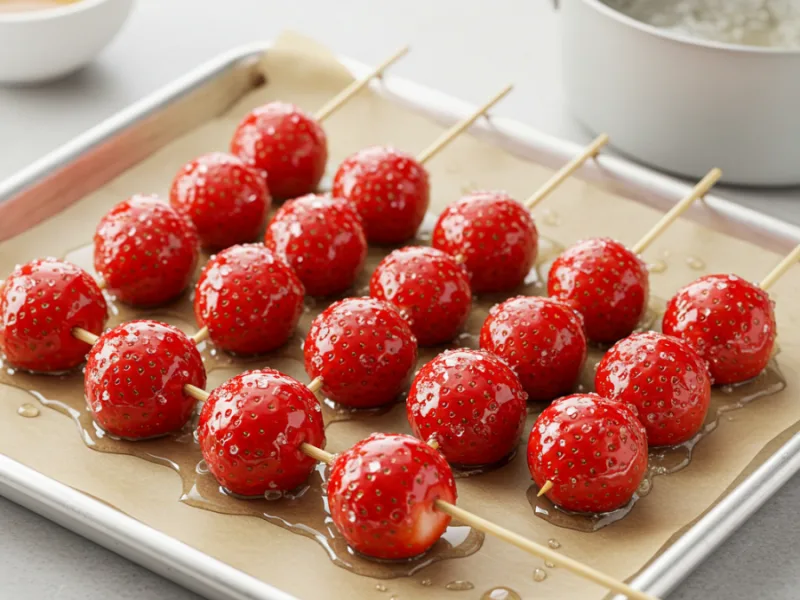
Base recipe: This recipe makes 8 skewers (serves approximately 4 people).
Your kitchen companion
Ingredients
Check off ingredients as you prepare them.
Follow the steps at your own pace.
Method
Prepare the fruit
Wash the strawberries (or other fruit) thoroughly and pat them completely dry with a kitchen towel.
Any moisture left on the fruit will prevent the sugar from adhering properly.
If using larger fruits like kiwis or oranges, slice them into bite-sized pieces.
Skewer the fruit
Thread two strawberries per skewer (or adjust based on the fruit size).
Ensure the skewers are not overcrowded, as this will make dipping easier.
Prepare a cooling surface
Line a baking sheet with parchment paper and lightly grease it with vegetable oil to prevent sticking.
This step is crucial because the hardened sugar can easily adhere to surfaces.
Make the sugar syrup
In a small saucepan, combine sugar, water, and glucose syrup (if using).
Heat over medium heat, stirring gently until the sugar dissolves.
Once dissolved, stop stirring and let the syrup boil undisturbed.
Use a candy thermometer to monitor the temperature.
Reaching the hard-crack stage
The sugar must reach 150°C (300°F) to form a shatteringly crisp coating.
This process takes about 8-10 minutes.
To test, drop a little syrup into cold water; if it hardens instantly and breaks rather than bending, it’s ready.
Coat the fruit
Working quickly, dip each fruit skewer into the hot syrup, turning it to coat evenly.
Let excess syrup drip off before placing it on the prepared baking sheet.
If the sugar starts to harden before all skewers are coated, gently reheat it over low heat.
Cool and serve
Let the Tanghulu cool completely for about 5 minutes until the sugar coating hardens.
Once set, enjoy immediately for the best crunch.
Extra technique, safety notes and details when you want to go deeper.
More tips & details
Tanghulu: The Ultimate Guide to Chinese Candied Fruit
Tanghulu, the famous Chinese candied fruit, is a stunning and irresistible street snack that has captivated food lovers for generations. With its glossy, sugar-coated shell and the perfect balance between sweetness and tartness, this treat is more than just a snack—it’s an experience. Whether you're looking for a fun homemade dessert, a delightful party treat, or a way to enjoy fruit in a whole new way, Tanghulu is a must-try.
Unlike traditional candied fruits that are soft and chewy, Tanghulu has a crisp, glass-like coating that cracks satisfyingly with every bite, revealing the juicy, refreshing fruit inside. Originating from northern China, this snack was historically enjoyed during winter festivals, as the cold weather helped the sugar harden quickly, creating its signature crunch. Today, it remains a beloved delicacy, enjoyed across China and beyond.
Why You’ll Love This Tanghulu Recipe
There’s something truly magical about making Tanghulu at home. Whether you're a fan of Asian street food or just looking for a unique and simple treat, this recipe offers something special:
- Incredible Texture – The contrast between the brittle sugar shell and the fresh, juicy fruit is simply addictive.
- Naturally Sweetened – While the sugar coating adds sweetness, the natural flavors of the fruit shine through beautifully.
- Customizable – You can use a variety of fruits, from strawberries and grapes to oranges and kiwis, creating endless flavor combinations.
- Perfect for Special Occasions – Whether for Chinese New Year, birthday parties, or festive gatherings, this eye-catching treat is always a hit.
- Fun & Easy to Make – With just a few ingredients and a little technique, you can master Tanghulu in your own kitchen.
The Secret to a Perfectly Crisp Tanghulu
Making Tanghulu is all about precision. The key to achieving that shatteringly crisp sugar shell lies in cooking the sugar syrup to the right temperature. Unlike caramel, which remains soft, the hardened sugar coating on Tanghulu is thin and glassy, thanks to the proper balance of water and sugar. To ensure success, use a candy thermometer and heat the syrup to hard-crack stage (150°C / 300°F).
Another essential factor is ensuring that your fruit is completely dry before dipping it into the syrup. Any moisture on the fruit can cause the sugar to crystallize improperly, leading to a sticky mess instead of a crisp coating. Skewering the fruit on bamboo sticks makes dipping easier and gives Tanghulu its signature street-food charm.
The Best Fruits for Tanghulu
Traditionally, Tanghulu is made with hawthorn berries, which have a naturally tart flavor that balances the sweetness of the sugar coating. However, you can use a variety of fruits to create your own unique version. Some of the best options include:
- Strawberries – Their vibrant color and juicy texture make them an all-time favorite.
- Grapes – Red, green, or black grapes work well and provide a delightful pop of flavor.
- Mandarin Orange Segments – A touch of citrusy brightness pairs wonderfully with the crisp sugar shell.
- Kiwi Slices – A slightly tangy and exotic twist on the traditional recipe.
- Pineapple Chunks – Their tropical sweetness is enhanced by the crunchy coating.
No matter which fruit you choose, Tanghulu is a visually stunning and delicious treat that never fails to impress.
A Treat That’s as Fun to Make as It Is to Eat
There’s something incredibly satisfying about making Tanghulu from scratch. Watching the sugar bubble and transform into a glossy syrup, dipping the fruit to coat it perfectly, and hearing the satisfying crunch as you take a bite—every step of the process is an enjoyable experience.
This recipe is also a great way to get creative with food. You can experiment with different fruits, drizzle them with chocolate, or even sprinkle sesame seeds for an extra layer of flavor and texture. If you love the idea of creating Instagram-worthy desserts, this is one recipe you’ll want to try.
Try This Classic Chinese Street Snack Today
Tanghulu is more than just a sweet treat—it’s a taste of tradition, a celebration of texture, and a delight for the senses. Whether you’re making it for a special occasion or simply indulging in a fun kitchen experiment, this Chinese candied fruit is guaranteed to bring joy.
Gather your ingredients, prepare your favorite fruits, and get ready to experience the magic of Tanghulu. Once you take that first bite, you'll understand why this snack has remained a beloved favorite for generations.
How to Perfect Your Tanghulu: Ingredient Variations and Expert Tips
Tanghulu is a beloved Chinese candied fruit that delivers a satisfying crunch with every bite, followed by the juicy freshness of the fruit inside. While the classic recipe is already a masterpiece, there are many ways to customize and enhance it. Small adjustments to the ingredients, sugar syrup, or preparation techniques can dramatically change the texture, taste, and overall experience of this sweet treat.
Understanding these modifications and their impact allows you to create a Tanghulu that suits your preferences—whether you want a richer flavor, a thinner sugar coating, or a variation with extra crunch. Let’s explore some expert tips and ingredient swaps to refine your Tanghulu and take it to the next level.
Choosing the Right Fruit for Tanghulu
The type of fruit you use is one of the most crucial factors in determining the final taste and texture of your Tanghulu. While traditional versions feature hawthorn berries, modern variations experiment with different fruits, each offering unique results.
Fruits That Work Best
- Strawberries – Their natural sweetness and tartness create the perfect balance with the sugar coating. They also absorb the syrup well, making them a great beginner-friendly choice.
- Grapes – A firm, juicy option that maintains its crisp texture inside the hardened sugar shell. Both red and green grapes work beautifully.
- Mandarin Orange Segments – These add a citrusy brightness to the recipe, but their higher water content requires extra drying before dipping.
- Kiwi Slices – A tangy and exotic alternative that pairs well with the sugar’s sweet crunch. Slightly thicker slices hold up better.
- Pineapple Chunks – Their tropical flavor makes them a standout choice, but their fibrous texture makes them trickier to skewer and dip.
Fruits That Are Less Suitable
- Bananas – Too soft and do not hold their shape well.
- Watermelon – Contains too much moisture, which prevents the sugar from hardening properly.
- Berries like raspberries and blackberries – Their delicate structure makes it difficult for them to maintain integrity during dipping.
Adjusting the Sugar Coating
The sugar coating is what defines Tanghulu, so small adjustments to the sugar mixture can make a big difference in crunch, flavor, and color.
Using Different Sugars
- White granulated sugar – The classic choice for a clear, glossy finish.
- Brown sugar – Adds a deeper caramel-like flavor, but the darker color may slightly mask the fruit’s natural vibrancy.
- Honey or maple syrup – Can be added in small amounts for a richer taste, but excessive use will make the coating too soft.
Adding Flavor to the Syrup
- Vanilla Extract – A few drops will introduce a subtle warmth.
- Cinnamon or Star Anise – These spices bring in an aromatic depth, making Tanghulu feel more festive.
- Citrus Zest – Adds brightness to balance out the sweetness of the sugar shell.
The Role of Glucose Syrup
Adding glucose syrup (or corn syrup) to the sugar mixture helps prevent crystallization, ensuring a smooth, even coating. If you skip this ingredient, you must be extra careful to avoid stirring the sugar syrup once it starts boiling, as excessive agitation can cause grainy crystallization instead of a clear, glassy finish.
Techniques for the Perfect Sugar Coating
Achieving the ideal texture requires more than just the right ingredients—it also depends on the proper cooking and dipping technique.
Controlling the Syrup Temperature
- The sugar must reach 150°C (300°F), known as the hard-crack stage. If undercooked, the coating will be chewy rather than crisp. If overcooked, it can become too dark and bitter.
- Use a candy thermometer to ensure accuracy. If one is unavailable, you can test by dropping a small amount of syrup into ice water—if it hardens instantly and snaps cleanly, it’s ready.
Ensuring Even Coating
- Tilt the pan slightly and rotate each skewer slowly to ensure the fruit is evenly coated.
- Let excess syrup drip off to prevent thick, clumpy layers. A thin, even coating results in the perfect Tanghulu crunch.
Preventing Stickiness
Once dipped, place the skewers on lightly oiled parchment paper rather than a regular plate to prevent sticking. You can also lightly grease the skewers beforehand to avoid sugar buildup.
How to Influence the Final Crunch
The signature crack of Tanghulu is what makes it special, but the level of crispness can be adjusted depending on your preferences.
- For an Extra Thin and Delicate Crunch – Reduce the sugar slightly or dip the fruit twice very lightly instead of coating it in a single thick layer.
- For a Thicker, More Dramatic Crunch – Dip the skewers twice, allowing the first layer to set before dipping a second time.
- For a Softer Coating – Mix a small amount of honey into the syrup. This will make the sugar coating less brittle, giving a chewier texture.
Storing and Serving Tanghulu
Tanghulu is best enjoyed fresh, as the sugar coating absorbs moisture over time, making it sticky. However, if you need to store it:
- Do not refrigerate – The humidity will cause the sugar shell to soften.
- Store at room temperature in a dry place for up to 12 hours.
- If the coating starts to soften, place the skewers in a cool, dry area for a few minutes before serving.
Creative Twists on Classic Tanghulu
If you love the traditional version, try some fun variations:
Chocolate-Dipped Tanghulu
After the sugar coating sets, drizzle the fruit with melted dark or white chocolate for extra richness.
Sesame Seed Tanghulu
Before the sugar hardens completely, sprinkle the coated fruit with sesame seeds for a nutty, toasty crunch.
Spiced Tanghulu
Add chili flakes or cayenne powder to the sugar syrup for a sweet and spicy contrast.
Tanghulu is a beautiful, versatile dessert that can be customized in endless ways. Whether you stick to the classic version or experiment with different fruits, sugar flavors, and textures, you’ll enjoy a deliciously crisp, glossy treat that brings a touch of Chinese street food magic into your home.
Recivelle · /recipe/tanghulu-how-make-chinese-candied-fruit