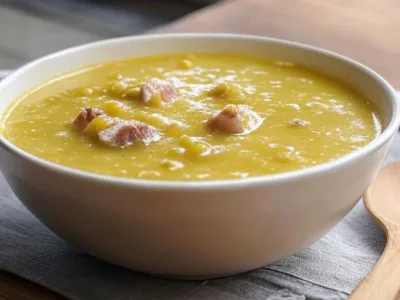
Base recipe: 6
Your kitchen companion
Ingredients
Check off ingredients as you prepare them.
Follow the steps at your own pace.
Method
1. Preparing the Peas
Rinse the yellow peas thoroughly under cold water.
Soak them in a large bowl of water overnight or for at least 8 hours. This helps them cook faster and improves their texture.
2. Cooking the Soup
Drain the soaked peas and place them in a large pot.
Add 2 liters of water and bring to a gentle boil over medium-high heat.
Skim off any foam that rises to the top during boiling.
3. Adding Flavor
Reduce the heat to low and add the ham hock (or bacon), chopped onion, diced carrot, thyme, marjoram, mustard seeds, bay leaf, black pepper, and salt.
Stir gently and cover with a lid.
4. Simmering to Perfection
Let the soup simmer for 90 minutes, stirring occasionally.
Check if the peas have softened and the flavors have melded beautifully. If needed, add a little extra water if the soup thickens too much.
5. Adjusting the Texture
Remove the ham hock from the pot and shred the meat, discarding any bones.
Return the shredded ham to the soup and stir well.
6. Final Touches
Taste and adjust the salt and seasoning as needed.
Serve hot, with a spoonful of Swedish mustard stirred in for a deep, tangy kick.
Extra technique, safety notes and details when you want to go deeper.
More tips & details
A Traditional Swedish Pea Soup – A Comforting and Hearty Classic
When it comes to comforting, hearty, and deeply satisfying meals, few dishes rival the beloved Swedish Pea Soup (Ärtsoppa). This centuries-old Scandinavian classic has been enjoyed for generations, bringing warmth and nourishment to cold Nordic nights. Made from yellow split peas, savory cured ham, and aromatic spices, this soup is a staple in Swedish households, often served on Thursdays with a side of mustard and crispbread.
With its rich, velvety texture and deep umami flavor, this dish is not only incredibly delicious but also packed with protein, fiber, and essential nutrients, making it a fantastic choice for a wholesome meal. Whether you’re looking for a nostalgic taste of Sweden or simply a hearty and nutritious soup, this simple yet flavorful recipe is sure to impress.
The History and Tradition Behind Swedish Pea Soup
Swedish Pea Soup is more than just a meal—it’s a cherished culinary tradition. Dating back to medieval times, this dish became popular among monks and soldiers due to its filling nature and long shelf life. Over time, it became a Thursday staple in Swedish households, as it was traditionally eaten before the fasting day on Friday.
Even today, many Swedish schools, military institutions, and homes still serve yellow pea soup on Thursdays, often accompanied by a dollop of mustard and a side of pancakes (Pannkakor) for dessert. This unique combination is not just a taste of history but also a time-honored ritual that brings people together over a warm, nourishing bowl of goodness.
Why You’ll Love This Recipe
1. Authentic and Traditional
This recipe follows the classic Swedish method, using simple yet flavorful ingredients to create a soup that tastes just like the one served in Swedish homes.
2. Nutritious and Satisfying
Rich in protein, fiber, and essential vitamins, this soup provides long-lasting energy while keeping you full and satisfied. It’s an excellent meal for cold days or when you need a comforting boost.
3. Easy to Make
Despite its deep, developed flavors, this recipe requires minimal effort. Just let the ingredients simmer slowly, and you’ll be rewarded with a rich, hearty soup that practically cooks itself.
4. Budget-Friendly and Filling
Using affordable pantry staples, this dish is perfect for meal prep, offering large portions that can be stored and reheated for several meals throughout the week.
5. Perfect for Meal Planning
This soup tastes even better the next day, making it ideal for leftovers. Simply store it in the fridge, and the flavors will continue to deepen, resulting in an even more delicious and satisfying meal.
How to Serve Swedish Pea Soup Like a Swede
While this soup is incredibly flavorful on its own, it’s traditionally served with a spoonful of strong Swedish mustard stirred into the bowl. The mustard enhances the savory and slightly sweet flavors of the soup, adding an extra layer of depth and warmth.
For the ultimate Swedish experience, pair this soup with:
- Knäckebröd (Crispbread) with Butter – A crunchy and satisfying accompaniment.
- Pancakes (Pannkakor) with Lingonberry Jam – A delightful sweet contrast to the savory soup.
- A Glass of Warm Punsch – A traditional Swedish spiced liqueur, often enjoyed alongside Ärtsoppa.
Tips for the Best Pea Soup
1. Use Dried Yellow Peas for the Best Texture
While some recipes call for green split peas, the Swedish version is traditionally made with yellow peas, which give the soup its signature golden color and creamy consistency.
2. Let It Simmer for Maximum Flavor
The secret to a rich and flavorful broth is slow cooking. Let the peas gently simmer with the ham, onions, and spices, allowing all the flavors to meld together beautifully.
3. Don’t Skip the Mustard
A small spoonful of mustard stirred into the soup just before serving adds an irresistible depth of flavor and is a must-try for an authentic experience.
4. Make It Ahead of Time
This soup tastes even better the next day, as the flavors have more time to develop. Make a big batch and enjoy delicious leftovers throughout the week.
Bring a Taste of Sweden to Your Table
There’s something incredibly comforting about a bowl of warm, hearty soup, especially when it’s as rich in tradition and flavor as Swedish Pea Soup. Whether you’re enjoying it on a chilly evening, serving it to loved ones, or simply exploring new Nordic flavors, this dish is bound to become a favorite in your kitchen.
Try this authentic Swedish recipe today and experience the heartwarming taste of Scandinavia—one spoonful at a time!
How to Elevate Your Swedish Pea Soup – Expert Tips and Ingredient Variations
Swedish Pea Soup (Ärtsoppa) is a hearty, traditional dish that has been enjoyed for centuries. Its rich, creamy texture and deep, savory flavor make it a beloved meal, particularly on cold days. However, you can easily customize and enhance this dish by adjusting the ingredients, spices, and cooking techniques to suit your preferences.
This guide will walk you through expert tips and ingredient variations to help you achieve the perfect balance of flavors and textures while maintaining the authentic essence of Swedish Pea Soup.
Choosing the Right Type of Peas
Yellow vs. Green Peas – Which One to Use?
Traditional Swedish Pea Soup is made with yellow split peas, which provide a mild, slightly sweet taste and a creamy texture when cooked. However, if yellow peas are unavailable, you can substitute them with green split peas.
- Yellow peas – Milder flavor, smoother consistency
- Green peas – Slightly more earthy, deeper flavor
While green peas work well as a replacement, they will alter the color and taste of the soup slightly, giving it a more robust, earthy depth.
Enhancing the Flavor with Different Proteins
Using Smoked Ham vs. Bacon
The choice of protein can significantly affect the depth of flavor in Swedish Pea Soup. Traditionally, smoked ham hock is used, but you can explore different options:
- Smoked ham hock (classic choice) – Adds deep, smoky richness with tender, shredded meat
- Bacon (for more intensity) – Provides a stronger, saltier smokiness, ideal for those who enjoy bold flavors
- Pork shoulder (milder taste) – A good alternative if you prefer less smokiness but still want tender meat
- Sausage (for extra heartiness) – Sliced Swedish falukorv or smoked sausage can add a meaty bite
For a leaner version, consider using cooked turkey breast or lean ham, which will still provide a savory protein source without excessive fat.
Adjusting the Texture – Thick vs. Light
Making the Soup Thicker
For a thicker consistency, try these techniques:
- Cook longer – Let the soup simmer for an extra 15-20 minutes, allowing the peas to break down more.
- Mash some of the peas – Use a potato masher to partially mash the cooked peas, making the soup naturally thicker.
- Reduce the water – Start with slightly less liquid and add more as needed.
Making the Soup Lighter
If you prefer a lighter texture, consider the following:
- Add more water or broth – Increase the liquid ratio for a brothier consistency.
- Use whole peas instead of split peas – Whole peas hold their shape better and result in a less creamy soup.
- Blend only half of the soup – Pureeing part of the soup while leaving some whole peas intact gives a balanced texture.
Customizing the Seasoning Profile
Traditional Herbs and Spices
The classic flavors of Swedish Pea Soup come from thyme, marjoram, and mustard seeds. These herbs provide a mild yet aromatic balance to the dish.
For a slightly different taste, you can modify the seasoning:
- Add a hint of cumin – Gives the soup a deeper warmth and slight earthiness.
- Use fresh thyme instead of dried thyme – Provides a more vibrant herbal note.
- Increase the black pepper – Enhances the savory depth with a mild spicy kick.
Boosting the Umami Factor
If you want extra richness, consider these umami-enhancing ingredients:
- A splash of soy sauce – Adds depth and saltiness, complementing the ham.
- A spoonful of miso paste – Provides a fermented depth, making the soup more complex.
- A bit of Worcestershire sauce – Gives a subtle tang and umami boost.
Vegetarian and Vegan Alternatives
How to Make Swedish Pea Soup Without Meat
For a vegetarian or vegan version, replace the ham hock with ingredients that provide a deep, savory flavor:
- Vegetable broth instead of water – Enhances the natural taste of the peas.
- Smoked paprika – Adds a hint of smokiness to mimic the missing ham flavor.
- Mushrooms – Use finely chopped shiitake or cremini mushrooms to create a rich umami base.
- Liquid smoke or smoked salt – A small amount can replace the smokiness of traditional ham.
To ensure protein content remains high, consider adding red lentils or extra peas to keep the dish nutrient-dense.
Best Toppings and Garnishes
Traditional vs. Creative Toppings
Swedish Pea Soup is typically served with mustard stirred in, but you can explore different topping options to enhance the dish:
- Traditional Swedish mustard – The classic way to add a tangy depth.
- Chopped fresh dill – Provides a fresh contrast to the creamy soup.
- Sour cream or Greek yogurt – Adds a creamy tang for extra richness.
- Crunchy croutons – Brings a delightful textural contrast.
For a modern twist, try sprinkling the soup with crushed roasted almonds or pumpkin seeds for a bit of crunch and extra nutrients.
How to Store and Reheat for Maximum Flavor
Best Way to Store the Soup
- Refrigerate: Store in an airtight container for up to 5 days.
- Freeze: Freeze in portions for up to 3 months. Thaw in the refrigerator overnight before reheating.
Reheating Tips
- Stovetop: Heat on low, adding a splash of water or broth to adjust consistency.
- Microwave: Reheat in 1-minute intervals, stirring in between to prevent uneven heating.
Since pea soup thickens when cooled, adding a little liquid while reheating will restore its smooth consistency.
Swedish Pea Soup is a versatile and deeply satisfying dish, and with the right tweaks, you can customize it to suit your taste preferences. Whether you adjust the protein, alter the seasoning, or experiment with different textures, this traditional Nordic favorite can be transformed into a dish that’s uniquely yours.
Try these enhancements and variations the next time you make Ärtsoppa, and enjoy a rich, nourishing, and flavorful meal that brings the essence of Sweden to your table.
Recivelle · /recipe/swedish-pea-soup