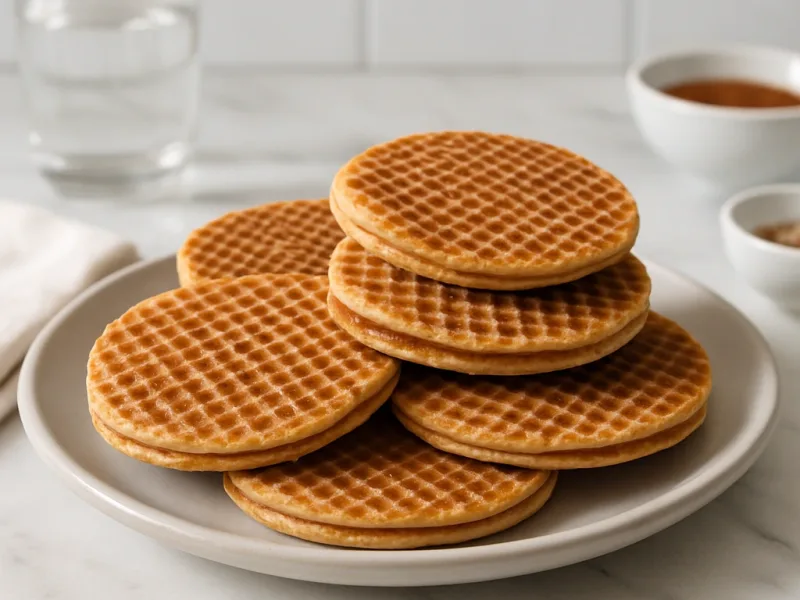
Base recipe: 12 stroopwafels
Your kitchen companion
Ingredients
Check off ingredients as you prepare them.
Follow the steps at your own pace.
Method
Activate the yeast: Pour 0.5 cup whole milk (120 ml) into a small saucepan and heat gently to 100°F (38°C). Remove from heat. Stir in 2.25 tsp instant yeast (7 g) and 1 tbsp granulated sugar (taken from the measured amount). Let stand 5 minutes. The surface will look foamy and smell lightly yeasty.
Mix the dough: Place 3 cups all-purpose flour (375 g), remaining granulated sugar, and 0.5 tsp salt (3 g) into a large mixing bowl. Add 1 cup softened unsalted butter (225 g) and mix on low speed using a stand mixer with dough hook for 2 minutes. Pour in the yeast mixture and add 2 large eggs, one at a time. Mix on medium speed for 4 minutes until the dough looks smooth, soft, and slightly sticky. It should pull away from the bowl sides but still feel elastic when touched.
First rise: Transfer the dough to a lightly greased bowl. Cover with a clean kitchen towel. Let rise at room temperature for 60 minutes until doubled in size. When pressed gently with a finger, the dough will slowly spring back.
Prepare the caramel filling: In a medium saucepan, combine 1 cup brown sugar (200 g), 0.5 cup unsalted butter (113 g, taken from the measured butter if pre-divided), 1 tsp vanilla extract (5 ml), and 0.5 tsp ground cinnamon (1 g). Heat over low heat while stirring constantly with a silicone spatula. Cook for 8–10 minutes until thick, glossy, and deeply golden. Careful: the caramel will be extremely hot. Remove from heat. The texture should be thick but spreadable.
Portion the dough: Divide the risen dough into 12 equal balls, about 2.5 oz (70 g) each. Roll each portion smoothly between your palms. Cover with a towel to prevent drying.
Bake the waffles: Preheat a waffle iron to medium-high heat, about 375°F (190°C). Lightly grease the plates with melted butter. Place one dough ball in the center and close the lid firmly. Bake for 2–3 minutes until evenly golden brown and fragrant. If not golden yet, bake 30 seconds longer.
Slice the waffles: Immediately remove the hot waffle and place it on a cutting board. Using a sharp knife, carefully slice it horizontally while still hot. The interior should be soft and steamy.
Fill with caramel: Spread about 1.5 tbsp caramel filling evenly over the bottom half. Place the top half back on and gently press. The caramel will spread to the edges without leaking.
Cool and set: Place filled stroopwafels on a wire rack. Let cool for 15 minutes so the caramel sets and the waffles become crisp.
Testing for doneness
Visual: Deep golden color with defined waffle pattern
Touch: Firm edges, slightly soft center
Aroma: Warm buttery caramel scent
Extra technique, safety notes and details when you want to go deeper.
More tips & details
Authentic Dutch Stroopwafels at Home
Crisp waffle cookies with a soft caramel heart, made the traditional way
Stroopwafels sit at the heart of Dutch baking culture, balancing contrast better than almost any other classic sweet. Thin, crisp waffle cookies are baked until golden, sliced while still warm, and filled with a sticky caramel syrup that remains soft long after cooling. The result is a dessert that feels both delicate and indulgent, with layers of texture and deep, rounded sweetness. A well-made stroopwafels recipe delivers gentle crunch on the outside, a tender bite within, and a rich caramel center that slowly melts when warmed.
The dough itself is carefully structured to create even browning and fine waffle ridges. Butter contributes flavor and crispness, while sugar caramelizes on contact with heat, forming that signature toasted aroma. Yeast or leavening adds subtle lift, keeping the waffles thin but not brittle. The syrup filling is where depth develops: cooked sugar transforms into caramel, balanced with butter and a touch of warmth from spices traditionally used in Dutch kitchens. Once pressed between two waffle halves, the filling settles into a smooth layer that binds everything together.
Unlike soft waffles meant to be eaten fresh, Dutch caramel syrup waffles improve as they rest. The syrup gently migrates into the waffle layers, creating cohesion without sogginess. This controlled moisture exchange is what separates authentic stroopwafels from simplified versions. When placed over a warm cup of coffee or tea, the caramel softens just enough to become luxuriously stretchy, releasing its aroma before the first bite.
A short look at the origin
Stroopwafels originated in the Netherlands in the late 18th century, most commonly associated with the city of Gouda. Bakers originally created them as a way to use leftover crumbs and dough scraps, binding them with syrup made from sugar and butter. What began as a practical solution evolved into one of the most recognizable Dutch waffle cookies, now sold at markets, bakeries, and cafés across the country and far beyond.
Why you’ll love this recipe
- True bakery-style texture with crisp edges and a soft caramel center
- Balanced sweetness, never cloying, with deep caramel notes
- Make-ahead friendly, perfect for gifting or entertaining
- Versatile serving options, from coffee pairings to dessert platters
- Authentic technique that mirrors traditional Dutch methods
Why this method works
- Baking the waffles until just golden ensures structural integrity without dryness
- Filling while warm allows the caramel to bond evenly with the waffle layers
- Resting time lets moisture redistribute, improving texture over time
- Thin waffles maximize contrast between crisp exterior and soft filling
Chef’s tips
- Work quickly when slicing the waffles; warmth keeps them flexible and cleanly cut
- Keep the caramel warm but not hot to prevent soaking or leaking
- Press gently after filling to avoid forcing syrup out of the edges
- Use consistent waffle size to ensure even filling distribution
Common mistakes
- Overbaking the waffles, which leads to excessive hardness after cooling
- Filling when the waffles are too cool, preventing proper adhesion
- Using caramel that is too thin, resulting in leakage
- Skipping resting time, which is essential for final texture
Storage and make-ahead
Stroopwafels store exceptionally well when handled correctly. Once fully cooled, keep them in an airtight container at room temperature, where they maintain quality for several days. The caramel acts as a natural moisture regulator, helping preserve texture. For longer storage, stroopwafels can be layered with parchment and frozen; thawing at room temperature restores their original consistency. Rewarming briefly over a hot beverage or low oven refreshes the caramel without drying the waffles.
A love for Dutch sweets often leads to discovering other classics built on simple batters and comforting flavors. Exploring similar recipes can open up new ways to enjoy traditional treats at home.
For another beloved specialty, try the Poffertjes Recipe – Fluffy Mini Dutch Pancakes, a soft and airy contrast to crisp stroopwafels. If you’re looking for a fruit-forward dessert that’s just as approachable, the Easy Pineapple Tart Recipe for Beginners offers a warm, buttery alternative that fits beautifully alongside classic European baking.
A classic Dutch treat with timeless appeal
Stroopwafels stand out because they deliver contrast in every bite. Crisp waffle layers meet a soft, caramel-filled center, creating a texture that feels both comforting and indulgent. This stroopwafels recipe captures the essence of the original Dutch bakery version while remaining achievable in a home kitchen. The balance of buttery dough and warm caramel flavor makes these waffles satisfying without feeling heavy, and their thin structure keeps them elegant rather than overwhelming.
What makes stroopwafels especially appealing is how quickly they reward careful preparation. Once the dough is rested and baked, the assembly comes together fast, making the process feel engaging rather than tedious. The aroma of caramel and butter filling the kitchen is part of the experience, signaling that something special is about to be enjoyed.
Practical benefits for everyday baking
Beyond flavor, stroopwafels offer real practical advantages. They store well at room temperature, travel easily, and can be made ahead without losing quality. This makes them ideal for planning in advance, whether for entertaining or gifting. With thoughtful substitutions, the recipe also adapts to dietary needs, including gluten-free or dairy-free variations, while still preserving the characteristic texture.
Timing is another strength. The active preparation fits comfortably into an afternoon, and the finished waffles continue to improve slightly as the caramel settles. Served plain, they are already complete; served warm over a cup of coffee or tea, they become a small ritual rather than just a dessert.
When stroopwafels truly shine
What makes this dish special is its ability to feel both everyday and celebratory. Stroopwafels suit quiet moments with coffee, festive gatherings, holiday trays, and homemade gift boxes alike. They bring a sense of Dutch tradition to the table while remaining universally appealing. Whether shared with guests or enjoyed slowly on your own, stroopwafels offer a simple pleasure built on craftsmanship, warmth, and unmistakable flavor.
Questions
What are stroopwafels made of?
Stroopwafels are made from waffle dough using flour, butter, eggs, sugar, milk, and yeast, filled with a caramel syrup made from brown sugar, butter, cinnamon, and vanilla. These ingredients create the classic crisp exterior and soft, sticky center.
Why are my stroopwafels too hard or dry?
This happens when the waffles are overbaked or sliced too late. Bake only until golden, slice while hot, and fill immediately so the caramel softens the interior instead of drying it out.
Can stroopwafels be made gluten-free or dairy-free?
Yes, gluten-free stroopwafels can be made with a 1:1 gluten-free flour blend, and dairy-free versions work using plant-based butter and oat milk. Expect a slightly softer texture but similar flavor.
How long do homemade stroopwafels last?
Stroopwafels keep 5–7 days at room temperature when stored in an airtight container. The caramel helps retain moisture while the waffles stay crisp.
Can stroopwafels be frozen?
Yes, stroopwafels freeze very well. Wrap them tightly and freeze up to 2 months. Thaw at room temperature, then warm briefly to restore the caramel’s softness.
How should stroopwafels be served or decorated?
Serve stroopwafels plain, stacked neatly, or warmed over a hot cup of coffee or tea. For presentation, lightly drizzle extra caramel or dust with powdered sugar, keeping the focus on the waffle texture.
Recivelle · /recipe/stroopwafels-recipe-dutch-caramel-syrup-waffles