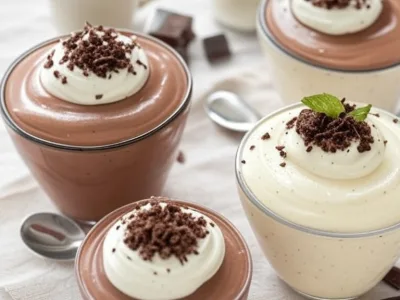
Base recipe: This recipe yields 4 servings, making it perfect for a family dessert or a sweet treat for guests.
Your kitchen companion
Ingredients
Check off ingredients as you prepare them.
Follow the steps at your own pace.
Method
Chocolate Pudding
In a medium saucepan, combine sugar, cocoa powder, and cornstarch. Mix well to ensure even distribution.
Gradually whisk in milk, making sure there are no lumps.
Place the saucepan over medium heat and cook while stirring continuously with a whisk. The mixture will start thickening in 5-7 minutes.
Once the pudding begins to bubble, reduce the heat and cook for another 1-2 minutes, stirring constantly.
Remove from heat and add the chopped dark chocolate, stirring until fully melted.
Stir in vanilla extract and butter (if using) for a richer texture.
Pour into serving dishes and let it cool slightly before serving. Refrigerate if you prefer a chilled pudding.
Vanilla Pudding
In a saucepan, mix sugar and cornstarch.
Slowly whisk in milk until the mixture is smooth.
If using a vanilla bean, slice it open and scrape out the seeds, adding both seeds and pod to the mixture. If using vanilla extract, add it at the end.
Heat over medium heat, stirring constantly until the pudding thickens, about 5-7 minutes.
Once it starts to bubble, reduce heat and cook for an additional 1-2 minutes, stirring to prevent sticking.
Remove from heat, discard the vanilla pod if used, and stir in butter for extra creaminess.
Pour into serving dishes and let cool. Serve warm or chilled.
Extra technique, safety notes and details when you want to go deeper.
More tips & details
Indulgent and Easy Pudding Recipes for Every Occasion
Few desserts bring the same level of comfort and satisfaction as a perfectly creamy, homemade pudding. Whether you’re craving rich chocolate, smooth vanilla, or other delightful flavors, these simple pudding recipes are guaranteed to impress. With minimal ingredients and effortless preparation, they are the perfect choice for both beginner and experienced home cooks.
Imagine scooping into a velvety chocolate pudding, where each bite melts on your tongue with deep cocoa intensity, or savoring a classic vanilla pudding, infused with the warm aroma of real vanilla bean. These puddings are not only quick to make but also endlessly versatile—serve them warm or chilled, enjoy them plain or topped with fresh fruit, whipped cream, or crunchy caramelized nuts.
Why You’ll Love These Pudding Recipes
1. Simple and Quick – These recipes require just a few ingredients and can be made in under 30 minutes. 2. Creamy and Decadent – The perfect balance of smooth texture and deep flavor in every spoonful. 3. Versatile and Customizable – Swap ingredients, add mix-ins, or experiment with toppings for a unique twist. 4. Perfect for Any Occasion – Whether you need a last-minute dessert or a cozy treat, homemade pudding is always a great choice. 5. No Baking Required – Enjoy a stress-free dessert without turning on the oven.
Chocolate Pudding: A Timeless Favorite
There’s nothing quite like homemade chocolate pudding—its deep, rich flavor and silky texture make it an irresistible classic. Made with real cocoa, milk, and just the right amount of sweetness, this dessert is both indulgent and comforting. For an even more luxurious experience, top it with chocolate shavings, a drizzle of caramel, or a sprinkle of sea salt to enhance its complexity.
Chocolate pudding isn’t just a delicious treat—it’s also a great base for other desserts. Use it as a filling for cakes, layer it in trifles, or enjoy it alongside a scoop of vanilla ice cream for a contrast in flavors.
Vanilla Pudding: Pure and Classic
For those who prefer a lighter, more delicate taste, vanilla pudding is the ultimate comfort dessert. Infused with real vanilla bean or high-quality vanilla extract, this pudding delivers a smooth and aromatic experience. The subtle sweetness makes it a great match for a variety of toppings, from berries and caramel sauce to crunchy granola and nuts.
Homemade vanilla pudding is infinitely better than store-bought versions, offering a fresh, natural taste without artificial ingredients. Whether served warm or chilled, it provides a cozy and satisfying experience.
More Delicious Pudding Variations to Try
If you’re feeling adventurous, why not explore other pudding flavors beyond chocolate and vanilla?
- Butterscotch Pudding – A caramelized blend of brown sugar and butter for a deep, nutty flavor.
- Coconut Pudding – Light and tropical, made with coconut milk for a creamy, dairy-free option.
- Banana Pudding – Layers of fresh bananas and vanilla wafers, topped with fluffy whipped cream.
- Coffee Pudding – A bold and slightly bitter twist, perfect for coffee lovers.
- Caramel Pudding – Smooth and buttery, with a delicate hint of sea salt.
How to Serve and Elevate Your Pudding
Presentation can take your homemade pudding to the next level. Try serving it in elegant dessert glasses or small jars for a sophisticated look. Add layers of crushed cookies, nuts, or fruit compotes for extra texture. A dollop of freshly whipped cream, a sprinkle of cinnamon, or a drizzle of melted chocolate can make all the difference.
For a more festive touch, serve pudding as part of a dessert platter, alongside biscotti, shortbread, or fruit tarts. You can also incorporate pudding into layered parfaits, adding visual appeal and a variety of flavors.
Try These Easy and Delicious Recipes Today
If you love creamy, indulgent desserts, these pudding recipes are a must-try. Whether you stick to the timeless classics of chocolate and vanilla or experiment with new flavors, you’ll enjoy the perfect homemade treat every time.
Gather your ingredients and start making your favorite pudding today—it’s easier than you think, and the results are absolutely worth it!
How to Customize and Enhance Your Pudding Recipes
Homemade pudding is one of the most versatile and adaptable desserts you can make. Whether you prefer a richer, creamier texture, a lighter and healthier version, or a completely dairy-free alternative, small ingredient swaps and adjustments can make a significant difference. Below, you’ll find detailed tips on how to modify the recipe to suit different preferences, dietary needs, and flavor profiles while maintaining a smooth, decadent consistency.
Adjusting the Texture and Creaminess
One of the most important aspects of a good pudding is its texture. The key to a silky smooth consistency lies in the thickening agent, fat content, and cooking technique.
- For a thicker pudding – Increase the amount of cornstarch by 5-10 g (1-2 tsp). This will create a more custard-like consistency, perfect for layering in desserts like parfaits.
- For a silkier pudding – Add an extra 10 g (2 tsp) of butter at the end of cooking. This creates a richer mouthfeel and enhances the flavor.
- For a lighter pudding – Reduce the cornstarch by 5-10 g (1-2 tsp) for a more delicate, spoonable pudding with a looser consistency.
- For a denser pudding – If you prefer a pudding that holds its shape better, substitute ½ of the milk with heavy cream. This results in a thicker, richer dessert.
Substituting Milk for Dietary Preferences
The type of milk used in pudding significantly affects both flavor and texture. Here are some variations and their effects:
- Whole milk (default recipe) – Provides the best balance of creaminess and richness.
- Skim milk – Creates a lighter pudding but may be less creamy.
- Almond milk – Adds a slightly nutty undertone, great for pairing with chocolate and vanilla puddings.
- Coconut milk – Gives the pudding a tropical note and is ideal for a richer, dairy-free alternative.
- Oat milk – Provides a natural sweetness and a smooth consistency.
- Soy milk – Has a neutral flavor, making it a good all-purpose dairy substitute.
Sweetener Modifications and Their Impact
The type of sweetener you choose not only affects the taste but also the overall texture of the pudding.
- Granulated sugar (default recipe) – Provides a classic sweetness without altering texture.
- Brown sugar – Adds a deep, caramelized flavor, making the pudding richer and slightly darker.
- Honey or maple syrup – Introduces a mild floral or woody note but requires reducing the milk slightly to balance the extra liquid.
- Coconut sugar – Creates a subtly nutty and less processed taste, working well in chocolate pudding.
- Stevia or erythritol – Great for a sugar-free version, but may alter texture slightly, requiring an additional 5 g (1 tsp) of cornstarch to maintain thickness.
Flavor Enhancements for a Unique Twist
While classic chocolate and vanilla puddings are always delicious, adding unique spices, extracts, or other ingredients can elevate the flavors even further.
For Chocolate Pudding
- Espresso powder (2 g / ½ tsp) – Enhances the depth of cocoa flavor, making it more intense.
- Cinnamon (2 g / ½ tsp) – Adds a warm, spiced undertone, ideal for a comforting winter dessert.
- Orange zest (5 g / 1 tsp) – Pairs beautifully with dark chocolate, creating a bright citrus contrast.
- Sea salt (a pinch) – Balances the sweetness and brings out the chocolate’s natural richness.
For Vanilla Pudding
- Almond extract (2 ml / ½ tsp) – Gives a subtle nutty sweetness, enhancing the vanilla profile.
- Lavender (a small pinch) – Adds a floral note for a sophisticated twist.
- Lemon zest (5 g / 1 tsp) – Brings a refreshing brightness that complements the creamy texture.
Making Pudding Without Cornstarch
Cornstarch is a key thickening agent in this recipe, but it can be replaced with other alternatives:
- Arrowroot powder (same amount as cornstarch) – Produces a lighter and glossier pudding.
- Agar-agar (3 g / ¾ tsp) – A plant-based alternative that creates a firmer pudding.
- Egg yolks (2 per recipe) – Create a custard-like consistency with a richer flavor but require slow heating to prevent curdling.
How to Adjust Pudding for Special Diets
Whether you’re making pudding healthier, vegan, or gluten-free, small adjustments can make a big difference.
- For a vegan version – Use plant-based milk, substitute butter with coconut oil or omit it, and choose a non-dairy sweetener.
- For a gluten-free version – The recipe is already naturally gluten-free, but ensure your ingredients, such as cocoa powder and cornstarch, are labeled gluten-free.
- For a high-protein pudding – Add 1 scoop (30 g) of protein powder before cooking. Vanilla or chocolate flavors work best.
- For a low-carb pudding – Replace sugar with erythritol or stevia and cornstarch with xanthan gum (¼ tsp instead of 40 g cornstarch).
Best Ways to Serve and Store Pudding
Serving Suggestions
- Layer with fruit and crushed biscuits for a parfait-style dessert.
- Top with whipped cream and shaved chocolate for an extra indulgent touch.
- Serve with caramelized bananas or nuts for added crunch.
Storage Tips
- Refrigeration: Store in an airtight container for up to 3 days. Cover the surface with plastic wrap to prevent skin formation.
- Freezing: Not recommended, as the pudding may separate upon thawing.
Small Changes, Big Differences
Even small ingredient swaps can create a dramatically different pudding experience. Whether you want a richer, creamier, lighter, or more adventurous dessert, these adjustments allow you to personalize every bite while maintaining a deliciously smooth texture. Try different combinations and discover your perfect pudding!
Recivelle · /recipe/simple-pudding-recipes-chocolate-vanilla-more