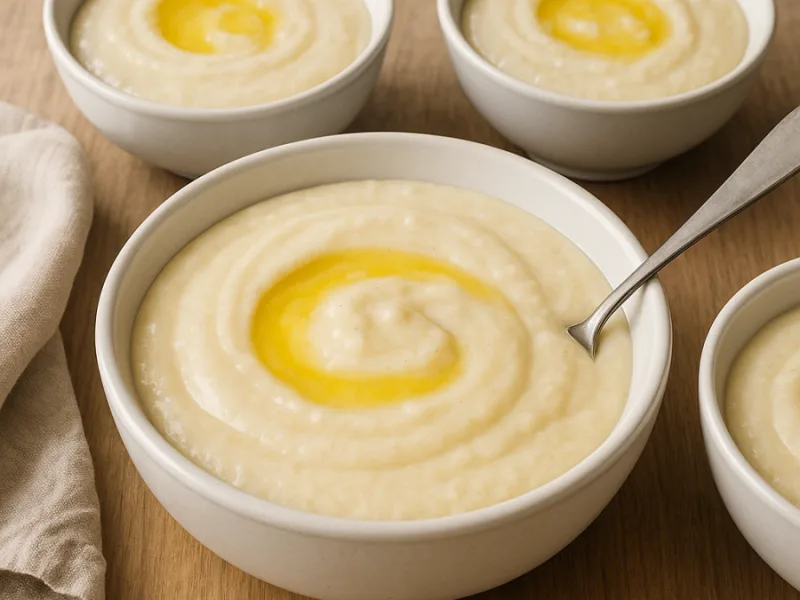
Base recipe: Approximate serving size: 1 cup (240 g) per portion
Your kitchen companion
Ingredients
Check off ingredients as you prepare them.
Follow the steps at your own pace.
Method
Place the sour cream in a heavy-bottomed saucepan. Cook over medium heat for about 10 minutes, stirring frequently. The cream should look smooth and start to release small droplets of clear fat on the surface, giving off a gentle, warm dairy aroma.
Gradually sprinkle in the flour while whisking constantly. Continue whisking until the mixture thickens into a dense, uniform paste. The texture should look cohesive and pull slightly away from the sides of the pan as you stir.
Slowly pour in the milk in a thin stream while stirring steadily. Keep mixing until all the milk is incorporated and the mixture is smooth and creamy, resembling a thick custard that flows slowly from the spoon.
Reduce the heat to low. Simmer gently for 25–30 minutes, stirring occasionally. The porridge should become glossy and thick enough to coat the back of a spoon without running. You will notice a faint nutty aroma as the flour cooks through.
Stir in the granulated sugar and salt. Mix until dissolved and fully integrated. The porridge should taste delicately sweet with a mellow tang, and look uniform without lumps.
In a small saucepan, melt the butter over low heat until it becomes completely liquid and emits a warm, rich scent. Drizzle the melted butter over each portion of the porridge.
Serve warm, sprinkled with ground cinnamon if desired. The finished dish should look smooth, slightly glossy on top, and have a soft, spoonable consistency.
Extra technique, safety notes and details when you want to go deeper.
More tips & details
Discover the Comfort of Homemade Rømmegrøt – Authentic Norwegian Creamy Porridge
What Is Rømmegrøt and Why Is It So Beloved in Norway?
Rømmegrøt, a traditional Norwegian sour cream porridge, holds a special place in countless Scandinavian kitchens. It’s a dish that instantly evokes the gentle hush of snowy landscapes and the welcoming glow of a candlelit table. Every spoonful melts softly on your tongue, releasing a luscious creaminess balanced by a subtle tang that comes from rich sour cream. When I first learned to make this recipe, I was struck by its simplicity and the way it transforms everyday ingredients into something profoundly comforting. It’s the sort of dish you prepare when you want to create an atmosphere of quiet contentment, whether you’re celebrating a midsummer gathering or simply craving a warm, nourishing bowl on a winter afternoon.
Over the years, I’ve tested countless variations, adjusting the ratio of sour cream to flour until the texture reached the ideal silky consistency. This version is the one I come back to time and again, not only because it’s reliable but because it always draws delighted smiles from family and friends. From the first gentle stir to the final dusting of cinnamon sugar, Rømmegrøt is a celebration of homemade Norwegian traditions passed from one generation to the next.
Why You’ll Fall in Love with This Rømmegrøt Recipe
There’s something unforgettable about the way this porridge tastes. The creamy texture wraps around each bite, coating your palate with a delicate, almost buttery richness that feels both rustic and elegant. The flavor is nuanced—mild sweetness lifted by a whisper of salt, followed by the velvety tang of cultured cream. It’s a dish that feels at once familiar and extraordinary, like an heirloom you didn’t know you were missing.
This is my go-to when I want a reliable, crowd-pleasing comfort food that feels both humble and special. Every time I prepare it, I’m reminded of how the warm aroma rising from the pot fills the kitchen with a sense of belonging. The recipe is wonderfully straightforward, requiring only a handful of pantry staples and about an hour of leisurely cooking. Even if you’ve never made Norwegian cuisine before, you’ll find this process both approachable and rewarding.
What to Serve with Norwegian Rømmegrøt
Pairing Rømmegrøt is half the joy of preparing it. Traditionally, this creamy porridge is served with a scattering of ground cinnamon and a drizzle of golden butter, creating a beautiful contrast of flavor and color. For a heartier meal, I love to offer it alongside cured meats like fenalår or spekemat, which lend a delicate saltiness that balances the soft sweetness of the porridge.
If you prefer something lighter, try pairing it with a fresh berry compote or stewed fruits, adding a bright, tart note that awakens every spoonful. A simple crispbread or a slice of dark rye can also be set out to provide texture and variety. This combination makes Rømmegrøt a versatile centerpiece, whether you’re planning a holiday brunch, an afternoon gathering, or a quiet family dinner.
How Do You Know When Rømmegrøt Is Perfectly Cooked?
One of the most rewarding aspects of this recipe is learning to recognize when the porridge has reached its ideal consistency. During my first attempts, I tested various cooking times and temperatures, observing how the sour cream gradually releases its fat and emulsifies with the flour. You’ll know it’s ready when the mixture becomes thick yet fluid enough to form soft ribbons as you stir. The surface should glisten slightly, and a small amount of clarified butter will rise to the top—this is your cue that the transformation is complete.
If you prefer an even silkier texture, you can cook it a little longer, stirring gently to avoid any lumps. Over time, you’ll develop an instinct for this stage, making the preparation feel intuitive and almost meditative.
The Cultural Story Behind This Classic Norwegian Dish
Rømmegrøt has long been associated with celebration and tradition in Norway. In centuries past, it was prepared to mark midsummer festivals, weddings, and harvest gatherings. Today, it’s equally cherished as a holiday comfort food or a simple Sunday indulgence. The ritual of slowly stirring the porridge while it thickens, the delicate scattering of cinnamon, the final swirl of butter—it all feels like an embrace of heritage.
When I first encountered Rømmegrøt during a winter visit to the fjords, I was struck by its warmth and unpretentious luxury. In a country where simplicity is elevated to an art form, this dish exemplifies how a few wholesome ingredients can become something remarkable. It’s a testament to the idea that food doesn’t have to be elaborate to be deeply satisfying.
Special Occasions Perfect for Serving Rømmegrøt
This porridge is ideal for moments when you want to create a sense of connection and tradition. I often prepare it as part of a festive breakfast spread, accompanied by smoked salmon and soft-boiled eggs. It’s also wonderful as a comforting evening dish on cold days, when all you crave is something warm and nourishing. In Norway, Rømmegrøt is a beloved part of Christmas Eve traditions, but it’s equally welcome at casual gatherings or quiet nights in.
If you’re looking for a low carb dinner idea or a healthy comfort food that feels decadent without being complicated, this recipe will exceed your expectations. Its simplicity is its strength, and each step—from gently melting the sour cream to swirling in the flour—feels like an invitation to slow down and savor the process.
I hope this recipe brings as much joy to your table as it has to mine.
Enhance Your Nordic Comfort Food – Elevate Traditional Rømmegrøt for a Richer Experience
Professional Tips for Achieving Perfect Rømmegrøt Every Time
Mastering Norwegian sour cream porridge starts with understanding how each step affects its final texture and flavor. For the smoothest result, whisk the flour into the hot sour cream gradually, allowing each addition to absorb fully before adding more. This prevents lumps and ensures a seamless, velvety base. I’ve found that maintaining moderate heat is essential—too high, and the cream can scorch, creating an overly sharp aroma and gritty mouthfeel. Keep the temperature just high enough to gently release the fat from the sour cream, which forms the delicate layer of butter that floats to the top. Using a heavy-bottomed pan is another simple upgrade that helps distribute heat evenly and minimizes sticking. If you like a richer finish, reserve a spoonful of the clarified butter from the top and drizzle it over each serving just before bringing it to the table.
Common Mistakes to Avoid When Preparing Sour Cream Porridge
Even experienced cooks can run into issues when preparing homemade Rømmegrøt. One of the most frequent missteps is adding milk too quickly. If you pour it all at once, the mixture can separate, leading to a thin consistency with curdled bits. Always add milk in a slow stream, whisking steadily until the mixture looks uniformly smooth and creamy. Another common error is undercooking the flour. If the porridge is removed from heat too soon, it will taste starchy and raw. Cook it until you notice the aroma change—it should smell nutty and mellow rather than floury. I also recommend tasting for seasoning toward the end of cooking. Because sour cream varies in acidity and salt content, you may need an extra pinch of salt or sugar to bring the flavor into perfect balance.
Substitution Ideas and Healthier Alternatives for Rømmegrøt
For cooks who want to adapt this recipe to different diets, several healthier substitutions can maintain its comforting character while lowering fat or gluten content. To reduce saturated fat, you can replace part of the sour cream with Greek yogurt, though this will create a slightly tangier flavor and a lighter texture. If you need a gluten-free option, use a gluten-free all-purpose flour blend in place of regular flour. In my testing, I’ve found that blends containing rice flour and tapioca starch create the smoothest consistency. For those watching their sodium intake, select unsalted butter and low-sodium dairy. You can then season carefully at the end to your taste. Each substitution slightly alters the flavor, but the porridge remains rich and satisfying.
Recipe Variations to Explore New Textures and Flavors
Once you’ve mastered the classic technique, consider experimenting with subtle variations to tailor the porridge to your preferences. A traditional version uses only whole milk, but you can try a splash of heavy cream for extra richness. Some cooks like to incorporate a spoonful of wheat farina for a lightly grainy texture and nutty taste. In my experience, this small addition makes the dish feel heartier and more rustic. If you prefer a more pronounced sweetness, increase the sugar slightly and serve with a warm berry compote or lingonberry preserves. For a savory twist, top the porridge with crisped prosciutto or a scattering of chopped chives, transforming it into an elegant brunch dish.
Ingredient Benefits: Why Traditional Ingredients Make the Difference
Every component of this classic Norwegian recipe contributes to its unique appeal. The sour cream brings tangy richness while naturally thickening the porridge. Its high fat content creates the signature clarified butter that floats on top, adding depth and visual beauty. Whole milk smooths the base and softens the acidity, yielding a balanced, mellow flavor. All-purpose flour binds everything together, forming the comforting, spoonable texture that makes Rømmegrøt so beloved. I’ve tested versions with lower-fat dairy, and while they can be pleasant, nothing replicates the silky consistency that comes from full-fat sour cream. When you see the glossy surface forming in the pot, you’ll understand why these traditional ingredients are so enduring.
Storage and Reheating Tips to Preserve Flavor and Texture
If you have leftover porridge, proper storage keeps it tasting fresh. Transfer the cooled Rømmegrøt to an airtight container and refrigerate for up to 3 days. To reheat, place it in a saucepan over low heat, adding a splash of milk as you stir. Warm slowly until it reaches a creamy, pourable consistency again. Avoid using high heat, as this can cause the porridge to separate and develop a grainy mouthfeel. If you prefer, you can also microwave individual servings in short intervals, stirring every 30 seconds to maintain smoothness. In my experience, reheating gently makes a noticeable difference—you’ll preserve the luxurious texture and delicate flavor that make this dish special.
Common Questions About Rømmegrøt
How do I know when the porridge is cooked properly?
You’ll know it’s ready when it has thickened enough to coat the back of a spoon and a small amount of clarified butter rises to the top. It should look glossy and smooth without lumps.
Can I prepare Rømmegrøt ahead of time?
Yes, you can cook it up to 1 day in advance. Let it cool, store it in the fridge, and reheat gently with a bit of milk to restore the creamy texture.
What should the porridge taste like when finished?
The flavor should be mildly sweet with a pleasant tang from the sour cream, balanced by a touch of salt. The texture will be silky and rich, almost like a loose custard.
How can I prevent lumps in the porridge?
Pour the milk in slowly while whisking constantly, and don’t rush the process. The mixture should look smooth and cohesive before each new addition of liquid.
I’ve found that giving this recipe a little extra time and care transforms it from a simple porridge into a memorable dish you’ll want to share with friends and family.
Recivelle · /recipe/rommegrot-recipe-norwegian-sour-cream-porridge