Base recipe: 4
Your kitchen companion
Ingredients
Check off ingredients as you prepare them.
Follow the steps at your own pace.
Method
In a medium saucepan, combine the mixed berries, chopped peaches, chopped plums, granulated sugar, lemon juice, ground cinnamon, and water.
Place the saucepan over medium heat and bring the mixture to a gentle boil while stirring occasionally.
Once the mixture begins to boil, reduce the heat to low and simmer for 5–7 minutes, or until the fruit is soft and the flavors have blended.
Stir in the vanilla extract and the cornstarch slurry (cornstarch mixed with cold water).
Increase the heat slightly and cook for another 2–3 minutes, stirring constantly until the soup thickens slightly.
Remove the soup from heat and let it cool at room temperature for 10 minutes.
Transfer the mixture to a blender or use an immersion blender to purée the soup until completely smooth.
Pour the soup through a fine mesh strainer into a large bowl to remove any seeds or pulp, if desired.
Cover the bowl and refrigerate for at least 2 hours, or until the soup is fully chilled.
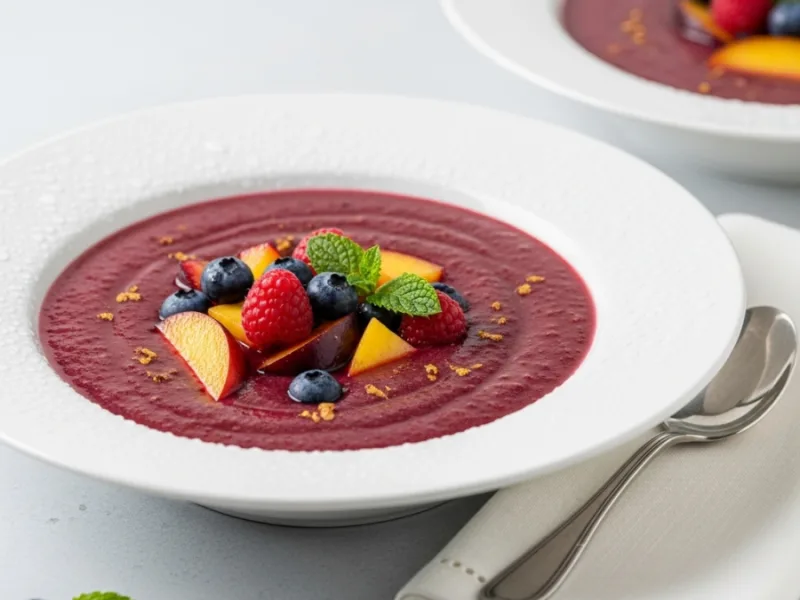
Serve cold, optionally garnished with fresh berries or a sprig of mint.
Extra technique, safety notes and details when you want to go deeper.
More tips & details
Chilled Fruit Soup for Summer Gatherings and Light Meals
What makes this cold fruit soup a favorite for hot weather meals
In the heart of summer, when the days stretch long and the appetite wanes under the sun’s intensity, European fruit soup offers a cooling escape. Silky, slightly sweet, and luxuriously smooth on the palate, this refreshing cold soup recipe blends ripe berries, stone fruits, and aromatic citrus into a vibrant medley that tastes like the season distilled in a bowl. Unlike overly sweet desserts or rich starters, it strikes a balance — light enough for an appetizer, elegant enough for a dinner party, and satisfying as a standalone midday treat.
Rooted in Scandinavian, Central European, and Baltic traditions, this European-style chilled fruit soup reflects a rich culinary heritage of preserving fruits through boiling and cooling — not for longevity, but for flavor elevation. What sets this version apart is its clean technique, minimalist structure, and focus on peak-season produce. Every spoonful brings a burst of natural fruit flavor with an undertone of zest and subtle sweetness that never overwhelms. It’s a soup that feels sophisticated, but is effortlessly simple.
When and how to serve fruit soup for maximum impact
While fruit soup may sound niche, its versatility in modern summer dining is underestimated. Served cold in a wide-rimmed bowl, garnished with a few whole berries or mint leaves, it fits seamlessly into a multi-course summer dinner or brunch buffet spread. In upscale menus, it works beautifully as a first course before grilled fish or white meat dishes, especially when the main course features citrus or light herbs. For casual meals, pair it with buttery brioche or a slice of rustic sourdough bread and a soft cheese like goat’s cheese or ricotta.
For a more minimalist meal, serve this soup with a crisp salad of bitter greens and citrus vinaigrette. Alternatively, for a Nordic-inspired pairing, offer it with smoked salmon toast and pickled red onions — the contrast in textures and temperatures is unforgettable.
Why you’ll fall in love with this elegant fruit-based starter
What makes this dish more than just a chilled purée is its careful layering of flavor and mouthfeel. First, there’s the texture: velvet-smooth with a slightly pulpy body that coats the tongue without being cloying. Then comes the fruit-forward taste, where each ingredient — be it strawberries, peaches, or plums — retains its own identity while harmonizing with others. A splash of lemon or orange juice introduces a refreshing acidity, essential to cutting through natural sugars and making the dish sing. The subtle hint of spice — perhaps from a whole clove or vanilla bean during simmering — adds quiet depth.
Its simplicity is its luxury. No fancy equipment needed. Just ripe fruit, a stovetop, and time to chill. And yet, the final result feels like something served in a vineyard-side bistro or Nordic summer lodge. In culinary terms, this is refined comfort food — a dish that’s humble in ingredients but graceful in execution.
Serving fruit soup as a dessert or light course
In many cultures, this dish shifts effortlessly from starter to dessert, depending on when and how it’s presented. Serve it in a coupe glass with a dollop of crème fraîche for a fine-dining finish to a summer meal. Add a crisp biscuit or almond tuile on the side for textural contrast. For afternoon garden parties, offer it in chilled espresso cups alongside iced tea or herbal infusions. In more rustic presentations, it can be ladled into earthen bowls, topped with granola, and served as a light summer lunch idea.
If you're planning a no-cook dinner party menu, chilled fruit soup checks all the boxes: make-ahead friendly, visually stunning, and endlessly customizable to what’s in season. Think of it not just as a recipe, but as a canvas — where every fruit, spice, and garnish is a brushstroke.
Cold fruit soup across Europe: Cultural roots and contemporary appeal
From Hungarian meggyleves (sour cherry soup) to Swedish fruktsoppa, Europe’s love affair with chilled fruit soups goes back centuries. Often served during summer feasts, these dishes were prized for their ability to cool the body and excite the palate before heavier fare. The modern version distills those historic inspirations into something lighter and more balanced, perfect for warm-weather dinner parties, picnic-friendly dishes, or vegetarian meal planning.
Unlike smoothies or fruit compotes, these soups are strained for a fine texture, cooled with intention, and always served as part of a composed meal. Their clean, bright appearance and refreshing taste make them ideal for guests who prefer low-fat starters, gluten-free appetizers, or simply a break from the expected. The simplicity of ingredients also means the final product tastes truly like what it is — real fruit, gently treated, perfectly chilled.
Ideal occasions for serving this dish
This soup shines at moments when lightness and elegance are called for. It’s perfect for:
- Al fresco summer dining, especially when heat calls for minimal cooking.
- Elegant bridal or baby showers, offering a feminine, floral, and photogenic option.
- Mother’s Day brunches, where fruit-forward dishes dominate the table.
- Gourmet vegetarian dinners, where every dish must pull double duty as both healthy and indulgent.
- Make-ahead cold lunch ideas, since it holds well for up to two days when refrigerated in a sealed container.
Whether you’re hosting a refined dinner party or just need a refreshing recipe for summer weather, this chilled fruit soup delivers not just on flavor, but on experience. Save this one to your seasonal favorites — it’s a cool, colorful, and creative dish you’ll return to every year.
How to Elevate Cold Fruit Soups for a Modern European-Inspired Menu
Professional techniques to refine your European fruit soup
Mastering the art of cold European fruit soups means more than just blending berries and refrigerating them. To transform this seasonal classic into a standout dish on any menu, attention must be paid to how each step shapes flavor, mouthfeel, and presentation. Begin by selecting fruit at peak ripeness — underripe fruit lacks depth, while overripe varieties introduce bitterness or fermentation notes after chilling.
Simmering the fruit briefly, rather than raw blending, enhances the soup’s aromatic profile and ensures better flavor extraction from spices like cinnamon or vanilla. This step also reduces enzymatic bitterness found in some stone fruits. After simmering, puréeing and then straining the mixture ensures a luxuriously smooth texture, making it worthy of a fine-dining starter or plated dessert.
One professional technique is using ice baths after blending to bring down the temperature quickly, preserving the soup’s vivid color and flavor. Refrigerating directly without quick cooling can dull the freshness. For an ultra-elegant finish, serve it in pre-chilled bowls with minimalist garnishes: fresh berries, edible flowers, or a delicate quenelle of yogurt or whipped crème fraîche.
Avoid these common mistakes when preparing chilled fruit soups
Despite its simplicity, several common errors can compromise the quality of cold berry soups. Over-sweetening is one of the most frequent pitfalls. Since chilling dulls sweetness perception, many home cooks attempt to compensate by adding more sugar than necessary. But once chilled, the soup becomes too sweet and cloying. Instead, balance with acid from lemon juice, which sharpens the fruit’s natural flavors without increasing sugar.
Another common mistake is skipping the straining step, which leaves fibrous pulp or seeds that disrupt the soup’s otherwise silky consistency. Using a fine mesh strainer or chinois removes any coarse textures and elevates the soup’s refinement.
Lastly, home cooks often forget that temperature dramatically affects perception. Serving the soup too cold can mute its flavor, while too warm results in a clumsy, jam-like taste. The ideal serving temperature is between 6–8°C (42–46°F) — cool enough to refresh, but warm enough to allow flavors to bloom.
Ingredient swaps and healthier alternatives that work
When adapting this recipe for specific dietary needs, it's important to maintain both taste and texture integrity. For example, those aiming to reduce sugar without using artificial sweeteners can rely on naturally sweet fruits like ripe peaches or mangos, which add both body and sweetness. Dates or bananas may be added sparingly if additional natural sugar is needed.
To create a sugar-free fruit soup suitable for low glycemic diets, consider using stevia extract or erythritol in small quantities. These blend well into the hot fruit mixture and don’t leave a cooling aftertaste when served cold.
The standard thickening agent, cornstarch, can be replaced with arrowroot powder or agar-agar for a gluten-free and cleaner-label alternative. Arrowroot, in particular, provides a smoother finish and works well in chilled preparations. For added protein, especially in post-workout meals, swirl in a spoonful of plain Greek yogurt before serving.
Unique variations of traditional European fruit soups
There are endless ways to customize fruit soup recipes depending on the cuisine or season. A Scandinavian twist might include dried apricots and raisins simmered with clove and cardamom, blended with fresh apples and chilled for a more robust, autumnal variation.
To make a French-inspired version, simmer mixed berries with red wine and a vanilla bean pod — a flavor profile that leans more into the dessert category and pairs exceptionally well with soft cheeses.
For a Mediterranean flair, a splash of orange blossom water or rosewater adds aromatic complexity. In hot climates, adding diced cucumber or melon at the end creates contrast in texture and makes the soup more refreshing.
Don’t overlook savory-spiced fruit soups. A subtle hint of pink peppercorn or Szechuan pepper adds unexpected complexity and gives a gentle bite to balance the sweetness — a trend increasingly seen in modern European menus.
Why fresh fruit matters: Ingredient insights and quality control
The quality of the fruit directly determines the success of this soup. Soft fruits like strawberries, raspberries, and peaches contain high water content and natural sugars, which give the soup body and aroma. But if fruits are out of season, their flavor may be dull — requiring either more acid or sweetness to compensate.
Choosing organic, unsprayed fruit matters in this recipe more than others. Because there’s no baking or long cooking time, the raw nuances of each fruit — including off-notes from pesticides or waxes — remain present in the final taste.
Another key ingredient is lemon juice, not just for flavor but for preservation. Its acidity inhibits browning and acts as a natural color stabilizer. Vanilla extract brings cohesion to the fruit blend — always opt for pure vanilla, as artificial versions often create a sharp, chemical aftertaste, especially in chilled dishes.
Lastly, the choice of thickener affects final texture. Cornstarch delivers gloss and body but can become gummy if overheated. Heat only to gentle thickening and remove from the flame immediately to preserve a delicate finish.
Storage methods and how to re-serve cold soups correctly
Fruit soups are best consumed within 48 hours of preparation to enjoy their peak freshness. Store in a glass container or ceramic bowl, covered tightly with plastic wrap to prevent odor absorption from the fridge. Plastic containers may stain or transfer flavor — avoid them for this recipe.
Never freeze this soup unless using it for popsicle molds or granita. The high water content causes ice crystal formation, which breaks down the texture and dulls the flavor upon thawing.
When ready to serve, stir gently and taste for balance. Cold storage may reduce the perception of acidity or sweetness, so adjust with a small splash of lemon juice or sugar syrup if needed. Serve in chilled bowls or glasses, and avoid garnishing until the moment of plating, as fruit or herbs can oxidize or wilt quickly when in contact with moisture.
Presentation upgrades to impress your guests
To elevate your soup visually and professionally, serve it in glass coupe bowls or stemmed glasses for a more dramatic presentation. Use a small ladle to pour the soup gently to avoid bubbles on the surface. Garnish with precisely placed herbs or microgreens, and dot the top with a few whole berries or edible flowers.
For plated starters, add a chilled quenelle of vanilla yogurt or almond cream in the center of the bowl, and pour the soup tableside for dramatic effect. To contrast temperatures and textures, serve with a small wedge of warm brioche or spiced shortbread.
Ultimately, mastering this recipe is about combining restraint with technique — allowing the fruits to shine while using classical culinary methods to support and elevate their natural flavors. Whether you’re planning a light summer dinner party, building out a vegetarian tasting menu, or simply seeking a refreshing soup that isn’t savory, this recipe delivers a clean, elegant experience worth revisiting every season.
Recivelle · /recipe/refreshing-european-fruit-soup