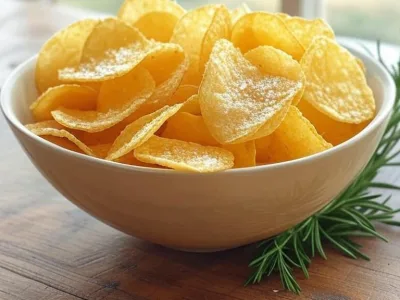
Base recipe: This recipe makes approximately 4 servings.
Your kitchen companion
Ingredients
Check off ingredients as you prepare them.
Follow the steps at your own pace.
Method
Prepare the Potatoes:
Wash and peel the potatoes.
Using a mandoline slicer, slice the potatoes into thin, even rounds (about 1–2 mm thick).
Soak the Slices:
Place the potato slices in a bowl of cold water for 10–15 minutes. This helps remove excess starch, resulting in crispier chips.
Dry the Potatoes:
Drain the slices and pat them completely dry with a clean kitchen towel or paper towel.
Heat the Oil:
In a deep pan or fryer, heat the sunflower oil to 180°C (356°F). Use a thermometer for accuracy.
Fry the Chips:
Carefully add a few potato slices at a time to the hot oil. Avoid overcrowding the pan.
Fry for 2–3 minutes, flipping occasionally, until the chips are golden brown.
Drain and Season:
Remove the chips with a slotted spoon and place them on a tray lined with paper towels to absorb excess oil.
Sprinkle salt and optional seasonings over the chips while they are still warm.
Cool and Serve:
Allow the chips to cool for 5 minutes to achieve maximum crunchiness before serving.
Extra technique, safety notes and details when you want to go deeper.
More tips & details
There's something magical about the sound of a crispy potato chip breaking under your bite, followed by the burst of flavor that melts on your tongue. While store-bought chips often satisfy our cravings, nothing compares to the freshness and quality of homemade potato chips. This recipe allows you to craft chips that are not only crispy and golden but also tailored to your taste, making them the ultimate snack for every occasion.
Why Make Your Own Potato Chips?
Making potato chips at home gives you full control over the ingredients, ensuring a healthier and fresher alternative to packaged varieties. No preservatives, no artificial flavors—just real, wholesome potatoes, a touch of oil, and your favorite seasonings. Whether you prefer them lightly salted, spicy, or infused with unique herbs, this recipe is versatile enough to cater to your culinary creativity.
Home preparation also ensures a more sustainable approach, with fewer packaging materials and an opportunity to use locally sourced ingredients. It's a win-win for your health and the environment.
A Culinary Experience to Remember
The process of creating your own potato chips is as rewarding as the result. From the moment you slice the potatoes into paper-thin rounds to watching them transform into golden perfection in the pan or oven, this recipe turns a simple snack into a delightful cooking adventure. Plus, the aroma of freshly fried or baked chips filling your kitchen is utterly irresistible.
Why You’ll Love This Recipe
- Simple and Accessible: With just a few basic ingredients—potatoes, oil, and salt—you can create a masterpiece.
- Customizable: Add your favorite spices like paprika, garlic powder, or rosemary to elevate the flavor.
- Perfectly Crispy: Achieving that delicate crunch is easier than you think with this foolproof method.
- Quick Preparation: In less than an hour, you’ll have a bowl of chips ready to serve and enjoy.
- Ideal for Any Occasion: From casual snacking to party platters, these chips fit every setting.
Tips for Perfect Potato Chips
- Choose the Right Potato: Waxy varieties like Yukon Gold or starchy options like Russets yield the best results.
- Slice Evenly: A mandoline slicer is your best friend for consistent, thin slices that fry or bake evenly.
- Soak for Extra Crispiness: Soaking potato slices in cold water removes excess starch, ensuring a crunchy finish.
- Monitor the Heat: Maintaining a consistent oil temperature prevents soggy or burnt chips.
- Season While Hot: Sprinkle your favorite seasonings immediately after frying for maximum flavor absorption.
Your Homemade Adventure Awaits
Unleash your inner chef and create a batch of potato chips that rivals your favorite store-bought brands. Gather your ingredients, clear your kitchen workspace, and get ready to embark on a delicious journey. Once you’ve tasted your own perfectly crispy chips, you’ll never look at packaged snacks the same way again.
Share the Love Invite your friends and family to join in the fun of making and tasting these delectable potato chips. Post your creations online, tag your loved ones, and inspire others to try their hand at this delightful recipe.
Your homemade potato chips await—crispy, flavorful, and undeniably satisfying. Start making memories one chip at a time!
Enhancing and Customizing Your Potato Chips Recipe
When it comes to homemade potato chips, versatility and creativity are key. This simple yet satisfying recipe can be easily modified to suit different tastes, dietary needs, or even cooking methods. Below, you'll find a variety of tips and tricks to help you tweak this recipe while maintaining the delicious crunch and flavor that make potato chips so irresistible.
Adjusting the Type of Potato
Choosing the right potato is essential for achieving the desired texture and flavor of your chips.
- Starchy Potatoes (e.g., Russets): These potatoes result in extra-crispy chips with a neutral, earthy flavor. Their low moisture content ensures a golden, crunchy finish.
- Waxy Potatoes (e.g., Yukon Gold): These yield slightly softer chips with a creamier texture and a richer, buttery flavor. Ideal for those who prefer a more delicate crunch.
- Sweet Potatoes: For a sweeter, healthier alternative, try using sweet potatoes. Their natural sugars caramelize beautifully, creating chips with a balance of crispness and chewiness.
Experimenting with Oils
The type of oil you use for frying significantly impacts the flavor and nutritional profile of your potato chips.
- Sunflower or Vegetable Oil: Neutral in taste, these oils let the natural potato flavor shine.
- Olive Oil: Adds a subtle, fruity flavor and enhances the health benefits of your chips by providing monounsaturated fats.
- Coconut Oil: Gives the chips a light, tropical aroma and a hint of sweetness, pairing wonderfully with sweet potatoes.
- Avocado Oil: With a high smoke point and mild flavor, avocado oil is perfect for health-conscious cooks.
Exploring Seasonings and Flavors
Seasoning your chips is where you can really let your creativity shine. Below are ideas to transform the flavor profile of your potato chips:
- Classic Salt: A timeless favorite that highlights the natural taste of potatoes.
- Herbed Chips: Sprinkle dried rosemary, thyme, or oregano for an earthy, aromatic touch.
- Spicy Chips: Add a dash of cayenne pepper, chili powder, or smoked paprika for a bold, fiery kick.
- Cheesy Chips: Sprinkle nutritional yeast or grated Parmesan for a cheesy, savory flavor.
- Sweet Chips: Dust with cinnamon and sugar for a unique dessert-like snack.
Tip: Always season the chips while they’re still warm to ensure the flavors stick to the surface.
Alternative Cooking Methods
While deep-frying creates traditional crispy chips, alternative methods can be used to reduce fat content or achieve unique textures.
- Baking:
- Preheat the oven to 200°C (392°F).
- Arrange potato slices on a baking tray lined with parchment paper.
- Lightly brush with oil and bake for 20–25 minutes, flipping halfway through.
- Outcome: Chips are less oily but still crispy, with a slightly roasted flavor.
- Air-Frying:
- Preheat the air fryer to 180°C (356°F).
- Place a single layer of potato slices in the basket and cook for 15–20 minutes, shaking occasionally.
- Outcome: Similar to baking, but with a quicker cooking time and a more even crunch.
Healthier Substitutions
If you're looking to make health-conscious adjustments, consider the following:
- Reduce Sodium: Use low-sodium salt or a sprinkle of dried herbs to minimize sodium intake while maintaining flavor.
- Low-Fat Chips: Opt for baking or air-frying instead of deep-frying to reduce fat content.
- Gluten-Free Seasonings: Ensure all spice blends and toppings are free of gluten to cater to dietary restrictions.
Adding Color and Nutrients
Enhance the visual appeal and nutritional value of your chips by incorporating colorful root vegetables:
- Beet Chips: Their deep red hue is rich in antioxidants like betalains, which help combat inflammation.
- Carrot Chips: Vibrant orange chips are packed with beta-carotene, supporting eye health and the immune system.
- Parsnip Chips: Creamy-white chips with a slightly nutty flavor offer fiber and essential vitamins like B9 (folate).
Adjusting Thickness for Texture
The thickness of your potato slices affects the final texture:
- Thin Slices (1 mm): Result in ultra-crispy chips with a delicate crunch.
- Thicker Slices (2–3 mm): Create sturdier chips with a satisfying bite and a slight chewiness.
Tip: Use a mandoline slicer for precise and even slicing.
Custom Presentation Ideas
Presentation matters, especially when serving chips for gatherings or parties. Here are a few suggestions:
- Layered Chips Platter: Arrange chips in layers, alternating between different flavors or potato types.
- Chip Cones: Serve chips in paper cones for an elegant, casual look.
- Dip Pairings: Pair chips with homemade dips like guacamole, tzatziki, or spicy salsa for added flavor and variety.
Whether you stick to the classic recipe or experiment with different ingredients and techniques, homemade potato chips offer endless possibilities. With these tips, you can create a snack that’s truly your own—crispy, flavorful, and perfectly tailored to your preferences.
Recivelle · /recipe/potato-chip-recipe