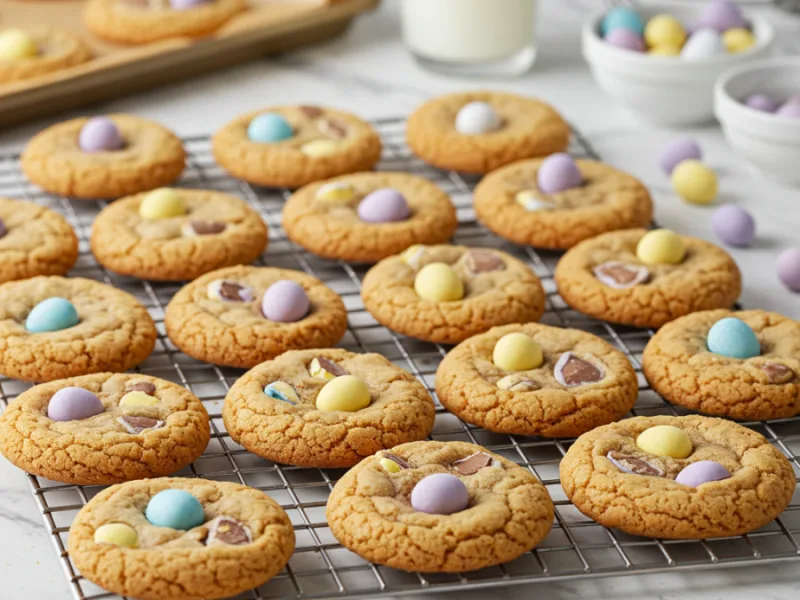
Base recipe: 24 cookies
Your kitchen companion
Ingredients
Check off ingredients as you prepare them.
Follow the steps at your own pace.
Method
In a large mixing bowl, cream together butter, granulated sugar, and brown sugar until light and fluffy.
Add the egg and vanilla extract, mixing until well combined.
In a separate bowl, whisk together flour, baking soda, and salt. Gradually add this to the wet mixture, stirring until a soft dough forms.
Fold in the crushed mini chocolate eggs and chocolate chips (if using).
Cover the dough and refrigerate for at least 30 minutes to enhance flavor and prevent excessive spreading.
Preheat the oven to 175°C (350°F) and line a baking sheet with parchment paper.
Scoop the dough into balls of about 30 g (2 tbsp each) and place them on the baking sheet, leaving enough space for spreading.
Bake for 10-12 minutes, or until the edges are golden while the center remains slightly soft.
Allow cookies to cool on the baking sheet for 5 minutes, then transfer to a wire rack to cool completely.
Extra technique, safety notes and details when you want to go deeper.
More tips & details
Irresistible Mini Egg Cookies: A Delightful Easter Treat
A Perfect Blend of Crunchy and Chewy
Nothing captures the essence of Easter baking quite like a batch of freshly made Mini Egg Cookies. These delightful treats combine buttery, golden cookie dough with crunchy yet melt-in-your-mouth chocolate mini eggs, creating a perfect balance of textures and flavors. The chewy center paired with a slight crisp on the edges makes them an irresistible indulgence for all ages. Whether you’re baking these for a family gathering, gifting them in decorative jars, or simply treating yourself, this easy cookie recipe is bound to become a seasonal favorite.
The Magic of Mini Eggs in Baking
Mini eggs add a unique crunch and a burst of sweet, creamy chocolate in every bite. Their candy shell brings not only texture but also a vibrant, colorful touch that makes these cookies visually stunning. Unlike traditional chocolate chip cookies, which rely solely on the richness of chocolate, mini eggs introduce a playful contrast with their crisp shell and smooth milk chocolate interior.
What makes these cookies even more special is their versatility. They are perfect for Easter brunch, festive dessert tables, and afternoon tea. Their eye-catching pastel colors make them an ideal choice for spring-themed celebrations, making any dessert spread more inviting and cheerful.
Why This Recipe Stands Out
Among countless cookie recipes, Mini Egg Cookies stand out due to their perfect balance of sweetness and texture. Unlike standard chocolate chip cookies, where the chocolate fully melts into the dough, the mini eggs hold their shape slightly, ensuring every bite has a delightful crunch. Their buttery and vanilla-infused dough enhances the overall flavor profile, making these cookies not only delicious but irresistibly addictive.
1. Perfect Texture in Every Bite
One of the best aspects of this Easter cookie recipe is its combination of textures. A soft and chewy core, a slight crispy edge, and the delightful crunch of crushed mini eggs work together to create the ultimate cookie experience.
2. Festive and Fun for All Ages
Whether you’re baking with kids or making a batch for a party, these Mini Egg Cookies bring joy to every occasion. Their colorful candy shells make them a fun and festive treat, and they can be customized to suit any preference—whether you like them soft and gooey or slightly crisp.
3. Easy and Foolproof Recipe
This no-fail cookie recipe is ideal for bakers of all levels. Using simple pantry ingredients, it comes together effortlessly, with no special techniques required. The dough can be made ahead of time, allowing for convenient baking whenever you need a fresh batch of cookies.
Pro Tips for the Best Mini Egg Cookies
Choosing the Right Mini Eggs
For the best results, opt for high-quality milk chocolate mini eggs with a thin candy shell. Some varieties have a thicker coating, which can be harder to bite into once baked. If you prefer a slightly softer texture, crush some of the mini eggs before folding them into the dough while keeping a few whole for a beautiful, finished look.
Achieving the Perfect Cookie Texture
To get the ideal chewy and crispy balance, follow these tips:
- Use room temperature butter for a perfectly creamy dough.
- Chill the dough for at least 30 minutes before baking to prevent excessive spreading.
- Bake until the edges turn light golden brown, but the center remains slightly soft—it will firm up as the cookies cool.
Customization Ideas
While these cookies are perfect as they are, you can always add a personal touch by incorporating extra ingredients:
- White chocolate chunks for an added layer of sweetness.
- Chopped nuts like almonds or pecans for a crunchy contrast.
- A pinch of sea salt to enhance the chocolate flavor.
The Ultimate Easter Dessert
Whether you’re making these for a festive celebration or just indulging in a chocolatey treat, Mini Egg Cookies are a must-try for any cookie lover. Their irresistible combination of flavors and textures makes them stand out from classic cookie recipes, offering something both visually appealing and incredibly delicious.
With a crisp exterior, a soft and gooey center, and bursts of chocolate in every bite, these cookies bring the joy of Easter into every moment. Serve them with a glass of milk, package them as homemade gifts, or enjoy them straight from the oven—no matter how you choose to indulge, these Mini Egg Cookies will quickly become a yearly tradition.
Elevating the Classic Mini Egg Cookies Recipe
The Key to a More Flavorful and Texturally Perfect Cookie
Every great cookie recipe has room for improvement, and Mini Egg Cookies are no exception. While the classic recipe offers a perfect blend of buttery richness and chocolatey crunch, small modifications can enhance their flavor, texture, and nutritional value. Whether you want to create a chewier texture, intensify the chocolate flavor, or add a healthier twist, there are several techniques to transform these cookies into an even more irresistible treat.
Enhancing the Dough for Better Texture and Taste
A cookie’s texture and taste are influenced by the balance of fat, sugar, and flour. By adjusting these elements, you can create a cookie that is chewier, crispier, or softer, depending on your preference.
Increasing Chewiness
- More brown sugar: The molasses in brown sugar adds moisture and chewiness. Increasing brown sugar while slightly reducing granulated sugar will create a denser, chewier texture.
- Extra egg yolk: Adding an additional egg yolk instead of a whole egg enhances richness and tenderness, making the cookies softer and chewier.
- Chilling the dough longer: Extending the chilling time from 30 minutes to 24 hours allows the flour to fully hydrate and deepens the flavors, resulting in a better-textured cookie.
Achieving Crispier Edges
- More granulated sugar: Increasing the proportion of white sugar while reducing brown sugar leads to crisper edges.
- Melted butter instead of softened butter: Using melted butter creates thinner, crunchier cookies by allowing the flour to absorb more moisture.
- Baking at a slightly higher temperature: Baking at 180°C (355°F) instead of 175°C (350°F) encourages faster spreading, leading to a thinner and crispier result.
Making the Cookies Extra Soft
- More butter: Slightly increasing the butter content creates a rich, soft cookie that melts in the mouth.
- Cornstarch addition: Adding 5 g (1 tsp) of cornstarch to the flour mixture enhances softness and tenderness without making the cookies cakey.
The Power of High-Quality Ingredients
The quality of ingredients plays a crucial role in making the best Mini Egg Cookies. While the standard recipe calls for everyday pantry staples, upgrading certain ingredients can make a noticeable difference.
- Premium butter: Using European-style butter with higher fat content (82% or more) results in a more buttery and flavorful cookie.
- Real vanilla extract: Artificial vanilla can leave a synthetic aftertaste, whereas pure vanilla extract or vanilla bean paste provides a more natural, aromatic depth.
- Dark chocolate mini eggs: Swapping regular milk chocolate mini eggs for dark chocolate mini eggs enhances the contrast between sweetness and bitterness, creating a more balanced cookie.
- Toasted flour: Lightly toasting the flour in the oven before using it adds a nutty undertone, enhancing the depth of flavor in the dough.
Common Mistakes to Avoid
Even experienced bakers sometimes make mistakes that can lead to less-than-perfect cookies. Avoiding these errors will help you achieve consistent results every time.
Overmixing the Dough
Once flour is added, it’s essential to mix only until combined. Overmixing develops too much gluten, resulting in tough and dense cookies rather than soft and chewy ones.
Skipping the Chilling Step
Although it may be tempting to bake the cookies immediately, skipping the chilling step leads to excessive spreading, producing flat and greasy cookies. Allowing the dough to rest in the fridge enhances the structure and flavor.
Using Warm Baking Sheets
Placing dough on a hot baking sheet from a previous batch causes uneven baking and excessive spreading. Always use a room temperature or cooled baking sheet.
Incorrect Ingredient Measurements
Baking requires precision. Measuring flour incorrectly—by scooping directly from the bag instead of using a spoon and level method—can lead to dry, crumbly cookies. Similarly, too much sugar can make the cookies overly sweet and hard.
Healthier Alternatives for a Nutritious Twist
If you want to enjoy Mini Egg Cookies with a healthier approach, several substitutions can maintain flavor while reducing sugar, fat, or gluten.
Reducing Sugar Without Sacrificing Sweetness
- Replacing half of the sugar with coconut sugar provides a lower glycemic index and a more caramel-like taste.
- Using honey or maple syrup instead of granulated sugar reduces refined sugar content and adds natural sweetness.
Adding Fiber and Nutrients
- Whole wheat flour can replace up to 50% of the all-purpose flour for added fiber and a slightly nuttier taste.
- Adding ground oats or oat flour enhances texture and increases fiber content.
- Mixing in chia or flax seeds provides omega-3 fatty acids and additional fiber without altering the flavor significantly.
Making Them Dairy-Free and Gluten-Free
- Use plant-based butter alternatives such as coconut oil or vegan butter to eliminate dairy.
- Choose a gluten-free flour blend with xanthan gum to replicate the structure of traditional cookies.
- Opt for dairy-free chocolate mini eggs to ensure a fully plant-based version.
Why Homemade Mini Egg Cookies Are the Best Choice
While store-bought Easter cookies may seem convenient, homemade versions offer superior taste, freshness, and customization options.
Better Quality Ingredients
When baking at home, you have full control over ingredient quality. Unlike commercial cookies that may contain preservatives, artificial flavors, and stabilizers, homemade cookies use pure, natural ingredients for a fresher taste.
Customization to Personal Taste
Making your own cookies allows you to adjust sweetness, texture, and flavors to suit your preference. You can also incorporate additional mix-ins such as nuts, dried fruit, or different chocolate varieties for a unique twist.
No Unnecessary Additives
Many packaged cookies contain high-fructose corn syrup, hydrogenated oils, and artificial coloring. By baking at home, you avoid these unnecessary additives, creating a treat that’s both delicious and wholesome.
Cost-Effective and Sustainable
Buying ingredients in bulk and baking at home is often cheaper than purchasing pre-made cookies. Additionally, using reusable containers and avoiding excess plastic packaging makes homemade baking a more environmentally friendly choice.
Perfecting Mini Egg Cookies
By making small adjustments to ingredients and techniques, you can enhance the flavor, texture, and overall quality of Mini Egg Cookies. Whether you want to create a chewier, crispier, or healthier version, experimenting with different sugars, flours, and fats can make a noticeable impact.
Avoiding common mistakes and using high-quality ingredients ensures perfect results every time. Additionally, baking cookies at home allows you to enjoy a fresher, more flavorful treat, free from artificial additives.
No matter how you choose to personalize your Mini Egg Cookies, the key to success is precision, patience, and creativity—ensuring every bite is as delicious as possible.
Recivelle · /recipe/mini-egg-cookies-recipe