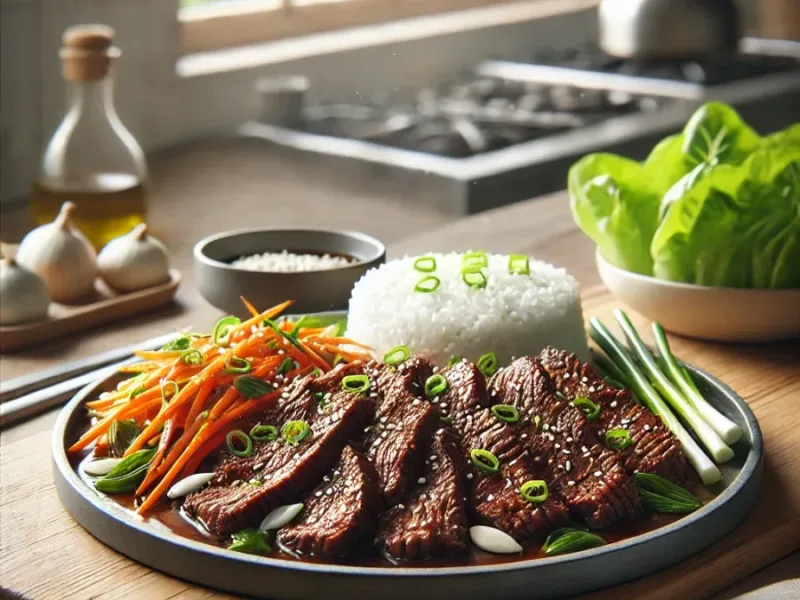
Base recipe: Serves 4
Your kitchen companion
Ingredients
Check off ingredients as you prepare them.
Follow the steps at your own pace.
Method
Marinate the Beef:
In a large bowl, mix soy sauce, sesame oil, brown sugar, garlic, ginger, mirin, and black pepper.
If using, add the grated Asian pear or kiwi for natural tenderization.
Add the thinly sliced beef to the marinade, ensuring each piece is well coated.
Cover and refrigerate for at least 1 hour (or up to 24 hours for deeper flavor).
Cook the Bulgogi:
Heat a large skillet or grill pan over medium-high heat. Add a small amount of oil if needed.
Cook the marinated beef in batches to avoid overcrowding.
Stir-fry the beef with sliced onion and julienned carrot for 2–3 minutes, or until the beef is fully cooked and slightly caramelized.
Assemble the Dish:
Serve the bulgogi with steamed white rice and fresh lettuce leaves.
Optionally, include side dishes like kimchi or spicy cucumber salad.
Extra technique, safety notes and details when you want to go deeper.
More tips & details
Korean Bulgogi Beef is more than just a dish; it’s an experience that brings together the rich culinary traditions of Korea with flavors that captivate the senses. This dish, which translates to “fire meat,” is renowned for its tender, thinly sliced beef marinated in a harmonious blend of sweet, savory, and umami-rich ingredients. With each bite, you’ll discover the balance of flavors that have made bulgogi a beloved dish around the globe.
A Culinary Tradition with Deep Roots
Bulgogi is a cornerstone of Korean cuisine with a history that dates back over a thousand years to the Goguryeo era. Originally prepared as a royal delicacy, it has evolved over time into a dish enjoyed by people of all walks of life. Traditionally cooked over an open flame, bulgogi’s name reflects its cooking method: "bul" meaning fire and "gogi" meaning meat.
While its preparation has modernized, the heart of bulgogi remains its flavorful marinade. A blend of soy sauce, sugar, sesame oil, garlic, and ginger creates the dish’s iconic profile, perfectly balancing sweet and savory notes with a touch of nuttiness. Today, bulgogi is served in homes, at special gatherings, and in restaurants, where it continues to celebrate Korea’s culinary heritage.
What Makes Korean Bulgogi Beef Unique?
What sets Korean Bulgogi Beef apart is its meticulous preparation and the attention given to balancing flavors:
- Thinly sliced beef ensures tenderness and allows the marinade to penetrate deeply, infusing every bite with flavor.
- The marinade combines umami-rich soy sauce, sweet brown sugar, and aromatic sesame oil, garlic, and ginger for a complex and delightful taste.
- Optional additions, such as Asian pear or kiwi, are often included in the marinade to naturally tenderize the meat and add a subtle fruity sweetness.
Bulgogi is incredibly versatile. It can be grilled, pan-fried, or even cooked on a tabletop grill, making it a social and interactive dining experience. Served with accompaniments like steamed rice, lettuce wraps, and a variety of banchan (Korean side dishes), bulgogi transforms a simple meal into a feast.
A Dish for Every Occasion
Whether you’re hosting a dinner party or preparing a comforting family meal, Korean Bulgogi Beef is the perfect choice. Its sweet and savory marinade appeals to a wide range of palates, making it a crowd-pleaser. Plus, the ability to prepare the marinade and meat in advance makes it a convenient option for busy schedules.
For an authentic experience, serve bulgogi with traditional Korean side dishes like kimchi, pickled radishes, and spicy cucumber salad. You can also create wraps by pairing bulgogi with lettuce leaves, rice, and a dollop of ssamjang (spicy dipping sauce). This adds a fresh and spicy contrast to the rich beef flavors.
Nutritional Benefits of Korean Bulgogi Beef
Not only is Korean Bulgogi Beef delicious, but it also offers nutritional benefits:
- Lean beef is an excellent source of high-quality protein, essential for muscle repair and overall health.
- The marinade contains antioxidant-rich garlic and ginger, which support the immune system and promote digestion.
- Sesame oil provides healthy fats, while soy sauce delivers vital minerals like iron and potassium.
Bringing the Flavors of Korea to Your Table
Preparing Korean Bulgogi Beef at home is an opportunity to embrace the flavors of Korea and share a dish steeped in history and tradition. The combination of tender meat, a perfectly balanced marinade, and a variety of accompaniments makes every meal special.
Whether you’re a seasoned fan of Korean cuisine or new to its delights, this dish is sure to impress. Let the sweet and savory perfection of bulgogi transport you to the heart of Korean culinary tradition.
Tips to Customize and Enhance Korean Bulgogi Beef
Korean Bulgogi Beef is a versatile and flavorful dish that can be adapted in numerous ways to suit individual preferences, dietary needs, or the ingredients available in your pantry. By making thoughtful adjustments, you can tailor the dish to create unique variations while maintaining its authentic essence. Below are detailed suggestions on how to modify the recipe and the impact these changes have on flavor, texture, and overall presentation.
Adjusting the Marinade
Soy Sauce Alternatives
Soy sauce is a key ingredient in bulgogi marinade, but different types or substitutes can create new flavor profiles:
- For a richer umami flavor: Use dark soy sauce, which is thicker and slightly sweeter.
- For a gluten-free option: Replace regular soy sauce with tamari or coconut aminos.
- Impact on flavor: Dark soy sauce enhances the savory depth, while coconut aminos add a hint of sweetness and reduce saltiness.
Sweeteners
The sweetness in the marinade can be adjusted based on personal taste or dietary preferences:
- For a more traditional sweetness: Stick to brown sugar or add a touch of honey.
- For a natural option: Use maple syrup or grated Asian pear, which also tenderizes the meat.
- Impact on flavor: Brown sugar creates a classic bulgogi taste, while honey or pear adds a subtle fruitiness.
Sesame Oil
Sesame oil is essential for its nutty aroma, but variations can offer a different profile:
- For a stronger nuttiness: Use toasted sesame oil.
- For a lighter option: Mix sesame oil with a neutral oil like grapeseed or avocado oil.
- Impact on flavor: Toasted sesame oil intensifies the nuttiness, while lighter oils make the dish less rich.
Customizing the Protein
Beef Cuts
The choice of beef greatly affects the dish’s texture and flavor:
- For a tender, melt-in-your-mouth experience: Use ribeye or sirloin, as these cuts are well-marbled.
- For a leaner option: Choose flank steak or tenderloin.
- Impact on flavor: Marbled cuts absorb the marinade better, offering a juicier result, while lean cuts provide a lighter, healthier dish.
Protein Substitutes
Bulgogi can be made with various proteins, making it adaptable for different diets:
- Chicken: Use boneless thighs for a juicy texture or breasts for a leaner version.
- Pork: Pork shoulder or belly creates a richer, heartier dish.
- Plant-based options: Tofu or tempeh works well when sliced thinly and marinated thoroughly.
- Impact on flavor: Chicken provides a lighter version, pork adds depth and richness, and plant-based proteins absorb the marinade for a flavorful vegetarian alternative.
Cooking Techniques
Grilling vs. Pan-Frying
Traditionally, bulgogi is grilled, but pan-frying is a practical and equally delicious method:
- Grilling: Adds a smoky char and caramelization.
- Pan-frying: Ensures even cooking and locks in juices.
- Impact on flavor: Grilling provides a slightly smoky taste, while pan-frying gives a cleaner, caramelized flavor.
Cooking Vegetables
Incorporating vegetables can enhance the dish’s nutritional value and texture:
- Classic additions: Onions and carrots, stir-fried alongside the beef, add sweetness and crunch.
- Creative options: Mushrooms, bell peppers, or zucchini can add color and variety.
- Impact on flavor: Vegetables balance the dish with freshness and contrast the richness of the beef.
Presentation and Pairings
Serving Styles
How bulgogi is served can elevate the dining experience:
- Traditional: Serve with steamed white rice and lettuce wraps for an authentic Korean meal.
- Modern: Use bulgogi as a topping for rice bowls, noodles, or even tacos.
- Impact on flavor: Serving with rice and lettuce keeps the dish balanced, while modern approaches add fusion flair.
Accompaniments
Side dishes (banchan) are a key part of a Korean meal:
- Kimchi: Adds a tangy, spicy contrast to the sweet-savory beef.
- Pickled radishes: Refresh the palate with their crisp texture and slight acidity.
- Spicy cucumber salad: Complements the beef with its cooling heat.
- Impact on flavor: These accompaniments provide balance and enhance the overall meal experience.
Healthier Adjustments
Reducing Sugar
- Use a sugar substitute like stevia or erythritol for a low-carb version.
- Impact on flavor: Sugar substitutes maintain sweetness without the calories, though they may slightly alter the marinade’s texture.
Lower Sodium
- Replace soy sauce with low-sodium versions or dilute it with water.
- Impact on flavor: The reduced saltiness lets the sesame oil and garlic shine more prominently.
Adding Whole Grains
- Serve with brown rice or quinoa instead of white rice.
- Impact on flavor: Whole grains introduce a nutty undertone and increase fiber content.
Exploring Flavor Variations
Bulgogi’s marinade can be adapted to create unique versions:
- Spicy bulgogi: Add gochujang (Korean chili paste) for heat and depth.
- Citrus twist: Include orange or lime zest for a zesty, bright flavor.
- Fusion style: Incorporate barbecue sauce for a Korean-American fusion dish.
- Impact on flavor: Each variation introduces a new layer of complexity, allowing you to experiment with different profiles.
Korean Bulgogi Beef is a dish that invites creativity and customization while retaining its traditional roots. Whether you’re experimenting with proteins, adding vegetables, or exploring new marinade combinations, each modification offers a unique take on this classic dish. With these tips, you can create a personalized version that suits your tastes and dietary needs while celebrating the rich flavors of Korea.
Recivelle · /recipe/korean-bulgogi-beef-sweet-and-savory-perfection