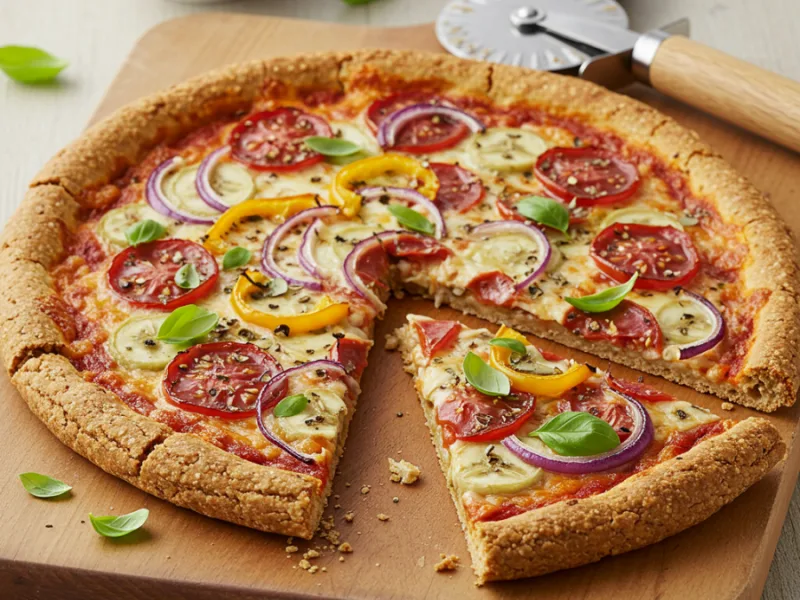
Base recipe: This recipe makes 1 pizza crust, which serves 2-3 people depending on portion size.
Your kitchen companion
Ingredients
Check off ingredients as you prepare them.
Follow the steps at your own pace.
Method
Preheat the oven to 200°C (400°F). Line a baking sheet or pizza stone with parchment paper.
Melt the cheese
In a microwave-safe bowl, combine shredded mozzarella and cream cheese.
Microwave for 45-60 seconds, stirring halfway through, until fully melted and smooth.
Mix the dough
In a separate bowl, whisk the almond flour, baking powder, salt, garlic powder, and oregano.
Add the melted cheese mixture and stir to combine.
Lightly beat the egg, then mix it into the dough. Knead with hands until a smooth, uniform dough forms.
Roll out the crust
Place the dough between two sheets of parchment paper and roll it out into a thin, even circle about 5 mm (¼ inch) thick.
Transfer it to the prepared baking sheet.
Pre-bake the crust
Bake for 8 minutes, until the edges start turning golden brown.
Remove from the oven and let it cool slightly before adding toppings.
Add toppings and bake again
Spread your favorite low-carb pizza sauce, sprinkle with cheese, and add toppings of choice.
Bake for another 4-7 minutes, until the cheese is bubbly and golden.
Serve and enjoy
Let the pizza cool for a few minutes before slicing. Serve warm and enjoy your keto-friendly pizza!
Extra technique, safety notes and details when you want to go deeper.
More tips & details
The Ultimate Keto Almond Flour Pizza Crust – Crispy, Chewy, and Low-Carb
Nothing compares to the joy of biting into a perfectly crispy, golden pizza crust, especially when it's low-carb, grain-free, and keto-friendly. This almond flour pizza crust delivers everything a pizza lover craves— a delightful chew, a lightly crisped edge, and a satisfying base for all your favorite toppings. Unlike traditional dough, this recipe keeps things simple, gluten-free, and completely grain-free, making it the ideal choice for those following a keto diet or looking for a healthier pizza alternative.
Why You’ll Love This Keto Almond Flour Pizza Crust
Finding a low-carb pizza crust that tastes like the real deal can be a challenge, but this almond flour version checks all the right boxes. Here’s why you’ll love it:
- Crispy yet chewy texture – The balance of almond flour and cheese creates a sturdy yet tender base.
- Keto and low-carb – Say goodbye to excess carbs without sacrificing flavor.
- Grain-free & gluten-free – A great choice for those with gluten sensitivities.
- Quick and easy – No need to wait for the dough to rise—just mix, roll, and bake.
- Customizable – Works with any toppings, from classic pepperoni to fresh veggies.
A Low-Carb Pizza Crust That Doesn't Compromise on Taste
Traditional pizza dough relies on wheat flour and yeast to develop its signature elasticity, but this keto pizza dough recreates that experience with almond flour, eggs, and cheese. These ingredients come together to form a dough that bakes into a golden, slightly crisp crust with a tender bite. The secret? Mozzarella cheese, which helps mimic the chewiness of traditional pizza crust while keeping the carb count low.
For those worried about an overpowering almond taste—don’t be. The savory blend of cheese, eggs, and seasonings ensures that the almond flour acts as a neutral, lightly nutty base without dominating the flavor. The result is a versatile crust that pairs well with any pizza sauce, cheese, or toppings you desire.
How This Keto Pizza Crust Fits Into a Healthy Lifestyle
One of the biggest perks of making homemade keto pizza dough is controlling the ingredients. Store-bought options often contain hidden carbs, preservatives, and unnecessary fillers, but this clean, wholesome recipe keeps it simple.
- Low in carbs – Perfect for keto and low-carb eaters.
- High in healthy fats – Supports ketosis and provides lasting energy.
- Rich in protein – Helps keep you full and satisfied.
- Naturally gluten-free – Great for those with wheat allergies or sensitivities.
Unlike traditional dough, which can leave you feeling bloated and sluggish, this almond flour pizza crust is light, nourishing, and satisfying.
Tips for the Perfect Almond Flour Pizza Crust
For the best results, follow these simple tips to achieve the ideal texture and crispness:
- Use finely ground almond flour – A smooth texture ensures the dough holds together without being grainy.
- Pre-bake before adding toppings – This helps prevent a soggy crust and ensures a sturdy base.
- Roll the dough evenly – A thin, uniform layer leads to even baking.
- Let it cool slightly before slicing – This allows the crust to firm up, making it easier to handle.
Ready to Make the Best Keto Pizza?
This almond flour pizza crust proves that low-carb eating doesn’t mean giving up on your favorite foods. Whether you're craving a cheesy Margherita, a loaded meat-lovers pizza, or a veggie-packed delight, this crust is the perfect foundation for any topping combination.
Now it’s time to get baking! Gather your ingredients, roll out your dough, and enjoy a delicious, homemade keto pizza that satisfies your cravings—without the carbs.
How to Perfect Your Keto Almond Flour Pizza Crust
A keto almond flour pizza crust is a game-changer for anyone following a low-carb, gluten-free, and grain-free diet. But just like with traditional pizza dough, small tweaks in the ingredients, preparation, and baking technique can dramatically impact the texture, flavor, and crispiness of the final crust. Whether you prefer a chewy, crispy, or soft base, adjusting your recipe can help you achieve the perfect result.
Adjusting the Texture for a Crispier or Softer Crust
One of the biggest advantages of making your own keto pizza crust is that you can modify it to match your preferred pizza style. Here’s how different ingredient changes can affect the final texture:
For a crispier crust
- Use more mozzarella cheese – Increasing the amount of mozzarella by 20-30 g (¼ cup) creates a firmer dough that bakes into a crispier crust. Mozzarella has natural elasticity, which helps develop structure, creating a stronger, crunchier bite.
- Roll the dough thinner – A thin layer (around 3 mm / ⅛ inch) ensures even baking and crisp edges. A thicker crust retains more moisture, making it softer.
- Pre-bake for longer – Extend the initial baking time by 3-5 minutes before adding toppings. This allows the crust to firm up and remove excess moisture before absorbing sauce and cheese.
For a softer crust
- Add an extra egg – Using two eggs instead of one creates a softer, more pliable dough with a richer taste. Eggs add structure while keeping the crust moist and tender.
- Use less cheese – Reducing the amount of mozzarella cheese results in a lighter, less dense crust that retains more moisture.
- Bake at a lower temperature – If you prefer a more bread-like consistency, bake at 180°C (350°F) for a slightly longer time instead of at a higher temperature.
Ingredient Substitutions and Their Effects
Making changes to the ingredients in your keto pizza crust can have a significant impact on flavor, texture, and overall nutrition. Here’s how different swaps affect the final product:
Replacing almond flour
- Coconut flour – Using 50 g (⅓ cup) of coconut flour instead of almond flour makes the dough denser and drier, as coconut flour absorbs more moisture. To balance this, increase the eggs to two and add an extra tablespoon of melted butter or olive oil.
- Sunflower seed flour – A great nut-free alternative, it has a similar texture to almond flour but with a slightly more earthy, nutty flavor. Use it in a 1:1 ratio with almond flour.
- Ground flaxseed – For a higher fiber version, replace half the almond flour with finely ground flaxseed. This gives the crust a more rustic, whole-grain taste and adds extra omega-3 fatty acids.
Adjusting the cheese
- Parmesan cheese – Replacing half of the mozzarella with grated Parmesan creates a crust with a richer, more savory taste and adds a hint of umami flavor. Parmesan is also drier than mozzarella, which contributes to extra crispiness.
- Cheddar cheese – Adds a sharper, tangier taste, though it results in a slightly more crumbly crust. Best used in combination with mozzarella.
- Dairy-free cheese alternatives – Vegan shredded cheese substitutes can be used for a dairy-free crust, but they don’t melt or bind as well as traditional cheese, so adding 1 tsp xanthan gum can improve elasticity.
Changing the fat content
- Butter instead of cream cheese – Swapping cream cheese for melted butter gives the crust a richer, more buttery flavor, but the texture becomes slightly more brittle.
- Olive oil instead of cream cheese – Adds a Mediterranean touch with a subtle hint of fruitiness, but results in a less chewy crust.
Adding More Flavor to the Dough
While the classic keto pizza crust is delicious on its own, adding herbs, spices, or even different cheeses can enhance its depth of flavor. Here are some variations:
- Garlic powder & onion powder – Add ½ tsp each to the dough for an extra savory kick.
- Italian seasoning – A blend of oregano, basil, and thyme can give the crust a more authentic pizzeria flavor.
- Chili flakes or paprika – A pinch adds a subtle heat and enhances the complexity of the crust.
- Nutritional yeast – For a slightly cheesy, nutty taste, add 1 tbsp nutritional yeast to the dough, especially if making a dairy-free version.
Making a Nut-Free Keto Pizza Crust
If you have a nut allergy, almond flour may not be suitable. Here’s how to make a nut-free keto pizza crust:
- Replace almond flour with sunflower seed flour in a 1:1 ratio.
- Use coconut flour (50 g / ⅓ cup) and increase the eggs to two for extra moisture.
- Ensure all other ingredients, including baking powder, are certified nut-free.
Controlling the Carb Count
One of the key reasons for making a homemade keto pizza crust is to keep the carb count as low as possible. Here’s how to optimize the macros for an ultra-low-carb version:
- Use full-fat cheese – Lower-carb than reduced-fat versions, and it adds more flavor.
- Skip baking powder – While minimal, it does contain trace carbs. Instead, use ⅛ tsp cream of tartar for a similar effect.
- Use fewer eggs – While eggs are nutritious, they contain a small number of carbs. If strict on carbs, use one egg instead of two.
Storing and Reheating Keto Pizza Crust
To make meal prep easier, this keto pizza crust can be made ahead and stored for later use:
- Refrigerate – Store a pre-baked crust in an airtight container for up to 3 days.
- Freeze – Roll out the dough, place it between parchment sheets, and freeze for up to 2 months.
- Reheat – Warm in the oven at 180°C (350°F) for 5-7 minutes before adding toppings.
The Best Toppings for Keto Pizza
Since the crust is low-carb, it’s important to choose toppings that keep the pizza keto-friendly. Here are some great options:
Best low-carb toppings
- Sugar-free tomato sauce or homemade marinara
- Full-fat mozzarella and cheddar cheese
- Pepperoni, sausage, or grilled chicken
- Mushrooms, spinach, olives, and bell peppers
- Fresh basil, oregano, or arugula for extra freshness
Toppings to avoid
- Traditional store-bought sauces (often high in sugar and hidden carbs)
- Pineapple, corn, or starchy vegetables
- High-carb processed meats with added sugars
A homemade keto almond flour pizza crust is an excellent way to enjoy pizza without guilt. With just a few adjustments, you can create a crispy, chewy, or soft crust that perfectly matches your preferences. Whether you choose to experiment with different flours, cheeses, or seasonings, this recipe is a versatile, delicious foundation for a low-carb lifestyle.
Recivelle · /recipe/keto-almond-flour-pizza-crust