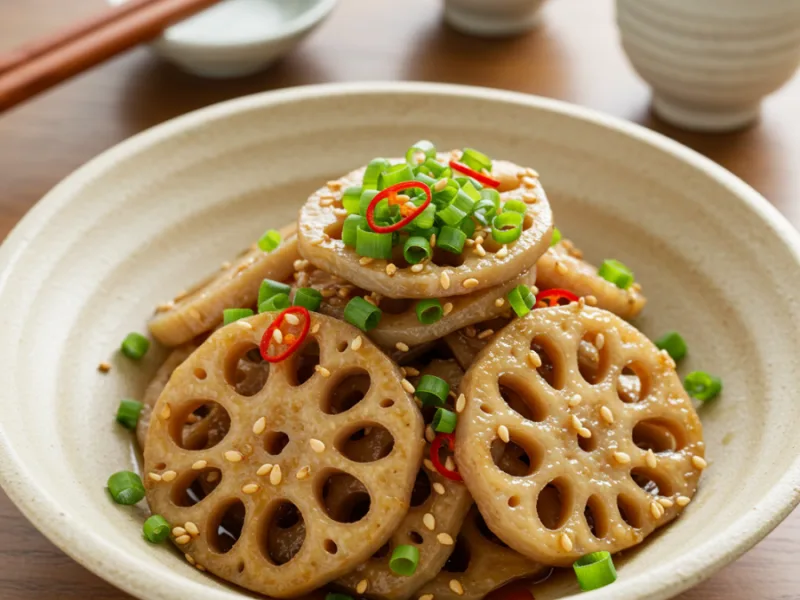
Base recipe: 4
Your kitchen companion
Ingredients
Check off ingredients as you prepare them.
Follow the steps at your own pace.
Method
Prepare the lotus root: Peel the lotus root and slice it into 5 mm (¼ inch) rounds. Place the slices in a bowl with 1 L (4 cups) of water and 15 ml (1 tbsp) of rice vinegar to prevent discoloration. Let them soak for 5 minutes, then drain and pat dry.
Sauté the lotus root: Heat 15 ml (1 tbsp) of sesame oil in a pan over medium heat. Add the lotus root slices and stir-fry for 3–4 minutes until they start to turn golden.
Add flavor: Add 30 ml (2 tbsp) of soy sauce, 30 ml (2 tbsp) of mirin, 15 ml (1 tbsp) of sake, and 10 g (2 tsp) of sugar to the pan. Stir well to coat the lotus root. Cook for another 5 minutes, allowing the sauce to reduce and caramelize.
Enhance the taste: Add 5 g (1 clove) of minced garlic and 5 g (1 tsp) of grated ginger. Stir for another minute to infuse the flavors.
Final touch: Sprinkle 10 g (2 tsp) of sesame seeds and 20 g (¼ cup) of chopped green onions over the dish. For a spicy kick, add 1 g (¼ tsp) of chili flakes.
Serve: Transfer the lotus root to a serving dish and enjoy warm as a side dish or part of a bento meal.
Extra technique, safety notes and details when you want to go deeper.
More tips & details
Discover the Delicate Flavors of Japanese Lotus Root
A Unique Ingredient in Japanese Cuisine
Japanese lotus root (renkon) is a fascinating and highly versatile ingredient that has been cherished in Japanese cuisine for centuries. With its distinctive crisp texture and subtle sweetness, lotus root is often featured in a variety of traditional Japanese dishes, from simmered stews to delicate tempura. This root vegetable is not only prized for its unique visual appeal, with its signature lace-like pattern, but also for its ability to absorb flavors while maintaining a pleasant crunch.
Whether used in stir-fries, soups, or pickled delicacies, lotus root brings a satisfying contrast of textures to any dish. Its mild, slightly nutty flavor complements both savory and sweet preparations, making it a staple in Japanese home cooking. This recipe highlights the authentic flavors of lotus root while preserving its natural taste and texture, allowing you to experience its delicate yet satisfying qualities.
The Cultural Significance of Lotus Root in Japan
In Japan, lotus root is more than just a culinary ingredient—it carries deep symbolic meaning. Because of its many holes, renkon is often associated with clarity and foresight, as it is believed to allow people to "see through" the future. This makes it a popular dish during New Year's celebrations, where it is served as part of osechi ryori, the traditional multi-course meal that welcomes prosperity for the year ahead.
In addition to its presence in festive dishes, lotus root is a common ingredient in everyday Japanese cooking. Whether sliced thinly for a light crunch in salads, braised in a flavorful dashi-based broth, or deep-fried into crispy renkon chips, this vegetable continues to be appreciated for its adaptability in modern Japanese cuisine.
How Lotus Root is Used in Traditional and Modern Dishes
One of the best qualities of Japanese lotus root is its ability to take on different flavors, making it a key component in both traditional and contemporary recipes. Some of the most common ways to prepare lotus root include:
- Kinpira Renkon – A classic Japanese side dish, featuring thinly sliced lotus root stir-fried with soy sauce, mirin, and sesame seeds.
- Renkon no Nimono – Simmered lotus root in a savory broth, often with dashi, soy sauce, and a touch of sweetness.
- Tempura Renkon – Lightly battered and deep-fried, creating a crispy texture that enhances its natural flavor.
- Renkon Chips – Thinly sliced and fried until golden, offering a crunchy snack or garnish for various dishes.
- Sushi and Bento Additions – Often included in sushi rolls or served as an aesthetically pleasing side dish in bento boxes.
By incorporating lotus root into your cooking, you can explore its remarkable versatility, whether you prefer simple, lightly seasoned preparations or richer, umami-packed dishes.
The Perfect Balance of Texture and Flavor
One of the most appealing aspects of lotus root is its ability to retain a satisfying crunch even after cooking. When briefly stir-fried, it maintains a crisp bite, while slow simmering in a broth results in a softer yet still slightly firm texture. This adaptability makes it ideal for various cooking techniques, allowing you to enjoy it in multiple ways depending on your preferred flavor profiles and preparation methods.
Its ability to absorb sauces and seasonings also makes it a fantastic ingredient for fusion cuisine, where it can be paired with diverse spices and flavors beyond traditional Japanese cooking. Whether marinated with miso, tossed in a tangy vinegar dressing, or coated with a rich sesame sauce, lotus root enhances any dish with both taste and visual appeal.
Tips for Preparing and Cooking Lotus Root
When working with fresh lotus root, it’s important to prepare it properly to maintain its vibrant color and crisp texture. Here are some essential tips for handling Japanese lotus root:
- Peeling and Slicing – Use a vegetable peeler to remove the thin skin, then slice it crosswise to reveal its signature pattern.
- Soaking in Vinegar Water – To prevent discoloration, soak the slices in a bowl of water with a splash of rice vinegar. This also helps maintain its crisp texture.
- Cooking Methods – Depending on the recipe, lotus root can be stir-fried, simmered, deep-fried, or steamed. Adjust cooking time accordingly to achieve the desired texture.
- Pairing with Other Ingredients – Lotus root pairs well with ingredients like soy sauce, miso, sesame oil, ginger, and mirin, enhancing its natural umami depth.
By following these preparation steps, you can ensure that your Japanese lotus root dish turns out flavorful and visually appealing every time.
Why You Should Try Cooking with Lotus Root
Whether you're a fan of Japanese cuisine or simply looking to experiment with new ingredients, lotus root is a fantastic choice to incorporate into your meals. It offers a delicate yet satisfying texture, a mild sweetness that complements both savory and sweet dishes, and an aesthetic quality that enhances any plate.
Cooking with lotus root allows you to explore authentic Japanese flavors while experimenting with different preparation methods to suit your taste. Whether served as a crunchy side dish, a flavorful addition to soups and stews, or a crispy snack, this versatile ingredient is sure to add a unique and delightful touch to your cooking repertoire.
Elevating the Flavor and Texture of Lotus Root Dishes
Enhancing the Natural Taste with Additional Ingredients
Lotus root has a naturally mild and slightly nutty flavor, making it an excellent base for a variety of seasonings. While the traditional Japanese recipe includes soy sauce, mirin, and sake, you can experiment with different ingredients to deepen the umami or introduce a new layer of complexity.
- Miso Paste: Adding a small amount of miso paste to the sauce enhances the savory depth while complementing the natural sweetness of the lotus root. White miso provides a mild, slightly sweet note, while red miso gives a richer, more robust flavor.
- Dashi Broth: Instead of using water or relying only on soy sauce, cooking the lotus root in a light dashi broth infuses it with a subtle umami while keeping the dish delicate and well-balanced.
- Yuzu or Lemon Zest: A touch of citrus zest can brighten the dish, cutting through the richness and adding a refreshing contrast. This is particularly effective if the lotus root is served as part of a bento or paired with heavier dishes.
- Honey or Maple Syrup: While sugar is traditionally used to balance flavors, replacing it with honey or maple syrup brings a deeper caramelization and a more complex sweetness.
By carefully selecting complementary ingredients, you can enhance the balance of flavors while maintaining the authentic essence of the dish.
Adjusting the Cooking Technique for Different Textures
The texture of lotus root can be adjusted depending on the cooking method, making it more versatile for different preferences.
- For a crispier texture: Stir-fry the lotus root over high heat for a shorter time, ensuring that it remains slightly firm with a pleasant crunch. This works best for dishes like kinpira renkon, where a slight bite enhances the contrast with the sauce.
- For a softer, more tender texture: Simmering lotus root in a sauce for a longer period allows it to absorb more flavor while becoming softer. This technique is commonly used in nimono (simmered dishes), where a gentle, slow-cooked texture is preferred.
- For a glazed finish: To create a glossy and slightly sticky coating, increase the sugar content slightly and let the sauce reduce at the end of cooking. This results in a rich caramelization that clings to the lotus root slices.
- For a lighter dish: Instead of frying or stir-frying, steaming lotus root preserves its delicate taste while making it a healthier option. Steamed lotus root can then be tossed in a light dressing or used in salads.
By adjusting the cooking time and method, you can customize the texture of the dish to better suit your preferences.
Avoiding Common Mistakes When Cooking Lotus Root
While lotus root is easy to prepare, there are a few common mistakes that can affect the final result.
- Skipping the soaking process: If freshly cut lotus root is not soaked in vinegar water, it will quickly oxidize and turn brown. This does not affect taste but can result in an unappealing appearance.
- Overcooking: Lotus root should retain some firmness even when simmered. Overcooking makes it too soft, losing its characteristic crunch.
- Using too much salt or soy sauce: Since lotus root absorbs flavors well, adding excessive seasoning too early can make the dish overly salty. It's best to start with a smaller amount and adjust later.
- Not drying the lotus root properly before stir-frying: If there is too much moisture, it can prevent proper caramelization, making the dish watery instead of flavorful.
Being mindful of these small but crucial details ensures that the lotus root remains flavorful, visually appealing, and texturally balanced.
Making the Dish Healthier with Alternative Ingredients
If you're looking to make this Japanese lotus root dish healthier, consider making a few substitutions while maintaining the dish’s authentic essence.
- Reduce sodium content: Traditional soy sauce can be replaced with low-sodium soy sauce or tamari, maintaining the umami without excessive salt. Coconut aminos is another alternative that is naturally lower in sodium.
- Use natural sweeteners: Instead of refined sugar, opt for honey, maple syrup, or a touch of date syrup for a more natural sweetness while adding a hint of caramelization.
- Replace mirin with apple cider vinegar and a touch of honey: If you want to reduce alcohol content, a mixture of vinegar and honey provides a similar effect while keeping the dish refined and balanced.
- Increase fiber content: Adding shredded carrots or burdock root (gobo) to the stir-fry increases fiber while introducing a slightly earthy, complementary flavor.
- Use healthier cooking oils: While sesame oil is traditionally used for its nutty aroma, you can use avocado oil or extra virgin olive oil for a lighter alternative with beneficial fats.
By making small changes, you can retain the traditional flavors while making the dish more nutritious and suitable for various dietary needs.
The Advantages of Homemade vs. Store-Bought Lotus Root Dishes
Many pre-packaged or restaurant-made lotus root dishes contain added preservatives, excess sodium, or artificial sweeteners, making homemade preparation a better and healthier option.
- Control over ingredients: By making the dish at home, you can adjust seasoning, reduce sodium, and use high-quality ingredients, ensuring a fresher and healthier meal.
- Better texture preservation: Freshly prepared lotus root retains optimal texture, while store-bought versions are often softer or overly preserved, affecting the mouthfeel of the dish.
- Customization: Homemade recipes allow you to experiment with new flavors, spice levels, and healthier alternatives, catering to personal preferences and dietary needs.
- No artificial preservatives: Many pre-packaged lotus root dishes contain additives to extend shelf life. Preparing it at home ensures a pure and natural taste.
Pairing Suggestions for a Complete Meal
Lotus root is a versatile side dish that pairs well with a variety of Japanese meals. If you're looking to create a balanced and harmonious meal, consider serving it with:
- Steamed Japanese rice: A simple bowl of rice complements the savory-sweet flavors of lotus root.
- Miso soup: A warm, umami-rich broth enhances the comforting nature of the dish.
- Grilled fish or tofu: The caramelized lotus root works well with lightly seasoned proteins, adding contrast in texture and taste.
- Pickled vegetables: A side of pickled daikon or cucumbers adds refreshing acidity to balance the dish’s depth.
A Versatile Dish for Every Occasion
Japanese lotus root dishes are simple yet incredibly flavorful, and with a few adjustments, they can be further refined to match your taste preferences. Whether you want a richer umami flavor, a crispier texture, or a healthier version, experimenting with ingredients, cooking methods, and pairings allows you to elevate the dish while keeping its authentic essence intact.
Recivelle · /recipe/japanese-lotus-root-recipe