Base recipe: 6 portions
Your kitchen companion
Ingredients
Check off ingredients as you prepare them.
Follow the steps at your own pace.
Method
Preheat your oven to 375°F (190°C). Lightly grease a deep baking dish (approximately 9×13 inches or 23×33 cm) with butter so the casserole doesn’t stick.
Peel the russet potatoes. Slice them into thin matchstick-sized strips about ¼ inch (0.6 cm) thick. They should feel firm and slightly starchy to the touch. Place them in a bowl of cold water to prevent browning.
Peel the onions and slice them thinly into half-moons. When sliced, they should look translucent and release a sweet aroma.
In a large skillet, melt 2 tbsp (30 g) of butter over medium heat. Add the onions and cook for 6–8 minutes, stirring frequently, until they turn soft and glossy and develop a light golden color. They should smell sweet and fragrant.
Drain the potatoes well and pat them dry with a clean towel until no moisture remains on the surface. This helps them cook evenly.
Arrange one-third of the potatoes evenly across the bottom of the prepared baking dish. They should form a flat, even layer with no gaps.
Scatter half of the cooked onions over the potatoes. Place half of the anchovy fillets on top, distributing them evenly. The anchovies will look glossy and slightly curled.
Repeat with another third of the potatoes, followed by the remaining onions and anchovies. Top with the final layer of potatoes. The dish should look layered and neat.
In a small saucepan, combine the heavy cream and whole milk. Warm gently over low heat for 2–3 minutes, until the liquid feels warm to the touch but does not simmer.
Pour the warm cream mixture evenly over the layered potatoes. The liquid should just cover the top layer.
Sprinkle the fresh breadcrumbs across the surface. Dot with the remaining 2 tbsp (30 g) of butter cut into small pieces. The breadcrumbs should look lightly moistened.
Season the top with the salt and white pepper.
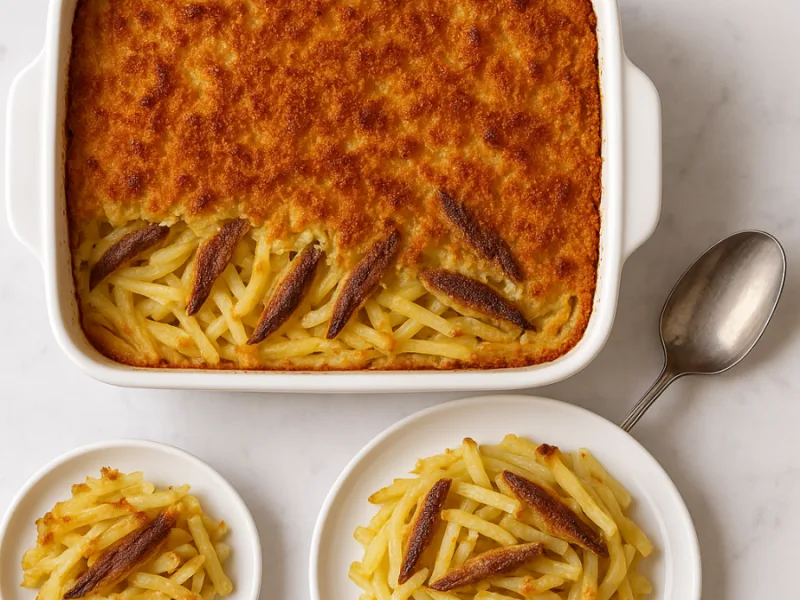
Bake uncovered for 60 minutes. The casserole is ready when the top is deeply golden brown, the edges are bubbling, and a knife inserted into the center meets little resistance. You should see a lightly puffed surface and smell a rich, savory aroma.
Extra technique, safety notes and details when you want to go deeper.
More tips & details
Discover the Essence of Swedish Comfort Food: Authentic Janssons Frestelse Casserole
What Makes This Classic Swedish Potato Anchovy Bake So Special?
Few dishes embody the spirit of Swedish home cooking quite like Janssons Frestelse, a beautifully layered casserole that transforms simple potatoes, onions, cream, and savory anchovies into something unforgettable. Imagine pulling a bubbling dish from your oven, the cream gently thickened and infused with briny richness, the edges of the potatoes delicately crisped to golden perfection. As you spoon it onto your plate, the silky layers meld together, releasing a warm, comforting aroma that hints at festive gatherings and the quiet pleasure of a meal made with care.
When I first tested this recipe, I experimented with different potato cuts—some too thick, others too thin—and discovered that thin, uniform slices create the ideal tender texture without dissolving into the cream. The result is a casserole that feels rustic yet refined, with each mouthful balancing earthy softness and that signature salty touch. This is the kind of dish that makes you pause mid-bite to savor the contrast of the buttery potatoes and the subtle umami of the anchovies.
Why You’ll Love This Janssons Frestelse Recipe
Every bite of this casserole is a testament to why it remains a beloved classic across generations. You’ll experience:
- Velvety, layered texture where thin potato slices become meltingly tender, enveloped in rich cream that carries the flavors of the sea.
- Perfectly balanced taste, where the anchovies lend a delicate salinity rather than an overpowering fishiness, complemented by the sweetness of slow-cooked onions.
- Ease of preparation that belies the luxurious result—this is a dish that looks impressive on the table yet requires only simple steps.
- Deep cultural connection, as Janssons Frestelse often graces Swedish holiday buffets and family dinners, evoking memories of shared celebration.
I return to this recipe whenever I want healthy comfort food that feels hearty but not heavy, always grateful for how reliably it delivers both flavor and nostalgia.
Where Did Janssons Frestelse Originate?
This iconic casserole traces its origins to early 20th-century Sweden, where it quickly became a staple of julbord, the traditional Christmas buffet. The name translates to “Jansson’s Temptation,” said to be inspired either by a food-loving opera singer or a 1920s film character—either way, it perfectly captures how impossible it is to resist.
The combination of potatoes and anchovies is a reflection of the Scandinavian knack for elevating humble ingredients into dishes with remarkable depth. Even today, it’s served at festive tables and casual dinners alike, always carrying the same promise of satisfaction.
What to Serve With Janssons Frestelse: Delicious Pairings
When you’re planning a meal around this creamy potato anchovy casserole, consider pairing it with side dishes that contrast its richness:
- A crisp green salad dressed with sharp vinaigrette for brightness.
- Lightly pickled cucumbers to cut through the cream.
- Rye bread or crispbread for a traditional Scandinavian touch.
- Roasted vegetables like carrots and parsnips to add color and earthy sweetness.
If you’re creating a celebratory spread, serve it alongside cured salmon, mustard herring, or cold cuts to honor its classic place on the holiday table.
What Makes This Recipe Stand Out From Other Potato Casseroles?
You might wonder how this dish compares to a gratin dauphinois or other creamy potato bakes. The secret lies in the distinctive flavor of Swedish sprats (often labeled anchovies), which are cured differently from Mediterranean anchovies and lend a mellow, savory depth rather than a strong fish taste.
In testing, I found that letting the cream slowly bubble around the potatoes created a beautifully cohesive texture. Unlike many casseroles that can separate or become greasy, this recipe stays smooth and luscious. It’s a detail that feels simple but elevates the dish to something truly special.
When I prepared this for a winter gathering, guests were surprised by how comforting and familiar it felt, even if they’d never tasted it before—a reminder that good food can bridge cultural gaps effortlessly.
When Should You Make Janssons Frestelse?
This is the kind of recipe you’ll find yourself turning to for many occasions:
- Holiday buffets where you need a dish that feels traditional and celebratory.
- Family dinners when you crave something filling and warm.
- Potlucks and gatherings, because it travels well and reheats beautifully.
- Even weeknights, when you simply want an easy dinner recipe that feels indulgent without fuss.
Every time you lift the golden top layer, you’re reminded of the timeless appeal of simple ingredients, thoughtfully combined.
Bringing It All Together
I’ve prepared this recipe countless times, always returning to the way the cream tenderizes the potatoes while the anchovies melt into a subtle backdrop of flavor. Each batch feels like a quiet celebration of tradition and the pleasure of cooking something that feels both humble and extraordinary.
I hope this Janssons Frestelse recipe brings as much warmth and satisfaction to your table as it has to mine—share it with those you love or save it for the moments you need a little extra comfort.
Upgrade Your Potato Casserole: Mastering Janssons Frestelse with Expert Techniques
Professional Tips to Elevate Your Janssons Frestelse Every Time
One of the best ways to enhance your low-carb comfort food repertoire is by refining every detail of this traditional Swedish casserole. Start by selecting firm russet potatoes, as their higher starch content creates a creamy, cohesive texture without falling apart during baking. When slicing, keep the pieces as uniform as possible—ideally matchstick-sized—to ensure the potatoes cook evenly and absorb the cream properly.
For an extra velvety finish, warm the cream and milk mixture gently before pouring it over the layered potatoes. This step helps the liquid infuse evenly and prevents sudden temperature shocks that could cause separation. I’ve found that taking this simple precaution always produces a silky sauce that binds the casserole beautifully.
Finally, don’t underestimate the importance of the breadcrumb topping. Fresh breadcrumbs create a lighter, crisp texture compared to dry packaged varieties, adding a delicate contrast to the creamy filling.
Common Mistakes to Avoid When Preparing This Anchovy Potato Casserole
It’s easy to make small errors that compromise the finished dish. One of the most frequent mistakes is cutting the potatoes too thick or too thin. If the slices are overly thin, they disintegrate and turn mushy. If they’re too thick, they remain firm even after an hour in the oven. Aim for slices about ¼ inch thick to strike the perfect balance.
Another pitfall is failing to drain and dry the potatoes thoroughly. Excess water can dilute the cream, leading to a watery casserole. Always pat them dry with a clean towel before layering.
Overcrowding the baking dish is another common error. The ingredients need space to bubble and cook evenly; if packed too tightly, the potatoes can steam instead of baking. I once tested a smaller dish and found the center remained undercooked while the edges overbaked—a reminder that the right dish size matters.
Lastly, avoid adding cold cream straight from the refrigerator. If you skip warming the liquid, it can cause uneven cooking and separate during baking.
Substitution Ideas and Healthier Alternatives
If you want to make this recipe gluten-free, swap the fresh breadcrumbs with a gluten-free alternative such as crushed rice crackers or gluten-free panko. This substitution still delivers a crisp, golden topping without altering the overall flavor profile.
For a lighter version, replace half of the heavy cream with unsweetened full-fat Greek yogurt. This change reduces the saturated fat content while maintaining a rich, creamy consistency.
Some cooks prefer a milder fish flavor. In that case, you can substitute traditional Swedish anchovies with lightly salted sprats or white anchovies in olive oil, which offer a gentler briny taste. While the dish will lose a bit of its classic character, it remains satisfying and approachable for those sensitive to stronger fish notes.
If you’re preparing this for a low-sodium diet, consider using unsalted butter and reducing the anchovy quantity slightly, but remember that this will significantly change the taste.
Recipe Variations to Explore New Flavors
Once you’re comfortable with the classic preparation, try enhancing your potato casserole with thoughtful variations. For a richer, more indulgent texture, layer in thin slices of aged Gruyère or sharp cheddar cheese between the potatoes and onions. The cheese melts into the cream and forms pockets of savory depth.
To add earthy complexity, include finely chopped fresh dill or chives in each layer. Herbs brighten the overall flavor and introduce a subtle freshness that pairs beautifully with the anchovies.
Another option is to create a smoked variation by incorporating small pieces of smoked mackerel or trout alongside the anchovies. The result is a deeper, more complex aroma that elevates the dish into something unforgettable.
When I first tested a smoked version, the aroma reminded me of Scandinavian fish markets—a rustic touch that felt both comforting and sophisticated.
Ingredient Benefits That Make This Dish So Nourishing
Each ingredient in Janssons Frestelse contributes more than just flavor. Russet potatoes are a good source of potassium and vitamin C, essential for maintaining heart health and supporting the immune system.
Heavy cream provides calcium and vitamin A, helping build strong bones and promoting healthy vision.
Anchovies are rich in omega-3 fatty acids, known to reduce inflammation and support brain function. They also deliver a potent umami note that gives the dish its distinctive character.
Onions add prebiotic fiber, which supports digestion and gut health. Their natural sweetness balances the briny anchovies and creates harmony in every bite.
When you combine these ingredients, you not only create an unforgettable flavor experience but also a meal that feels genuinely satisfying and nourishing.
Expert Tips for Storing and Reheating Janssons Frestelse
Proper storage preserves both the taste and the texture of your casserole. Let the dish cool completely before covering it with foil or transferring it to an airtight container. Refrigerate for up to 3 days.
To reheat, place the casserole in a 325°F (160°C) oven for about 20–25 minutes. It’s ready when the center is warmed through and the top regains its golden color. Avoid microwaving in large portions, as it can make the potatoes rubbery.
For best results, reheat individual servings in the oven to maintain the creamy consistency. In my experience, a gentle reheat always brings back the comforting aroma and texture without drying out the layers.
Common Questions About Janssons Frestelse
How do I know when Janssons Frestelse is fully cooked?
Bake until the top looks deep golden brown, the edges are bubbling, and a knife inserted in the center slides through the potatoes with almost no resistance.
Can I prepare this casserole in advance?
Yes, you can assemble the layers and refrigerate the dish, tightly covered, for up to 24 hours before baking. Let it sit at room temperature for 30 minutes before placing it in the oven.
What’s the best way to make the topping extra crispy?
Use fresh breadcrumbs and dot the surface with small pieces of butter. Bake uncovered, and if needed, broil the top for 2–3 minutes at the end, watching closely to avoid burning.
How should I adjust the recipe for a larger crowd?
Double all ingredients and use a deeper, larger baking dish. Extend the cooking time by 15–20 minutes, and test doneness by checking the center with a knife.
Can I freeze Janssons Frestelse?
It’s possible but not ideal, as the texture can become grainy. If you must freeze it, cool completely, wrap tightly, and freeze for up to one month. Thaw in the refrigerator overnight and reheat slowly in the oven.
I hope these insights help you master and customize this classic dish, making it a beloved staple in your kitchen as it has become in mine.
Recivelle · /recipe/janssons-frestelse-recipe-potato-anchovy-casserole