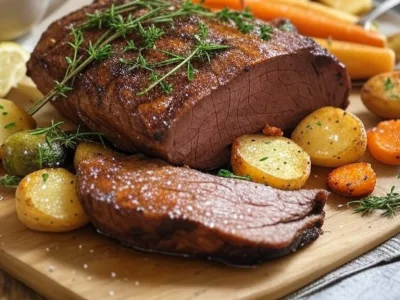
Base recipe: Serves 6
Your kitchen companion
Ingredients
Check off ingredients as you prepare them.
Follow the steps at your own pace.
Method
Step 1: Prepare the Meat
Preheat your oven to 220°C (428°F).
Pat the meat dry with paper towels. Rub olive oil over the entire surface.
Season generously with sea salt, cracked black pepper, garlic powder, rosemary, and thyme.
Place the meat on a roasting rack in a roasting pan to ensure even air circulation.
Step 2: Prepare the Vegetables
Boil the potatoes in salted water for 10 minutes until slightly tender. Drain and roughen the edges with a fork.
Toss the potatoes, carrots, parsnips, and Brussels sprouts in duck fat or olive oil. Season with salt and pepper.
Spread the vegetables evenly on a baking sheet lined with parchment paper.
Step 3: Roast the Meat and Vegetables
Roast the meat in the preheated oven for 20 minutes at 220°C (428°F), then lower the temperature to 180°C (356°F).
Place the vegetables in the oven and roast alongside the meat for 1 hour. Stir the vegetables halfway through to ensure even cooking.
Check the meat’s internal temperature: 55°C (130°F) for rare, 63°C (145°F) for medium, or 70°C (160°F) for well-done.
Once cooked, remove the meat and let it rest for 15 minutes, covered with foil.
Step 4: Make the Gravy
While the meat rests, place the roasting pan on the stovetop over medium heat.
Add the red wine and scrape up the browned bits from the bottom of the pan.
Whisk in the flour and cook for 2 minutes to remove the raw flour taste.
Gradually add the beef stock, whisking constantly to prevent lumps. Simmer until thickened. Season to taste.
Step 5: Assemble and Serve
Slice the rested meat thinly and arrange it on a serving platter.
Surround the meat with the roasted vegetables and pour the gravy into a serving jug.
Garnish with fresh herbs like rosemary or thyme for a professional finish.
Extra technique, safety notes and details when you want to go deeper.
More tips & details
There's something undeniably special about a Sunday roast, a meal that brings family and friends together to share both food and joy. The aroma of roasted meat, crispy vegetables, and rich, flavorful gravy wafting through the air is enough to make anyone’s mouth water. Whether you’re a seasoned cook or a beginner in the kitchen, perfecting this classic dish is a skill that’s well worth your time. This guide will walk you through essential tips and tricks to ensure your Sunday roast is nothing short of extraordinary.
A Meal Rooted in Tradition
The Sunday roast is more than just a meal; it’s a tradition that dates back centuries. Originating in Britain, this comforting dish quickly became a hallmark of family gatherings, evolving to include a variety of meats, seasonal vegetables, and all the fixings. It’s the ultimate comfort food that allows for personalization, whether you prefer roast beef with Yorkshire pudding, succulent chicken with crispy skin, or a vegetarian nut roast packed with flavor.
Why This Recipe Will Delight You
- Foolproof Tips: Even if you’ve never made a roast before, this guide simplifies the process with step-by-step instructions. From selecting the perfect cut of meat to achieving the ideal roast on your vegetables, every detail is covered.
- Customizable to Your Taste: Whether you’re cooking for two or hosting a crowd, this recipe can be easily scaled to meet your needs. Swap ingredients to match dietary preferences without sacrificing flavor.
- A Guaranteed Showstopper: Perfectly crispy roast potatoes, tender meat, and rich gravy will make your roast unforgettable. Your guests won’t stop raving about it!
- Nutritional Balance: This recipe includes a mix of protein, vegetables, and healthy fats, ensuring a balanced and satisfying meal.
How to Achieve the Perfect Sunday Roast
1. Choosing the Right Ingredients The secret to a flawless roast starts with quality ingredients. Opt for a well-marbled cut of meat like beef rib or leg of lamb for maximum tenderness. If poultry is your choice, free-range chicken delivers exceptional flavor. Pair your protein with fresh, seasonal vegetables like carrots, parsnips, and Brussels sprouts for vibrant color and taste.
2. Seasoning Like a Pro Seasoning is key to enhancing the natural flavors of your ingredients. Generously rub your meat with a blend of sea salt, cracked black pepper, garlic, and herbs like rosemary and thyme. Don’t forget to drizzle olive oil over your vegetables and season them for a delicious caramelized finish.
3. Perfecting the Cooking Process Use an oven thermometer to maintain consistent heat. Start by cooking your meat at a high temperature for the first 20 minutes to create a crispy crust, then lower the heat to ensure even cooking. For the best results, let your meat rest for 15–20 minutes after roasting; this locks in the juices, ensuring each slice is tender and moist.
4. The Art of Crispy Potatoes Crispy roast potatoes are a non-negotiable element of any Sunday roast. Parboil your potatoes until slightly tender, then roughen their edges with a fork. Toss them in duck fat or olive oil, season generously, and roast them at high heat until golden brown and irresistibly crispy.
5. Mastering the Gravy A rich, silky gravy ties your roast together beautifully. Use the pan drippings from your meat as a base, deglaze with a splash of red wine or stock, and whisk in flour for a smooth consistency. Season to taste and strain if needed for a polished finish.
Tips and Tricks for the Best Results
- Timing Is Everything: Plan your cooking times meticulously to ensure all elements are ready simultaneously. Use a kitchen timer to keep track of roasting and resting periods.
- Prep Ahead: Save time on the day by preparing your vegetables and seasoning your meat in advance.
- Presentation Matters: Serve your roast on a large platter, garnished with fresh herbs for a stunning visual impact.
Why You’ll Want to Try This Recipe Today
Making the perfect Sunday roast is not just about food; it’s about creating memories. This dish is a celebration of togetherness, a comforting reminder of home, and a culinary masterpiece that everyone can enjoy. Whether you’re cooking for family or entertaining guests, this recipe is sure to impress.
So, gather your ingredients, roll up your sleeves, and embrace the art of roasting. Your perfect Sunday meal awaits!
Enjoy the process, savor every bite, and don’t forget to share your creation with loved ones. If you’re looking for more ways to elevate your cooking, this recipe is just the beginning. Dive into the world of delicious, heartwarming meals today!
Tips and Tricks to Elevate Your Sunday Roast
Creating the perfect Sunday roast is an art, but it’s also an opportunity to experiment with ingredients and techniques that can elevate your meal to extraordinary levels. By making small adjustments to the recipe, you can influence the taste, texture, and overall experience of your roast.
Choosing the Right Cut of Meat
How different meats impact the flavor
- Beef: A rib or sirloin cut provides a deep, hearty flavor with a tender texture. For a more luxurious experience, opt for dry-aged beef, which has a richer taste due to natural enzymes breaking down the muscle fibers.
- Lamb: Leg of lamb delivers a milder, slightly gamey flavor that pairs beautifully with rosemary and garlic. For a subtler taste, consider lamb shoulder, which is fattier and creates a more succulent roast.
- Poultry: If you prefer a lighter roast, go for chicken or turkey. Free-range birds have a firmer texture and a more pronounced flavor compared to standard options.
Substitution tip: For plant-based options, a well-seasoned nut roast or seitan-based alternative can replicate the hearty texture and flavor of traditional roasts.
Enhancing the Flavor with Marinades
How marinades influence your roast
- A marinade can add complexity and depth to your roast. Use combinations of acidic elements like lemon juice or vinegar, oils for moisture, and herbs and spices for flavor.
- For beef, try a mixture of red wine, garlic, rosemary, and mustard for a bold, robust profile.
- For lamb, yogurt, mint, and cumin add a refreshing twist while tenderizing the meat.
- For chicken, a blend of buttermilk, paprika, and thyme will keep the meat juicy while infusing it with subtle spice.
Pro tip: Marinate the meat overnight in the refrigerator to allow the flavors to penetrate fully.
Adjusting Seasoning for a Personal Touch
Seasoning variations and their impact
- Garlic lovers can double the garlic powder in the rub for an intense, savory profile.
- Adding smoked paprika to your seasoning mix can impart a subtle smokiness, elevating both the meat and the vegetables.
- For a hint of sweetness, sprinkle the vegetables with a touch of honey or maple syrup during roasting. This creates a delicious caramelized finish.
Substitution idea: If you’re avoiding salt, try using a blend of lemon zest, pepper, and fresh herbs for a flavorful, low-sodium alternative.
Perfecting Roast Vegetables
Different vegetables, different textures
- The classic combination of potatoes, carrots, parsnips, and Brussels sprouts works beautifully, but don’t hesitate to experiment with alternatives:
- Sweet potatoes: Add a subtle sweetness and creamy texture.
- Butternut squash: Complements the meat with its nutty, buttery taste.
- Beets: Introduce earthy notes and vibrant color to the platter.
How to change textures:
- For extra crispy potatoes, boil them longer (until the edges begin to break down) and toss them in semolina or flour before roasting.
- Vegetables roasted with balsamic vinegar take on a rich, tangy sweetness that contrasts beautifully with savory meat.
Experimenting with Gravy Flavors
How to customize gravy to suit your roast
- Red wine reduction: Use a bold red wine for beef roasts to create a deep, velvety sauce with fruity undertones.
- White wine or cider: Ideal for chicken or turkey, offering a light, crisp flavor.
- Herb-infused gravies: Simmer the gravy with sprigs of thyme or rosemary to echo the flavors of the roast.
Pro tip: For a creamier gravy, whisk in a splash of heavy cream or crème fraîche at the end.
Adjusting Cooking Techniques
How cooking methods alter the result
- Slow-roasting: Cooking the meat at a lower temperature for a longer time creates a melt-in-your-mouth texture, especially for tougher cuts like brisket or pork shoulder.
- Reverse-searing: For beef, cook at a low temperature first, then finish with a high-heat sear for a crusty exterior and evenly cooked interior.
- Spatchcocking poultry: Flattening the bird before roasting reduces cooking time and ensures evenly crisped skin.
Time-saving tip: Use a convection oven setting if available. It circulates heat more evenly, resulting in faster cooking and crisper vegetables.
Exploring Dietary Adaptations
Adapting the roast for dietary needs
- Gluten-free: Replace flour in the gravy with cornstarch or arrowroot powder for the same thickening effect.
- Low-fat: Swap duck fat for olive oil or a light vegetable spray for roasting.
- Dairy-free: Use coconut or almond milk in marinades and skip cream-based gravies.
Plant-based idea: Pair a nut roast with roasted vegetables and a mushroom-based gravy for a hearty, vegan-friendly alternative.
Using Garnishes and Plating for Impact
Finishing touches to elevate presentation
- Garnish your roast with fresh herbs like parsley, thyme, or rosemary for a burst of color and aroma.
- Arrange vegetables around the meat in colorful layers to create a visually appealing platter.
- Serve the gravy in a small pitcher to allow guests to pour as desired.
Pro tip: Add a sprinkle of flaky sea salt to the meat just before serving to enhance its natural flavor.
Balancing Nutritional Content
How ingredient swaps affect nutrition
- Replacing traditional potatoes with sweet potatoes increases Vitamin A and lowers the glycemic index.
- Using lean cuts of meat reduces overall fat content while maintaining protein levels.
- Adding more cruciferous vegetables like Brussels sprouts boosts fiber and Vitamin C.
How Small Changes Make a Big Impact
By tailoring the ingredients, cooking methods, and presentation to suit your preferences, you can transform your Sunday roast into a truly memorable meal. These adjustments not only enhance flavor and texture but also make the dish more inclusive for a variety of dietary needs. Experiment, enjoy the process, and create a roast that’s uniquely yours!
Recivelle · /recipe/how-make-perfect-sunday-roast-tips-and-tricks