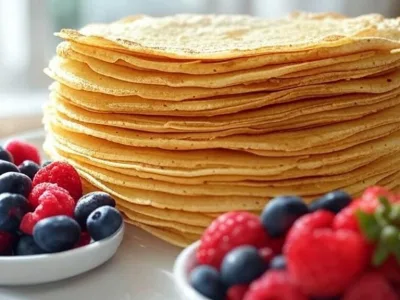
Base recipe: 12 crepes (4 servings, 3 crepes per serving)
Your kitchen companion
Ingredients
Check off ingredients as you prepare them.
Follow the steps at your own pace.
Method
Prepare the Batter
In a large mixing bowl, sift the flour and add sugar and salt. Make a well in the center and crack in the eggs.
Gradually whisk in the milk and water, combining thoroughly to avoid lumps.
Stir in the melted butter until smooth. For the best texture, strain the batter through a fine sieve.
Let the batter rest for at least 30 minutes at room temperature. This allows the gluten to relax, resulting in tender crepes.
Heat the Pan
Heat a non-stick skillet or crepe pan over medium heat. Lightly grease it with butter using a brush or a paper towel.
Cook the Crepes
Pour approximately 50 ml (3.3 tbsp) of batter into the pan, tilting it in a circular motion to coat the surface evenly.
Cook for about 1–2 minutes, until the edges begin to lift and the bottom is lightly golden.
Flip the crepe using a spatula and cook for another 30 seconds to 1 minute.
Transfer the cooked crepe to a plate and repeat with the remaining batter, greasing the pan lightly as needed.
Serve and Enjoy
Stack the crepes on a plate, covering them with a clean towel to keep warm.
Serve with sweet toppings like jam, Nutella, or fresh fruit, or savory fillings like ham, cheese, and sautéed vegetables.
Extra technique, safety notes and details when you want to go deeper.
More tips & details
French crepes are a timeless culinary delight, beloved for their light, airy texture and their versatility as a base for both sweet and savory creations. Whether you’re preparing a decadent dessert or a satisfying breakfast, mastering perfect French crepes is a skill every home cook should have. In this guide, we’ll unveil the secrets to creating crepes that are irresistibly tender, perfectly thin, and packed with authentic French flavor.
From simple ingredients to foolproof techniques, this recipe guarantees crepes so good, you’ll feel as if you’ve stepped into a charming Parisian café.
The Magic Behind Perfect French Crepes
What makes French crepes so special? It’s their simplicity. With just a handful of ingredients—eggs, milk, flour, butter, and a pinch of sugar—you can create a batter that transforms into delicate, golden crepes. But it’s not just about the ingredients; the secret lies in the technique.
- Mixing the batter: Achieving a smooth, lump-free consistency is key. This ensures the crepes are silky and free of imperfections.
- Resting the batter: Allowing the batter to rest for at least 30 minutes (or overnight) enhances the texture and flavor.
- The right pan: A non-stick skillet or a crepe pan ensures even cooking and prevents sticking.
- Even spreading: Mastering the wrist movement to spread the batter evenly ensures thin, uniform crepes every time.
Why You’ll Love This Recipe
- Authentic Taste
This recipe brings the essence of France to your kitchen. With a delicate balance of flavors and textures, each bite is a celebration of French culinary tradition.
- Versatility
Whether you prefer a drizzle of honey, a dollop of Nutella, fresh fruit, or savory fillings like ham and cheese, these crepes adapt to every craving.
- Simple Ingredients
You likely already have everything you need in your pantry. There’s no need for complicated or hard-to-find items.
- Beginner-Friendly
Even if it’s your first time making crepes, this recipe is straightforward and easy to follow. Detailed tips ensure your success on the first try.
- Perfect for Any Occasion
Crepes are an elegant option for brunch, a romantic dessert, or even a fun cooking project with kids.
What Makes These French Crepes Stand Out?
Unlike thicker pancakes or blini, French crepes are renowned for their ultra-thin and delicate structure. They’re designed to be pliable, making them perfect for rolling, folding, or layering. This recipe is carefully crafted to give you crepes that are thin enough to be authentic but sturdy enough to handle a generous amount of filling.
Pro Tips for Perfect Crepes Every Time
- Choose the right flour: Use all-purpose flour for the best texture. Sifting it before mixing ensures there are no lumps.
- Warm the milk: Slightly warm milk helps create a smoother batter and prevents clumping.
- Butter the pan lightly: A small amount of melted butter spread with a brush or paper towel is enough. Too much can make the crepes greasy.
- Adjust the heat: Start with medium heat and adjust as needed. Crepes cook quickly, so finding the right temperature is essential to prevent burning.
Serve and Impress
Imagine serving a platter of golden, homemade crepes that look as stunning as they taste. Roll them up with fresh berries and whipped cream for a sweet treat, or layer them with smoked salmon and cream cheese for a savory delight. Your family and friends will be amazed by your culinary skills!
Don’t wait for a special occasion to enjoy this French classic. Gather your ingredients, heat up your skillet, and start creating perfect crepes today. Once you try this recipe, it’s sure to become a favorite in your kitchen repertoire.
Ready to Try It Yourself?
There’s no better time to master the art of perfect French crepes than now. With this step-by-step guide, you’ll gain the confidence to create crepes that rival those from the finest Parisian cafes. So, roll up your sleeves, mix your batter, and transform simple ingredients into a masterpiece.
Your perfect French crepes await—give them a try and make your next meal unforgettable.
Mastering the Art of French Crepes: Expert Tips and Variations
French crepes are the epitome of versatility and elegance, offering endless possibilities for customization and creativity. Whether you’re aiming for a traditional Parisian-style crepe or an inventive variation, small adjustments to the ingredients and techniques can yield exciting results. Below, we’ll explore how you can influence the flavor, texture, and overall outcome of your crepes by tweaking this classic recipe.
Understanding the Role of Ingredients in Crepes
Every ingredient in this crepe recipe has a specific function, and modifying them can create subtle or significant changes in the final product. Here’s a breakdown of each ingredient and how substitutions or adjustments can impact your crepes.
Milk
Milk is essential for creating a smooth, pourable batter. Using whole milk provides richness and a slightly creamy taste. However, you can replace it with different liquids:
- Plant-based milk: Almond, oat, or soy milk can be used for a dairy-free version. Almond milk adds a mild nutty flavor, while oat milk provides a creamy texture.
- Water: Substituting part or all of the milk with water results in lighter, thinner crepes, closer to traditional French street food.
- Buttermilk: Using buttermilk creates slightly tangy crepes, perfect for savory fillings.
Flour
The choice of flour affects the texture and flexibility of the crepes.
- All-purpose flour: The standard choice for tender, pliable crepes.
- Whole wheat flour: Adds a nutty flavor and denser texture, ideal for savory recipes. Replace up to 50% of the all-purpose flour to maintain the batter’s fluidity.
- Gluten-free flour blends: For those avoiding gluten, a blend specifically designed for baking ensures soft and elastic crepes. Adding a pinch of xanthan gum can improve texture.
Eggs
Eggs bind the ingredients and add richness.
- Fewer eggs: Using fewer eggs creates lighter, less structured crepes.
- Extra egg yolks: For richer, more custard-like crepes, add an additional yolk.
- Egg substitutes: For egg-free crepes, use a mix of ground flaxseed or chia seeds with water (1 tablespoon of seeds + 2.5 tablespoons of water = 1 egg).
Butter
Butter contributes flavor and prevents the crepes from sticking.
- Unsalted butter: The standard for balancing sweetness and salt.
- Brown butter: Cook the butter until it’s golden and nutty before adding it to the batter for a richer flavor profile.
- Oil: Neutral oils like vegetable or grapeseed oil can replace butter, but they lack the buttery taste.
Sugar and Salt
These enhance the flavor of the crepes.
- More sugar: For dessert crepes, increase the sugar slightly to enhance sweetness.
- Less sugar: For savory crepes, reduce or omit the sugar entirely.
- Flavored sugar: Infuse the batter with vanilla sugar or citrus zest for a subtle twist.
Techniques That Influence Crepes
Adjusting your technique can also dramatically impact the outcome of your crepes.
Batter Consistency
- Thicker batter: Results in slightly thicker, heartier crepes. Add less water or milk for this effect.
- Thinner batter: Produces ultra-delicate, lace-like crepes. Add a few extra tablespoons of water or milk to thin the batter.
Resting Time
- Short rest (15 minutes): Creates decent crepes but may lack full flavor and elasticity.
- Extended rest (overnight): Allows the gluten to relax completely, resulting in ultra-tender crepes with a more pronounced flavor.
Cooking Heat
- Lower heat: Produces evenly cooked, soft crepes, ideal for folding.
- Higher heat: Creates crisp edges, perfect for crepes served flat or rolled.
Creative Variations for Unique Crepes
Sweet Crepe Ideas
- Chocolate Crepes
- Replace 15 g (1 tbsp) of flour with cocoa powder.
- Add a pinch of cinnamon or espresso powder for depth.
- These pair wonderfully with fruit fillings or whipped cream.
- Vanilla or Citrus Infused
- Add 1 teaspoon of vanilla extract or the zest of one orange or lemon to the batter.
- These subtle flavors enhance both sweet and savory recipes.
- Nutty Crepes
- Blend 2–3 tablespoons of ground hazelnuts, almonds, or pistachios into the batter.
- This adds a rich, nutty flavor and pairs beautifully with chocolate spreads.
Savory Crepe Variations
- Herb-Infused Crepes
- Mix 1 tablespoon of finely chopped fresh herbs (parsley, chives, thyme) into the batter.
- These crepes are excellent for filling with smoked salmon, cream cheese, or roasted vegetables.
- Cheese-Flavored Crepes
- Add 30 g (2 tbsp) of finely grated cheese (Parmesan, Gruyère, or Cheddar) to the batter.
- This creates savory crepes with a hint of cheesiness, perfect for brunch.
- Buckwheat Crepes (Galettes)
- Replace all-purpose flour with buckwheat flour for a traditional Breton-style crepe.
- These are naturally gluten-free and pair well with ham, eggs, and cheese.
Enhancing the Experience with Fillings and Toppings
Sweet Fillings
- Fresh fruit (berries, bananas, or peaches) with whipped cream or yogurt.
- Spreads like Nutella, jam, or peanut butter.
- A sprinkle of powdered sugar and a drizzle of honey or maple syrup.
Savory Fillings
- Classic combinations like ham, cheese, and sautéed mushrooms.
- Roasted vegetables with goat cheese or pesto.
- Smoked salmon with cream cheese, capers, and dill.
Final Touches to Elevate Your Crepes
- Presentation: Serve crepes folded into triangles, rolled, or layered as a stack. Dust with powdered sugar or drizzle with a sauce for added appeal.
- Pairings: Sweet crepes pair beautifully with a cup of coffee, while savory crepes are perfect with a crisp white wine or cider.
- Storage: Crepes can be made ahead, stacked with parchment paper, and refrigerated for up to 2 days or frozen for up to 2 months.
Mastering French crepes allows endless opportunities for experimentation. From subtle tweaks to bold variations, these adjustments help you create crepes that suit any occasion and personal preference. Dive in, try these tips, and discover the full potential of this versatile classic.
Recivelle · /recipe/how-make-perfect-french-crepes-every-time