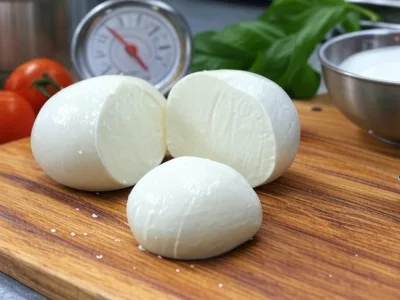
Base recipe: This recipe yields approximately 2 medium-sized mozzarella balls (around 250 g each), suitable for 4 servings.
Your kitchen companion
Ingredients
Check off ingredients as you prepare them.
Follow the steps at your own pace.
Method
1. Prepare the Milk
Pour the milk into a large pot and sprinkle citric acid evenly over the surface. Stir gently to dissolve.
Heat the milk slowly over medium heat, stirring occasionally, until it reaches 32°C (90°F).
2. Add Rennet
Remove the pot from heat and stir in the dissolved rennet mixture using an up-and-down motion.
Let the milk sit undisturbed for 5–10 minutes until it thickens into a gel-like consistency.
3. Cut the Curds
Use a long knife to cut the curds into 2.5 cm (1-inch) cubes. Make horizontal and vertical cuts to create a grid pattern.
Let the curds rest for 5 minutes.
4. Heat and Stir the Curds
Return the pot to low heat and gently stir the curds while maintaining a temperature of 40°C (105°F).
Cook for 5–7 minutes until the curds firm up and sink to the bottom of the pot.
5. Separate the Whey
Remove the pot from heat and scoop the curds into a colander using a slotted spoon. Press lightly to drain excess whey.
6. Heat and Stretch
Transfer the curds to a microwave-safe bowl. Heat on high for 1 minute, then drain off any excess whey.
Knead and stretch the curds with your hands or a spoon. Repeat heating for 30 seconds at a time until the curds are stretchy and shiny.
Add salt and knead it into the cheese for flavor.
7. Shape the Mozzarella
Shape the cheese into smooth balls by stretching and folding.
Place the mozzarella balls into a bowl of cold water to set the shape.
Extra technique, safety notes and details when you want to go deeper.
More tips & details
Imagine the joy of sinking your teeth into a piece of fresh, creamy mozzarella that you crafted with your own hands. Homemade mozzarella isn't just a recipe—it's an experience, a connection to traditional cheese-making that transforms everyday milk into a masterpiece. Whether you’re planning to elevate your pizzas, enrich your salads, or create a gourmet cheese platter, this easy homemade mozzarella recipe is your gateway to perfection.
The Magic of Fresh Mozzarella at Home
Making mozzarella at home is simpler than you might think. With just a few basic ingredients and a little patience, you can create a cheese that’s far superior to store-bought options. The result? A ball of mozzarella with a soft, stretchy texture and a milky, delicate flavor that pairs beautifully with almost anything.
Unlike processed cheeses, homemade mozzarella offers the satisfaction of knowing exactly what’s in your food. You’re in control—no unnecessary additives, just the pure goodness of fresh milk transformed into something extraordinary.
Why You’ll Love This Recipe
- Simplicity Meets Artistry: You don’t need to be an expert to make mozzarella. This recipe is perfect for beginners, yet satisfying enough for seasoned cooks.
- Quick and Rewarding: From start to finish, you’ll have fresh mozzarella ready in under an hour, making it ideal for busy schedules.
- Customizable Flavor: Homemade mozzarella allows you to experiment with salt levels or even infuse the cheese with herbs or spices for a personal touch.
- Healthier Option: With no preservatives or artificial ingredients, this mozzarella is as wholesome as it is delicious.
- Budget-Friendly: Making mozzarella at home costs significantly less than buying high-quality fresh cheese.
Perfect Pairings for Homemade Mozzarella
- Caprese Salad: Pair your mozzarella with fresh tomatoes, basil, and a drizzle of olive oil for a classic dish.
- Wood-Fired Pizza: Add thin slices of mozzarella to a homemade pizza for a gooey, melty topping.
- Cheese Platter: Serve with olives, prosciutto, and crusty bread for a sophisticated appetizer.
- Stuffed Pasta: Use your mozzarella to fill ravioli or layer it in lasagna for a creamy twist.
A Journey to Traditional Cheese-Making
Making mozzarella connects you to centuries-old traditions, where cheese was crafted in small kitchens with care and precision. Each step—from heating the milk to stretching the curds—is an opportunity to learn and appreciate the delicate balance of science and artistry.
Experience the Taste of Homemade Perfection
There’s something magical about the first bite of homemade mozzarella. It’s soft, slightly chewy, and bursting with the natural sweetness of milk. You’ll be amazed at how this cheese elevates even the simplest dishes.
Why settle for store-bought when you can create something so fresh, so delicious, and so satisfying at home? Gather your ingredients, follow our step-by-step instructions, and prepare to impress yourself and your loved ones with your very own homemade mozzarella cheese.
Start today and discover the joy of cheese-making—because nothing compares to the taste of fresh mozzarella made with care and love.
This engaging introduction not only highlights the appeal of making mozzarella at home but also inspires readers to dive into the process and enjoy the results.
How to Perfect Your Homemade Mozzarella Cheese Recipe
Homemade mozzarella is a rewarding culinary experience that allows for endless creativity. Whether you’re a beginner or a seasoned cheese-maker, there are several ways to tweak and improve this recipe to suit your preferences. Below, we’ll explore various tips, ingredient substitutions, and techniques to help you master the art of making fresh mozzarella at home.
Ingredients That Make All the Difference
Milk Selection
The quality of your milk directly impacts the flavor and texture of your mozzarella.
- Whole Milk: Opt for fresh, unpasteurized, or minimally processed whole milk for the richest flavor and creamy texture.
- Pasteurized Milk: While it works, avoid ultra-pasteurized milk as it may prevent proper curd formation.
- Goat’s Milk or Sheep’s Milk: Experiment with these options for a tangier, earthier flavor.
Tip: If using goat’s or sheep’s milk, adjust the citric acid amount slightly to prevent excessive curdling.
Rennet Variations
- Vegetarian Rennet: A perfect choice for those avoiding animal-derived products. It produces slightly softer mozzarella compared to traditional rennet.
- Liquid vs. Tablet Rennet: Both work well, but liquid rennet is easier to measure for small batch recipes.
Customizing Flavor Profiles
Adjusting Salt Levels
The salt in mozzarella enhances flavor but can be tailored:
- Less Salt: Creates a mild mozzarella, ideal for pairing with delicate dishes.
- More Salt: Intensifies the cheese’s flavor, making it a standout ingredient on its own.
- Flavored Salts: Experiment with smoked or herb-infused salts for a unique twist.
Infusing Flavors
During the stretching phase, add ingredients to personalize your mozzarella:
- Fresh Herbs: Finely chopped basil, thyme, or oregano for an Italian-inspired twist.
- Spices: Crushed red pepper or garlic powder for a bold, savory flavor.
- Truffle Oil: A luxurious addition for gourmet mozzarella.
Mastering Texture and Stretch
The Stretching Process
Proper stretching ensures the mozzarella is smooth and elastic. Here’s how to improve the process:
- Temperature Matters: Always heat the curds to 55–60°C (130–140°F) before stretching. This ensures they are pliable.
- Overworking: Avoid over-stretching as it can make the cheese tough. Stop once the texture is glossy and smooth.
Softer vs. Firmer Mozzarella
- Softer Texture: Stretch the cheese less and keep more whey in the curds. Ideal for melting or stuffing dishes.
- Firmer Texture: Stretch more thoroughly and drain additional whey. Perfect for slicing or using in salads.
Adjusting for Dietary Preferences
Lactose-Free Option
To create lactose-free mozzarella, use lactose-free whole milk and ensure your rennet is suitable for dairy-free cheese-making. The flavor remains nearly identical, though the texture may be slightly softer.
Vegan Cheese Alternatives
While traditional mozzarella relies on dairy, you can make vegan versions using plant-based milks (like cashew or almond milk) and vegan rennet. Note that the taste and texture will differ but still provide a creamy alternative.
Troubleshooting Common Issues
Curd Formation Problems
- Curds Too Soft: Likely due to milk that was too cold or insufficient rennet. Always ensure milk is at 32°C (90°F) before adding rennet.
- Curds Too Firm: May result from too much citric acid. Use precise measurements.
Rubber-like Texture
- Caused by overheating during stretching. Always keep an eye on the temperature.
Cheese Doesn’t Stretch
- Check the acidity of the curds. If the curds aren’t elastic, heat them slightly and test again.
Enhancing Your Mozzarella Experience
Serving Suggestions
Fresh mozzarella pairs wonderfully with a variety of dishes:
- Caprese Salad: Combine slices of mozzarella with ripe tomatoes, fresh basil, and a drizzle of olive oil.
- Homemade Pizza: Melt mozzarella over a thin crust for the ultimate gooey topping.
- Mozzarella Sticks: Bread and fry mozzarella for a crispy snack.
How Ingredient Changes Affect the Recipe
Citric Acid Variations
- More Citric Acid: Creates a firmer, tangier mozzarella.
- Less Citric Acid: Results in softer cheese with a milder flavor.
Milk Fat Content
- Higher Fat Content: Produces richer, creamier cheese. Use cream-top milk for luxurious results.
- Lower Fat Content: Results in a leaner, firmer mozzarella with less stretch.
Storage and Aging Tips
Fresh Storage
Mozzarella is best enjoyed fresh but can be stored for up to 5 days in the refrigerator. Place the cheese in salted whey or lightly salted water to maintain moisture.
Freezing Mozzarella
Freeze leftover mozzarella in an airtight container. Thaw in the refrigerator overnight and use in cooked dishes to preserve texture.
Why Experimenting Is Worth It
Homemade mozzarella offers endless possibilities. By tweaking ingredients and techniques, you can craft a cheese that perfectly matches your preferences. Whether you prefer a soft, delicate flavor or a bold, tangy bite, the control is entirely in your hands.
Start experimenting today and discover how small changes can elevate your homemade mozzarella cheese to new heights.
Recivelle · /recipe/how-make-homemade-mozzarella-cheese