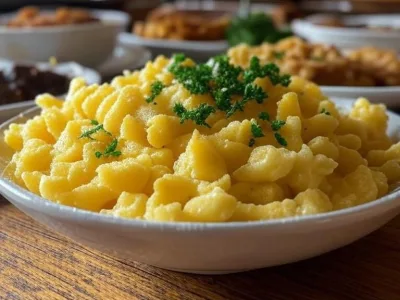
Base recipe: This recipe makes approximately 4 servings.
Your kitchen companion
Ingredients
Check off ingredients as you prepare them.
Follow the steps at your own pace.
Method
Prepare the Dough
In a large mixing bowl, combine the milk, eggs, and salt. Whisk until fully blended.
Gradually add the flour and nutmeg (if using), stirring continuously to create a smooth, thick, and slightly sticky dough. Let the dough rest for 5-10 minutes.
Boil the Water
Bring 2 liters of salted water to a boil in a large pot. Reduce to a gentle simmer.
Form the Spaetzle
Use a spaetzle maker, colander, or large-holed grater to press the dough directly into the simmering water. Work in batches to avoid overcrowding.
Cook the Spaetzle
Once the spaetzle floats to the surface, cook for an additional 1-2 minutes. Use a slotted spoon to remove the cooked spaetzle and transfer them to a bowl.
Optional Step: Enhance Flavor
Heat butter in a skillet over medium heat and sauté the cooked spaetzle for 2-3 minutes until lightly golden.
Serve
Garnish with chopped parsley or caramelized onions, or serve with your favorite sauce or stew. Enjoy warm!
Extra technique, safety notes and details when you want to go deeper.
More tips & details
German Spaetzle is more than just a side dish—it's a heartwarming, comforting, and versatile recipe that brings the rich culinary traditions of Germany straight to your table. Whether you’re hosting a family gathering, celebrating a festive occasion, or simply looking for a unique twist to elevate your dinner, this homemade spaetzle recipe is a must-try. With its soft, chewy texture and the ability to pair seamlessly with everything from creamy sauces to savory stews, spaetzle is bound to become a favorite in your kitchen.
This recipe is incredibly easy to make and requires only a few simple ingredients that you likely already have at home. The best part? You don’t need to be an expert cook to create this traditional dish. In just a few steps, you'll have delicious, fresh spaetzle that tastes better than anything you can buy at the store.
What Makes German Spaetzle Special?
Spaetzle, often referred to as German egg noodles, is a dish with humble beginnings, rooted in the countryside kitchens of southern Germany. Its charm lies in its simple yet satisfying flavor and its adaptability to a variety of dishes. The name “spaetzle” translates to “little sparrows,” which describes the small, irregular shapes of the noodles.
This dish is beloved for its versatility. Serve it with a rich cheese sauce for a comforting main course, top it with caramelized onions for a classic Swabian touch, or pair it with hearty meats like schnitzel or roast beef. Spaetzle can even be turned into a sweet dessert by adding a sprinkle of sugar and cinnamon!
Why You'll Love This Recipe
- Quick and Simple: With just a few basic ingredients and straightforward steps, this recipe is perfect for beginners and seasoned cooks alike.
- Authentic Taste: Experience the true flavors of Germany in your own kitchen with this traditional homemade spaetzle recipe.
- Customizable: Adapt this recipe to your taste! Add herbs to the dough for a unique twist or use a spaetzle press for perfectly uniform noodles.
- Budget-Friendly: With pantry staples like flour, eggs, and milk, this dish is as affordable as it is delicious.
- Perfect for Any Meal: Whether served as a side dish, main course, or even a snack, spaetzle fits every occasion.
Ingredients That Make a Difference
The secret to perfect spaetzle lies in the quality of the ingredients. Flour, eggs, milk, and a pinch of salt form the foundation of this dish. The high protein content in the eggs gives the spaetzle its signature chewy texture, while the milk ensures the dough stays soft and pliable. Don’t forget to use a touch of nutmeg to add a subtle depth of flavor that enhances the overall taste.
How to Serve German Spaetzle
German Spaetzle shines when paired with complementary flavors. Here are some serving suggestions:
- Cheese Spaetzle (Käsespätzle): Mix freshly boiled spaetzle with grated cheese (like Emmental or Gruyère) and top with crispy onions.
- With Stews: Serve alongside goulash, beef stroganoff, or any rich, meaty stew.
- Vegetarian Delight: Toss spaetzle with sautéed mushrooms, spinach, and a light garlic cream sauce.
- Sweet Variation: Sprinkle with sugar and cinnamon, then drizzle with melted butter for a unique dessert option.
Why Try Making Spaetzle at Home?
Homemade spaetzle has a freshness and texture that store-bought options simply can’t match. Making it from scratch allows you to control the ingredients, ensuring every bite is tailored to your taste. Plus, there’s something deeply satisfying about crafting your own noodles—watching the dough transform into tender spaetzle is a rewarding experience for any home cook.
Bring Germany to Your Table Today!
If you've never made homemade German Spaetzle before, now is the perfect time to try. Gather your ingredients, roll up your sleeves, and embark on a culinary journey that’s as enjoyable as it is delicious. Whether you're cooking for family, entertaining guests, or simply treating yourself, this recipe is guaranteed to impress.
So why wait? Start making your own German Spaetzle today and discover how this humble dish can transform your meals into memorable dining experiences. With its rich history, incredible versatility, and mouthwatering flavor, spaetzle is sure to become a beloved staple in your kitchen. Enjoy every bite!
Mastering German Spaetzle: Tips and Adjustments for Perfect Results
German Spaetzle is a beloved dish with rich flavors and a versatile nature, making it a favorite in kitchens worldwide. While the traditional recipe is simple and foolproof, there are various ways to customize it and elevate the flavors to suit your preferences. Below, you'll find detailed tips, substitutions, and techniques to help you create the perfect spaetzle while exploring creative variations.
Understanding the Core Ingredients
The beauty of spaetzle lies in its simplicity. The basic ingredients—flour, eggs, milk, and salt—form the foundation of this dish, but each can be adjusted for a unique outcome.
Flour Variations
- All-Purpose Flour: The standard choice, providing a balanced texture that is soft yet chewy.
- Bread Flour: Contains higher protein levels, resulting in firmer spaetzle with a chewier bite. This option works well if pairing spaetzle with rich sauces or hearty stews.
- Whole Wheat Flour: Adds a nutty flavor and a denser texture. Ideal for those seeking a healthier alternative, though the dough may require more liquid.
- Gluten-Free Flour: Use a blend designed for baking to maintain structure and elasticity. Gluten-free spaetzle might be slightly softer but equally delicious.
Milk Alternatives
- Whole Milk: Delivers richness and a creamy consistency to the dough.
- Buttermilk: Adds a tangy flavor, enhancing the taste of the spaetzle. This works especially well in savory dishes.
- Plant-Based Milk: Almond or oat milk can be used for a dairy-free option. Choose unsweetened varieties to avoid altering the flavor.
Egg Adjustments
- Extra Egg Yolk: Increases richness and adds a deeper yellow color to the noodles.
- Fewer Eggs: Results in a lighter, less chewy texture. Perfect for those who prefer softer spaetzle.
- Egg Substitutes: For a vegan option, use a mixture of ground flaxseeds or chia seeds with water (1 tbsp seeds + 2.5 tbsp water per egg).
Enhancing the Flavor Profile
Spaetzle has a mild flavor, making it the perfect canvas for various seasonings and ingredients. Here’s how you can amplify its taste:
Adding Spices and Herbs
- Nutmeg: A traditional addition that enhances the overall flavor without overpowering. Use sparingly to avoid masking the other ingredients.
- Garlic Powder or Onion Powder: Infuse the dough with subtle savory notes.
- Fresh Herbs: Chopped parsley, chives, or dill can be mixed into the dough for a vibrant and aromatic twist.
Cheese Infusion
For a luxurious touch, incorporate grated cheese directly into the dough or sprinkle it on top after cooking. Gruyère, Emmental, or sharp cheddar are excellent choices for a creamy, indulgent experience.
Incorporating Vegetables
Blend pureed spinach, carrots, or beets into the dough to add color, nutrients, and a unique flavor. Spinach spaetzle, for example, pairs beautifully with creamy sauces.
Techniques to Perfect Your Spaetzle
The method used to prepare spaetzle greatly influences its texture and presentation. Here are some techniques to consider:
Choosing the Right Tool
- Spaetzle Maker: Produces uniform noodles with consistent texture.
- Colander or Grater: Creates a rustic, irregular shape, adding charm to the dish.
- Knife and Cutting Board: For the most traditional method, spread the dough thinly on a cutting board and cut small strips directly into boiling water.
Controlling Dough Consistency
The dough should be thick yet pourable. Adjust consistency by:
- Adding more milk for softer spaetzle.
- Using less liquid for firmer, chewier noodles.
Cooking Tips
- Salt the Water Generously: This enhances the flavor of the noodles while they cook.
- Avoid Overcrowding: Work in batches to ensure even cooking and prevent the spaetzle from sticking together.
- Cool Quickly: If not serving immediately, transfer cooked spaetzle to an ice bath to stop the cooking process and maintain their texture.
Serving Suggestions and Pairings
Classic Käsespätzle
Layer spaetzle with grated cheese and top with crispy caramelized onions. Bake briefly for a traditional German comfort dish.
Hearty Meat Pairings
Serve spaetzle as a side dish with rich stews, such as beef goulash, schnitzel, or roasted pork. The mild flavor of the noodles balances well with bold, savory sauces.
Vegetarian Options
Toss spaetzle with sautéed mushrooms, garlic, spinach, and a light cream sauce for a vegetarian delight.
Sweet Variations
Turn spaetzle into a dessert by sautéing them in butter, then sprinkling with sugar and cinnamon. Serve with a dollop of whipped cream or fruit compote.
How Ingredient Changes Impact Flavor and Texture
Richer Spaetzle
Adding more eggs or incorporating extra yolks results in a richer, denser spaetzle with a pronounced golden hue. Perfect for indulgent dishes like cheese spaetzle.
Lighter Spaetzle
Using less egg or replacing milk with water yields lighter, fluffier noodles. This variation works well when serving spaetzle in broths or soups.
Healthier Alternatives
Replacing all-purpose flour with whole wheat flour introduces a nuttier flavor and higher fiber content. However, the texture will be denser, so increasing liquid slightly may help balance the dough.
Vegan Adjustments
Using flaxseed or chia egg replacements gives a slightly nutty flavor and a softer texture. Combine this with plant-based milk for a fully vegan spaetzle that retains its traditional charm.
Final Tips for Success
- Rest the Dough: Allowing the dough to rest for 10 minutes helps the gluten relax, resulting in softer noodles.
- Experiment with Toppings: From crispy onions to toasted breadcrumbs, simple garnishes can elevate the dish.
- Store Properly: Cooked spaetzle can be stored in the refrigerator for up to 3 days or frozen for later use. Reheat by sautéing in butter for added flavor.
Transform your German Spaetzle into a culinary masterpiece by experimenting with these adjustments and techniques. Whether you prefer a rich, cheesy version or a healthier spin, this versatile dish offers endless possibilities to suit every palate.
Recivelle · /recipe/how-make-german-spaetzle-homemade-recipe