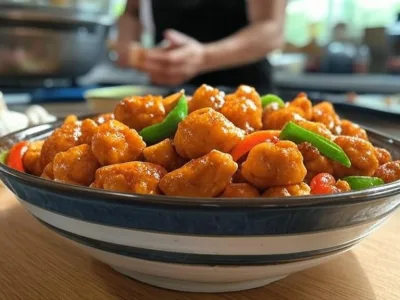
Base recipe: 4
Your kitchen companion
Ingredients
Check off ingredients as you prepare them.
Follow the steps at your own pace.
Method
Marinate the Chicken
In a bowl, mix soy sauce, rice wine, and cornstarch.
Add the diced chicken, mix well, and let it marinate for 10 minutes while you prepare the other ingredients.
Prepare the Sauce
In a small bowl, combine soy sauce, dark soy sauce, rice vinegar, hoisin sauce, sugar, cornstarch, and water.
Whisk until smooth and set aside.
Cook the Chicken
Heat 15 ml (1 tbsp) of vegetable oil in a wok or large pan over medium-high heat.
Add the marinated chicken and stir-fry until golden and cooked through, about 5-7 minutes.
Remove the chicken from the pan and set aside.
Stir-Fry the Aromatics and Vegetables
In the same pan, heat the remaining 15 ml (1 tbsp) of vegetable oil.
Add the dried red chilies, ginger, and garlic. Stir-fry for 1 minute until fragrant.
Toss in the bell peppers and stir-fry for 2-3 minutes until slightly tender.
Combine the Dish
Return the cooked chicken to the pan.
Pour in the sauce, stirring continuously until it thickens and evenly coats the chicken and vegetables.
Add the roasted peanuts and scallions. Toss everything together for 1-2 minutes.
Serve
Transfer the Kung Pao Chicken to a serving dish and enjoy hot with steamed rice or noodles.
Extra technique, safety notes and details when you want to go deeper.
More tips & details
Kung Pao Chicken is a classic dish that has captured the hearts (and taste buds) of food lovers around the globe. This iconic Chinese recipe, known for its perfect balance of flavors—spicy, sweet, savory, and tangy—is a must-try for anyone who appreciates bold and delicious cuisine. With this guide, you’ll learn how to recreate the authentic taste of Kung Pao Chicken right in the comfort of your home, making every meal feel like a culinary adventure.
The magic of Kung Pao Chicken lies in its carefully selected ingredients. Juicy chicken pieces, tender yet slightly crispy, are tossed in a rich, flavorful sauce. Roasted peanuts add a delightful crunch, while vibrant vegetables like bell peppers and scallions provide color and texture. And let’s not forget the dried red chilies, which bring the perfect amount of heat to this satisfying dish.
Why You’ll Love This Recipe
- Authenticity at Its Best: This recipe stays true to its origins, ensuring that you enjoy a dish that’s as close as possible to the flavors you’d experience in a traditional Chinese kitchen.
- Easy to Make at Home: You don’t need to be a professional chef to whip up this delightful dish. The recipe is straightforward and comes with step-by-step instructions.
- Customizable for All Tastes: Prefer less spice? You can adjust the heat level to suit your palate. Want to make it gluten-free or vegan? We’ve got tips to make it work for you.
- Impressive Yet Simple: Whether you’re hosting a dinner party or enjoying a quiet night in, this recipe is sure to impress everyone at the table.
The Allure of Kung Pao Chicken’s Flavor Profile
Kung Pao Chicken is all about contrasts that work in harmony. The velvety sauce clings to the chicken and vegetables, creating a coating that bursts with flavor. The subtle sweetness balances the spicy kick from the chilies, while the umami undertones of soy sauce and oyster sauce tie everything together. A hint of vinegar adds a tangy finish, elevating the dish to perfection. Each bite is a celebration of traditional Chinese cooking techniques brought to life in a simple and approachable way.
Tips for Making the Perfect Kung Pao Chicken
- Use Fresh Ingredients: Fresh chicken, crunchy peanuts, and crisp vegetables make all the difference in flavor and texture.
- Prep Ahead: Since stir-frying is quick, have all your ingredients chopped, measured, and ready to go before you start cooking.
- Marinate the Chicken: A quick marinade enhances the flavor and tenderness of the chicken, making it juicy and delicious.
- Control the Heat: Adjust the number of dried red chilies to suit your spice tolerance.
Bring the Taste of China to Your Kitchen
Recreating authentic dishes like Kung Pao Chicken allows you to experience the world through food. It’s more than just a meal; it’s an exploration of culture, tradition, and the art of balancing flavors. Cooking at home also lets you experiment, making each recipe your own while staying true to its roots.
Ready to Cook?
Gather your ingredients and dive into the process of making this authentic Kung Pao Chicken recipe. The sizzle of the wok, the aroma of roasted peanuts, and the vibrant colors of fresh vegetables are just the beginning. Once you take that first bite, you’ll understand why this dish has become a worldwide favorite.
Don’t wait—try this recipe today and discover the joy of authentic Chinese cooking in your own kitchen. Share your masterpiece with friends and family, and savor the satisfaction of creating a restaurant-quality meal at home. Your taste buds will thank you!
Tips to Perfect Your Kung Pao Chicken Recipe
Recreating authentic Kung Pao Chicken at home allows you to explore the rich flavors of Chinese cuisine while also adapting the dish to your preferences. Below, you’ll find detailed advice on ingredient substitutions, cooking techniques, and ways to elevate the recipe to suit your taste and dietary needs.
Customizing the Protein
- Chicken Options
- The classic recipe uses chicken breast, which is lean and absorbs the sauce well. If you prefer a juicier texture, opt for chicken thighs. The extra fat content makes the meat more tender and flavorful.
- For a more robust flavor, try marinating the chicken longer (up to 30 minutes).
- Vegetarian Alternatives
- Replace chicken with tofu or tempeh. Firm tofu works best, as it holds its shape during stir-frying. Marinate the tofu to infuse flavor and enhance the dish’s depth.
- Another option is mushrooms like shiitake or portobello. Their earthy flavor complements the sauce beautifully.
Adjusting the Heat
Kung Pao Chicken is known for its signature spicy kick, but the heat level can be tailored to your liking:
- Milder Version
- Reduce the number of dried red chilies, or deseed them before cooking. Deseeding significantly cuts down on the spice level while maintaining the dish's authenticity.
- Add a touch of honey or increase the sugar in the sauce to balance out the spice.
- Spicier Version
- Use Sichuan peppercorns for an authentic numbing sensation. Toast and grind them before adding to the dish for maximum flavor.
- Add fresh chili paste or chili oil to the sauce for an extra layer of heat.
Enhancing the Sauce
The sauce is the heart of this dish. Small tweaks can drastically change the flavor profile:
- For a Richer Taste
- Add a teaspoon of sesame oil at the end of cooking. It provides a nutty aroma and a silky finish.
- Incorporate a splash of Chinese black vinegar for a deeper umami flavor.
- For a Sweeter Twist
- Increase the amount of hoisin sauce or add a tablespoon of honey. This creates a sweeter sauce that’s less tangy.
- Gluten-Free Adaptation
- Substitute soy sauce with tamari or coconut aminos. Use a gluten-free hoisin sauce and ensure your cornstarch is certified gluten-free.
Experimenting with Vegetables
Vegetables not only add color and texture but also enhance the dish’s nutritional value.
- Classic Options
- Bell peppers and scallions are staples in Kung Pao Chicken. Their crunch complements the tender chicken and creamy peanuts.
- Add more vibrant vegetables like zucchini, carrots, or snap peas to make the dish visually appealing and healthier.
- Seasonal Additions
- Experiment with asparagus or broccoli for a seasonal twist. Their earthy and slightly sweet flavors pair well with the bold sauce.
Mastering the Cooking Technique
Stir-frying is a quick and efficient cooking method, but a few adjustments can elevate your dish:
- Use a Wok
- A wok is ideal for stir-frying because its shape allows even heat distribution. If you don’t have one, a large, heavy-bottomed skillet works as a substitute.
- High Heat is Key
- Cook over high heat to achieve the characteristic smoky flavor of authentic Chinese cuisine. This technique, called "wok hei," adds depth to the dish.
- Do Not Overcrowd
- Stir-fry in batches if necessary. Overcrowding the pan lowers the heat, leading to steaming instead of frying.
Substituting Peanuts
- Nut-Free Options
- If you have a peanut allergy, use roasted sunflower seeds or toasted pumpkin seeds for a similar crunch.
- Cashews are another excellent substitute, offering a creamy, slightly sweet flavor that complements the sauce.
- No Nuts at All
- For a completely nut-free version, omit the peanuts and add crunchy elements like water chestnuts or crispy fried shallots.
Balancing the Sweetness and Tanginess
Kung Pao Chicken thrives on balance. If the sauce tastes too sweet or too tangy, here’s how to fix it:
- Too Sweet
- Add a splash of **rice vinegar
, black vinegar, or lime juice** to cut through the sweetness. This will restore the tangy notes of the dish.
- Too Tangy
- Add an extra teaspoon of sugar or increase the hoisin sauce. A pinch of salt can also balance out excessive acidity.
Making It Healthier
For a lighter version of Kung Pao Chicken, try these tips:
- Reduce Oil
- Use only 1 tablespoon of vegetable oil for stir-frying instead of 2. You can also use a non-stick pan to minimize the need for oil.
- Lower Sodium
- Opt for low-sodium soy sauce and reduce the amount of salt added to the marinade or sauce.
- Add More Vegetables
- Increase the vegetable-to-chicken ratio. This boosts fiber and vitamins while reducing calorie density.
Creating a Vegan Kung Pao Chicken
Transform this dish into a vegan delight by making a few key substitutions:
- Replace Chicken
- Use extra-firm tofu, tempeh, or even cauliflower florets as the protein base.
- Adjust the Sauce
- Substitute oyster sauce with mushroom-based vegetarian oyster sauce.
- Add Plant-Based Crunch
- Use roasted chickpeas or sunflower seeds instead of peanuts.
Crafting a Kid-Friendly Version
If you’re preparing Kung Pao Chicken for children or spice-averse individuals, try the following:
- Mild Sauce
- Skip the dried red chilies and reduce the ginger and garlic slightly for a milder flavor profile.
- Sweeter Notes
- Increase the amount of hoisin sauce and sugar to create a sweeter, more appealing dish for younger palates.
- Fun Additions
- Serve with colorful vegetables like carrots or corn to make the dish visually engaging for kids.
Flavor Fusion Ideas
Experiment with unique flavor combinations to create your own spin on Kung Pao Chicken:
- Thai-Inspired
- Add Thai basil and a splash of coconut milk to the sauce for a creamy and aromatic twist.
- Indian Influence
- Sprinkle a pinch of garam masala or curry powder into the sauce for an earthy, spiced profile.
- Korean Flair
- Incorporate gochujang (Korean chili paste) into the sauce for a slightly sweet and smoky flavor.
Kung Pao Chicken is a versatile and flavorful dish that invites endless creativity. By making small adjustments to the ingredients and preparation, you can tailor it to suit any dietary preference, flavor profile, or occasion. Whether you’re keeping it traditional or experimenting with new flavors, this recipe will never fail to impress.
Now it’s your turn to bring your personal touch to this classic dish—explore, experiment, and enjoy the process!
Recivelle · /recipe/how-make-authentic-kung-pao-chicken-home