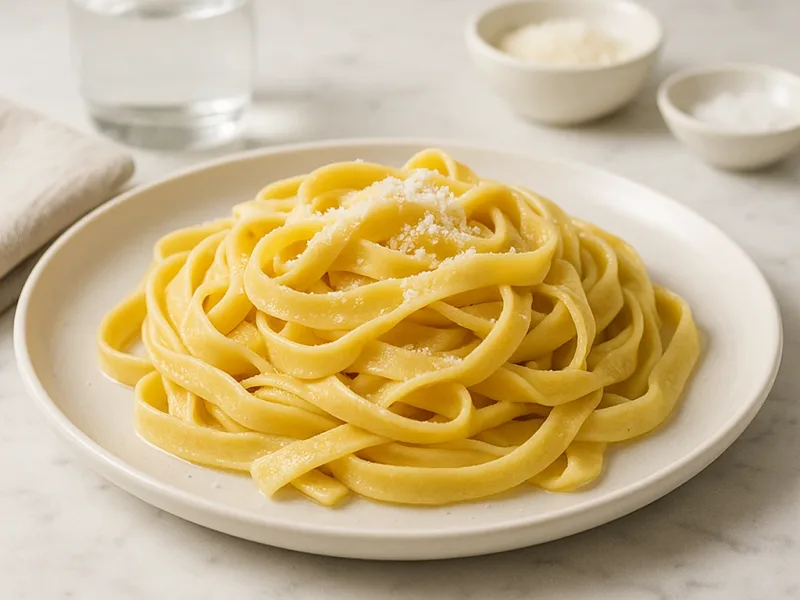
Base recipe: 4 servings (about 450 g total dough, approx. 110 g per serving)
Your kitchen companion
Ingredients
Check off ingredients as you prepare them.
Follow the steps at your own pace.
Method
Measure the flour: Place 2 cups all-purpose flour (240 g) on a clean work surface or in a large bowl. Shape it into a mound and create a deep well in the center. The flour should feel soft and finely milled.
Add the eggs and salt: Crack 3 large eggs (150 g without shells) into the center of the well. Add 1 tsp fine salt (6 g) on top of the eggs. Use a fork to gently whisk the eggs and salt together while pulling in small amounts of flour from the edges.
Form the dough: When the mixture becomes too thick to whisk, use your hands to bring the remaining flour into the center. Knead until a dough ball forms. The dough will feel shaggy and a bit sticky at first.
Knead until smooth: Continue kneading the dough for 8 to 10 minutes. Apply firm pressure with the heel of your hand, folding and pushing the dough. The dough is ready when it's smooth, elastic, and slightly springy. If it feels too dry, wet your hands lightly and continue kneading. If it’s sticky, dust with a little extra flour.
Rest the dough: Shape the dough into a ball and wrap it tightly in plastic wrap or cover with a bowl. Let it rest at room temperature for 30 minutes. This relaxes the gluten and makes the dough easier to roll out later.
Shape the pasta: After resting, cut the dough into 4 equal pieces. Lightly flour your surface and use a rolling pin or pasta machine to roll each piece into thin sheets (adjust thickness to your preference). Dust with flour to prevent sticking. Cut into desired shapes like fettuccine, tagliatelle, or lasagna sheets.
Cook the pasta: Bring a large pot of salted water to a boil. Add the fresh pasta and cook for about 3 minutes, or until pasta floats and reaches a tender, silky texture. Fresh pasta cooks much faster than dried pasta. Drain immediately and serve with your favorite sauce.
Visual and touch cues: The dough should be smooth, soft, and slightly firm to the touch after kneading. Cooked pasta should be tender but slightly chewy, never mushy. If it falls apart while boiling, the dough was rolled too thin.
Extra technique, safety notes and details when you want to go deeper.
More tips & details
Mastering Fresh Pasta at Home with Just 3 Ingredients
Unlock the secret to perfect texture, elasticity, and flavor
Creating homemade pasta dough is more than mixing flour, eggs, and salt — it's an experience rooted in tradition, craft, and simplicity. This easy 3-ingredient classic brings out the richness of handmade cooking without the need for special tools or a long list of ingredients. The beauty of pasta dough lies in its versatility: whether rolled into silky tagliatelle, cut into rustic pappardelle, or filled for ravioli, the result is a smooth, elastic dough that cooks into tender, flavorful pasta every time.
Traditional pasta dough relies on the harmony between protein-rich flour and eggs, forming soft but workable gluten strands. Kneading develops that structure, while resting relaxes the dough for easier shaping. These steps transform three simple ingredients into something truly exceptional: light, fresh pasta with a toothsome bite.
A Taste of History
Pasta has been a staple of Italian cuisine since the Middle Ages, commonly associated with the regions of Emilia-Romagna and Tuscany. Originally made by hand and rolled thin with wooden pins, pasta dough was crafted in family kitchens long before machines automated the process. Today, chefs and home cooks around the world still celebrate the ritual of making pasta from scratch — not just for its taste, but for its cultural and culinary heritage.
How Ingredients Influence the Dough
- Flour controls texture and elasticity. Finer flours like “00” create delicate noodles, while semolina adds firmness.
- Eggs bring richness, color, and moisture. They determine how stretchy or soft the dough will feel under your fingertips.
- Salt enhances natural flavors and helps balance the richness of the eggs and flour.
Each ingredient must be balanced — too much moisture and the dough gets sticky, too little and it becomes dry and hard to roll. Working by feel helps you learn the perfect consistency over time.
Why you’ll love this recipe
- Only 3 simple ingredients, pantry-friendly and budget-conscious
- No special equipment required — just hands, a surface, and a rolling pin
- Beginner-friendly method that delivers professional-quality results
- Freezable dough that keeps fresh flavor for future meals
- Endless shaping options: linguine, ravioli, lasagna sheets, and more
Storage and Make-Ahead
This dough can be made ahead and stored tightly wrapped in the refrigerator for up to 48 hours. For long-term storage, shape the pasta, let it air-dry slightly, and freeze flat in airtight bags for up to 2 months. Always dust with flour before freezing to prevent sticking. Rested and refrigerated dough is often easier to roll, making it perfect for preparing in advance of busy cooking days or dinner parties.
Explore More Italian Classics with Fresh Pasta
We also offer recipes for creating luxurious pasta dishes like truffle pasta, perfect for serving with your homemade pasta dough. This dish pairs beautifully with fresh pasta and takes your meal to a gourmet level.
Crafting the Perfect Dough Texture
The magic of homemade pasta lies in its tactile nature. Proper kneading builds strength, while resting time allows gluten to soften, delivering a silky smooth finish. When you roll the dough, the thinner the sheet, the more delicate the pasta becomes. Cutting shapes by hand or with a machine simply unlocks the form — the flavor and texture have already been built into the dough during mixing and kneading.
Pressing, stretching, and shaping pasta is a deeply sensory experience: you’ll feel the transformation from flour and eggs into a cohesive, elastic ball. Pasta made this way cooks in just a few minutes and brings a fresh, comforting depth that dried pasta cannot match.
The Joy of Homemade Pasta
From preparation to plating, homemade pasta brings heart and craft to the table. Whether you are honing your culinary skills, cooking with family, or treating yourself to a restaurant-quality meal at home, this 3-ingredient recipe is a foundation you can build upon again and again.
Serving Suggestions for Homemade Pasta Dough Recipe: Easy 3-Ingredient Classic
Homemade pasta offers endless serving possibilities. Freshly cooked fettuccine tossed in butter and Parmesan creates a simple and comforting meal in minutes. For a richer experience, pair the pasta with creamy Alfredo sauce, hearty Bolognese, or fresh tomato and basil. This dough is also ideal for ravioli, lasagna sheets, or delicate tagliatelle, adapting beautifully to both rustic and gourmet dishes. Serve immediately after cooking for the best texture and flavor.
Variations and Flavor Boosters
Enhance the base dough by adding herbs like dried basil or oregano, or incorporate spinach or roasted beet puree for colorful pasta with added nutrients. Use semolina flour for a firmer texture or blend in type “00” flour to create ultra-smooth noodles. Pasta made with this dough can also be dried, smoked, or infused with saffron or chili for deeper character.
Make-Ahead and Batch Cooking
The Homemade Pasta Dough Recipe: Easy 3-Ingredient Classic is perfect for meal prep. Make and freeze in portions to save time during busy weeks. Frozen pasta cooks straight from the freezer in just a few minutes. Ideal for quick weeknight dinners, special occasions, or hosting.
Why This Homemade Pasta Dough Stands Out
The recipe uses only 3 ingredients, making it beginner-friendly and cost-effective while delivering the signature chew and silkiness of traditional Italian pasta. Ready in under 50 minutes, including resting time, this dough is a reliable choice for both everyday cooking and festive meals. The texture holds sauces beautifully, cooks evenly, and offers a satisfying mouthfeel that stands above store-bought pasta.
Perfect for family dinners, date nights, holidays, or creative cooking projects, this recipe brings authentic Italian soul into the kitchen with minimal effort and maximum flavor.
Questions
Can I make pasta dough without eggs?
Yes, but the texture will change. Replace eggs with ⅔ cup water (160 ml) and 1 tbsp olive oil (15 ml), but expect a less elastic dough. Knead well and rest longer to help hydrate the gluten properly.
Why is my pasta dough too dry or crumbly?
Too much flour or not enough liquid causes dryness. If the dough crumbles, add 1 tsp water at a time and knead until smooth. Proper pasta dough should feel slightly tacky but not sticky, with no dry cracks.
How long does homemade pasta dough last in the fridge?
Up to 48 hours when wrapped tightly. Refrigerate immediately after kneading. If stored longer, gluten stiffens and dough becomes harder to roll.
Can I freeze homemade pasta dough?
Yes. Divide into portions, flour lightly, and wrap in plastic before freezing for up to 2 months. Thaw overnight in the fridge and rest 10 minutes at room temperature before rolling.
What flour is best for pasta dough: all-purpose or semolina?
All-purpose flour creates soft, silky pasta perfect for ravioli or fettuccine. Semolina flour adds firmness and works great for shapes like rigatoni or orecchiette. You can blend the two for texture balance.
How do I stop fresh pasta from sticking together?
Dust cut pasta generously with flour or semolina, then spread on a tray to dry slightly. Avoid stacking or piling. Proper flouring is key, especially before freezing or boiling.
Is homemade pasta dough suitable for gluten-free recipes?
Yes, if using a gluten-free flour blend with binding agents like xanthan gum. Gluten-free dough is more delicate, so roll gently and avoid overworking. Cook directly from fresh rather than drying.
Recivelle · /recipe/homemade-pasta-dough-recipe-easy-3-ingredient-classic