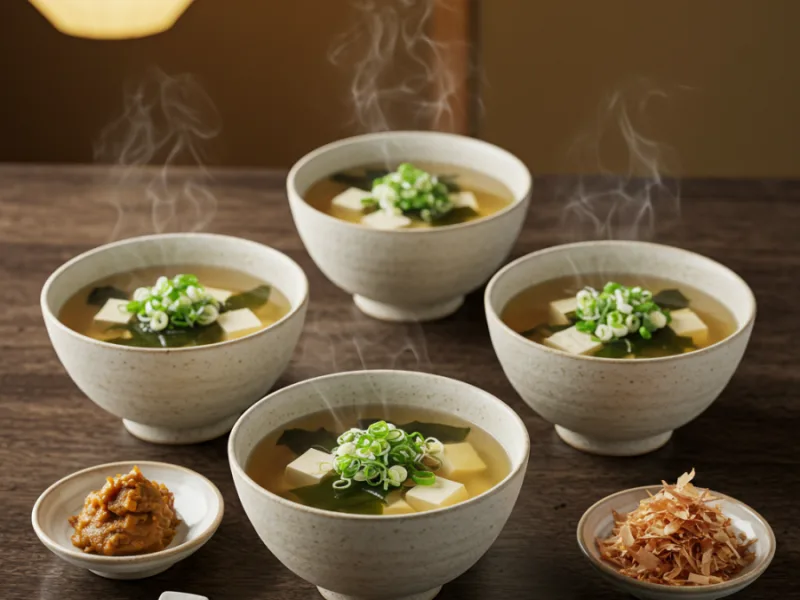
Base recipe: This recipe makes 4 servings.
Your kitchen companion
Ingredients
Check off ingredients as you prepare them.
Follow the steps at your own pace.
Method
Prepare the dashi broth
Pour water into a small saucepan and add kombu. Let it soak for 10 minutes to release its flavors.
Heat the saucepan over medium-low heat. Just before the water starts to boil, remove the kombu.
Increase to medium heat and add bonito flakes. Let it simmer for 5 minutes, then remove from heat.
Allow the broth to sit for another 5 minutes, then strain through a fine sieve to remove the bonito flakes.
Rehydrate the wakame
Place dried wakame in a small bowl and cover with warm water. Let it soak for 5 minutes until it expands. Drain and set aside.
Prepare the miso paste
In a small bowl, add white and red miso paste.
Take a few tablespoons of warm dashi broth and whisk it into the miso paste until smooth.
Assemble the miso soup
Bring the strained dashi broth to a gentle simmer over low heat. Do not boil.
Add tofu cubes and rehydrated wakame, letting them warm for 1-2 minutes.
Turn off the heat and slowly stir in the dissolved miso mixture. Stir well to combine.
Serve the soup
Ladle the soup into bowls and garnish with sliced green onions.
Serve immediately while warm.
Extra technique, safety notes and details when you want to go deeper.
More tips & details
A Warm and Comforting Bowl of Homemade Miso Soup
Few dishes capture the essence of Japanese cuisine as perfectly as homemade miso soup. This simple yet deeply satisfying dish combines the rich umami of miso paste, the delicate texture of silken tofu, and the subtle brininess of wakame seaweed, creating a perfectly balanced bowl of warmth and nourishment. Whether you're looking for a comforting appetizer or a light, nutritious meal, this miso soup is the ideal choice.
Unlike instant miso soups, which often lack depth and complexity, making it at home allows you to experience its true, authentic flavors. The key lies in the combination of high-quality miso paste, homemade dashi broth, and fresh ingredients, ensuring every spoonful is rich, flavorful, and packed with nutritional benefits.
If you’ve ever wanted to recreate restaurant-quality miso soup at home, this recipe will guide you through the process effortlessly. Whether you're a seasoned cook or a beginner, you'll be surprised by how quick and easy it is to prepare.
Why You’ll Love This Homemade Miso Soup
- Authentic Flavor – This recipe brings out the deep umami notes of miso and dashi, just like the soups served in traditional Japanese restaurants.
- Quick and Easy – With just a few ingredients and 10 minutes of cooking, you can have a warm, comforting bowl ready to serve.
- Nutritious and Healthy – Miso is a fermented superfood, rich in probiotics, while wakame seaweed and tofu provide essential minerals and proteins.
- Customizable – Add mushrooms, vegetables, or proteins like shrimp or chicken to tailor the soup to your preference.
The Secret to Perfect Miso Soup
The heart of this soup is dashi, a simple but essential Japanese broth made from kombu (dried kelp) and bonito flakes. While some recipes use instant dashi granules, making it from scratch provides a more delicate and refined flavor. White miso (shiro miso) gives the soup a mild, slightly sweet taste, while red miso (aka miso) adds a bolder, earthier depth. Depending on your preference, you can choose one or even blend both types for a unique flavor profile.
When adding miso to the soup, it's crucial not to boil it, as high heat can destroy its beneficial enzymes and alter its delicate taste. Instead, dissolve the miso paste in a small amount of warm dashi before mixing it into the soup, ensuring a smooth and well-balanced consistency.
A Traditional Japanese Staple with Modern Health Benefits
Miso soup isn’t just delicious—it’s also a nutritional powerhouse. Miso is packed with essential amino acids, probiotics, and antioxidants, making it an excellent choice for gut health. Wakame seaweed is rich in iodine, supporting thyroid function, while tofu provides plant-based protein. Together, these ingredients create a meal that is nourishing, light, and incredibly satisfying.
This soup is naturally gluten-free and can be easily adapted for a vegan diet by using kombu dashi instead of bonito flakes. If you're looking for a wholesome, comforting dish that supports a healthy lifestyle, this homemade miso soup is the perfect addition to your meal rotation.
Enjoy a Taste of Japan at Home
Bringing the flavors of Japan into your kitchen has never been easier. Whether you're preparing a Japanese-inspired dinner or simply need a light and nutritious soup, this recipe delivers authentic taste with minimal effort.
Try making this homemade miso soup today, and experience the rich umami flavors that have made it a beloved dish for centuries. Enjoy it as a starter, a light meal, or even as a side dish to your favorite Japanese recipes. With just one sip, you’ll understand why this soup remains a timeless classic.
How to Customize and Perfect Your Homemade Miso Soup
Homemade miso soup is a versatile dish that allows for a variety of ingredient substitutions and modifications, letting you adjust the flavor, texture, and nutritional value to your liking. Whether you want to create a richer umami depth, a milder taste, or a heartier soup, understanding how each ingredient interacts with the dish is key. Below, you'll find detailed modifications and tips that will help you craft the perfect miso soup to match your personal preference.
Choosing the Right Miso Paste for the Perfect Flavor
Miso paste is the foundation of miso soup, and choosing the right type has a significant impact on the taste, color, and intensity of the final dish.
- White miso (shiro miso): This is the mildest and slightly sweet variety. It works best if you want a light and delicate miso soup.
- Red miso (aka miso): Stronger, richer, and deeply umami, this miso gives a more robust and salty flavor. It’s best suited for those who enjoy a bold and hearty soup.
- Mixed miso (awase miso): A blend of white and red miso, which creates a balanced flavor profile that is neither too mild nor too intense.
How to Adjust the Miso for Different Flavor Profiles
- If you prefer a sweeter and more delicate taste, use only white miso and avoid over-concentrating the paste.
- For a stronger umami taste, increase the amount of red miso while slightly reducing the white miso.
- If you want a balanced miso soup, combine both white and red miso in equal parts.
Alternative Dashi Broths and How They Affect the Soup
Traditional dashi broth is made with kombu (dried kelp) and bonito flakes, but there are several variations that can influence the flavor complexity of the soup.
- Kombu and bonito dashi (classic): This provides a perfect umami balance—subtle oceanic depth from kombu and a smoky richness from bonito flakes.
- Kombu-only dashi: A great choice for a vegan version. This creates a lighter broth with a mild seaweed aroma.
- Dried shiitake mushroom dashi: Adding dried shiitake mushrooms to the broth instead of bonito flakes results in a rich, earthy, and slightly sweet miso soup.
- Anchovy dashi: A stronger and more intense seafood flavor can be achieved using dried anchovies instead of bonito flakes.
How to Adjust the Broth for a More or Less Intense Flavor
- If you want a mild and subtle broth, let the kombu soak longer and reduce bonito flakes.
- If you prefer a deeper umami, increase bonito flakes or add a small amount of dried shiitake mushrooms for extra complexity.
Best Tofu Types for Different Textures
Tofu is one of the key ingredients in miso soup, but the type of tofu you use affects the mouthfeel and consistency of the soup.
- Silken tofu: The most delicate and creamy, it gives the soup a smooth and light texture. Best for a refined miso soup.
- Soft tofu: Still tender, but with a bit more structure, making it a balanced choice.
- Firm tofu: Holds its shape well and provides a chewier texture—ideal if you want a heartier miso soup.
How to Adjust the Tofu for Different Textures
- For a gentler, melt-in-your-mouth texture, stick with silken tofu and cut it into small cubes.
- If you prefer a firmer bite, choose soft or firm tofu and cut it into slightly larger chunks.
Seaweed and Vegetable Additions for Extra Flavor and Nutrition
Wakame seaweed is traditionally used in miso soup, but other vegetables and seaweeds can enhance the taste and nutritional profile.
- Wakame seaweed: Adds a mild oceanic taste and is rich in iodine and minerals.
- Hijiki seaweed: A stronger seaweed variety, giving a bolder taste and adding fiber and calcium.
- Nori (roasted seaweed): Provides a crisp texture initially, which softens in the broth, delivering extra umami flavor.
- Spinach or bok choy: These leafy greens add freshness and extra nutrients to the soup.
- Mushrooms: Shiitake mushrooms bring an earthy umami depth that pairs well with the broth.
How to Modify the Soup with Extra Vegetables
- If you want a lighter, traditional miso soup, keep the wakame minimal and avoid overpowering vegetables.
- For a more filling meal, add shiitake mushrooms, bok choy, or tofu.
Adjusting the Saltiness and Depth of the Soup
Miso soup has a naturally salty taste due to miso paste and dashi broth, but the level of saltiness can be adjusted based on preference.
- If the soup is too salty, add a small amount of warm water to dilute it gradually.
- If the soup lacks depth, consider increasing red miso or adding an extra piece of kombu to the dashi.
- Avoid adding salt separately, as miso already contains a natural salt content.
Making Miso Soup More Filling with Proteins
For those who prefer a heartier miso soup, adding protein can turn it into a complete meal.
- Shrimp: Adds a mild sweetness and protein boost.
- Chicken: Makes the soup more filling and adds savory depth.
- Egg: A beaten egg stirred into the soup creates a smooth, silky texture.
- Tempeh: A great plant-based alternative to tofu with a nutty, firmer texture.
The Right Way to Store and Reheat Miso Soup
Miso soup is best enjoyed fresh, but if you need to store leftovers, follow these tips:
- Refrigeration: Store miso soup in an airtight container for up to 2 days.
- Reheating: Gently warm the soup over low heat, avoiding boiling to preserve the probiotic benefits of miso.
- Avoid freezing: Freezing can change the texture of tofu and miso, making the soup grainy when thawed.
Final Thoughts on Customizing Homemade Miso Soup
By adjusting the miso paste type, dashi broth, tofu, and additional ingredients, you can create a personalized miso soup that suits your taste preferences and dietary needs. Whether you want a light and delicate soup or a hearty and rich broth, these customizations will help you make a perfect bowl every time. Experiment with different flavors, textures, and additions to discover your ideal version of this traditional Japanese dish.
Recivelle · /recipe/homemade-miso-soup