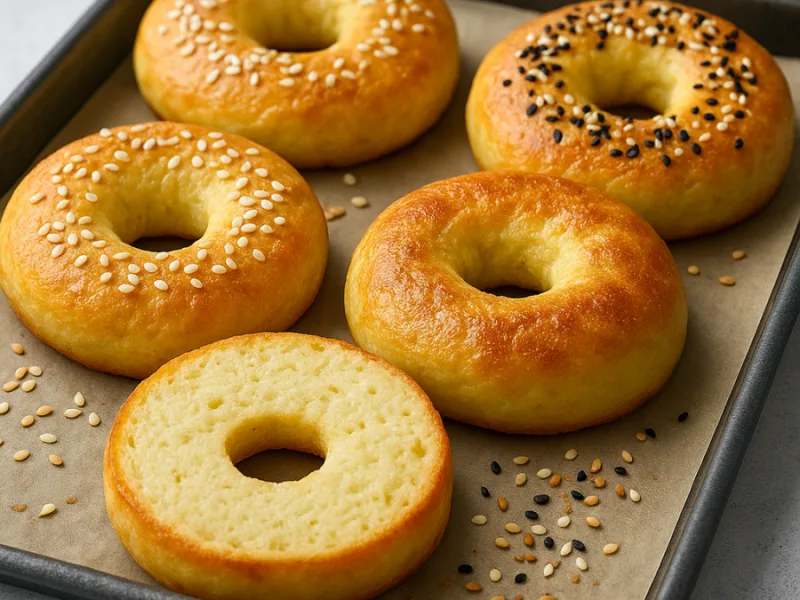
Base recipe: 6 bagels
Your kitchen companion
Ingredients
Check off ingredients as you prepare them.
Follow the steps at your own pace.
Method
Preheat the oven to 400°F (200°C). Line a baking sheet with parchment paper.
In a microwave-safe bowl, combine the shredded mozzarella and cream cheese. Microwave for 1 minute, then stir. Continue microwaving in 20-second intervals until the cheeses are fully melted and smooth.
In a separate mixing bowl, whisk the egg until well combined.
Add the almond flour and baking powder to the egg and mix thoroughly to form a dough-like consistency.
Add the melted cheese mixture to the almond flour mixture. Quickly mix everything together using a spatula or your hands. Knead the dough until fully combined and smooth.
Divide the dough into 6 equal portions. Roll each piece into a rope about 6–8 inches (15–20 cm) long, then form into a ring and press the ends together to seal.
Place each bagel on the prepared baking sheet. If desired, sprinkle the tops with sesame seeds, poppy seeds, or Everything Bagel seasoning.
Bake for 18–20 minutes, or until the bagels are golden brown and firm to the touch.
Allow to cool slightly before serving.
Extra technique, safety notes and details when you want to go deeper.
More tips & details
Easy Low Carb Bagels for Keto Breakfast and Meal Prep
The best gluten-free bagels without flour or sugar
What to serve with homemade keto bagels
Homemade keto bagels are incredibly versatile, making them perfect for everything from low carb breakfast ideas to light brunches, packed lunches, or even as a replacement for traditional sandwich buns. For a protein-packed start to your day, try pairing these low-carb bagels with smoked salmon, cream cheese, and capers—an elevated classic that feels indulgent while remaining entirely keto. They’re also excellent with scrambled eggs, avocado slices, or a slice of crispy bacon nestled inside. For those on a meal prep routine, slice and toast them to serve with homemade chicken salad or a slather of almond butter and chia jam.
These bagels shine as the centerpiece of a keto bagel sandwich board. Add hard-boiled eggs, fresh herbs, radishes, or cured meats like prosciutto and salami for variety. They also complement soups and stews beautifully—especially cauliflower chowder, tomato bisque, or keto chili—offering a chewy, comforting bite to soak up every last spoonful.
Why these homemade keto bagels will become your go-to recipe
What makes this homemade keto bagels recipe so irresistible isn’t just its nutritional profile—it’s the texture and taste that genuinely set it apart. With a satisfyingly chewy crust and a soft, doughy center, these bagels mimic the real thing without any of the carb overload. The blend of almond flour and melted mozzarella creates a structure that holds up to slicing, toasting, and topping—whether you’re keeping it simple or building a gourmet sandwich.
They have that golden-baked exterior and a dense, bready feel that’s often missing from low-carb alternatives. These aren’t dry or crumbly like many gluten-free breads. Instead, they deliver the kind of mouthfeel that brings healthy comfort food into your routine without compromise.
If you’ve tried other easy keto recipes before and felt like something was missing—whether it was flavor, texture, or practicality—these bagels will fill that gap. They’re quick to make, freezer-friendly, and consistent every time. The dough is forgiving and beginner-friendly, which means no kneading, no yeast, and no fermentation. Just melt, mix, shape, and bake.
How these keto bagels compare to traditional bagels
The texture of classic bagels comes from high-gluten flour and boiling before baking. These keto bagels skip the boil, yet deliver an impressively similar chew thanks to fathead dough, a blend of cheese and low-carb flour alternatives. Unlike traditional recipes that require rising and resting time, this keto dough recipe is ready in minutes and bakes up beautifully golden.
While classic bagels average 45–50 grams of carbs each, these come in under 5g net carbs, making them ideal for anyone following a keto meal plan or watching blood sugar levels. That means you can enjoy your morning bagel ritual without spiking insulin or sacrificing your goals.
They also keep well and toast up like a dream, creating a crisp edge that contrasts beautifully with creamy toppings. For many, they become a staple—a base for daily breakfast, quick lunches, or low carb snacks that don’t feel like a compromise.
How to make keto bagels without yeast or complicated techniques
This is the best keto bagel recipe for beginners and experienced home cooks alike. It relies on a straightforward process using just a handful of pantry staples: almond flour, eggs, baking powder, and shredded mozzarella. The secret to their structure is heating the cheese just enough to become pliable but not so much that it separates, allowing the ingredients to meld seamlessly into a smooth, elastic dough.
Shaping the bagels is easy. You can roll them into ropes and form rings, or use a silicone mold for uniform size. There’s no rising time needed. Just mix, shape, and bake until golden. The aroma alone will make it hard to wait until they’re cool enough to slice.
You can optionally top them with sesame seeds, poppy seeds, or even Everything Bagel seasoning for added crunch and flavor. Unlike store-bought alternatives that often contain hidden starches or additives, these homemade low carb bagels are pure, clean, and entirely customizable.
Easy keto bagels for weekly meal prep and freezer storage
These bagels make an excellent make-ahead keto recipe. You can bake a batch on Sunday, let them cool, and store in an airtight container for up to five days—or freeze for longer. Pop them in the toaster straight from the freezer and enjoy a hot, crisp bagel within minutes.
They’re especially handy for busy mornings when you want a quick keto breakfast without sacrificing quality. Slice them in advance to save time, or leave them whole if you plan to use them for keto-friendly burgers or stacked sandwiches.
Whether you're a busy professional, a parent managing family meals, or someone looking for healthy low carb bread alternatives, these bagels deliver convenience without compromise.
Try them once, and they’ll become part of your regular routine. Feel free to share the recipe with others or save it to your favorite collection for future keto baking sessions.
Perfect your low carb baking with this upgraded keto bagel guide
Professional tips for achieving perfect texture in keto bagels
The secret to truly satisfying homemade keto bagels lies in mastering the texture—getting that chewy, bready bite without using traditional wheat flour. While many low carb bread recipes turn out dry or crumbly, fathead dough, when treated correctly, delivers a structure that mimics gluten-based bagels closely. Here’s how to perfect your keto baking results every time:
- Melt cheese gradually: Mozzarella and cream cheese must be melted slowly to create a smooth, homogenous mix. Overheating causes separation, making it difficult to integrate with the almond flour.
- Work quickly with the dough: The dough becomes less pliable as it cools. Mix and shape it while it's still warm for easier handling and a smoother finish.
- Knead by hand for better structure: Unlike high-speed mixing, manual kneading helps develop elasticity without breaking the delicate emulsion of the cheese and flour.
- Use slightly damp hands: When shaping the bagels, lightly wet hands prevent sticking and create a cleaner surface.
- Preheat oven thoroughly: Even heat from the start is crucial for setting the outer layer, locking in structure and preventing spread.
These small adjustments improve consistency and prevent common texture problems in low carb bread alternatives.
Common mistakes when baking keto bagels at home
Even a simple low carb bagel recipe can go wrong without proper attention to detail. Based on professional testing, here are the most frequent issues and how to avoid them:
- Not blending cheese and flour thoroughly: Clumps of unmixed almond flour lead to uneven texture. Ensure the fathead dough is kneaded until fully uniform.
- Skipping baking powder: This leavening agent helps the dough rise slightly, giving a more authentic bread-like structure. Forgetting it can result in dense, flat bagels.
- Overbaking: Almond flour can dry out quickly. Bake just until golden brown, checking at the 18-minute mark.
- Adding toppings too late: Seeds or seasoning won’t stick if applied after the dough starts baking. Add them immediately after shaping, before the oven.
- Letting the dough cool too much before shaping: The cheese will harden, making the dough breakable.
Understanding and correcting these errors is key to mastering the best homemade keto bagels from scratch.
Substitution ideas and healthier ingredient alternatives
Whether you’re managing allergies, watching macros, or customizing for taste, these substitutions make the recipe more adaptable without compromising quality.
- Nut-free alternative: Use sunflower seed flour instead of almond flour (1:1 ratio). It provides a similar texture and is ideal for nut-free households.
- Dairy-free version: Choose plant-based shredded mozzarella and dairy-free cream cheese substitutes. Look for options that melt well to maintain dough elasticity.
- Egg-free adjustment: Use 1 tbsp chia seeds mixed with 3 tbsp water (let sit for 10 minutes) as an egg replacer. This helps bind the dough.
- Lower sodium: Use low-sodium cheese and skip added toppings like salt-based seasonings to make a heart-healthier version.
With these keto bagel ingredient swaps, you can cater to dietary needs while keeping flavor and texture on point.
Recipe variations for different flavors and occasions
One of the advantages of making low carb bagels at home is complete control over flavor and presentation. Here are some tested ideas to create exciting variations:
- Everything Bagels: Add a pre-mixed seasoning blend (garlic, onion flakes, sesame seeds, poppy seeds, salt) on top before baking.
- Cheddar Jalapeño: Mix ½ cup shredded cheddar and 1 tbsp finely chopped jalapeño into the dough for a spicy, savory option.
- Herbed Bagels: Add 1 tsp dried Italian herbs or rosemary to the almond flour mix for aromatic results.
- Sweet Cinnamon: Mix in ½ tsp cinnamon and a low-carb sweetener, then top with sliced almonds or crushed pecans.
- Mini Bagels: Make 10–12 smaller rounds for bite-sized snacks or low-carb party appetizers.
These variations offer flavorful twists for different meals, seasons, or nutritional targets—without deviating from a healthy low carb recipe base.
Key ingredient benefits for taste and nutrition
Each component in this recipe is carefully chosen for its role in structure and nutrition. Understanding the function of each helps you make better adjustments and appreciate the recipe’s balance:
- Mozzarella cheese: Offers stretch and elasticity, replicating gluten’s binding effect. It also contributes protein and calcium.
- Cream cheese: Adds moisture and softness, keeping the interior of the bagels tender.
- Almond flour: Rich in vitamin E, fiber, and healthy fats, it delivers nutty flavor and structure.
- Eggs: Essential for binding and browning. They also contribute protein and B vitamins.
- Baking powder: Lightens the dough slightly, helping avoid a dense final product.
Each of these ingredients works synergistically to create the kind of low-carb comfort food that feels indulgent while supporting better health goals.
How to store and reheat homemade keto bagels
Proper storage ensures these keto bagels for meal prep retain their texture and flavor for days. Here's how to keep them fresh:
- Room temperature: Store in an airtight container for up to 2 days. Reheat briefly in the oven or toaster before serving.
- Refrigerator: Keeps for 4–5 days. Use parchment between bagels to prevent sticking.
- Freezer: Best option for long-term storage. Freeze individually on a tray, then transfer to a bag or container. They’ll keep for 1–2 months.
- Reheating: Toast from frozen or microwave for 30 seconds, then toast to crisp. Avoid high heat in the microwave as it can make them rubbery.
This makes them perfect for busy schedules, providing a quick, nourishing base for low-carb breakfasts or snacks on demand.
How temperature affects the texture of keto bagels
Understanding the role of temperature at each stage of the process can dramatically improve results. Fathead dough is temperature-sensitive, and professional results come from mastering those stages:
- Cheese melt stage: Keep it just melted—not bubbling—to ensure a smooth, pliable blend.
- Dough mixing: Mix while warm. If it becomes too cool, it will be stiff and hard to knead. Briefly microwaving the dough (10 seconds) can make it workable again.
- Oven temperature: Maintain 400°F (200°C) for an even bake and golden color. Lower temps cause spreading; higher temps may brown too fast before the interior sets.
By adjusting temperature carefully, you’ll unlock superior structure and a truly chewy, bread-like texture in keto baking.
This level of detail and customization elevates the recipe from good to exceptional—proving that with the right approach, homemade low carb bagels can rival the real thing in taste, structure, and satisfaction.
Recivelle · /recipe/homemade-keto-bagels-recipe