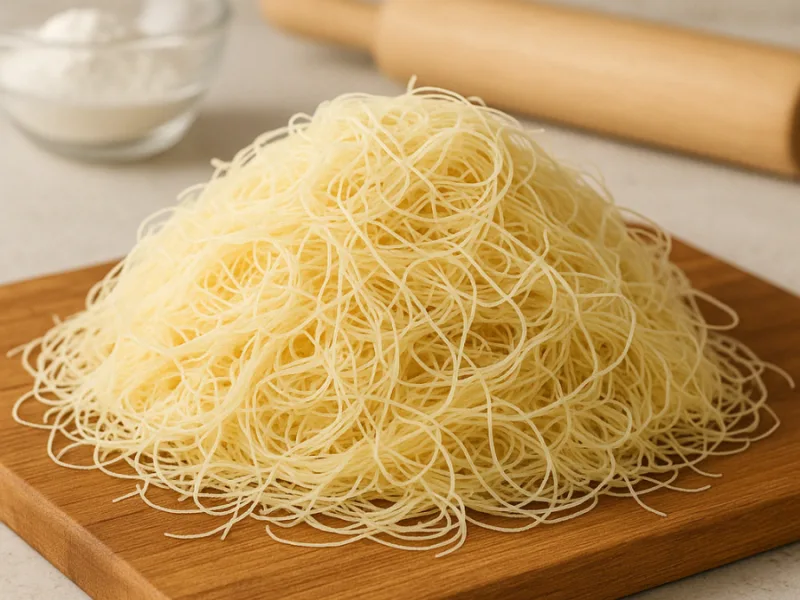
Base recipe: 6 (yields approx. 250 g of fresh kadayif noodles)
Your kitchen companion
Ingredients
Check off ingredients as you prepare them.
Follow the steps at your own pace.
Method
1. Prepare the batter: In a mixing bowl, combine the flour, cornstarch, and salt. Gradually add the water while whisking continuously to avoid lumps. The batter should be thin and smooth, with a consistency similar to crepe batter. Let the mixture rest for 10 minutes to eliminate air bubbles.
2. Set up your cooking surface: Preheat a wide, non-stick pan or a large griddle to medium-low heat. Lightly grease the surface using a paper towel dipped in neutral oil. For authentic results, use a squeeze bottle or a piping bag with a very small nozzle to drizzle the batter.
3. Cook the noodles: Gently squeeze or drizzle the batter in thin, continuous threads onto the heated surface in a circular motion. The batter will cook instantly. Allow it to dry for 10–15 seconds without browning. Carefully lift the cooked kadayif with a spatula and transfer it to a clean towel or wire rack to cool.
4. Repeat and stack: Repeat until all the batter is used. Let the strands cool completely. Do not stack them until they’re cooled to avoid steaming. Once cool, you can gently bundle or layer them for use in desserts.
5. Storage: Use immediately or store the dried noodles in an airtight container at room temperature for up to 1 week, or freeze them for longer shelf life (up to 3 months).
Extra technique, safety notes and details when you want to go deeper.
More tips & details
Traditional Turkish Kadayif Dough for Perfect Homemade Desserts
The delicate craft behind kadayif noodle making
There is something truly magical about handmade kadayif noodles, a staple in traditional Turkish and Middle Eastern pastry making. These ultra-fine, golden strands of dough are the foundation of countless beloved desserts, from the syrup-soaked künefe to the crunchy, nut-filled kadayif rolls. While many rely on store-bought versions, making kadayif from scratch opens the door to a richer, more authentic flavor and a satisfying culinary experience that transforms the ordinary into the extraordinary.
Unlike pasta or phyllo, kadayif dough is created through a unique cooking technique: the batter is gently streamed onto a hot griddle or special pan in thin lines, cooking instantly into delicate threads. This process yields noodles that are incredibly light, slightly chewy when baked, and crisp when fried or roasted. The aroma that fills your kitchen during preparation instantly evokes memories of traditional Turkish bakeries and festive family gatherings.
Why make kadayif noodles at home?
The growing interest in homemade Middle Eastern desserts has inspired many passionate home bakers and professional chefs alike to explore the art of crafting kadayif at home. With just a few simple ingredients—flour, water, and a pinch of salt—you can create a dough that serves as a versatile base for both sweet and savory dishes. When you make it yourself, you control the texture, thickness, and freshness, which can make a tremendous difference in the final dish.
Homemade kadayif is also free from preservatives and additives commonly found in packaged versions. The clean flavor and crisp texture it brings to desserts like knafeh, şöbiyet, or Greek kataifi rolls is unmatched. The process, while slightly meticulous, is incredibly rewarding and surprisingly therapeutic. It’s a beautiful way to reconnect with the culinary traditions of the Eastern Mediterranean, where every noodle is a testament to patience and care.
The roots and cultural richness of kadayif
Kadayif’s history stretches back centuries, with its origins traced to Ottoman culinary culture, where elaborate desserts held a prestigious place in royal kitchens. Over time, kadayif became a staple in households across Turkey, Lebanon, Greece, and the broader Levant region. Each country has put its own spin on how kadayif is used, whether paired with clotted cream (kaymak), stuffed with pistachios or walnuts, or drenched in rose-scented syrup.
The name "kadayif" itself comes from the Arabic word “qadaif,” which refers to a specific kind of thin pastry or batter. Though it shares characteristics with phyllo pastry, kadayif is cooked in strands rather than sheets, offering a crispier and more delicate texture. This makes it ideal for desserts that require a contrast between crunchy and soft layers.
Elevating classic desserts with homemade dough
The difference between store-bought and homemade kadayif is striking. When prepared by hand, the strands are fresher, softer, and more pliable, making them easier to work with in recipes that demand rolling, layering, or shaping. Once baked or fried, they deliver a golden crunch that elevates traditional desserts to restaurant-quality masterpieces.
This homemade kadayif noodle recipe is ideal for culinary enthusiasts looking to recreate authentic Turkish sweets or experiment with their own fusion desserts. Whether you’re preparing a rich, syrupy tray of künefe with cheese, elegant nut-filled nests, or even using the dough creatively in savory applications, starting with handmade noodles gives your creation a unique, unforgettable edge.
Discover the joy of mastering traditional techniques
Crafting kadayif at home is more than just a cooking project—it’s a culinary ritual that invites you to slow down and embrace a heritage passed down through generations. Each swirl of dough, each golden thread, reflects a timeless technique that has been cherished across cultures. Whether you're a professional chef or a passionate home cook, learning how to make kadayif noodles from scratch brings you one step closer to mastering the fine art of Middle Eastern pastry making.
Stay tuned for the full step-by-step recipe that will guide you through the process of creating homemade kadayif dough—from preparing the batter to cooking the noodles perfectly and storing them for your next dessert adventure.
Enhancing Your Kadayif Dough: Tips, Tricks, and Creative Adjustments
Exploring variations to elevate homemade kadayif noodles
Homemade kadayif noodles already deliver exceptional texture and flavor when made traditionally, but subtle changes in ingredients and technique can take this recipe even further. Whether you’re looking for a crisper bite, a softer, more flexible strand, or even a healthier version, experimenting with thoughtful adjustments can yield impressive results. This section explores how to improve traditional kadayif dough using modern knowledge and ingredients while maintaining its authentic character.
The influence of flour types on texture
The classic recipe uses plain white flour, which offers a neutral flavor and pliable consistency. However, changing the flour type can significantly affect the result:
- High-protein flour (bread flour) creates noodles with more chewiness and elasticity, making them ideal for desserts requiring structure like künefe.
- Low-gluten or cake flour results in a more delicate strand, suitable for lighter, crispier preparations.
- Mixing a small percentage (10–15%) of whole wheat flour with white flour adds a nutty undertone and increases fiber, though it slightly darkens the noodle color.
- For a gluten-free version, a blend of rice flour, potato starch, and tapioca starch can replicate the thin, dry texture—though mastering the ratio is essential to prevent brittleness.
Always sift the flour to ensure a smooth, lump-free batter, especially when using heavier or alternative flours.
Adding richness and flexibility with optional ingredients
A simple batter of flour and water works well, but enhancing the dough with subtle enrichments can refine the flavor and performance:
- Adding a few tablespoons of yogurt or milk to the batter gives it a richer taste and a slightly softer bite, perfect for baked or syrup-soaked desserts.
- A splash of olive oil or melted butter (5–10 ml) introduces a hint of fat that improves browning and flavor depth, especially if the kadayif will be toasted.
- A pinch of sugar or honey (1–2 g) helps the noodles brown more evenly and adds a mild sweetness that complements dessert fillings.
These enhancements should be used sparingly to preserve the fluidity of the batter.
Achieving perfect consistency and even cooking
The most important aspect of this recipe is the batter’s consistency. A batter that is too thick results in uneven, clumpy strands, while a batter that is too thin spreads uncontrollably.
The ideal texture is smooth and pourable, similar to pancake batter but slightly thinner. Letting the batter rest for 10–15 minutes helps eliminate air bubbles, ensuring consistent flow when applied to the pan. If the batter feels too thick after resting, add 1–2 tablespoons of water and whisk again.
When cooking the noodles, maintaining an even, low heat is essential. High heat leads to overcooked or browned strands, which can taste bitter and become too brittle for rolling or shaping.
Common mistakes and how to avoid them
Several common errors can compromise the quality of kadayif noodles. Here’s what to watch out for:
- Skipping the batter rest time: This can lead to uneven texture and bubbles in the strands.
- Pouring batter too quickly or unevenly: This results in overlapping or inconsistent noodle thickness. Always maintain steady, controlled movements.
- Using too much oil on the pan: This prevents the strands from setting properly and may cause unwanted browning.
- Stacking noodles before they cool: This creates steam and softens the strands, making them stick together.
Always let the strands cool completely before stacking or using, and avoid pressing them down to retain their airy texture.
Health-conscious ingredient swaps
For those seeking lighter or more nutritious alternatives, there are several ways to adjust the base recipe:
- Replace white flour with spelt flour for a slightly nutty flavor and improved digestibility.
- Incorporate chickpea flour for added protein and a subtle earthy aroma, especially in savory applications.
- Use unsweetened plant-based milk like almond or oat instead of water to introduce vitamins and minerals while keeping the batter vegan.
- Adding flaxseed meal (1 tsp) improves the nutritional profile and enhances texture when combined with alternative flours.
These swaps allow for more personalized results while maintaining the core structure of the dough.
Why handmade always surpasses store-bought
Though packaged kadayif is readily available, homemade noodles provide unmatched freshness and versatility. Store-bought versions are often dry, overly brittle, and may contain preservatives or artificial stabilizers. In contrast, freshly made noodles are:
- More flexible, making them easier to shape into rolls, nests, or layered desserts.
- More flavorful, especially when cooked in butter or syrup.
- Customizable, allowing you to fine-tune taste, texture, and health content.
Homemade kadayif also absorbs syrup more evenly, giving desserts a balanced sweetness without becoming soggy.
Creative ideas for flavor infusion
To push the boundaries of traditional kadayif dough, consider subtle flavor infusions in the batter:
- Rosewater or orange blossom water (a few drops) adds a floral note, perfect for Middle Eastern-style desserts.
- A touch of ground cardamom or cinnamon (optional for specific desserts) offers warmth and complexity.
- Use infused oils, like pistachio or almond oil, for delicate nutty undertones.
These variations work best in small amounts, ensuring the primary flavor of the dough remains balanced and versatile.
Storage tips and long-term use
Once made, homemade kadayif noodles can be dried thoroughly and stored in an airtight container in a cool, dry place. For longer storage:
- Freeze in portions: layer cooled noodles between sheets of parchment paper, then place in freezer bags. They’ll keep for up to 3 months.
- To use frozen noodles, thaw at room temperature without opening the bag to avoid condensation.
- If storing fresh (not dried), keep refrigerated in a sealed container and use within 3 days.
Proper storage maintains the noodles’ integrity and flavor, making it easy to enjoy authentic desserts any time.
By understanding these refinements and creative techniques, anyone can master the art of kadayif noodle making and enjoy consistent, high-quality results that elevate both classic and modern dessert creations.
Recivelle · /recipe/homemade-kadayif-noodles-recipe