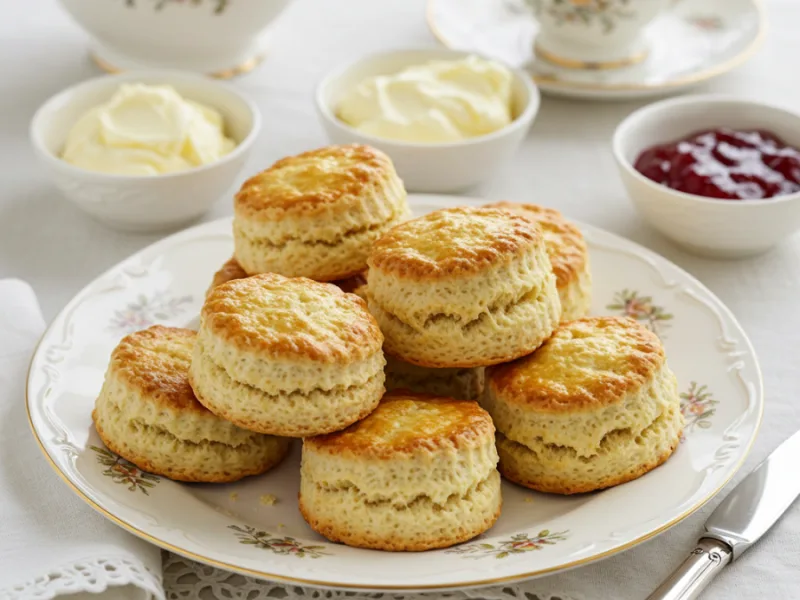
Base recipe: 8 scones
Your kitchen companion
Ingredients
Check off ingredients as you prepare them.
Follow the steps at your own pace.
Method
Prepare the oven and baking tray: Preheat the oven to 200°C (400°F). Line a baking tray with parchment paper.
Mix the dry ingredients: In a large bowl, combine self-raising flour, salt, and sugar. Add the cold butter and rub it into the flour mixture using your fingertips until it resembles fine breadcrumbs.
Incorporate the liquid: Gradually pour in the milk, mixing gently with a spoon or knife until a dough starts to form. If making fruit scones, add the dried fruit at this stage.
Shape the dough: Lightly flour a surface and gently knead the dough just a few times until smooth. Avoid overworking to keep the scones light and fluffy.
Cut out the scones: Roll out the dough to about 2 cm (¾ inch) thick. Use a 5 cm (2-inch) round cutter to cut out scones, pressing straight down without twisting.
Glaze and bake: Place the scones on the prepared tray, brush the tops with beaten egg, and bake for 12–15 minutes until golden brown.
Cool and serve: Transfer to a wire rack to cool slightly before serving with clotted cream and jam.
Extra technique, safety notes and details when you want to go deeper.
More tips & details
The Perfectly Fluffy British Scones for Any Occasion
A Timeless Classic with a Buttery, Tender Crumb
Few baked goods capture the essence of British tradition quite like a freshly baked scone. Whether served with clotted cream and jam for an indulgent afternoon tea or enjoyed warm with butter for a comforting treat, these delicate, flaky pastries have stood the test of time. Their signature golden crust and soft, pillowy interior make them a favorite for both casual and elegant occasions.
Homemade British scones are a true delight—miles apart from their store-bought counterparts, which often lack the light, airy texture that makes them so irresistible. The key to achieving that perfect rise lies in the balance of ingredients, gentle handling of the dough, and just the right amount of baking time.
Unlike the dense, sweet scones often found in American bakeries, traditional British scones are lighter, less sweet, and designed to be paired with butter, preserves, or cream. Their beauty lies in their simplicity, making them the ideal base for an array of toppings.
The Secret to a Perfect Rise
Achieving the perfect rise and texture in a scone requires attention to detail. The combination of self-raising flour, cold butter, and a gentle touch ensures that the dough remains tender and flaky. Cold ingredients are essential—the butter should be rubbed into the flour just enough to create a breadcrumb-like texture, which results in that desirable, soft crumb.
Another crucial element is the mixing process. Overworking the dough can lead to dense, heavy scones, while under-mixing may prevent them from holding their shape. The key is to mix until just combined, then pat the dough out gently before cutting. A clean, sharp-edged cutter ensures a well-defined shape, while a hot oven helps create that signature golden crust.
A Staple of Afternoon Tea
Scones are an integral part of the British tea experience, often served as part of a cream tea—a ritual that dates back centuries. Accompanied by a steaming pot of tea, clotted cream, and fruit preserves, this elegant yet simple treat has long been a symbol of warmth and hospitality.
The tradition of afternoon tea is believed to have originated in the 19th century, when Anna, the Duchess of Bedford, introduced it as a way to satisfy hunger between lunch and dinner. Since then, the ritual has evolved into a cherished custom, with scones taking center stage on the tea table.
While there are many variations, the classic British scone remains a favorite due to its light texture, buttery flavor, and versatility. Whether enjoyed fresh out of the oven or slightly toasted the next day, each bite delivers a perfect balance of crispness and softness.
Variations and Flavors to Try
Although the traditional British scone is simple in its ingredients, there are countless ways to customize the recipe to suit different preferences. From fruit-studded variations to savory twists, these adaptable treats can be made in numerous ways:
- Classic plain scones – The traditional choice, ideal for pairing with rich toppings.
- Fruit scones – Dotted with raisins, currants, or sultanas, these are a slightly sweeter variation.
- Cheese scones – A savory alternative, featuring sharp cheddar cheese for a rich, tangy bite.
- Lemon zest and poppy seed scones – A refreshing, fragrant twist for citrus lovers.
- Chocolate chip scones – A modern favorite with bursts of melted chocolate.
Each of these variations can be made using the same basic technique, with minor adjustments to ingredients. The key remains a light hand when mixing and shaping the dough to ensure a soft, airy texture.
Serving and Storing Scones
The beauty of homemade scones lies in their freshness. While they are best enjoyed warm on the day of baking, they can also be stored for later. To maintain their texture and flavor:
- Keep them in an airtight container at room temperature for up to two days.
- Reheat in the oven at a low temperature to restore their warmth and slight crispness.
- Freeze unbaked scones for a quick, fresh batch anytime—just bake them straight from the freezer, adding a couple of extra minutes to the baking time.
If planning a traditional afternoon tea or simply indulging in a homemade treat, these British scones will always be a winning choice. Their delicate, buttery texture and lightly sweet flavor make them the ultimate comfort food—perfect with a dollop of clotted cream and jam or enjoyed simply with a warm cup of tea.
Elevating the Classic British Scones to Perfection
The Impact of Ingredient Choices on Texture and Flavor
One of the easiest ways to enhance the texture and taste of traditional British scones is by carefully selecting and adjusting the ingredients. While the classic recipe is simple, small modifications can result in a richer, more flavorful, and even healthier version of this timeless treat.
- Using different types of flour – Traditional self-raising flour provides a light texture, but substituting a portion with cake flour can create a softer crumb. For a nuttier taste and added fiber, incorporating whole wheat flour (up to 30%) can make the scones more wholesome while maintaining a tender texture.
- Butter alternatives for a richer taste – The classic recipe calls for unsalted butter, which provides a delicate buttery flavor. For a deeper, slightly caramelized taste, browned butter (beurre noisette) can be used instead. Alternatively, using cream cheese instead of some butter enhances the richness and moisture.
- Enhancing sweetness without overpowering – Granulated sugar is standard, but replacing part of it with light brown sugar adds a hint of molasses, creating a subtle depth of flavor. For a more refined sweetness, honey or maple syrup can be used, though liquid sweeteners should be balanced with slightly less milk to maintain the right consistency.
- Milk variations for creamier scones – Using buttermilk instead of whole milk adds a slight tanginess, resulting in a more tender and flavorful scone. Other alternatives, such as heavy cream, make the texture more decadent and rich, while plant-based milks like almond or oat milk work well for dairy-free adaptations.
Common Mistakes That Can Ruin Scones
Despite being a seemingly simple bake, many things can go wrong when making homemade scones. Avoiding these common mistakes will ensure a perfect rise, texture, and flavor every time.
- Overmixing the dough – Overworking leads to dense, tough scones. The key is to mix until just combined, keeping the dough slightly shaggy.
- Using warm butter – The butter should be cold to create a flaky texture. If it melts too soon, the dough becomes heavy and loses its airy structure. Chilling the dough briefly before cutting can help maintain the right temperature.
- Incorrect thickness – Rolling the dough too thin results in flat, dry scones. A thickness of 2 cm (¾ inch) is ideal for a tall, fluffy scone.
- Twisting the cutter – Pressing down firmly with a sharp-edged cutter ensures even rising. Twisting the cutter can seal the edges, preventing an even expansion in the oven.
- Baking at the wrong temperature – Too low, and the scones won’t rise properly. Too high, and the outside browns too quickly while the inside remains underbaked. 200°C (400°F) is the ideal temperature for a golden crust with a soft center.
Healthier Alternatives Without Compromising Taste
For those looking to make scones healthier, there are several ingredient swaps that maintain flavor and texture while reducing fat, sugar, or refined carbs.
- Reducing sugar – The natural sweetness of dried fruits like raisins, dates, or figs allows for less added sugar while keeping the scones flavorful.
- Replacing butter with Greek yogurt – This substitution lowers fat content while adding a slight tang and extra protein, making the scones more balanced.
- Using whole grain flour – A mix of whole wheat and white flour enhances fiber content without making the scones too dense. Adding ground almonds improves the texture and provides healthy fats.
- Egg substitutes for a vegan option – Instead of egg wash, brushing the tops with oat milk or a mix of maple syrup and plant-based milk achieves a golden finish.
Flavor Variations to Elevate the Classic Recipe
While plain scones are perfect for pairing with clotted cream and jam, adding flavorful twists can make them even more enjoyable.
- Zesty and aromatic scones – Adding lemon zest, orange zest, or vanilla extract gives a refreshing lift to the flavor. A hint of lavender or cardamom brings a unique, fragrant touch.
- Chocolate-infused variations – Mixing in dark chocolate chips, white chocolate chunks, or cocoa powder transforms scones into a more indulgent treat.
- Nutty and spiced versions – Finely chopped hazelnuts, pecans, or almonds add a crunchy contrast, while a sprinkle of cinnamon or nutmeg provides warmth.
- Savory alternatives – Cheese scones with aged cheddar, gruyère, or Parmesan create a delicious balance of richness and saltiness. Adding chopped chives, garlic powder, or sun-dried tomatoes enhances their umami depth.
Why Homemade Scones Are Better Than Store-Bought
There’s a noticeable difference between homemade British scones and those found in supermarkets or bakeries. Making them from scratch ensures a fresher, superior texture and taste.
- Better quality ingredients – Store-bought scones often contain preservatives, artificial flavorings, and excess sugar, whereas homemade versions allow full control over ingredient quality.
- Customizable to personal preference – Whether adjusting sweetness, richness, or texture, homemade scones can be tailored to suit individual tastes and dietary needs.
- No compromise on freshness – Freshly baked scones have a crisp exterior and tender interior, while pre-packaged versions tend to be dry or dense due to extended shelf life.
- More affordable – Making scones at home is cost-effective, allowing for high-quality results without the premium price tag of artisanal bakeries.
Mastering the Art of Baking Perfect Scones
To achieve bakery-quality scones, it’s crucial to understand how each step influences the final result. By choosing the right ingredients, handling the dough gently, and baking at the proper temperature, anyone can create fluffy, golden scones that rival those served at a traditional afternoon tea.
With endless possibilities for flavors and variations, homemade scones remain a versatile and satisfying bake that can be tailored to suit any occasion—whether it’s a simple breakfast, an elegant tea-time treat, or a decadent dessert.
Recivelle · /recipe/homemade-british-scones-recipe