Base recipe: 1
Your kitchen companion
Ingredients
Check off ingredients as you prepare them.
Follow the steps at your own pace.
Method
Prepare the Base
Rinse the quinoa thoroughly under cold water to remove any bitterness.
Combine 50 g (¼ cup) of quinoa with 100 ml (½ cup) of water in a small saucepan. Bring to a boil, reduce heat, and simmer for 15 minutes until the water is absorbed. Let it cool slightly.
Cook the Protein
Season the chicken breast with salt and pepper.
Heat 5 ml (1 tsp) olive oil in a skillet and cook the chicken for 5–7 minutes on each side until fully cooked. Let it rest for a few minutes, then slice into thin strips.
Roast the Sweet Potato
Preheat the oven to 200 °C (400 °F).
Toss 50 g (1.8 oz) of sweet potato cubes with 5 ml (1 tsp) olive oil, salt, and chili flakes. Spread them on a baking sheet and roast for 20 minutes, flipping halfway through.
Prepare the Vegetables
Wash and chop the spinach, cucumber, and red bell pepper into bite-sized pieces.
Assemble the Bowl
Place the quinoa or rice as the base in a bowl.
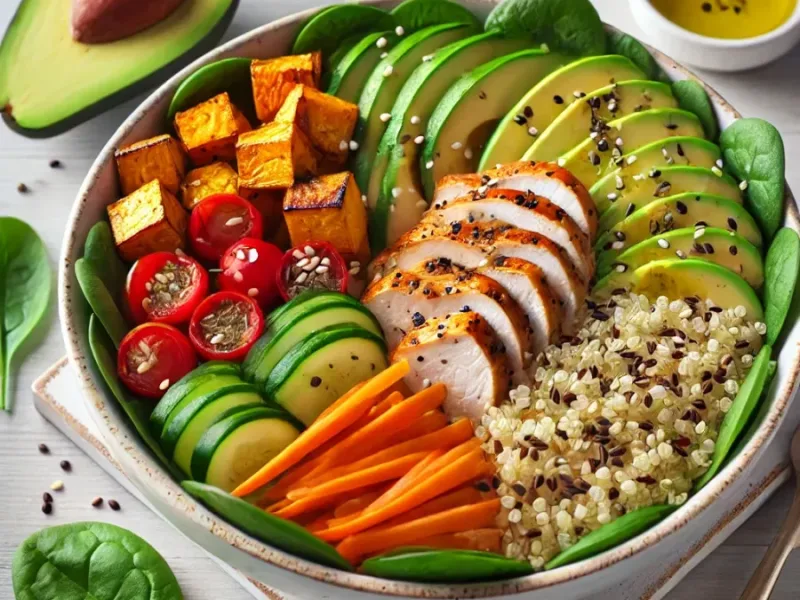
Arrange the spinach, roasted sweet potato, cucumber, red bell pepper, avocado slices, and chicken on top.
Drizzle with olive oil and lemon juice.
Sprinkle sesame seeds as a finishing touch.
Serve and Enjoy
Serve immediately to enjoy the freshness and vibrant flavors.
Extra technique, safety notes and details when you want to go deeper.
More tips & details
If you’re looking for a meal that’s both nutritious and delicious, healthy fat loss bowls are the perfect solution. These bowls combine protein-packed ingredients, nutrient-dense vegetables, and healthy fats, creating a balanced meal designed to fuel your body while supporting your weight loss goals. Whether you’re preparing lunch, dinner, or a post-workout meal, these bowls are easy to customize and full of flavor.
What Makes Fat Loss Bowls So Effective?
Protein for Sustained Energy and Muscle Support
The foundation of a great fat loss bowl is lean protein, such as grilled chicken, tofu, or chickpeas. Protein not only supports muscle recovery but also requires more energy to digest, making it a key ingredient in any fat loss-friendly meal.
Low-Calorie Yet Filling Ingredients
By incorporating low-calorie, high-volume foods like leafy greens, cucumbers, and bell peppers, these bowls keep you feeling full and satisfied without excessive calories. Additionally, healthy fats from avocado or olive oil provide long-lasting satiety while improving nutrient absorption.
Thermogenic Ingredients
Spices like chili, ginger, and lemon juice are natural metabolism boosters. They add a burst of flavor while subtly increasing your calorie burn, making your meal both enjoyable and effective.
Benefits of Including Fat Loss Bowls in Your Diet
- Boosts Metabolism: Protein and thermogenic spices encourage calorie burning, even during digestion.
- Provides Balanced Nutrition: These bowls combine essential macronutrients—proteins, carbs, and fats—with fiber-rich vegetables to keep you energized throughout the day.
- Helps Manage Weight: By being low in calories yet nutrient-dense, these meals help you maintain a caloric deficit without feeling deprived.
- Customizable for Every Diet: Easily adapt these bowls to suit your dietary preferences, whether vegan, gluten-free, or low-carb.
A Feast for the Eyes and the Palate
Fat loss bowls are as visually appealing as they are tasty. Imagine a vibrant mix of bright green spinach, golden roasted sweet potatoes, red bell pepper slices, and creamy avocado. The dish is finished with a sprinkle of sesame seeds and a drizzle of lemon juice for a fresh and zesty touch. This thoughtful presentation transforms a simple meal into a delightful experience.
How These Bowls Aid Fat Loss
High-Quality Proteins
Proteins like grilled chicken or plant-based options like tofu and lentils help build lean muscle and increase the thermic effect of food, meaning your body burns more calories during digestion.
Healthy Fats and Fiber
Ingredients such as avocado and seeds provide essential fats that promote satiety, while fiber from vegetables supports digestion and regulates appetite.
Natural Fat-Burning Boosters
Key ingredients include:
- Chili: Contains capsaicin, which stimulates thermogenesis.
- Ginger: Enhances digestion and slightly raises body temperature.
- Lemon Juice: Aids in detoxification and improves fat metabolism.
Customizing Your Fat Loss Bowl
Change the Base
Swap quinoa for cauliflower rice for a low-carb option or use farro or barley for a heartier meal.
Experiment with Proteins
Replace chicken with tempeh, chickpeas, or eggs to create variety or cater to dietary restrictions.
Incorporate Seasonal Vegetables
- Spring: Asparagus, radishes, and snap peas.
- Summer: Cherry tomatoes, zucchini, and fresh basil.
- Autumn: Roasted squash, carrots, and kale.
- Winter: Brussels sprouts, fennel, and pomegranate seeds.
A Simple, Delicious, and Healthy Choice
Integrating healthy fat loss bowls into your diet is an effortless way to maintain a nutritious eating plan while enjoying diverse flavors and textures. These meals are easy to prepare, endlessly customizable, and filled with ingredients that nourish your body and support your health goals.
Try these bowls today and discover how delicious healthy eating can be!
How to Customize Healthy Fat Loss Bowls: Tips for Flavor and Nutrition
Healthy fat loss bowls are not only a versatile and delicious meal option but also a canvas for culinary creativity. By adjusting the ingredients, you can tweak the flavor profile, nutritional value, and texture to meet your preferences and dietary needs. Here are some detailed insights on how to modify and enhance this recipe for the best results.
Adjusting the Protein Source
Plant-Based Alternatives
If you prefer to avoid meat, there are plenty of plant-based protein options:
- Tofu or tempeh: Rich in protein, these alternatives work well when marinated in soy sauce, ginger, and garlic. They can be grilled, baked, or stir-fried for added texture and flavor.
- Chickpeas or lentils: Chickpeas roasted with paprika and cumin offer a crunchy element, while lentils bring a soft and earthy flavor to the bowl.
Effect on flavor: Plant-based proteins are milder than meat, so using robust marinades or spices can enhance their taste and ensure a flavorful dish.
Changing the Base
Alternatives to Quinoa or Brown Rice
For variety or to meet specific dietary goals, try swapping out the base:
- Barley or farro: These grains provide a chewy texture and a nutty flavor, adding heartiness to the dish.
- Cauliflower rice: A low-carb option that’s light and neutral, allowing other ingredients to take center stage.
Effect on texture and taste: Traditional grains create a more filling meal, while cauliflower rice keeps the bowl lighter and fresher.
Incorporating Seasonal Vegetables
Adding Freshness and Nutrients
Seasonal vegetables bring both flavor diversity and nutritional value to the bowl:
- Spring: Add snap peas, asparagus, and radishes for a crisp and sweet touch.
- Summer: Incorporate cherry tomatoes, zucchini, and fresh basil for a Mediterranean feel.
- Autumn: Use roasted butternut squash, carrots, and kale for warm, earthy notes.
- Winter: Try Brussels sprouts, fennel, or pomegranate seeds for a refreshing mix of sweetness and tang.
Effect on flavor: Seasonal produce ensures peak freshness and flavor, enhancing the overall quality of the dish.
Enhancing with Healthy Fats
Additional Sources of Healthy Fats
Incorporating more healthy fats not only enriches the dish but also improves satiety and nutrient absorption:
- Nuts and seeds: Toasted almonds, sunflower seeds, or pumpkin seeds add crunch and a hint of smokiness.
- Tahini or nut butter: A tablespoon of tahini or almond butter introduces creaminess and depth of flavor.
- Avocado cream: Blend avocado with lemon juice and a pinch of salt to create a smooth, rich topping.
Effect on nutrition: Healthy fats provide essential fatty acids and support the absorption of vitamins A, D, E, and K.
Experimenting with Dressings
Dressing Options for Variety
- Yogurt-based dressings: A mix of Greek yogurt, lemon juice, and dill offers a tangy, creamy addition.
- Asian-inspired dressings: A blend of soy sauce, sesame oil, and rice vinegar delivers umami and balance.
- Spicy dressings: Harissa, sriracha, or chili-infused oil can provide heat and bold flavor.
Effect on flavor: Changing the dressing can dramatically shift the taste profile of the bowl, making it adaptable to different moods or occasions.
Modifications for Special Diets
Gluten-Free Options
- Replace soy sauce with tamari to ensure the dish remains gluten-free.
- Use certified gluten-free grains like quinoa or rice.
Vegan Adaptations
- Swap chicken for tofu, tempeh, or chickpeas.
- Avoid yogurt-based dressings, opting for olive oil or tahini instead.
Effect on accessibility: These adaptations make the recipe suitable for a broader audience without sacrificing taste or quality.
Playing with Texture and Presentation
Adding Crunch and Visual Appeal
- Use roasted chickpeas, kale chips, or toasted seeds to add texture contrast.
- Incorporate colorful vegetables like shredded carrots, purple cabbage, or bright green herbs for a visually stunning bowl.
Effect on the dining experience: A well-presented dish with varied textures enhances both the aesthetic appeal and the eating experience.
Recivelle · /recipe/healthy-fat-loss-bowls-protein-packed-and-low-calorie-meal-ideas