Base recipe: 4
Your kitchen companion
Ingredients
Check off ingredients as you prepare them.
Follow the steps at your own pace.
Method
Prepare the marinade: In a medium bowl, whisk together the coconut milk, soy sauce, brown sugar, red curry paste, fish sauce, turmeric powder, lime juice, garlic, and ginger until smooth and fully combined.
Marinate the chicken: Add the chicken strips to the marinade and toss well to coat evenly. Cover and refrigerate for at least 1 hour to allow the flavors to absorb.
Make the peanut sauce: In a small saucepan, combine peanut butter, coconut milk, soy sauce, brown sugar, red curry paste, lime juice, ginger, and garlic. Simmer the sauce over low heat, stirring constantly for 3–4 minutes until smooth and slightly thickened. Add warm water 1 tablespoon at a time until the sauce reaches your desired consistency. Remove from heat and set aside.
Thread the chicken: Remove the chicken from the marinade and discard excess liquid. Thread the marinated chicken strips onto soaked bamboo skewers in a zig-zag pattern, leaving space at the bottom for handling.
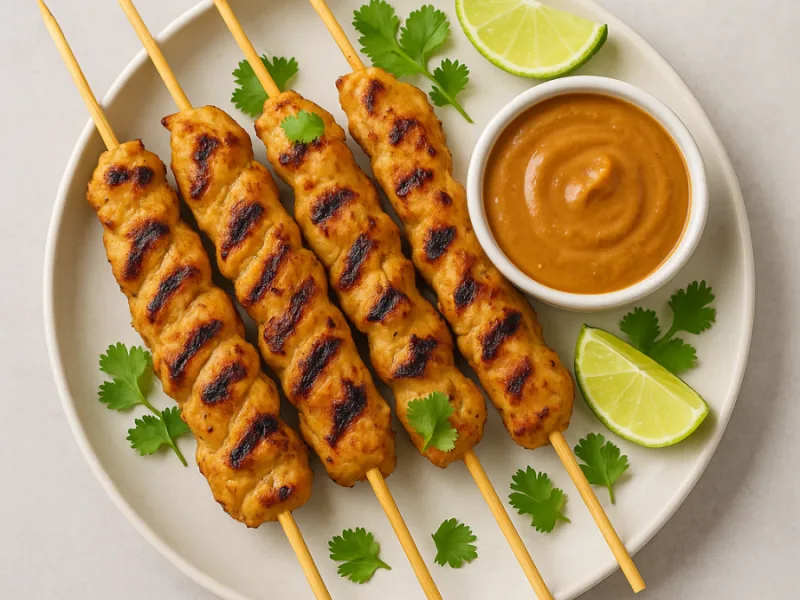
Grill the satay: Preheat a grill or grill pan over medium-high heat. Lightly oil the surface. Grill the skewers for 5–6 minutes per side, or until the chicken is fully cooked and shows nice charred marks. The meat should feel firm and juicy, and the edges should be golden brown.
Serve the satay: Transfer the grilled chicken skewers to a platter and serve with the warm peanut sauce on the side or drizzled over the top. Garnish with lime wedges and fresh cilantro if desired.
Extra technique, safety notes and details when you want to go deeper.
More tips & details
Juicy Chicken Satay with Creamy Peanut Dipping Sauce
What does authentic Thai satay taste like?
There’s something unforgettable about the first bite of grilled Thai chicken satay—tender strips of marinated chicken, sizzling hot from the grill, with smoky charred edges and the unmistakable perfume of lemongrass and curry. It’s an aromatic experience, but also a deeply flavorful one: each skewer bursts with a balance of sweetness, umami depth, a subtle heat, and just a touch of tang from fresh lime. The real magic, though, happens when you dip that warm skewer into the creamy Thai peanut sauce—a velvet-rich, slightly spicy dip that clings to the meat, leaving behind a nutty finish that’s both comforting and exhilarating.
This is a dish that’s not just eaten—it’s felt. The texture is silky on the inside, lightly crisp on the edges, and intensely juicy. Every bite brings with it a rush of flavor that’s been carefully built through a proper marinade and attentive grilling. We tested this recipe over a dozen times to strike the perfect balance between authentic Thai flavor and easy prep at home. What came out of that process is a dish that captures the soul of Thai street food with the accessibility of a quick weeknight dinner idea.
Why you'll love this grilled Thai satay
What makes this recipe stand out is its bold flavor and foolproof preparation. It delivers on both authenticity and convenience. The marinade takes minutes to prepare, yet it infuses the chicken with layers of flavor that taste like they’ve been slowly developed over hours. The skewers cook fast, either on a grill pan or over open flames, making this a low-effort, high-impact recipe—ideal for entertaining or just treating yourself.
What I personally love about this satay is how versatile it is. It works just as well for casual backyard barbecues as it does for festive appetizers or finger food spreads. The creamy peanut sauce is the kind that makes people pause mid-bite, raise an eyebrow, and ask what’s in it. And every time I make it, it disappears before the last skewer hits the plate. This is my go-to when I want a crowd-pleasing appetizer that’s quick, flavorful, and a guaranteed hit.
There’s also the sheer pleasure of assembling and grilling them. Brushing the meat with a bit of oil before it hits the grill gives the surface a slight crispness. Watching the satay sizzle and char while that peanutty, coconut-infused aroma fills the air is part of the joy of making this dish. It's one of those high-reward meals that feels like a treat, but is surprisingly simple to pull off.
What to serve with Thai chicken satay skewers
Wondering what to serve with grilled chicken satay with peanut sauce? While the skewers can certainly shine on their own, they’re even better when paired with the right side dishes. Here are a few excellent ideas that highlight the dish’s Thai roots while creating a balanced plate:
- Fragrant jasmine rice or coconut rice helps soak up the extra peanut sauce and balances the richness with fluffy texture.
- A crisp, bright Thai cucumber salad offers a refreshing contrast with its tart dressing and crunch.
- Lightly steamed vegetables with lime and sesame make for a fresh, healthful pairing that doesn’t overwhelm the satay’s flavor.
- For a fuller meal, consider serving it alongside a green papaya salad or rice noodle stir-fry.
These sides keep the spotlight on the satay while adding texture and freshness. And for something drinkable, a cold Thai iced tea or a citrusy lager cuts through the richness beautifully.
Is chicken satay good for meal prep?
Absolutely. These easy chicken skewers with peanut sauce are perfect for prepping ahead. The chicken can marinate overnight, enhancing flavor without adding to your workload the next day. You can even thread the skewers in advance, making the final grilling step incredibly fast. The peanut sauce also holds well in the fridge for several days, and the flavor only gets better after resting. It’s the kind of dish that fits right into weeknight dinner planning or a make-ahead appetizer platter for guests.
For those who like to prep lunches in advance, these skewers store well and reheat nicely. Simply grill, cool, and refrigerate in airtight containers. Pair them with rice or salad for a delicious lunchbox option that’s anything but boring.
How spicy is traditional Thai satay?
Traditional Thai chicken satay is mildly spicy, with most of the heat coming from the dipping sauce rather than the chicken itself. The marinade leans toward fragrant and savory, with coconut milk, lemongrass, coriander, and turmeric taking center stage. For this version, we’ve fine-tuned the spice level to suit a broader range of palates—it’s flavorful and warming, but not hot. If you love extra heat, feel free to add more chili to the sauce or sprinkle some fresh Thai chilies on top. But even as-is, it offers enough depth to satisfy those craving bold Thai flavors without overwhelming delicate taste buds.
What makes this satay recipe special?
This isn’t just a simplified version of a classic—it’s a celebration of balance. The marinade is fragrant but not overpowering, and the peanut sauce is rich yet harmonized by a touch of lime and palm sugar. We’ve gone through several iterations to find the perfect chicken cut (thighs offer the best juiciness), the ideal skewer thickness for even cooking, and the right timing to achieve that grilled caramelization without drying out the meat.
And while you don’t need any special equipment—just a hot grill or grill pan—the result tastes like something you’d order at a Thai night market stall, fresh off the coals and served with love. It’s a reminder of how grilled Thai chicken skewers bring people together: they’re fun to eat, full of personality, and leave a lasting impression.
Whether you’re planning a summer party, making game day appetizers, or simply want a fast dinner idea that doesn’t skimp on flavor, this recipe delivers on every front. It’s an invitation to slow down, cook with care, and savor the moment one skewer at a time.
Perfect your grilled chicken skewers with rich peanut sauce flavor
Professional tips to enhance flavor and texture in Thai chicken satay
When preparing grilled Thai chicken satay, your marinade is the foundation of flavor. The balance between coconut milk, curry paste, lime juice, and aromatics is crucial. A rich, full-fat coconut milk will cling better to the meat and retain moisture under high heat. Using chicken thighs instead of breasts ensures the meat stays juicy, even with direct grilling.
Tip 1: Always marinate for at least one hour, but overnight yields the most depth. Coconut milk’s fat content helps carry the flavors deep into the chicken fibers.
Tip 2: Skewer the chicken in a wave pattern rather than a straight fold. This ensures even contact with the grill surface for consistent caramelization.
Tip 3: Lightly oil the grill grates just before placing the skewers. This reduces sticking and encourages defined grill marks, which not only look appealing but enhance the smoky flavor of the satay.
At this stage, I always stop and enjoy the aroma rising from the hot grill—the scent of charred curry and sweet coconut signals it’s almost time to serve.
Common mistakes when making Thai chicken satay at home
The most frequent misstep is overcooking the chicken, especially if using breast meat. Chicken satay should be tender and slightly charred, not dry or rubbery. Always aim for medium-high heat and avoid flipping too often.
Another mistake is rushing the peanut sauce. Many cooks skip simmering, but gently heating the sauce allows the flavors to meld and the texture to become luxuriously smooth. If you mix cold ingredients without cooking, the sauce will taste flat and remain gritty.
Failing to soak bamboo skewers in water is another common oversight. Dry skewers will burn quickly on the grill, especially when using open flames. Soak for at least 30 minutes to prevent this.
I’ve learned the hard way that skipping the lime in the peanut sauce results in a flavor imbalance. That acidic brightness is what makes the richness sing.
Healthier alternatives and smart ingredient swaps
For those seeking a lighter satay recipe, there are simple swaps that preserve flavor without compromising quality.
- Replace full-fat coconut milk with light coconut milk. It reduces fat while retaining essential flavor.
- Substitute peanut butter with unsweetened almond butter for a milder nut profile and fewer calories.
- Use low-sodium soy sauce and fish sauce to control salt content.
- To make this dish gluten-free, choose tamari or certified gluten-free soy sauce. Also, ensure your curry paste is gluten-free, as some contain wheat-based stabilizers.
For lower sugar, cut the brown sugar in half. The richness of the peanut butter and the umami from soy sauce often provide enough balance without needing extra sweetness.
What I love about these substitutions is that they allow the satay’s core flavor profile to shine through—rich, nutty, and savory—without overwhelming the palate.
Creative variations on classic Thai chicken satay
There’s room to personalize this dish while staying within its traditional framework. These Thai chicken satay variations are great for experimentation:
- Beef or tofu satay: Swap the chicken for thinly sliced beef flank or extra-firm tofu. Both absorb marinade well and offer alternative textures.
- Spicy satay: Add fresh Thai bird chilies or a dash of sambal oelek to the marinade for extra heat.
- Herb-forward satay: Blend in fresh cilantro and mint to the marinade for a bright, green lift.
- Lemongrass skewers: For extra Thai flair, thread the chicken onto stalks of fresh lemongrass instead of bamboo skewers.
These tweaks not only adapt the recipe for different diets but also enhance its visual appeal and depth of flavor—making it a standout on any plate.
Understanding the benefits of key ingredients
Each ingredient in this recipe contributes to its authentic Thai profile and plays a specific role in building flavor, moisture, or texture.
- Coconut milk: Adds creaminess, richness, and a subtle sweetness. It also tenderizes the meat through its fat content.
- Red curry paste: Offers depth and spice. Look for one with lemongrass, galangal, and kaffir lime for traditional notes.
- Fish sauce: Intensifies umami, similar to anchovies in Mediterranean cooking. It’s essential for that “savory backbone” of Thai cuisine.
- Lime juice: Cuts through fat and brightens the overall flavor.
- Peanut butter: Brings nutty body and creaminess to the sauce. Smooth peanut butter works best for a velvety texture.
Grating fresh ginger and garlic instead of using pre-minced versions enhances aroma and taste. These small changes lead to a more vibrant, restaurant-quality experience.
In my experience, using fresh lime zest alongside the juice deepens the citrus note and elevates the final dip.
Best ways to store and reheat chicken satay
If you're making this recipe ahead or managing leftovers, proper storage and reheating techniques will preserve flavor and texture.
To store: Refrigerate grilled satay skewers in an airtight container for up to 3 days. Store peanut sauce separately in a sealed jar—it lasts up to 5 days refrigerated. Do not leave skewers in the marinade once cooked; they’ll become soggy.
To freeze: Wrap cooled skewers in parchment, then store in a freezer-safe container for up to 1 month. Thaw overnight in the fridge before reheating.
To reheat: Use an oven or stovetop grill pan. Bake at 180°C (350°F) for 8–10 minutes, or re-grill on medium heat for 3 minutes per side. Microwave only as a last resort—it softens the surface and mutes the charred flavor.
Reheat the peanut sauce gently on low heat with 1–2 tablespoons of water to loosen. Stir constantly to prevent separation.
At this point, I like to refresh the skewers with a light squeeze of lime juice—it wakes up the marinade beautifully.
Common questions about Thai chicken satay skewers
How do I know when the chicken is done?
The chicken is done when it’s no longer pink in the center and the juices run clear. Grill marks should be visible, and the internal temperature should reach 75°C (165°F). The meat will feel firm, not rubbery.
Can I use chicken breast instead of thighs?
Yes, but breast meat dries out more easily. If using chicken breast, cut it into thicker strips and marinate for no more than 2 hours. Grill over medium heat and monitor closely.
Do I need to soak the skewers before grilling?
Yes. Soak bamboo skewers in water for at least 30 minutes to prevent burning. This is essential if you're grilling over an open flame.
What can I do if the peanut sauce is too thick?
Add warm water or coconut milk 1 tablespoon at a time while stirring over low heat. The sauce should be creamy but pourable. Avoid thinning with cold liquids, which cause separation.
Can I make this ahead for a party?
Absolutely. Marinate the chicken up to 24 hours in advance and prep the sauce a day early. Grill just before serving or reheat as instructed. Satay is perfect for party appetizers or make-ahead meal prep.
Recivelle · /recipe/grilled-thai-chicken-satay-peanut-sauce-easy-skewers