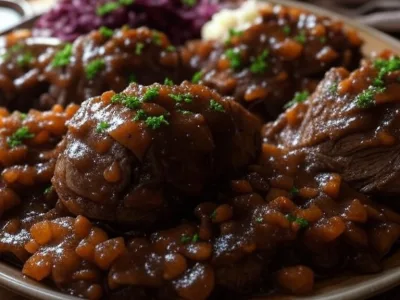
Base recipe: 6
Your kitchen companion
Ingredients
Check off ingredients as you prepare them.
Follow the steps at your own pace.
Method
Prepare the Meat: Pat the beef chuck roast dry with paper towels. Season generously with salt and pepper on all sides.
Sear the Beef: Heat the vegetable oil in a large Dutch oven or heavy-bottomed pot over medium-high heat. Sear the beef on all sides until browned (about 2–3 minutes per side). Remove the beef and set aside.
Cook the Vegetables: In the same pot, add the onions, carrots, and celery. Sauté for 5–7 minutes until softened and slightly caramelized.
Deglaze the Pot: Stir in the tomato paste and cook for 1 minute. Add the red wine and red wine vinegar, scraping the bottom of the pot to release browned bits. Let the liquid simmer for 3–4 minutes.
Add the Beef Stock: Pour in the beef stock and add the bay leaves, cloves, juniper berries, sugar, and any remaining seasoning. Stir well.
Return the Beef: Place the seared beef back into the pot, ensuring it is mostly submerged in the liquid.
Simmer: Cover the pot with a lid and reduce the heat to low. Simmer gently for 2.5 to 3 hours, turning the beef occasionally.
Check for Doneness: The beef is ready when it is fork-tender and easily pulls apart. Remove the beef and cover loosely with foil to rest.
Make the Gravy: Strain the cooking liquid into a separate saucepan, pressing the vegetables to extract as much flavor as possible. Discard the solids. Simmer the liquid over medium heat until slightly thickened (about 10 minutes).
Serve: Slice the beef or shred it into large pieces. Pour the gravy over the beef and garnish with fresh parsley.
Extra technique, safety notes and details when you want to go deeper.
More tips & details
Indulge in the rich flavors and comforting aroma of a traditional German beef pot roast, a dish that brings warmth and satisfaction to every bite. Perfect for special family dinners or an impressive meal for guests, this timeless recipe combines the finest ingredients with a cooking method that tenderizes the meat to perfection. The result? A melt-in-your-mouth roast infused with the savory goodness of classic German cuisine.
Whether you’re a seasoned home cook or exploring culinary traditions, this recipe offers a rewarding experience with its authentic taste and straightforward preparation. Let's dive into what makes this dish so special.
A Classic Dish with Timeless Appeal
The German beef pot roast, known as Rinderschmorbraten in its native language, is a testament to the art of slow cooking. By searing a high-quality cut of beef and then slowly braising it in a flavorful broth, this recipe transforms simple ingredients into an elegant and satisfying meal. Traditional seasonings such as bay leaves, cloves, and juniper berries add layers of complexity, while vegetables like carrots, onions, and celery create a hearty base.
What sets this recipe apart is its balance of savory and slightly tangy flavors, achieved by incorporating a touch of vinegar or red wine into the broth. This unique profile is what makes German beef pot roast stand out on any table.
Why You'll Love This Recipe
1. Unforgettable Taste
Each bite of this pot roast is a celebration of deep, savory flavors that only slow cooking can achieve. The beef becomes tender enough to fall apart with a fork, while the gravy, enriched with caramelized vegetables and spices, is perfect for drizzling over mashed potatoes or spaetzle.
2. Perfect for Every Occasion
From holiday feasts to casual Sunday dinners, this dish is versatile enough to suit any occasion. Its rustic charm and elegant presentation make it a go-to recipe for impressing your loved ones.
3. Easy to Prepare
Despite its gourmet appeal, this recipe requires minimal hands-on time. Once the beef is seared and the ingredients are combined, the oven does the hard work. This makes it ideal for cooks of all skill levels.
4. Nutritionally Balanced
Rich in protein and low in carbohydrates, this dish is not only delicious but also aligns with balanced eating habits.
Serve Up Tradition with a Twist
For an authentic experience, serve your German beef pot roast alongside traditional sides such as:
- Creamy mashed potatoes
- Buttered egg noodles (spaetzle)
- Braised red cabbage
- Freshly baked rye bread
For a modern twist, consider pairing it with roasted root vegetables or a crisp green salad. The versatility of this dish allows you to get creative with your pairings while staying true to its roots.
Bring the World to Your Kitchen
Recreate the charm of German home cooking in your kitchen with this simple yet impressive recipe. Whether you're hosting a dinner party or enjoying a quiet evening at home, this pot roast will become a staple in your repertoire. The aroma wafting from your oven will transport you straight to the cobblestone streets of Germany, where hearty meals are at the heart of the culture.
Don’t wait to experience this timeless dish. Gather your ingredients, roll up your sleeves, and get ready to create a meal that will be remembered and cherished.
A Recipe That Connects Generations
Food has the unique ability to tell stories and create memories. By preparing this German beef pot roast, you're not just cooking a meal; you're embracing a tradition passed down through generations. This recipe honors the time-honored techniques of German cooking while inviting you to make it your own.
Embrace the warmth, flavor, and simplicity of this dish, and let it become a new tradition in your household. Your family and friends will thank you.
Enhancing Your German Beef Pot Roast Recipe
The German beef pot roast, or Rinderschmorbraten, is a dish steeped in tradition. While the original recipe delivers exceptional results, small tweaks can elevate the flavors or adapt the dish to suit specific preferences or dietary needs. Below, you’ll find a comprehensive guide on how to modify ingredients and techniques to influence the taste, texture, and presentation of this iconic meal.
Adjusting the Cut of Meat
Opt for a Different Cut
The traditional recipe calls for beef chuck roast, known for its marbling and tenderness when braised. However, other cuts can be substituted:
- Beef brisket: Adds a slightly richer, smokier flavor due to its fat content.
- Top round roast: A leaner option, offering a firmer texture but still tender when cooked low and slow.
- Short ribs: For a more decadent, melt-in-your-mouth texture with a bold beefy flavor.
Impact on Taste: The choice of cut affects the richness and succulence of the dish. Marbled cuts produce a creamier, more indulgent mouthfeel, while lean cuts yield a cleaner, lighter flavor.
Modifying the Liquid Base
Swap Red Wine with Alternatives
- Replace red wine with white wine for a milder, slightly fruity acidity.
- Use dark beer for a robust, malty undertone, complementing the savory flavors.
- For a non-alcoholic option, try grape juice, which provides a hint of sweetness, or extra beef stock for a purer beef flavor.
Impact on Taste: Altering the liquid base transforms the depth of flavor, ranging from fruity to earthy to tangy, allowing you to customize the dish’s profile to your liking.
Playing with Spices and Aromatics
Add or Substitute Spices
- Cinnamon stick: Adds a warm, slightly sweet note, pairing well with red wine.
- Star anise: Introduces a subtle licorice flavor, creating a sophisticated aroma.
- Thyme or rosemary: Amplifies the herbal essence for a more Mediterranean-inspired twist.
Impact on Taste: Adjusting spices can make the pot roast more aromatic, bold, or complex, depending on the seasoning used.
Boost the Aromatics
- Add more garlic for a deeper savory element.
- Include leeks alongside onions for a mild, sweet flavor.
- Use shallots instead of onions for a refined, delicate taste.
Adjusting the Vegetables
Try Root Vegetable Variations
While carrots, celery, and onions are staples, consider these substitutions:
- Parsnips: Add a nutty sweetness.
- Turnips or rutabagas: Provide a slightly peppery and earthy flavor.
- Potatoes: Create a heartier dish, ideal for a one-pot meal.
Impact on Taste: Substituting or increasing vegetables changes the balance between savory and sweet elements in the dish.
Thickening the Gravy
Experiment with Different Methods
- Flour-based roux: Offers a traditional, velvety finish.
- Cornstarch slurry: Produces a lighter, glossy gravy.
- Mashed vegetables: Blended carrots or potatoes from the braise add a natural thickness and earthy sweetness.
Impact on Taste: How you thicken the gravy influences both its texture and its flavor profile, ranging from smooth and buttery to hearty and rustic.
Balancing Sweet and Tangy Notes
Adjust the Sugar and Vinegar
- Increase sugar slightly for a subtle sweetness, balancing any tang from the vinegar.
- Use balsamic vinegar for a rich, slightly sweet acidity.
- Add a splash of apple cider vinegar for a fruitier tang.
Impact on Taste: Fine-tuning the balance between sweet and tangy creates a more nuanced, harmonious flavor.
Dietary Adjustments
Gluten-Free Options
- Ensure the beef stock is gluten-free.
- Use cornstarch or arrowroot powder to thicken the gravy instead of flour.
Dairy-Free Adjustments
- This recipe is naturally dairy-free, making it suitable without alterations.
Low-Sodium Modifications
- Use low-sodium beef stock and reduce the added salt. Enhance flavor with more herbs and spices instead.
Presentation Tips
Elevate the Dish with Garnishes
- Sprinkle with fresh parsley for a pop of color and freshness.
- Add caramelized onions on top for extra sweetness and texture.
- Use thinly sliced radishes or pickled vegetables as a tangy contrast.
Impact on Appearance: Thoughtful garnishes make the dish visually appealing and add layers of complementary flavors.
Cooking Techniques
Braising vs. Slow Cooking
- Oven braising: Allows for better control over browning and caramelization.
- Slow cooker: Provides convenience and consistent tenderness, though browning steps must be done separately.
Resting the Meat
Allow the roast to rest for 10–15 minutes before slicing. This helps retain juices, ensuring every bite is tender and flavorful.
Serving Suggestions
Traditional Pairings
- Mashed potatoes: A creamy base to absorb the rich gravy.
- Spaetzle: Adds a chewy texture and pairs well with the roast's hearty flavors.
- Braised red cabbage: Offers a tangy, sweet contrast.
Creative Twists
- Serve over polenta for a Mediterranean-inspired flair.
- Pair with roasted garlic bread for a rustic, comforting meal.
Modifying the German beef pot roast recipe allows you to create a version that reflects your taste and dietary preferences. Whether you're enhancing the flavor with new spices, experimenting with different cuts of meat, or adjusting the liquid base, every tweak adds a unique twist to this classic dish. Small changes can lead to big culinary discoveries, ensuring this recipe remains a cherished favorite for years to come.
Recivelle · /recipe/german-beef-pot-roast-recipe